

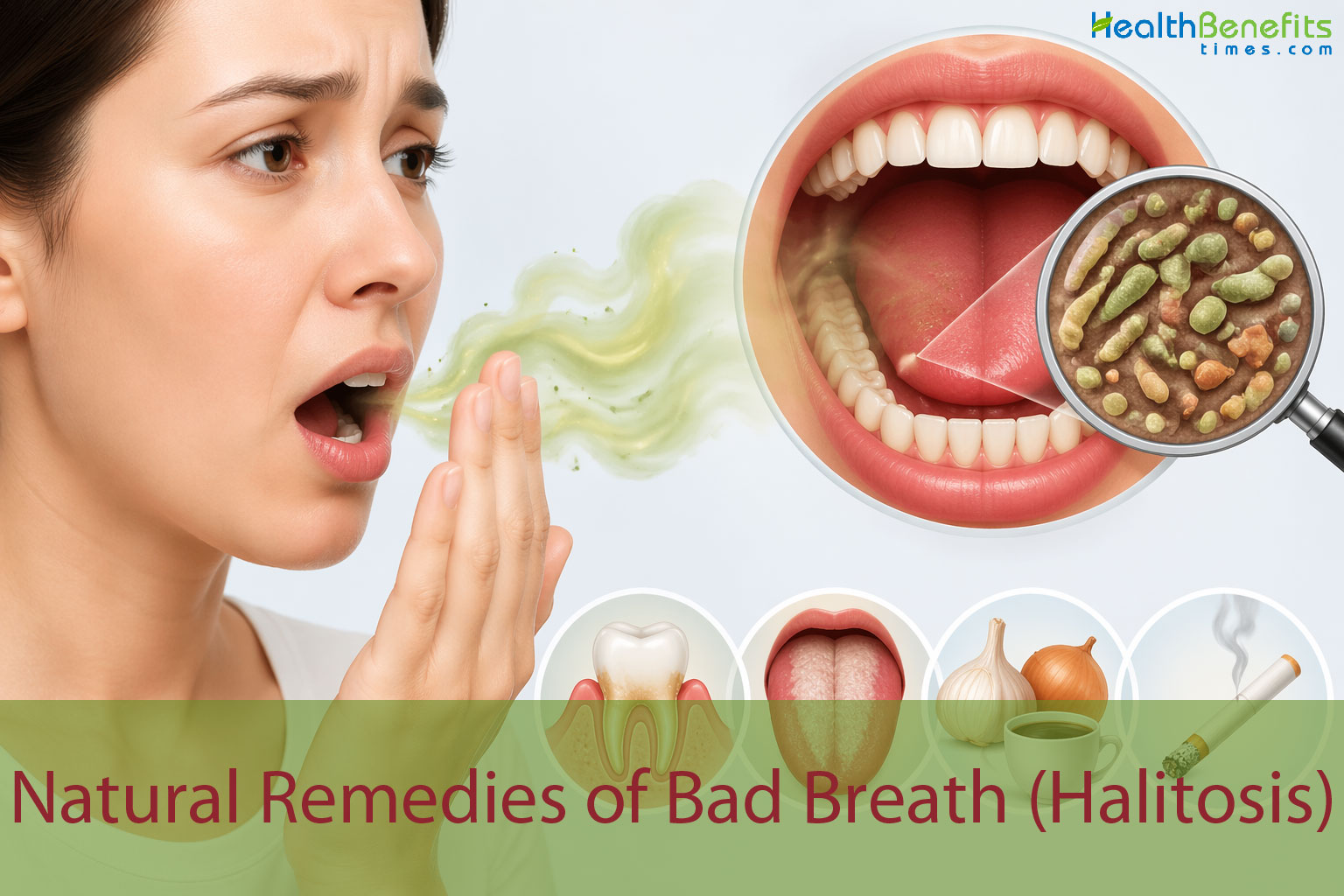
Most of us deal with breath worries at some point, that moment when you lean in to whisper something and suddenly wonder if your breath is working against you. The medical term for this is halitosis, a word that comes from the Latin for “breath” combined with a Greek suffix meaning a medical condition 1. And it’s far more common than most people think. If your bad breath keeps coming back, it’s usually a sign of something deeper going on, an imbalance in your mouth or elsewhere in your body, not just last night’s garlic bread 2. What many people don’t realize is that halitosis actually breaks down into three separate types. The first is genuine halitosis, where a real, measurable odor exists. The second is pseudo-halitosis, you’re convinced your breath smells bad, but it actually doesn’t. And the third is halitophobia, an ongoing fear of bad breath that sticks around even after treatment has resolved the problem 3.
Causes of BAD BREATH
1. Poor Oral Hygiene and Tongue Bacteria
Not brushing and flossing regularly allows food particles and bacteria to build up on your teeth, gums, and tongue, and as bacteria break down leftover proteins, they release volatile sulfur compounds that cause bad breath 4 5 1.
2. Dry Mouth (Xerostomia)
Dry Mouth (Xerostomia) Saliva helps clean the mouth and control bacteria, so when the body doesn’t produce enough of it a condition called xerostomia, often caused by medications, mouth breathing, or dehydration bacteria build up and can lead to bad breath 4 6.
3. Gum and Periodontal Disease
Gum disease causes the tissues around your teeth to become inflamed and pull away, forming deep pockets where bacteria collect and produce foul-smelling sulfur gases that a regular toothbrush cannot reach. 7 8
4. Tobacco Use and Combustible Inhalants
Smoking coats the mouth with tar and nicotine, creating a persistent bad smell while also destroying the mouth’s healthy bacteria and promoting harmful microbes that cause severe bad breath and gum disease 9 10
5. Frequent Alcohol Consumption
Drinking alcohol causes bad breath because it dries out your mouth by reducing saliva production and because your liver breaks it down into a foul-smelling chemical called acetaldehyde that is released through your lungs when you breathe. 11 8
6. Systemic Medical Conditions
Bad breath isn’t always about your teeth conditions like chronic sinus infections, inflamed tonsils, and severe acid reflux can produce foul-smelling breath by leaking bacteria-laden mucus into the throat or pushing stomach acids back up into the esophagus 12 13.
7. Substance Use and Addiction
Chronic use of drugs like methamphetamine and cocaine can cause severe dental damage including rapid tooth decay, dry mouth, teeth grinding, and intense bad breath a condition often called “meth mouth” that requires professional treatment. 14, 15
Symptoms of BAD BREATH
1. Sulfurous or Rotten Egg Odors
A rotten egg or decaying cabbage smell on your breath is usually caused by mouth bacteria breaking down proteins and releasing volatile sulfur compounds like hydrogen sulfide and methyl mercaptan 16.
2. Unusually Sweet or Fruity Scents
A persistent sweet or fruity smell on your breath, unrelated to food, can be a sign of diabetic ketoacidosis, a serious condition where the body burns fat instead of sugar for energy and releases fruity-smelling ketones through the lungs 12.
3. Musty, Fishy, or Mothball-Like Smells
Certain unusual breath odors such as a mothball-like smell from infected mucus, a fishy or ammonia-like smell from kidney failure, or a sweet musty smell from liver disease can be warning signs of serious internal organ problems. 16, 12
4. A Persistent Sour or Bitter Taste
A constant sour, metallic, or bitter taste in your mouth, even after brushing, is a strong sign that odor-causing bacteria are present and others can likely smell your breath 2.
5. A Thick White Coating on Your Tongue
A thick white, yellow, or brownish coating on the back of your tongue is a buildup of bacteria, food particles, and dead cells that causes bad breath. 17
6. Swollen, Bleeding Gums
If your gums are red, swollen, and bleed when you brush or floss, it usually means harmful bacteria have infected your gumline, causing gum disease and often leading to persistent bad breath 13 18.
BAD BREATH Facts
| Symptoms |
|
| Causes |
|
| Types of BAD BREATH
19. |
|
| How does spread
20. |
|
| Caused of BAD BREATH |
|
| Age Group 21. |
|
| You might be at a higher risk for exposure of this disease if you: |
|
| How doctors diagnose
1. |
|
| Remedies for BAD BREATH
22. |
|
| Other facts |
|
Natural Remedies of BAD BREATH
1. Harnessing Green Tea and Polyphenols
For a food with such a simple reputation just a calming drink green tea packs a surprisingly powerful punch for your oral health. It’s rich in antioxidants called polyphenols, and these compounds start working inside your mouth almost immediately after you take a sip 23. They break down the sulfur gases behind bad breath and hold back the bacteria that produce them. That makes green tea one of the more practical, natural breath fresheners you can reach for throughout the day {% https://www.medicalnewstoday.com/articles/326120 %} .
2. Chewing on Cloves
In Southeast Asia and parts of the Middle East, cloves have been used for centuries as a natural remedy for mouth problems. Now, modern science is catching up to explain why they actually work. When you pop a whole clove into your mouth and gently chew on it, you release a compound called eugenol a natural antiseptic 24. It does two things at once. First, it covers up bad odors with a warm, spicy scent. Second, it fights the bacteria that cause cavities and bad breath in the first place 25.
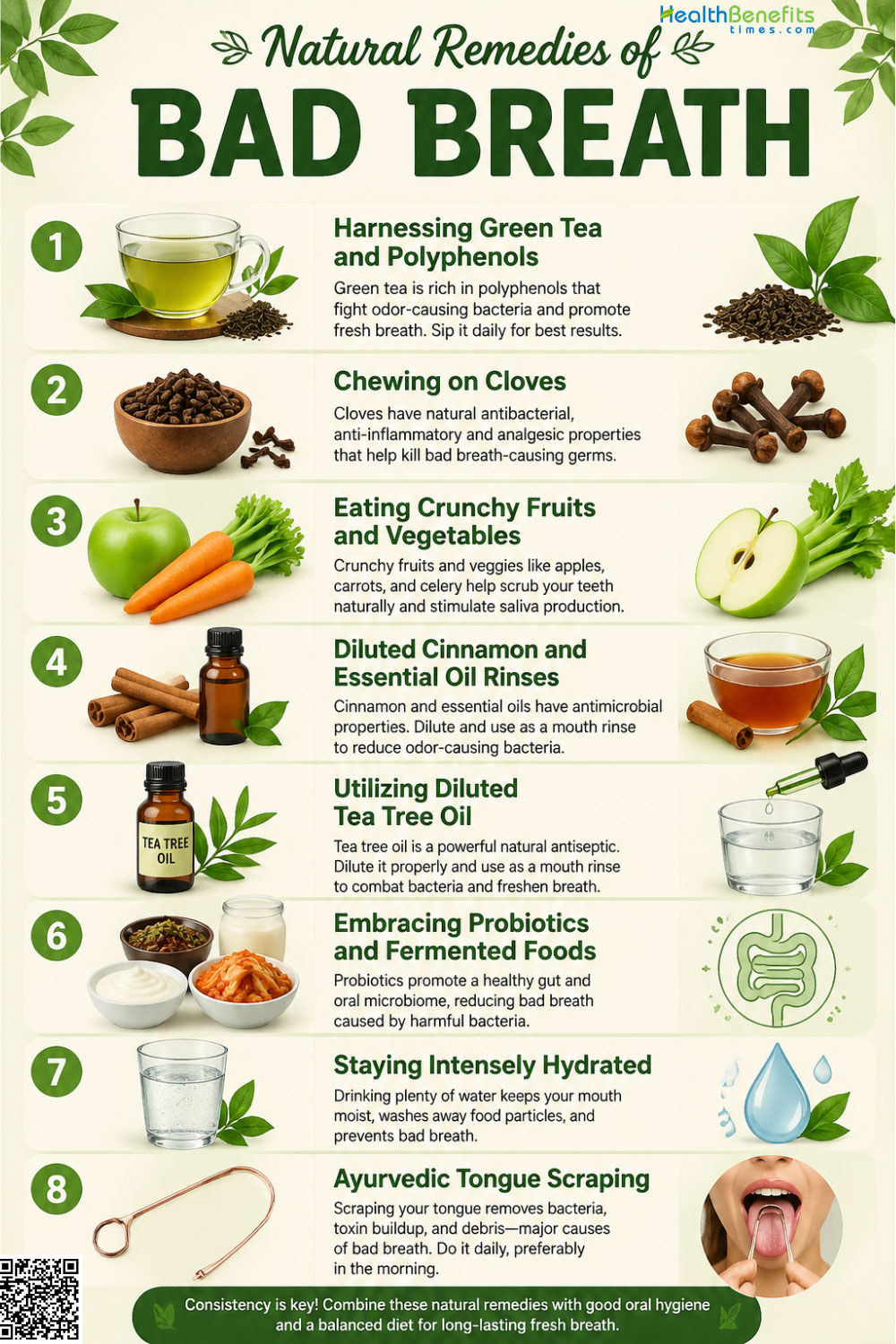
3. Eating Crunchy Fruits and Vegetables
You probably already know that brushing and flossing fight bad breath. What you might not know is that a simple, crunchy snack can do some of the heavy lifting for you. Raw fruits and vegetables like apples, carrots, and celery are firm and full of water. Chewing them takes real effort, and that extra chewing naturally gets your saliva flowing 23. Saliva is your mouth’s built-in rinse cycle, it washes away the bacteria that cause odor. There’s a bonus, too. The rough, fibrous texture of these foods works almost like a natural toothbrush. As you chew, the fibers scrub away plaque and leftover food particles stuck on your teeth 25.
4. Diluted Cinnamon and Essential Oil Rinses
Most people don’t think of cinnamon as a tool for fresh breath, but it consistently ranks among the more effective natural options for fighting oral bacteria. Research shows that cinnamon essential oil has strong antibacterial properties. It’s especially good at going after the specific bacteria responsible for producing hydrogen sulfide, the gas behind that unpleasant smell 26. To put it to use, you can add a small, heavily diluted amount of food-grade cinnamon oil to a glass of warm water. This gives you a simple, alcohol-free mouthwash that helps kill germs without drying out your mouth the way many commercial rinses do 27.
5. Utilizing Diluted Tea Tree Oil
Getting germ-killing power from a mouthwash and getting it from a natural oil are different propositions, one comes with a harsh chemical taste, the other does not. Tea tree oil, when highly diluted, works as a surprisingly effective rinse. Research shows it can reduce the growth of bacteria linked to gum disease and lower the sulfur compounds that cause bad breath, performing on par with chlorhexidine, a common antiseptic mouthwash 26. A gentle swish is all it takes to help neutralize odor at the source.
6. Embracing Probiotics and Fermented Foods
You might assume the best way to fight bad breath is to wipe out every microbe in your mouth. But that assumption doesn’t hold up when you look at how your oral microbiome actually works. A smarter approach is to crowd out the odor-causing bacteria by bringing in helpful ones. Foods like natural yogurt, kefir, and kimchi are rich in probiotic bacteria that can do exactly that 28. Once these beneficial strains settle into your mouth and gut, they compete with the bacteria responsible for bad breath, taking up space and using up resources those germs need to thrive. Over time, this can lead to noticeably lower levels of oral odor 29.
7. Staying Intensely Hydrated
It sounds almost too simple, but water might be the best breath freshener you can find. Your saliva is mostly water, so when you drink enough of it, your salivary glands can keep producing the fluid they need to wash away dead cells and neutralize the acidic conditions that odor-causing bacteria thrive in 30. Keep a water bottle nearby and sip from it often. This helps flush out debris from your mouth before it has a chance to break down and cause a smell.
8. Ayurvedic Tongue Scraping
In South Asia, tongue scraping has been used for centuries as a daily oral hygiene practice. Now, modern dentists are starting to pay attention to why it works 17. In Ayurvedic medicine, bad breath is linked to a buildup of toxic residue on your tongue, a sticky layer that harbors bacteria. The fix is simple: you use a copper or stainless steel scraper to physically remove that coating each morning. A regular toothbrush tends to glide right over this dense bacterial film, but a scraper catches and drags it away. The result is noticeably fresher breath, often right away 31.
Foods and Activities to Avoid When You Have Bad Breath
You probably already know that brushing your teeth helps with bad breath. What you might not know is that your daily habits and diet often play a bigger role than your oral hygiene routine.
1. Consuming Pungent, Sulfurous Foods
Garlic, onions, and heavy spices add great flavor to your meals, but they come with a downside. These ingredients are loaded with volatile sulfur compounds. Once you digest them, those compounds enter your bloodstream and get released through your lungs every time you exhale. That’s why the smell lingers even after you brush. Mints and mouthwash can cover it up temporarily, but the odor won’t fully go away until the chemicals leave your body.
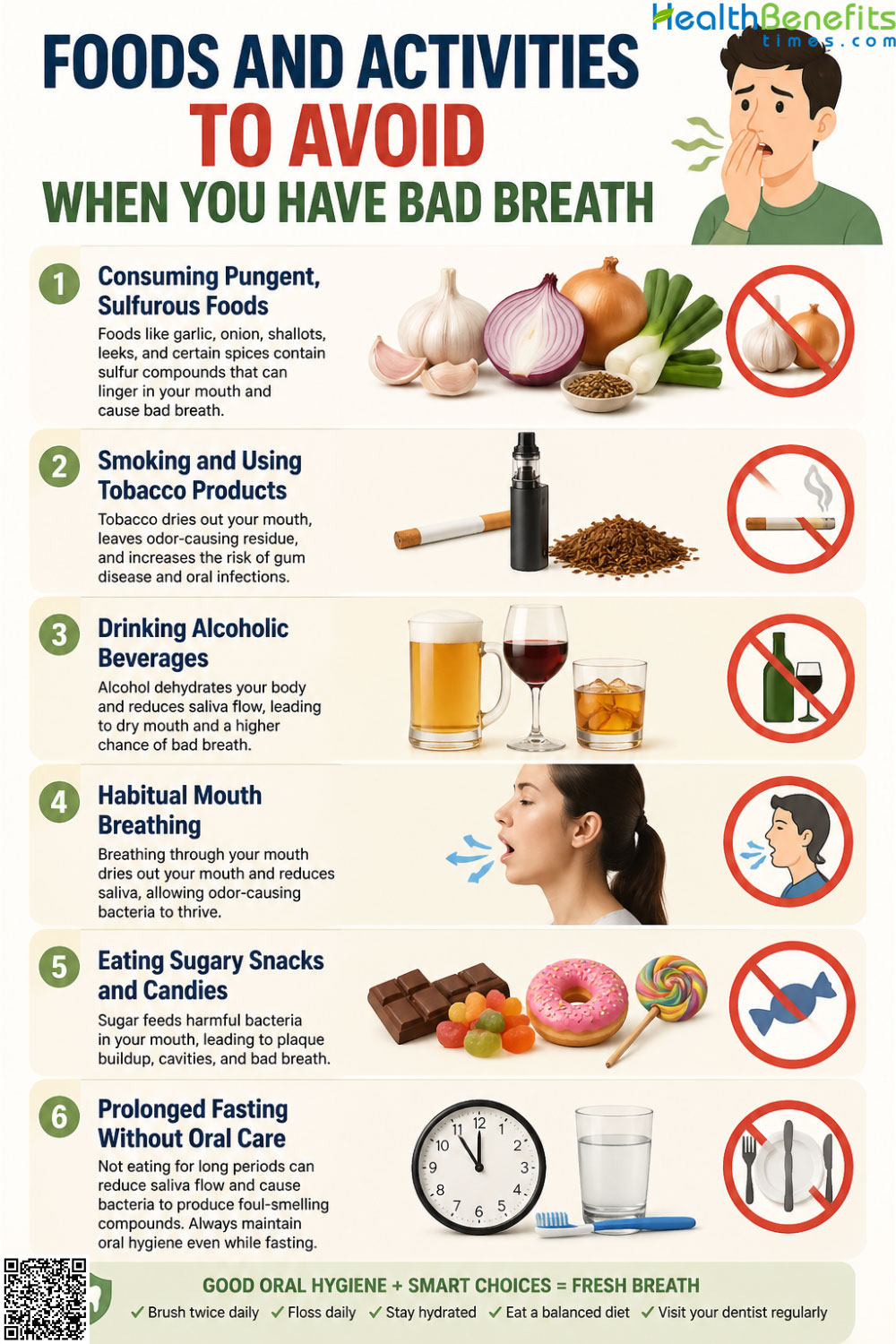
2. Smoking and Using Tobacco Products
The relationship between tobacco and bad breath looks simple on the surface, but gets more complicated the deeper you look. When you smoke a cigarette, tar and chemicals coat the inside of your mouth almost instantly and the smell lingers long after you’re done. But that’s only part of the problem. Tobacco also disrupts the natural balance of bacteria in your mouth, allowing harmful microbes to take over. On top of that, smoking dries out your salivary glands. Without enough saliva to wash away bacteria, your mouth becomes a breeding ground for the germs that cause gum disease and persistent bad breath.
3. Drinking Alcoholic Beverages
You’ve likely heard that alcohol causes dehydration. Here’s what that actually means for your breath. When you drink, alcohol acts as a diuretic it pulls water out of your body. That dries out your mouth and cuts down on saliva production. Saliva is what normally washes away leftover food particles and bacteria throughout the day. Without enough of it, those bacteria stick around and start producing odor. But dehydration is only part of the problem. As your liver breaks down alcohol, it produces a byproduct called acetaldehyde. This chemical has its own sharp, unpleasant smell and it lingers on your breath. That’s why even a few drinks in the evening can leave your breath noticeably off the entire next day.
4. Habitual Mouth Breathing
Most people don’t realize that a stuffy nose can quietly cancel out everything their toothbrush is doing. If you’re constantly breathing through your mouth whether it’s because of nasal congestion, allergies, or sleep apnea your saliva dries up fast. And saliva is your mouth’s built-in cleaning system. Without enough of it, you develop a condition called xerostomia, or chronic dry mouth. That dry environment is exactly where plaque and odor-causing bacteria grow best, coating your teeth and tongue largely unchecked.
5. Eating Sugary Snacks and Candies
That candy bar or cookie isn’t just satisfying a craving, it’s feeding the bacteria in your mouth. Refined sugar is their favorite fuel. When these bacteria feast on leftover sugar stuck between your teeth, they multiply fast and produce acidic waste. Worse, they release foul-smelling sulfur gases in the process. That’s what kills your breath freshness.
6. Prolonged Fasting Without Oral Care
If you’ve ever wondered why your breath smells worse when you skip meals, the answer often comes back to two things: less saliva and a shift in how your body fuels itself. When you go long stretches without eating, your mouth produces less saliva because there’s nothing to chew. That drop in saliva dries out your mouth and a dry mouth is a breeding ground for odor-causing bacteria. On top of that, your body starts burning fat for energy instead of food. This process releases acetone and other strong-smelling compounds into your bloodstream, which then show up on your breath. Staying well-hydrated during fasting can help keep both problems in check.
Precaution before use of natural remedies
The idea that “natural” means “harmless” is so widespread that most people accept it without question. It’s also largely incorrect. These botanical compounds carry real physiological effects and some can be dangerous if misused.
1. Swallowing Highly Toxic Essential Oils
Essential oils demand serious caution and common sense. Take tea tree oil as an example. A few drops diluted in water can work well as an antibacterial mouthwash. But you need to spit out every last drop. Swallowing tea tree oil is toxic. It can cause severe neurological and gastrointestinal emergencies 32.
2. Applying Undiluted Spices to Your Gums
A spice that works beautifully in your favorite pie doesn’t automatically belong on your gums. Clove oil, concentrated cinnamon extracts, and raw powdered spices can seem like natural fixes but applying them directly to your mouth without diluting them first is a different story. Pure, undiluted forms can cause chemical burns and painful tissue ulcers 30. Before using any herbal extract inside your mouth, always dilute it well in a carrier liquid to protect the soft tissue lining.
3. Overusing Highly Acidic Rinses
For most people, natural mouth rinses are safe and worth trying. There are, however, a few situations where caution makes sense particularly with highly acidic options like raw lemon juice or apple cider vinegar 28. These liquids are very acidic. If you use them too often, they can permanently strip the protective calcium from your tooth enamel. Once that enamel is gone, it doesn’t grow back. You’re left with extreme tooth sensitivity and a much higher risk of decay. To protect your teeth, always rinse your mouth with plain water right after consuming anything acidic 25.
4. Masking a Serious Underlying Disease
The real-world question isn’t whether natural remedies can freshen your breath most evidence suggests they can but whether relying on them might keep you from catching something far more serious. That’s the biggest risk of treating bad breath with mints, herbs, or essential oils on your own. Sometimes, the smell itself is a warning sign. A sweet, fruity odor can point to diabetic ketoacidosis. A musty or ammonia-like smell may signal liver or kidney failure. These are medical emergencies 12. If you mask that smell with clove oil or other remedies, you might miss the signal your body is sending you. So if your bad breath won’t go away or it carries an unusual chemical scent don’t just cover it up. See a doctor 33.
Comments
comments