


Causes of Chronic Fatigue
Uncovering the exact origins of this invisible illness remains an ongoing journey for medical researchers around the globe. While scientists have not discovered one single trigger that applies to every patient, they generally agree that chronic fatigue syndrome results from a combination of complex biological and environmental factors.
1. Immune System Abnormalities
A close look at the immune system reveals that individuals with this condition often experience irregular immune responses. Evidence indicates that the illness shares features with autoimmune diseases, where the immune system remains in a constant state of high alert and increases overall body inflammation 2. However, unlike traditional autoimmune conditions such as rheumatoid arthritis, patients generally do not show signs of permanent tissue damage. This persistent inflammation leaves the body feeling as though it is constantly fighting off an invisible infection.
2. Viral and Bacterial Infections
It is quite common for the severe exhaustion to begin suddenly following a standard illness. Many patients trace the onset of their extreme symptoms back to a bout of the flu, Epstein-Barr virus, Ross River virus, or even Q fever 3. Researchers suspect that these initial infections might alter the way the body recovers, permanently flipping a switch in the central nervous system that prevents it from returning to a normal, healthy baseline.
3. Cellular Energy Malfunctions
Deep inside human cells, tiny structures called mitochondria act as power plants to convert food into usable energy. In those suffering from this condition, these power plants often fail to operate efficiently, resulting in impaired cellular metabolism 4. Because the cells cannot produce enough fuel, the individual experiences profound physical weakness and a complete lack of stamina, even after minor physical tasks.
3. Hormonal and Stress Axis Disruption
The human body manages physical and emotional stress through a delicate communication network called the hypothalamic-pituitary-adrenal (HPA) axis. Medical observations show that patients frequently possess a dysregulated stress response and abnormal activity within this crucial hormonal pathway 5. This imbalance means the body cannot properly adapt to changes in temperature, minor physical exertion, or emotional distress.
4. Physical or Emotional Trauma
Sometimes, the body’s systems become overwhelmed by a single, catastrophic event. Reports show that an acute onset of the illness can occasionally follow a major physical trauma, such as a severe car accident, a complex surgery, or a period of immense psychological distress 6. The shock of these events appears to disrupt the central nervous system, creating a cascade of chronic symptoms.
Symptoms of Chronic Fatigue
Recognizing the wide array of physical challenges involved helps paint a clearer picture of how deeply this illness affects daily life. Because it impacts multiple systems throughout the body, the presentation of symptoms can vary drastically from person to person and fluctuate from day to day.
- Profound, Unrelenting Fatigue: Individuals experience a severe drop in their ability to perform occupational, social, and personal activities, accompanied by exhaustion that lasts for six months or longer 7.
- Post-Exertional Malaise (PEM): This is the defining feature of the illness, characterized by a massive worsening of symptoms following any minor physical, mental, or emotional effort 8. This severe “crash” can leave a person bedbound for days or weeks.
- Unrefreshing Sleep Patterns: Despite sleeping for ten or twelve hours, patients frequently wake up feeling stiff, exhausted, and as though they have not slept at all 9.
- Cognitive Impairment (Brain Fog): Difficulties with thinking, short-term memory, word retrieval, and concentration make simple tasks like reading or holding a conversation incredibly difficult 10.
- Orthostatic Intolerance: Simply standing upright or sitting at a desk can trigger dizziness, heart palpitations, weakness, or fainting, forcing the person to lie down to find relief 11.
- Widespread Pain: Patients often endure deep muscle aches, painful joints without noticeable swelling, and severe headaches that present in new patterns or unprecedented severity 12.
- Extreme Sensory Sensitivities: The nervous system becomes highly reactive, causing the individual to feel physical pain or nausea when exposed to bright lights, loud sounds, strong odors, or certain chemicals 13.
- Flu-Like Immune Symptoms: A continuous feeling of being unwell is common, marked by recurrent sore throats, tender lymph nodes in the neck or armpits, and unexplained chills or night sweats 7.
Chronic Fatigue Facts Table
To provide a clear, easy-to-read overview, the following table organizes the most crucial facts, risks, and diagnostic criteria associated with this complex illness.
| Category | Key Details |
| Symptoms
10. |
|
| Causes
14. |
|
| Types of Chronic Fatigue
9. |
|
| How does spread
3. |
|
| Age Group
15. |
|
| You might be at a higher risk for exposure of this disease if you:
16. |
|
| How doctors diagnose
17. |
|
| Other facts 1. |
|
Natural Remedies of Chronic Fatigue
When you are managing a condition that drains your physical and mental battery, exploring alternative therapies can be incredibly empowering. Because conventional medicine does not yet have a pill to cure this illness, you might turn to natural remedies and lifestyle strategies to support your body’s healing, ease your discomfort, and protect your energy. It is important to view these remedies as gentle, supportive tools designed to improve your daily comfort rather than instant miracle cures.
Below, you will find a detailed, practical guide to some of the most widely researched and utilized natural therapies for chronic fatigue.
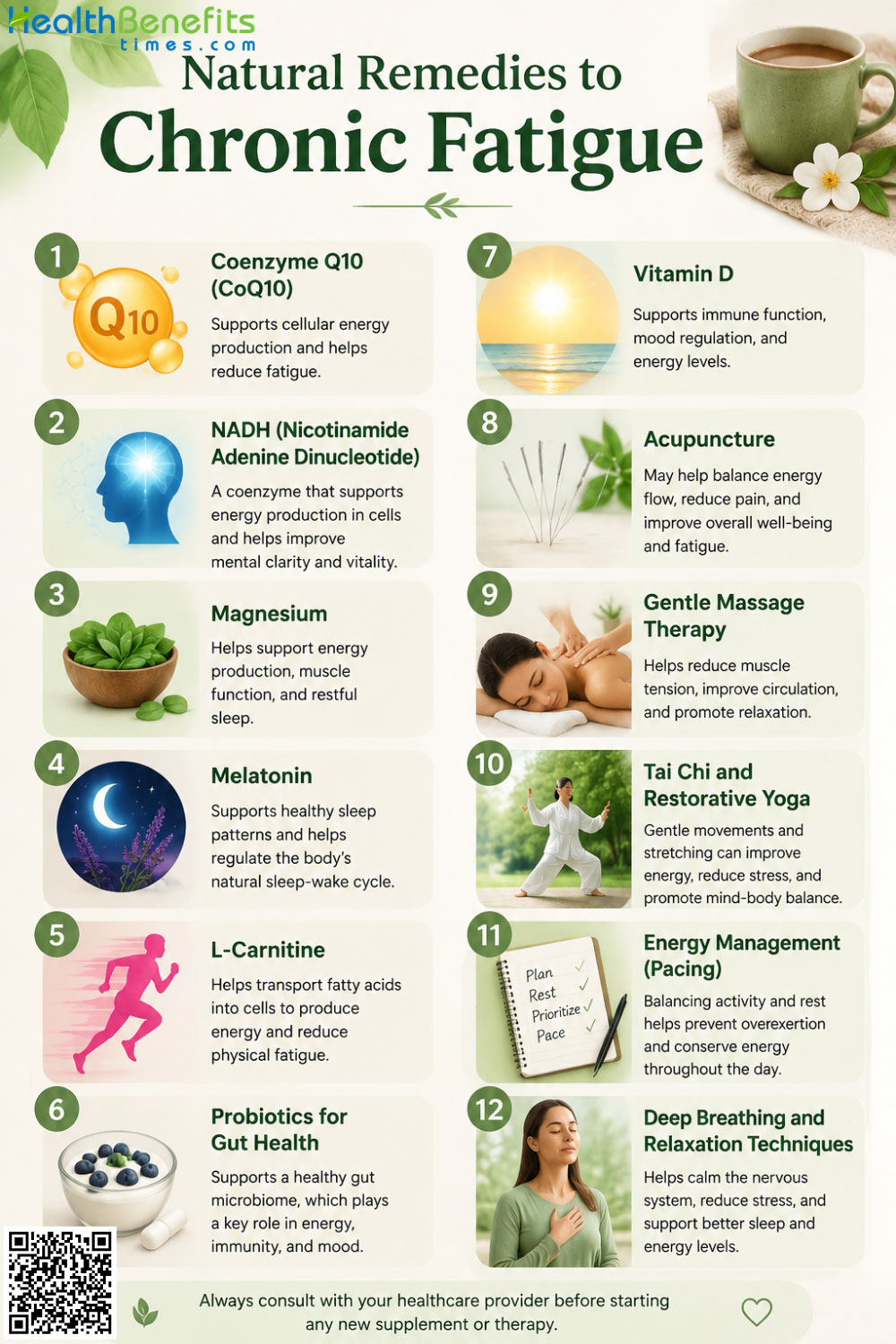
1. Coenzyme Q10 (CoQ10)
Deep within your cells, microscopic power plants known as mitochondria work around the clock to turn the food you eat into raw energy. When you have chronic fatigue, these power plants often sputter and fail to operate smoothly, leading to overwhelming weakness. Coenzyme Q10 is a powerful, naturally occurring antioxidant that plays a direct role in this energy-making process. By protecting your cells from oxidative stress, it helps your mitochondria run more efficiently. Clinical research has shown that supplementing with CoQ10 can significantly reduce the perception of cognitive fatigue and improve the overall quality of life for those suffering from this illness 18. It essentially acts as a spark plug, helping your body maximize whatever fuel it has available.
Note: You commonly use this remedy by taking it as a daily oral softgel or capsule, preferably consumed with a meal containing healthy fats to help your body absorb it properly.
2. NADH (Nicotinamide Adenine Dinucleotide)
Working as the perfect partner to CoQ10, NADH is a naturally occurring molecule derived from Vitamin B3. It is absolutely vital for brain function and cellular metabolism. When your body tries to create ATP which is the fundamental chemical energy that powers every heartbeat and muscle twitch it relies heavily on NADH. When you supplement with a combination of NADH and CoQ10, studies demonstrate a notable decrease in the severity of exhaustion and a marked improvement in daily functioning 19. By directly feeding the energy pathways in your cells, this supplement aims to lift the heavy, leaden feeling from your limbs and clear away some of the mental fog.
Note: You can take this as an oral dietary supplement, usually swallowing a tablet first thing in the morning on an empty stomach with a large glass of water for maximum benefit.
3. Magnesium
If your nervous system constantly feels like it is on high alert, you might be lacking the relaxation mineral. Magnesium is involved in over 300 essential biochemical reactions in your body, from relaxing tight muscles to helping nerves send clear signals. People living with severe exhaustion often endure deep, aching muscle cramps and a sensation of feeling “wired but tired” at night. Ensuring you have adequate magnesium helps gently calm your central nervous system down. Research reveals that magnesium is one of the few dietary supplements with genuine potential to offer beneficial effects in managing the pain and physical tension of this condition 20. Furthermore, your cells literally cannot synthesize energy without sufficient magnesium present.
Note: You commonly use this by taking a capsule or powder mixed into water, or by absorbing it through your skin by soaking in a warm, comforting bath filled with Epsom salts before bed.
4. Melatonin
Getting a good night’s rest is often impossible when your body’s internal clock is broken. You might lie awake for hours, or sleep deeply only to wake up feeling as though you ran a marathon. Melatonin is a natural hormone produced by the pineal gland in your brain, and it tells your body when it is time to transition into sleep. Supplementing with melatonin can help safely signal to your brain that night has fallen, encouraging a more regulated circadian rhythm 21. Beyond just fixing sleep, melatonin acts as a fantastic antioxidant that travels into the brain to clean up inflammatory toxins while you rest.
Note: You apply this remedy by taking a small oral tablet, gummy, or liquid drop about 30 to 60 minutes before your desired bedtime to ease your mind into a restful state.
5. L-Carnitine
Imagine L-Carnitine as a tiny biological delivery truck inside your bloodstream. Its main job is to pick up fatty acids and transport them directly into your mitochondria so they can be burned for fuel. When your body’s energy production is compromised, you want to make sure that every drop of fuel is being delivered efficiently. Medical reviews have highlighted that replenishing L-Carnitine can lead to significant benefits in mitigating physical and mental fatigue in individuals suffering from chronic illnesses 22. By supporting better muscle endurance, it helps you feel slightly more stable when performing simple daily tasks like walking up a flight of stairs.
Note: You ingest this commonly as an oral capsule or a liquid syrup, generally taken in the morning or early afternoon to support your physical energy throughout the active parts of your day.
6. Probiotics for Gut Health
The health of your digestive system is incredibly closely tied to the health of your brain and immune system. When the good and bad bacteria in your stomach fall out of balance, a state called dysbiosis it can lead to a “leaky gut,” where microscopic toxins slip into your bloodstream and cause severe inflammation. Introducing high-quality probiotics helps restore this delicate inner ecosystem. Exciting new findings suggest that targeting the gut microbiome with probiotics can be a valuable strategy, as it often coincides with a decrease in neurotoxic metabolites and a notable reduction in overall fatigue severity 23. A happy gut often translates to a calmer immune system and a clearer mind.
Note: You eat probiotics either by taking a specialized daily capsule or by enjoying naturally fermented foods like plain yogurt, kefir, fresh sauerkraut, and kimchi as part of your regular diet.
7. Vitamin D
Often referred to as the sunshine vitamin, Vitamin D acts more like a powerful hormone that dictates bone health and immune regulation. Because managing a chronic illness often means spending long periods resting indoors away from the sun, you are highly susceptible to becoming deficient in this crucial nutrient. A lack of Vitamin D can cause deep bone pain, amplify muscle weakness, and drastically lower your mood. Supplementing to fix a Vitamin D deficiency has been noted to reduce widespread pain in individuals dealing with complex fatigue and musculoskeletal conditions 24. Removing that layer of pain frees up valuable energy for your body to use elsewhere.
Note: You consume Vitamin D as a daily oral softgel or liquid drop, and it is best taken alongside a meal that contains some healthy fats, as it is a fat-soluble vitamin.
8. Acupuncture
Drawing upon thousands of years of traditional practice, acupuncture offers a unique way to communicate with your nervous system. By gently inserting hair-thin needles into highly specific points on your body, a skilled practitioner can stimulate the release of endorphins, which are your body’s natural, built-in painkillers. This ancient therapy encourages the body to shift out of a stressful “fight or flight” mode and into a restorative “rest and digest” phase. Research into alternative treatments shows that acupuncture holds significant promise for reducing both the mental and physical exhaustion associated with chronic fatigue 25. It is a gentle, passive way to help your body find balance without requiring you to expend energy.
Note: You apply this therapy by visiting a licensed acupuncturist, where you will rest comfortably on a soft table for 30 to 60 minutes while the practitioner carefully places the needles to promote relaxation.
9. Gentle Massage Therapy
Living with constant stiffness, painful joints, and unyielding muscle aches creates a vicious cycle that continually drains your physical battery. Gentle massage therapy, such as traditional Chinese Tui Na or light myofascial release, targets the tight connective tissues beneath your skin. This hands-on approach improves blood flow, warms the muscles, and encourages the lymphatic system to clear out cellular waste. Systematic reviews of clinical trials reveal that massage therapy has a significant therapeutic effect on fatigue, helping to improve physical and mental scores without causing adverse side effects 26. It offers a wonderful way to experience the benefits of circulation without having to engage in exhausting exercise.
Note: You use this remedy by booking a session with a massage therapist who specializes in chronic pain, explicitly requesting very light, soothing pressure to ensure the treatment does not trigger an energy crash.
10. Tai Chi and Restorative Yoga
While intense aerobic exercise is dangerous for your fragile energy reserves, incredibly gentle, mindful movement can be profoundly healing. Practices like Tai Chi and restorative yoga blend slow, deliberate stretches with deep, rhythmic breathing. These mind-body practices do not raise your heart rate or force your muscles to exhaustion; instead, they focus on balance, joint mobility, and oxygenating your blood. Evidence indicates that these meditative movement therapies are generally safe and can provide a modest relief of physical symptoms and improve the overall quality of life 27. They teach your body how to move gracefully and comfortably again.
Note: You practice this by following along with a beginner-friendly, low-impact video from the comfort of your living room, ensuring you only stretch as far as your current energy envelope safely allows.
11. Energy Management (Pacing)
Perhaps the single most important and effective natural strategy you can adopt is an entirely behavioral one called pacing. Pacing is a structured self-management technique that teaches you how to meticulously balance your physical and mental activity with mandatory, planned periods of rest. The main objective is to identify your “energy envelope” the exact amount of activity you can safely handle without triggering a relapse 28. By breaking large tasks into tiny chunks and resting before you feel utterly exhausted, you stop the destructive push-and-crash cycle and give your body a stable foundation to heal.
Note: You apply pacing by using a daily symptom diary or a smart watch to track your heart rate, and by scheduling non-negotiable 30-minute rest periods throughout your day, even when you feel relatively well.
12. Deep Breathing and Relaxation Techniques
Your autonomic nervous system is divided into two parts: the sympathetic (stress) and the parasympathetic (calm). Chronic illness often traps your body in a state of chronic stress. Deep breathing is a scientifically proven, natural switch that instantly activates your calming nervous system. By taking slow, measured breaths from your diaphragm, you lower your heart rate, decrease your blood pressure, and halt the production of stress hormones like cortisol. Using these relaxation techniques on a daily basis is highly recommended to help you cope with the overwhelming anxiety and pain that often accompany a long-term illness 29.
Note: You practice this by sitting or lying down comfortably in a quiet room, breathing deeply into your belly for a count of five, and slowly exhaling for a count of five, repeating for just a few minutes every day.
Foods and Activities to Avoid When You Suffer from Chronic Fatigue
Protecting your health is just as much about knowing what to remove from your life as it is about what to add. Because your nervous system is hyper-reactive and your cellular energy is heavily compromised, making the wrong dietary choice or engaging in the wrong activity can instantly trigger a severe symptom flare-up. Here is what you should actively avoid.
Foods and Drinks to Avoid
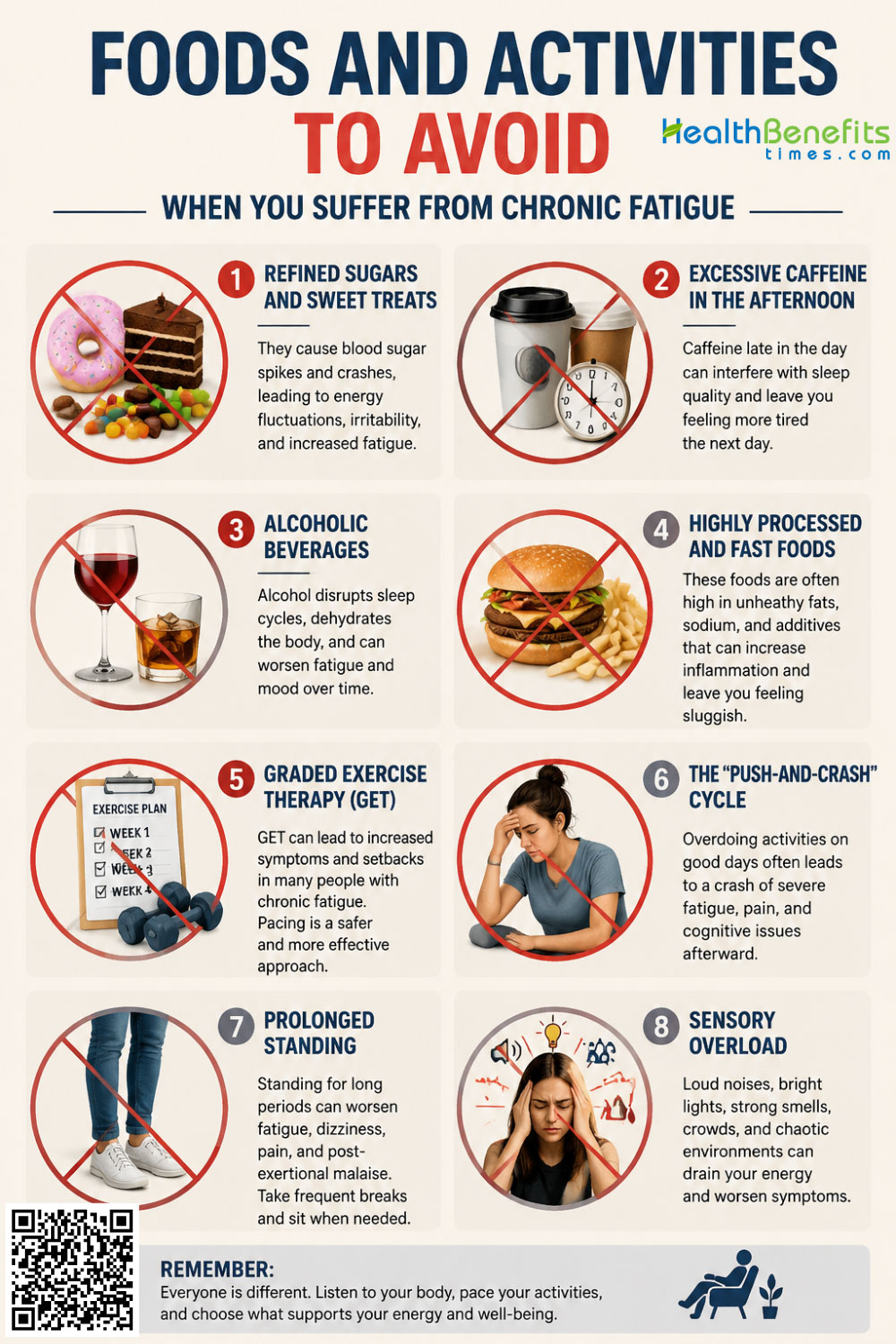
1. Refined Sugars and Sweet Treats
You must try to eliminate candies, pastries, and highly sweetened beverages from your diet. While a burst of sugar might give you a temporary illusion of energy, it will inevitably lead to a massive blood sugar crash that leaves you feeling far more exhausted and brain-fogged than before.
2. Excessive Caffeine in the Afternoon
You should avoid relying on strong coffees or multiple energy drinks to force your way through the day. Caffeine artificially masks your true fatigue, encouraging you to overexert yourself. Furthermore, consuming it later in the day will severely disrupt your already fragile sleep patterns.
3. Alcoholic Beverages
You will likely find that your body has developed a very low tolerance for alcohol. Alcohol is a central nervous system depressant that can drastically worsen your sleep quality, increase dizziness, and interact dangerously with any pain or sleep supplements you may be taking.
4. Highly Processed and Fast Foods
You should avoid meals that are loaded with trans fats, artificial preservatives, and heavy sodium. These processed ingredients are difficult for your body to break down and can aggravate systemic inflammation, making your joints ache more and worsening any existing digestive issues.
Activities and Habits to Avoid
1. Graded Exercise Therapy (GET)
You must strictly avoid any structured fitness program that demands you gradually increase your aerobic exercise regardless of how terrible you feel. Pushing through the pain is deeply harmful for this illness, and graded exercise therapy is no longer recommended by major medical institutions 30.
2. The “Push-and-Crash” Cycle
You should resist the temptation to frantically catch up on chores or work on the rare days you wake up feeling somewhat normal. Pushing yourself past your safe limits on a good day almost always guarantees a severe, punishing relapse the following day.
3. Prolonged Standing
You need to avoid situations that require you to stand perfectly still for long periods, such as waiting in long grocery lines or taking extended hot showers. Standing allows blood to pool in your legs, which can quickly lead to lightheadedness, heart palpitations, and fainting.
4. Sensory Overload
You should steer clear of overwhelming environments that feature bright flashing lights, loud overlapping noises, or strong chemical smells. For a sensitive nervous system, processing this intense sensory data burns through your precious energy just as quickly as running a race.
Myths and Misconceptions
Because this illness lacks a visible, outward marker like a broken arm or a rash, patients frequently face heartbreaking misunderstanding from society and even some medical professionals. Below is a breakdown of the most common myths contrasted directly with the medical reality.
| Myth | Reality |
| “You are just experiencing normal tiredness; you just need a good night’s sleep to fix it.”
11. |
The condition is a complex, multisystem biological disease. The fatigue is completely disabling, and the sleep is inherently unrefreshing. Resting in bed does not magically cure the exhaustion |
| “If you just push yourself to exercise more, you will eventually build up your stamina.”
31. |
Pushing through fatigue is actively harmful. The hallmark symptom of post-exertional malaise means that exercise can cause a severe, prolonged worsening of all bodily symptoms |
| “It is simply a psychological condition, a type of depression, or a result of laziness.”
32. |
While living with a chronic illness can understandably cause feelings of grief, this syndrome is a very real physical, neurological, and immunological disorder, not a psychiatric illness |
| “Only highly stressed, middle-aged women are diagnosed with this condition.”
1. |
The illness can strike absolutely anyone at any time. It widely affects children, teenagers, men, and the elderly across all ethnic and socioeconomic backgrounds |
| “If standard blood tests come back normal, there is absolutely nothing wrong with you.” | There is currently no single biomarker or blood test to confirm the disease. A diagnosis is based on specific clinical history and symptom criteria, not standard laboratory panels. |
Special Considerations
Managing chronic fatigue syndrome does not happen in a vacuum; it affects unique individuals who have vastly different life circumstances, ages, and medical backgrounds. Tailoring treatments and expectations based on these specific life stages is absolutely vital for safe care.
1. Children and Adolescents
It often surprises people to learn that children and teenagers are frequently affected by this profound exhaustion, quite commonly developing the condition after a bout of mononucleosis or a severe flu 34. In younger patients, the illness can present slightly differently; they are much more likely to experience severe stomach pain and headaches rather than the widespread joint pain typically seen in adults. The primary consideration for a child is ensuring they have robust educational support without burning out. They often require specialized school accommodations, such as a 504 Plan or an Individualized Education Program (IEP), which can provide extended test times, permission to rest during the day, or part-time home tutoring 35. These adjustments ensure they do not fall behind socially or academically while managing their limited energy.
2. Pregnancy
For women in their peak childbearing years, navigating this illness during pregnancy requires meticulous planning and a strong support network. Interestingly, the massive hormonal shifts of pregnancy create a unpredictable environment: roughly one-third of women experience an improvement in their symptoms (usually after the first trimester), one-third see no change, and one-third experience a significant worsening of their fatigue and pain 36. The postpartum period is considered particularly critical. The physical trauma of giving birth, the sudden crash in hormones, and the immense, round-the-clock energy demands of caring for a newborn can trigger a severe relapse. Any natural remedies or supplements must be strictly vetted by an obstetrician to ensure they are safe for both mother and baby.
3. Chronic Conditions
Often, this syndrome does not travel alone. It frequently overlaps with other chronic illnesses, which can heavily complicate a natural treatment plan. Conditions such as Fibromyalgia (characterized by intense, widespread pain), Postural Orthostatic Tachycardia Syndrome (POTS, causing a racing heart and dizziness upon standing), and irritable bowel syndrome are very common companions. When managing multiple conditions naturally, one must ensure that a remedy for one problem does not aggravate another. For instance, increasing salt and fluid intake is a wonderful natural remedy for POTS to boost blood volume, but it must be carefully monitored if the patient happens to have co-existing high blood pressure or kidney issues.
4. The Elderly
As individuals age, their baseline physical energy naturally decreases, making the management of severe, chronic exhaustion in the elderly particularly challenging. Older adults are frequently managing polypharmacy, which means they are taking multiple prescription medications for common issues like blood pressure, cholesterol, or arthritis. Adding natural remedies like herbal supplements or high-dose vitamins can increase the risk of dangerous drug interactions. Furthermore, the dizziness and orthostatic intolerance associated with the illness poses a severe, life-threatening fall risk for the elderly. Natural therapies for this age group should lean heavily toward highly supervised, gentle movement, assisted massage, and conservative nutritional support under the strict guidance of a geriatric medical specialist.
Precaution Before Use of Natural Remedies When You Have Chronic Fatigue
Before you completely overhaul your daily wellness routine with new supplements and alternative therapies, it is crucial to protect your fragile biological system. Natural does not always mean completely safe, especially for a body with a highly reactive and sensitive immune system.
1. Consult Your Healthcare Provider First
You must always talk to your primary care doctor, pharmacist, or a specialist before taking any new supplement. Some natural herbs and high-dose vitamins can seriously interfere with prescription medications, altering how your body absorbs antidepressants or pain relievers 29.
2. Start Low and Go Slow
Your body may be incredibly sensitive to new substances and treatments. You should begin any new supplement at the lowest possible dose often just a fraction of what is recommended on the label and slowly increase it over a period of weeks to carefully monitor how your body reacts.
3. Introduce One Remedy at a Time
You should never start taking five different supplements on the exact same day. If you happen to have a bad reaction or a sudden, wonderful improvement, you need to know exactly which remedy caused it. Space out your new treatments by at least a week or two.
4. Beware of “Miracle Cures”
You must remain deeply skeptical of any product, practitioner, or expensive online program that promises a fast, 100% cure for your illness. The syndrome is currently incurable, and opportunistic marketing preys heavily on desperation. Stick to well-researched, gentle supportive therapies.
5. Factor Treatments into Your Energy Envelope
Even completely passive treatments like a massage or an acupuncture session require you to travel, communicate with a practitioner, and process physical touch. You must factor the energy spent acquiring the remedy into your daily pacing budget so that the treatment itself does not accidentally trigger an exhaustion crash.
When to See a Doctor
While natural remedies, mindful breathing, and lifestyle pacing form the beautiful foundation of living with chronic fatigue, professional medical oversight remains absolutely essential for your safety. There are certain biological red flags that cannot be managed at home with supplements and require immediate professional intervention.
1. A Sudden, Severe Drop in Baseline
If you suddenly find yourself entirely bedbound and unable to perform basic hygiene when you were previously functioning at a moderate level, you need a medical evaluation. A doctor must rule out a new, acute infection or a hidden underlying illness that is draining your energy.
2. New or Changing Pain Patterns
While general muscle aches are an expected part of the condition, if you experience sudden, sharp chest pain, severe nerve-burning sensations, or an unbearable new type of headache, you must seek emergency care. These symptoms could indicate a completely separate cardiovascular or neurological crisis.
3. Dangerous Fainting Spells
If your dizziness progresses from feeling merely lightheaded to actually losing consciousness and fainting when you stand up, you need to see a cardiologist or neurologist immediately. Fainting poses a massive risk for severe head injuries or broken bones.
4. Inability to Swallow or Keep Food Down
In very severe cases of this illness, patients can develop gastrointestinal paralysis or an inability to properly chew and swallow their food, putting them at extreme risk. You must seek urgent medical help if you cannot eat or drink, as you may require nutritional support 37.
5. Severe Depression or Mental Health Crisis
Living with a chronic, disabling illness that steals your independence takes a massive, heartbreaking psychological toll. If your grief or frustration turns into severe depression, overwhelming anxiety, or any thoughts of self-harm, you must immediately connect with a mental health professional for compassionate, life-saving support.
Comments
comments