

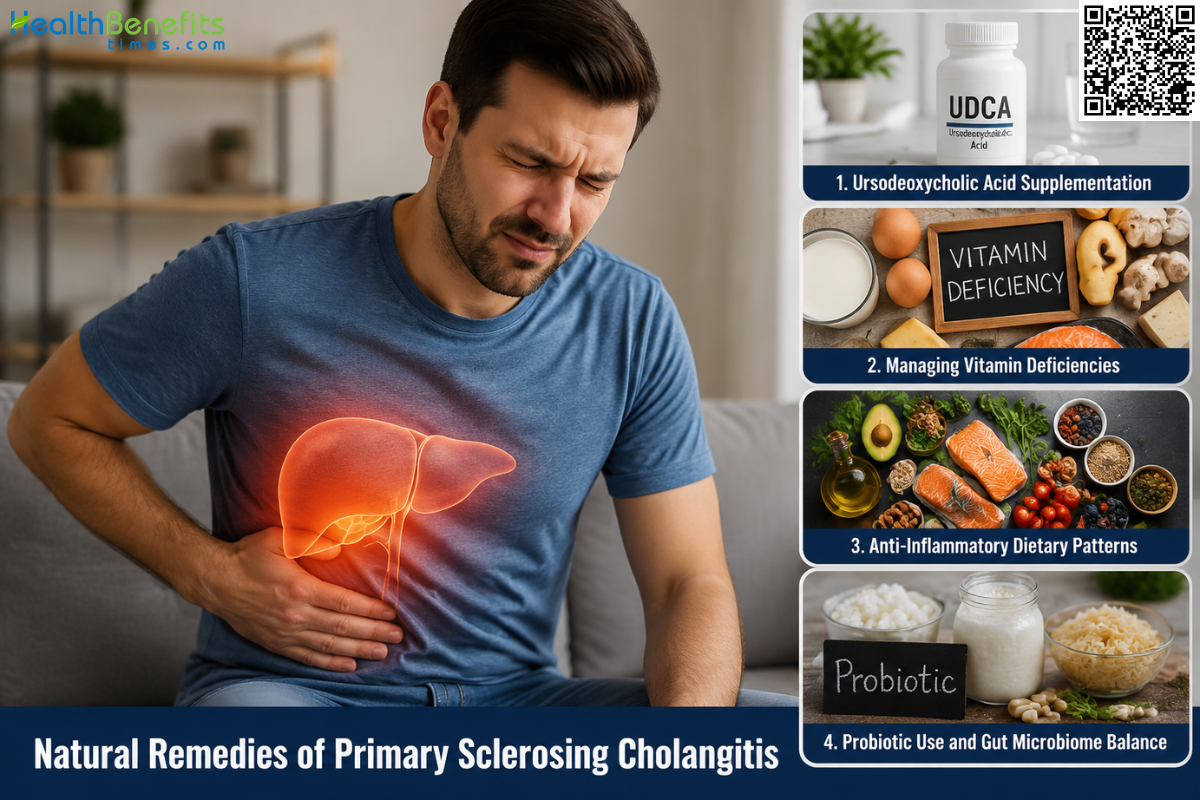
Causes of Primary Sclerosing Cholangitis
While the precise origin of primary sclerosing cholangitis remains unknown, current clinical understanding identifies several contributing factors:
- Autoimmune Response: The disease is primarily categorized as an immune-mediated condition. In affected individuals, the body’s immune system mistakenly attacks the healthy cells lining the bile ducts, resulting in chronic inflammation and subsequent scarring 1.
- Genetic Predisposition: Specific human leukocyte antigen (HLA) gene variations are strongly associated with the development of the disease. These inherited traits influence how the immune system identifies and interacts with foreign substances, increasing individual susceptibility 5.
- Microbiome and Intestinal Factors: There is a significant clinical link between the gut and the liver. A large proportion of patients also suffer from inflammatory bowel disease (IBD), suggesting that altered gut bacteria or a “leaky” intestinal barrier may allow substances to reach the liver and trigger an inflammatory response 6.
- Environmental Triggers: Exposure to certain unknown environmental factors may interact with a person’s genetic makeup to initiate the disease process, though no single external cause has been identified by researchers to date 7.
Symptoms of Primary Sclerosing Cholangitis
Many individuals with primary sclerosing cholangitis remain asymptomatic for years, often receiving a diagnosis after routine blood tests reveal abnormal liver enzyme levels. When symptoms do manifest, they frequently include:
- Persistent Fatigue: An overwhelming sense of tiredness or low energy is the most common complaint reported by patients, regardless of the stage of the disease 6.
- Jaundice: A yellowing of the skin and the whites of the eyes occurs when the flow of bile is blocked, leading to a buildup of bilirubin in the bloodstream 8.
- Pruritus: Severe, unrelenting itching of the skin, which typically occurs without an accompanying rash, often intensifies due to the accumulation of bile salts under the skin 1.
- Abdominal Pain: Discomfort or aching in the upper right quadrant of the abdomen is frequent, often resulting from inflammation or pressure within the bile ducts 3.
- Fever and Chills: Recurrent episodes of fever and shivering can signal a bacterial infection within the blocked bile ducts, a serious complication known as cholangitis that requires immediate medical intervention 2.
Natural Remedies of Primary Sclerosing Cholangitis
1. Ursodeoxycholic Acid Supplementation
How it may help
Ursodeoxycholic acid (UDCA) replaces toxic bile acids that accumulate in the liver due to blocked ducts. This action reduces bile toxicity, protects liver cells from inflammatory damage, improves fluid flow, and significantly lowers elevated liver enzymes 9.
What research says
Clinical studies confirm standard doses of UDCA improve liver blood tests. However, extensive trials conclude the supplement does not halt disease progression, improve overall survival rates, or prevent the eventual need for a liver transplant 10.
How to use it safely
Take UDCA only under a hepatologist’s strict supervision. Follow your moderate-dose regimen carefully; experts warn against high doses. Attend all scheduled blood tests to monitor liver function and adjust medication safely 11.
Potential precautions or side effects
High doses increase risks of severe liver complications and death. At standard doses, you may experience mild side effects like weight gain or diarrhea 11.
2. Managing Vitamin Deficiencies
How it may help
Because primary sclerosing cholangitis restricts bile flow, the intestines struggle to absorb dietary fats and fat-soluble vitamins (A, D, E, and K) 8. Addressing these nutritional deficits prevents secondary complications like weakened bones, night blindness, and poor blood clotting, thereby maintaining foundational health 1.
What research says
Clinical research demonstrates that fat-soluble vitamin deficiencies are highly prevalent in advanced liver disease 5. Studies conclude that targeted dietary supplementation effectively corrects serum vitamin levels and significantly reduces the incidence of severe complications, such as osteoporosis and coagulopathy, in affected patients 6.
How to use it safely
Request annual blood tests from your doctor to monitor your vitamin levels. Only take supplements at the exact dosages prescribed. If severe bile blockages prevent standard pills from working, your provider may prescribe specialized water-soluble versions or injections to ensure proper absorption 12.
Potential precautions or side effects
Unlike water-soluble nutrients, excess fat-soluble vitamins accumulate in body tissues and can cause severe toxicity, potentially leading to organ damage 1. Never exceed the dose recommended by your doctor.
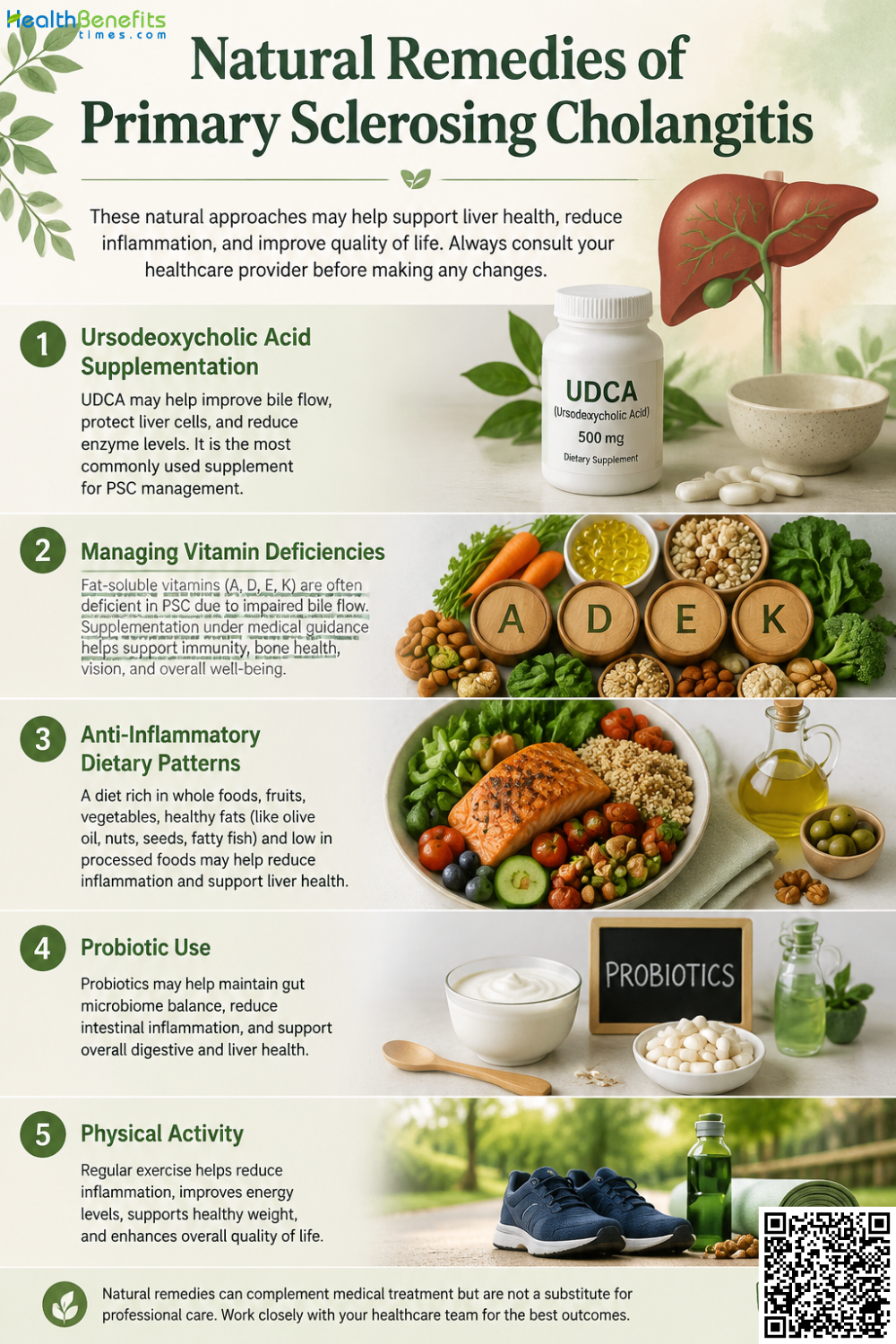
3. Anti-Inflammatory Dietary Patterns
How it may help
Primary sclerosing cholangitis is closely connected to inflammatory bowel disease through the gut-liver axis. Adopting an anti-inflammatory diet helps by minimizing intestinal irritation. Eliminating highly processed foods and excess sugar reduces immune system triggers, eases digestive discomfort, and lowers the overall inflammatory stress placed on the liver 13.
What research says
Clinical studies confirm that while diet cannot reverse established bile duct scarring, anti-inflammatory eating patterns significantly influence disease factors. Research demonstrates these diets reduce inflammatory blood markers, strengthen the intestinal barrier, and promote healthier gut bacteria, which collectively reduces the body’s inflammatory burden 14.
How to use it safely
Work with a clinical dietitian to design a balanced nutrition plan. Focus on nutrient-dense whole foods, healthy fats, and natural fiber. Avoid severely restrictive fad diets, which can dangerously worsen the nutrient absorption issues, weight loss, and vitamin deficiencies already caused by chronic liver disease.
Potential precautions or side effects
Extreme dietary restrictions risk severe malnutrition and muscle wasting. You must prioritize adequate daily calories and monitor your nutritional status to prevent weakening your foundational health and energy levels.
4. Probiotic Use
How it may help
Because primary sclerosing cholangitis is heavily tied to inflammatory bowel disease, probiotics are used to restore healthy digestive bacteria. By improving the gut-liver axis, these beneficial microbes theoretically prevent harmful intestinal bacteria and toxins from traveling to the liver and triggering bile duct inflammation 15.
What research says
Clinical trials conclude that probiotics do not effectively lower liver enzymes, reduce bile duct scarring, or relieve symptoms like itching and fatigue in primary sclerosing cholangitis. While helpful for co-existing bowel issues, current data proves they cannot halt or reverse the underlying liver disease 16.
How to use it safely
Consult your hepatologist before trying any supplement. If approved, select high-quality strains specifically tested for digestive health. Take them precisely as directed, and never substitute them for standard medical care, prescription therapies, or routine liver monitoring 13.
Potential precautions or side effects
You may experience temporary gas or bloating. If you have end-stage liver failure or a weakened immune system, avoid probiotics, as live bacteria risk causing severe bloodstream infections 16.
5. Physical Activity
How it may help
Regular physical activity combats the severe fatigue commonly associated with chronic liver conditions. Staying active preserves skeletal muscle mass, preventing the debilitating muscle wasting that frequently affects individuals with advanced liver disease. Additionally, routine exercise improves cardiovascular endurance and boosts overall daily energy levels 17.
What research says
Clinical studies on chronic liver disease demonstrate that moderate exercise significantly improves aerobic capacity, muscle strength, and overall quality of life while safely reducing fatigue 18. However, researchers confirm that while physical activity manages these physical complications, it cannot halt bile duct scarring or cure the underlying liver disease 19.
How to use it safely
Consult your hepatologist before starting a new routine. Begin slowly with moderate aerobic exercises, such as brisk walking, and incorporate light resistance training to build strength. Prioritize rest if you experience extreme exhaustion. A physical therapist can help design a safe, highly customized exercise plan 20.
Potential precautions or side effects
If your condition has caused an enlarged spleen, strictly avoid contact sports to prevent internal rupture 19. Skip heavy weightlifting if liver disease has caused you to develop severe bone thinning.
Foods to Avoid When You Suffer from Primary Sclerosing Cholangitis
1. Alcoholic Beverages
Alcohol significantly accelerates liver damage. Patients with primary sclerosing cholangitis must completely avoid alcohol to prevent additional toxic stress and preserve remaining liver health 21.
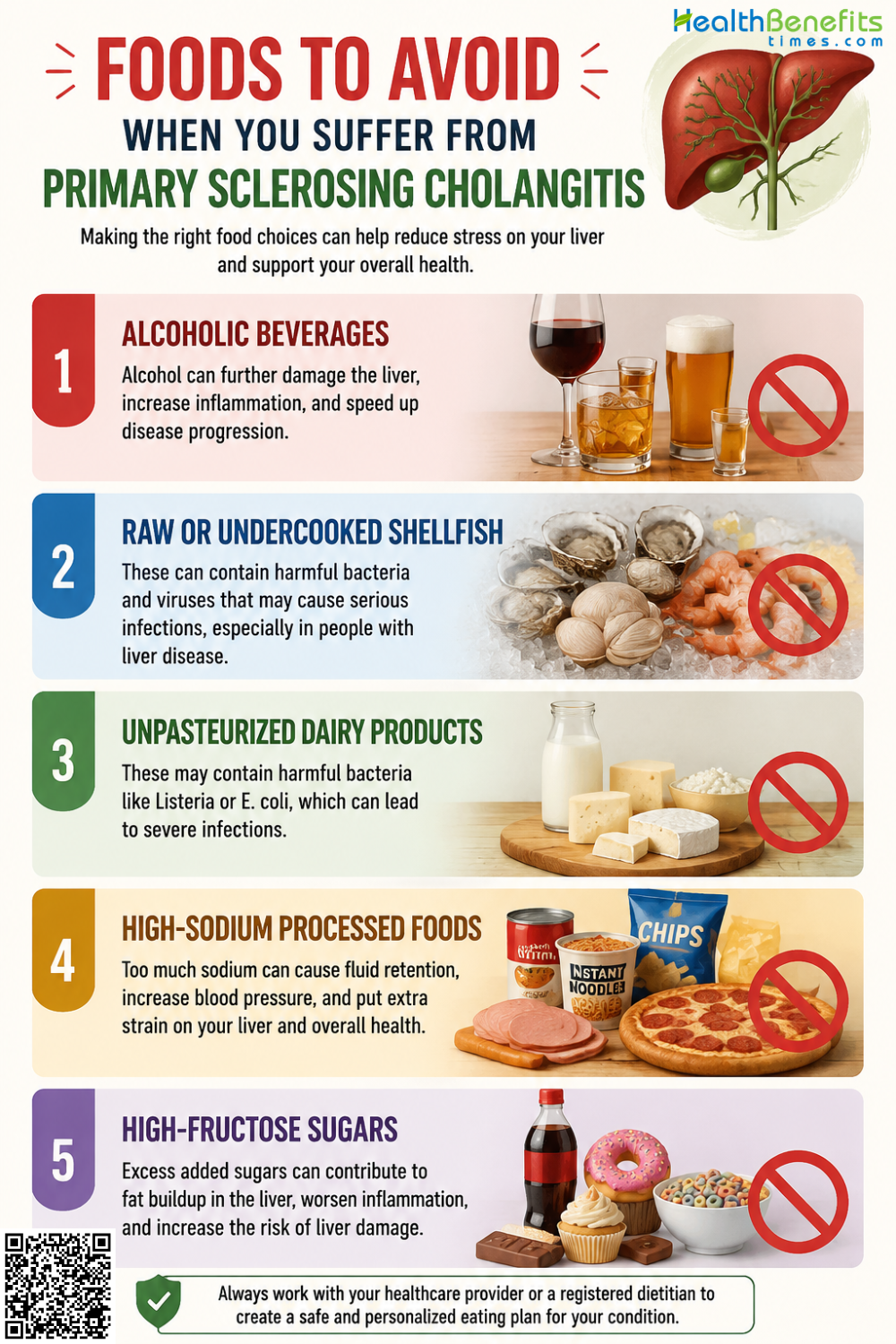
2. Raw or Undercooked Shellfish
A damaged liver struggles to fight off infections. Eating raw marine life or undercooked meat exposes patients to severe, life-threatening bacterial and viral infections 21.
3. Unpasteurized Dairy Products
Raw milk and unpasteurized cheeses often contain dangerous bacteria. Because liver disease weakens immune filtration, these untreated products pose a severe infection risk to patients 21.
4. High-Sodium Processed Foods
Eating too much salt worsens fluid buildup in the body. This leads to severe abdominal swelling and leg fluid retention, which are dangerous complications of advanced liver disease 22.
5. High-Fructose Sugars
Large amounts of simple sugars and fructose cause the liver to create excess fat. This worsens overall liver inflammation and causes further damage to the organ 23.
When to See a Doctor When You Suffer from Primary Sclerosing Cholangitis
1. Fever and Chills
Recurrent fevers or sudden chills indicate a dangerous bacterial infection in the blocked bile ducts, requiring emergency antibiotics to prevent life-threatening sepsis 1.
2. New or Worsening Jaundice
A sudden increase in the yellowing of your skin or eyes signals a severe bile blockage that demands immediate medical evaluation and potential duct widening 3.
3. Severe Abdominal Pain
Intense, sudden pain in the upper right side of your stomach may indicate a ruptured duct, severe infection, or gallbladder complications requiring urgent clinical care 8.
4. Unexplained Confusion or Drowsiness
Significant changes in mood, extreme confusion, or severe sleepiness indicate toxins are building up in your brain due to rapidly failing liver function 2.
5. Gastrointestinal Bleeding
Vomiting blood or passing black, tarry stools indicates ruptured blood vessels in the digestive tract, a severe liver disease complication requiring emergency hospitalization 1.
Comments
comments