

According to the World Health Organization (WHO), headache disorders are among the most prevalent disorders of the nervous system. Almost half of the adult population has had a headache at least once within the last year. 1
The International Headache Society classifies headaches into more than 150 types, broadly divided into primary (not caused by another condition) and secondary (caused by an underlying issue). 2
Primary headaches such as migraines, tension-type, and cluster headaches are the most common. Migraines alone affect more than 1 billion people globally, making them the third most prevalent illness in the world. 3
Headaches can range from mild and brief to severe and debilitating. While many headaches respond well to home care, understanding their nature is the first step to managing them effectively. 4
Causes of Headache
Headaches can arise from a wide range of triggers and underlying factors. Here are the most common causes:
- Stress and anxiety: Emotional stress is a leading trigger for tension headaches, causing muscles in the head and neck to tighten. 5
- Dehydration: Not drinking enough water can shrink the brain temporarily, triggering pain signals. {% https://my.clevelandclinic.org/health/diseases/21517-dehydration-headache %}
- Poor sleep: Both too little and too much sleep can cause or worsen headaches. 6
- Hormonal changes: Fluctuations in estrogen, particularly around menstruation, pregnancy, or menopause, are a major migraine trigger in women. 7
- Skipping meals: Low blood sugar caused by missing meals can rapidly trigger headache onset.
- Caffeine overuse or withdrawal: Both high caffeine intake and sudden cessation can lead to rebound headaches. 8
- Eye strain: Prolonged screen time or uncorrected vision problems strain the eye muscles and cause tension headaches.
- Sinus congestion or infection: Inflammation of the sinuses from allergies or colds creates pressure that leads to facial and head pain. 9
- Loud noise or bright lights: Sensory overload is a well-known trigger, especially for migraine sufferers.
- Medications overuse: Taking pain relievers too frequently can lead to “medication overuse headache” (MOH), sometimes called a rebound headache. 10
Symptoms of Headache
Recognizing the symptoms of a headache can help identify the type and guide appropriate treatment:
- Dull, aching, or throbbing pain in the head or temples
- Pressure or tightness around the forehead, sides, or back of the head
- Sensitivity to light (photophobia) or sound (phonophobia)
- Nausea or vomiting (especially with migraines) 3
- Blurred vision or visual disturbances (aura) before or during a migraine
- Tenderness in the scalp, neck, or shoulder muscles
- Pain that worsens with physical activity or movement
- Nasal congestion or runny nose (with sinus or cluster headaches)
- Severe, stabbing pain around one eye (characteristic of cluster headaches) 11
- Dizziness or difficulty concentrating during a headache episode
Headache Facts at a Glance
The following table summarizes key information about headaches for quick reference:
| Symptoms |
|
| Causes |
|
| Types of Headache |
|
| How It Affects Daily Life |
|
| Age Group Most Affected |
|
| Who Is at Higher Risk? |
|
| How Doctors Diagnose |
|
| Other Key Facts |
|
Natural Remedies to Relieve Headache
When a headache strikes, reaching for a pill is not always the first or only option. Many natural remedies have solid scientific backing and have been used safely for generations. Below are the most effective, research-supported natural remedies to relieve headache pain.
1. Stay Hydrated
Dehydration is one of the simplest yet most overlooked headache triggers. Even mild fluid loss can cause the brain to temporarily pull away from the skull, creating pain. 12
Research has found that increasing water intake in individuals prone to headaches significantly reduced headache intensity and duration. 13
You should aim to drink at least 8 glasses of water per day. If you already have a headache, sip cool water slowly and steadily. Avoid sugary drinks and alcohol, as they can worsen dehydration.
Note: Water is used as the most basic remedy, drink it at the first sign of headache, especially after exercise, heat exposure, or if you notice your urine is dark yellow.
2. Peppermint Oil
Peppermint oil contains menthol, a natural compound that relaxes muscles and creates a cooling sensation on the skin. This makes it particularly effective for tension headaches, which often arise from muscle tightness in the head and neck 14
Studies have shown that applying diluted peppermint oil to the forehead and temples is as effective as acetaminophen for tension headache relief. 15
You should mix a few drops of peppermint essential oil with a carrier oil like coconut oil and gently massage it into your temples, forehead, and back of the neck. Leave it on for 15–30 minutes. Avoid getting it near the eyes.
Note: Peppermint oil is applied topically. Dilute it properly (2–3 drops in a teaspoon of carrier oil) before use, especially on sensitive skin.
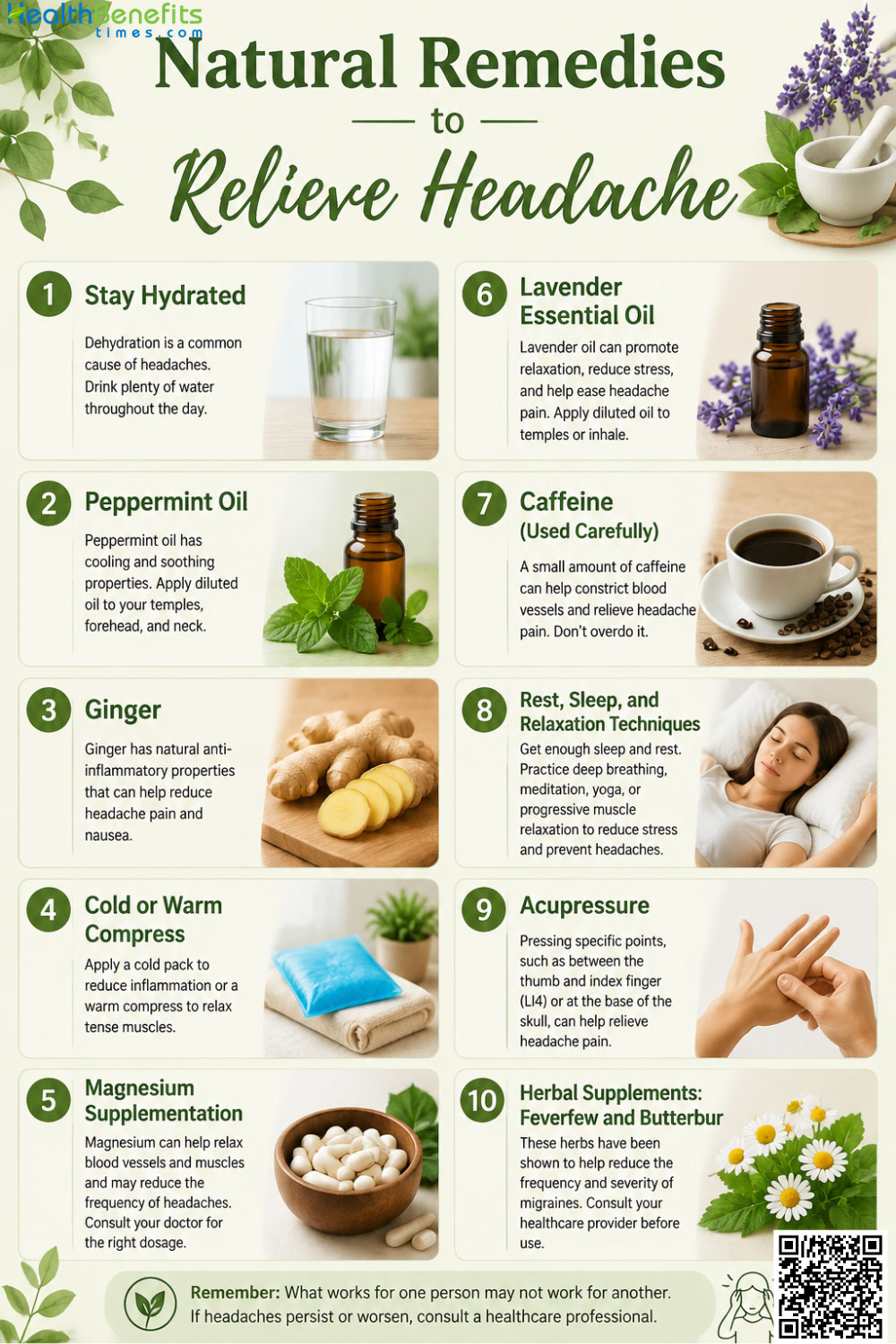
3. Ginger
Ginger has been used in traditional medicine for thousands of years to treat pain and nausea. Its active compounds, gingerols and shogaols have potent anti-inflammatory properties that can help ease headache pain, especially migraines. 16
A randomized clinical trial found that ginger powder was as effective as sumatriptan (a common migraine drug) in reducing migraine severity and duration, with fewer side effects. 17
You can brew fresh ginger tea by simmering a few slices of fresh ginger in water for 10 minutes, then straining and sipping slowly. Adding honey or lemon can make it more palatable.
Note: Ginger is consumed as a tea, chewed raw, or taken as a supplement capsule. Fresh ginger tea is the most commonly used form for headache relief.
4. Cold or Warm Compress
Temperature therapy is a simple, drug-free way to ease headache pain. Cold compresses numb the pain and reduce inflammation, which is especially helpful for migraines. Warm compresses relax tense muscles, making them better for tension headaches. 18
For migraines, applying an ice pack wrapped in a cloth to the forehead or back of the neck for 15–20 minutes has been shown to reduce headache pain. 19
You should apply a cold compress to your forehead or temples for migraines. For tension headaches caused by neck stiffness, use a warm towel on the back of your neck or your shoulders. Always wrap ice in cloth to prevent frostbite.
Note: Cold compresses are applied to the forehead or neck for 15–20 minutes. Warm packs can be applied to the neck and shoulders for muscle relaxation.
5. Magnesium Supplementation
Magnesium is an essential mineral involved in nerve transmission and blood pressure regulation. Low magnesium levels are strongly linked to migraines, particularly menstrual migraines. 20
The American Migraine Foundation recommends magnesium supplementation as a safe and effective preventive treatment for migraines, especially for those who experience them frequently. 21
You can increase your magnesium intake through food sources such as spinach, almonds, avocados, black beans, and pumpkin seeds. Magnesium supplements are also available, though you should consult a doctor before starting them.
Note: Magnesium is consumed through magnesium-rich foods or as an oral supplement (typically magnesium citrate or glycinate). Always check with a healthcare provider for the appropriate dose.
6. Lavender Essential Oil
Lavender oil is widely recognized for its calming and pain-relieving properties. Inhaling lavender aroma has been studied as a safe, effective option for migraine management. 22
A clinical study published in the European Neurology journal found that patients who inhaled lavender oil during a migraine attack reported significantly greater headache reduction compared to those who inhaled a placebo. 23
You can inhale lavender oil by adding 2–4 drops to a bowl of hot water and breathing in the steam, or by dabbing a diluted drop on your temples. A lavender pillow or diffuser in the room is also effective for relaxation.
Note: Lavender oil is most commonly used for aromatherapy, inhaled via steam, a diffuser, or applied topically to the temples after proper dilution with a carrier oil.
7. Caffeine (Used Carefully)
In small amounts, caffeine can actually help relieve headaches. It enhances the pain-relieving effect of medications and can constrict blood vessels, reducing migraine pain. This is why caffeine is an ingredient in many over-the-counter headache medications. 24
However, regular heavy coffee consumption can lead to caffeine-dependent headaches, and sudden withdrawal from caffeine is a well-known trigger. 8
You should limit caffeine intake to one small cup of coffee or tea at the onset of a headache. Avoid using caffeine as a daily headache remedy, as this can create dependency and increase headache frequency over time.
Note: Caffeine is consumed as a beverage, small amounts of coffee, tea, or even dark chocolate to help relieve occasional headaches. Use sparingly.
8. Rest, Sleep, and Relaxation Techniques
Sometimes, the body just needs to rest. Lying down in a quiet, dark room is one of the most effective ways to ride out a migraine. Sleep helps the brain reset and reduces pain signaling. 25
Relaxation techniques such as deep breathing, progressive muscle relaxation, and mindfulness meditation have been shown to reduce both the frequency and intensity of tension headaches. 26
You should find a quiet, dark space to lie down when a headache starts. Practice slow, deep breathing: inhale for 4 counts, hold for 2, exhale for 6. Even 20 minutes of this can significantly reduce headache pain.
Note: Relaxation techniques are practiced through guided breathing, meditation apps, or yoga sessions. These are most effective when practiced regularly as a preventive measure.
9. Acupressure
Acupressure involves applying pressure to specific points on the body to relieve pain and tension. The LI-4 point (located between the thumb and index finger) is one of the most studied pressure points for headache relief. 27
Research indicates that acupressure may effectively reduce the intensity and duration of headaches, and several studies support its use as a complementary therapy alongside conventional treatments. 28
You should firmly press and massage the LI-4 point (the fleshy area between your thumb and index finger) on one hand for 4–5 minutes, then switch to the other hand. Do not use this technique if you are pregnant.
Note: Acupressure is applied using finger pressure on specific body points. It requires no equipment and can be done anywhere as a quick first-aid remedy.
10. Herbal Supplements: Feverfew and Butterbur
Feverfew (Tanacetum parthenium) is an herb with anti-inflammatory properties. It has been used for centuries in European folk medicine to treat headaches. Research supports its use in reducing migraine frequency and severity. 29
Butterbur (Petasites hybridus) is another herbal remedy shown in clinical trials to reduce migraine frequency by up to 48% when taken regularly. However, it is important to use only PA-free (pyrrolizidine alkaloid-free) butterbur supplements, as raw butterbur contains compounds that can harm the liver. 30
Note: Feverfew is taken as a capsule, tablet, or tea made from dried leaves. Butterbur is available as standardized PA-free capsules. Always consult a doctor before starting herbal supplements.
Foods and Activities to Avoid When You Have a Headache
Certain foods, drinks, and habits can make headaches worse or trigger new ones. Here is what to avoid:
- Alcohol (especially red wine and beer): Alcohol dilates blood vessels and dehydrates the body, two mechanisms that trigger headaches. 31
- Processed meats and foods with nitrates: Hot dogs, bacon, and deli meats contain nitrates that can dilate blood vessels and cause headaches.
- Aged cheeses: Tyramine, a naturally occurring compound found in aged cheeses like blue cheese, parmesan, and brie is a well-known migraine trigger.
- MSG (monosodium glutamate): Common in instant noodles, chips, and Chinese takeaway, MSG has been reported to trigger headaches in sensitive individuals.
- Artificial sweeteners (especially aspartame): Found in diet sodas and sugar-free products, aspartame is linked to headache onset in some people. 32
- Skipping meals: Going too long without eating drops blood sugar levels, which is a direct headache trigger.
- Strenuous physical activity: Intense exercise during a headache, especially a migraine, can intensify the pain.
- Bright screens and loud music: During a headache, additional sensory stimulation worsens symptoms.
- Strong perfumes or chemical smells: Odors are a recognized migraine trigger and can worsen existing headaches.
Myths and Misconceptions about Headaches
| Myth | Reality |
| “Headaches are not a real medical problem.” | Headaches are a recognized neurological disorder. Migraines alone are listed in the top 20 of the world’s most disabling illnesses by the WHO. |
| “Drinking more coffee will cure any headache.” | While small amounts of caffeine can help, too much coffee can cause or worsen rebound headaches, especially with regular use. |
| “Only adults get migraines.” | Children and teenagers can and do experience migraines, sometimes beginning as young as age five. |
| “A headache always means something is seriously wrong.” | Most headaches are primary headaches and are not a sign of a dangerous condition. Secondary headaches caused by serious illness are far less common. |
| “All headaches are the same.” | There are over 150 types of headaches. Migraine, tension, and cluster headaches each have distinct features, triggers, and treatments. |
| “Natural remedies don’t work for headaches.” | Multiple peer-reviewed studies have shown that remedies like magnesium, peppermint oil, and ginger are clinically effective for certain types of headaches. |
| “You should rest in bed all day with a headache.” | While rest helps, lying in bed for too long can actually worsen some headaches. Light stretching and hydration are also important. |
Special Considerations
1. Children
Children experience headaches too, though they can present differently than in adults. In young children, a headache may be indicated by irritability, refusal to eat, or sensitivity to light. 33
Natural remedies such as increased hydration, regular sleep routines, and reduced screen time are safe and effective for children. Always consult a pediatrician before giving a child any supplements or herbal products.
2. Pregnancy
Headaches are extremely common in the first trimester due to hormonal shifts. However, many standard headache medications are not safe during pregnancy. 34
Safe options include cold compresses, rest, gentle neck stretches, and staying hydrated. Peppermint oil in aromatherapy (inhaled, not ingested) is generally considered safe. Always consult your obstetrician before using any herbal supplement.
3. Chronic Conditions
People with conditions such as high blood pressure, diabetes, or thyroid disorders may experience headaches as a symptom. Natural remedies can complement their treatment, but these individuals should discuss any new remedy with their healthcare provider to avoid interactions with existing medications.
4. Elderly
New-onset headaches in people over 50 should always be evaluated by a doctor, as they may signal conditions such as temporal arteritis or intracranial lesions. 35
Natural remedies like magnesium and hydration are generally safe, but herbal supplements can interact with blood thinners or other medications common in older adults. Professional guidance is essential.
Precautions before Using Natural Remedies for Headache
Before trying any natural remedy, keep these important points in mind:
- Consult a healthcare provider: Always speak with a doctor or pharmacist before starting herbal supplements, especially if you take prescription medications.
- Check for allergies: Some natural remedies (like feverfew or peppermint) can cause allergic reactions in sensitive individuals. Test with a small amount first.
- Avoid unverified products: Choose herbal supplements that are certified and tested for purity. Look for third-party certifications such as USP or NSF.
- Do not use essential oils undiluted: Never apply essential oils like peppermint or lavender directly to the skin without diluting them in a carrier oil first.
- Pregnancy and breastfeeding: Many herbs and supplements are not safe during pregnancy or while breastfeeding. Always check with your obstetrician first.
- Children require different doses: Adult doses of supplements are not appropriate for children. Always consult a pediatrician.
- Monitor for worsening symptoms: If your headache does not improve after trying natural remedies, or if it gets worse, seek medical attention promptly.
- Natural does not always mean safe: Some herbs interact with medications. For example, feverfew can thin the blood and should not be combined with blood-thinning drugs.
When to See a Doctor
Most headaches resolve on their own or with home treatment. However, certain headache patterns are warning signs that require prompt medical attention:
- Sudden, severe headache (thunderclap headache): A headache that comes on suddenly and reaches peak intensity within a minute can be a sign of a brain aneurysm or stroke — seek emergency care immediately. 36
- Headache with fever, stiff neck, confusion, or rash: These are potential signs of meningitis, a medical emergency. 37
- Headache after a head injury: Any headache following trauma or a blow to the head should be evaluated to rule out concussion or internal bleeding.
- Headaches that are progressively worsening: A headache that steadily increases in severity over days or weeks may indicate a growing pressure problem in the brain.
- New headaches in people over 50: As noted above, new-onset headaches in older adults warrant a medical evaluation to rule out serious causes.
- Headache with vision changes, weakness, or speech difficulty: These neurological symptoms alongside a headache may signal a transient ischaemic attack (TIA) or stroke. Call emergency services immediately. 38
- Chronic headaches not responding to treatment: If you experience headaches 15 or more days per month for three months or longer, you may have chronic migraine and need specialist care. 39
This article is for informational purposes only and does not constitute medical advice. Always consult a qualified healthcare professional for diagnosis and treatment.
Comments
comments