

Causes of Nightmares
1. Stress and Anxiety
High levels of daily stress, significant life changes, or chronic anxiety frequently trigger bad dreams. The brain actively processes emotional distress and difficult experiences during sleep, which often manifests as disturbing dream content 3.
2. Trauma and Post-Traumatic Stress Disorder (PTSD)
Experiencing or witnessing a traumatic event, such as an accident, physical assault, or natural disaster, is a primary trigger for chronic nightmares. In individuals with PTSD, these nightmares are often exceptionally vivid and frequently replay the traumatic event either directly or through symbolic themes 4.
3. Medication Side Effects
Various prescription medications alter brain chemistry and disrupt normal sleep cycles, leading to vivid dreams. Drugs most commonly associated with triggering nightmares include certain antidepressants, blood pressure medications such as beta-blockers, and medications used to treat Parkinson’s disease 5.
4. Substance Use and Withdrawal
Consuming alcohol or recreational drugs close to bedtime can fragment sleep and alter brain activity. Additionally, sudden withdrawal from alcohol, sedatives, or even certain prescription sleep aids often causes a temporary but intense surge in REM sleep, which dramatically increases the likelihood of nightmares 6.
5. Sleep Deprivation and Irregular Schedules
Chronic lack of sleep, frequent travel across time zones, or working irregular night shifts can severely disrupt the body’s natural sleep-wake cycle. When a heavily sleep-deprived person finally sleeps, the brain rapidly attempts to recover lost REM sleep, often resulting in highly intense and frightening dreams 3.
6. Co-occurring Sleep Disorders
Underlying medical conditions that physically interrupt sleep can promote nightmares. For example, obstructive sleep apnea, a condition that causes repeated pauses in breathing and temporary drops in oxygen levels, is strongly linked to an increased frequency of distressful dreams 7.
Symptoms of Nightmares
- Sudden Awakening and Clear Recall: An individual typically wakes up abruptly from sleep and immediately becomes fully alert and oriented. Unlike other sleep disturbances such as night terrors, the person usually has an immediate, clear, and detailed memory of the distressing dream content 8.
- Intense Emotional Distress: The dream experience produces strong negative emotions that persist after waking up. While intense fear or anxiety is the most common reaction, individuals may also feel overwhelming anger, sadness, disgust, or helplessness 9.
- Physical Signs of Panic: Nightmares often trigger a strong physiological response in the autonomic nervous system. During the dream or immediately upon waking, an individual may experience physical symptoms of anxiety, including heavy sweating, shortness of breath, chest pain, and a rapid or irregular heartbeat 10.
- Sleep Resistance and Avoidance: The distress generated by a nightmare frequently causes a lingering fear of falling back asleep. This dread that the bad dream will return often leads to bedtime anxiety, active sleep avoidance, and subsequent insomnia 8.
- Daytime Impairment: When nightmares become a recurring disorder, the resulting sleep disruption causes significant daytime symptoms. These include chronic fatigue, excessive daytime sleepiness, persistent mood disturbances, and impaired concentration or memory that negatively impact work, school, or social functioning 8.
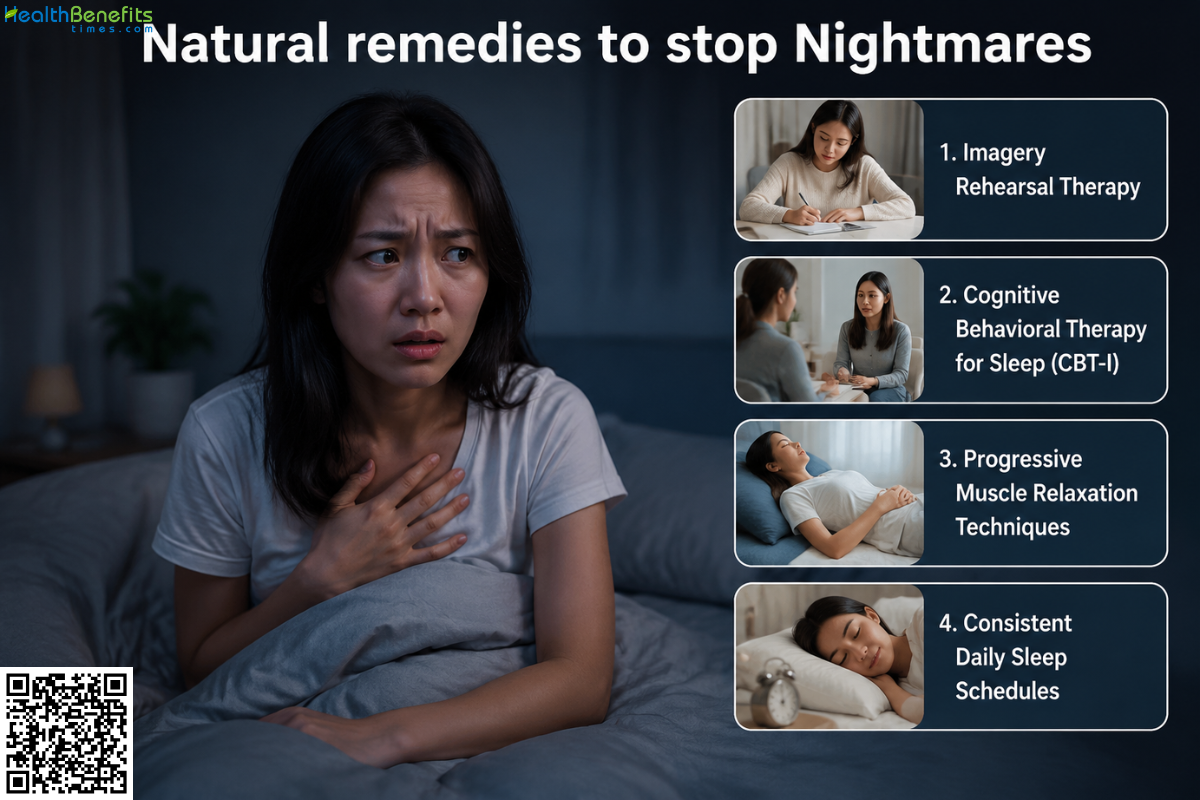
Natural remedies to stop Nightmares
1. Imagery Rehearsal Therapy
How it may help
Imagery Rehearsal Therapy (IRT) helps stop nightmares by retraining the brain’s dream patterns. Individuals recall a recurrent nightmare, rewrite the story to have a positive or neutral ending, and mentally practice this new script while awake. This cognitive restructuring replaces the frightening dream sequence with a safer alternative, reducing nighttime anxiety 4.
What research says
Clinical research demonstrates that IRT effectively reduces the frequency and intensity of nightmares. Studies show it significantly improves sleep quality and decreases daytime distress, particularly for individuals with post-traumatic stress disorder (PTSD) 11. Medical guidelines formally recommend IRT as a first-line psychological treatment for chronic nightmare disorders 3.
How to use it safely
For safe and effective results, you should learn this technique under the guidance of a trained mental health professional. Practice visualizing your newly written, positive dream scenario in a relaxed setting for about 10 to 20 minutes daily, well before your normal bedtime routine 4.
Potential precautions or side effects
Recalling distressing dreams may temporarily increase anxiety or trigger traumatic memories. Individuals with severe PTSD or complex psychiatric conditions should only attempt IRT with professional clinical supervision 3.
2. Cognitive Behavioral Therapy for Sleep (CBT-I)
How it may help
Cognitive Behavioral Therapy for Insomnia (CBT-I) addresses the negative thoughts and behaviors that disrupt rest. By reducing the intense fear of going to bed and minimizing sleep-related anxiety, CBT-I decreases sleep fragmentation. This stabilized and uninterrupted sleep pattern directly reduces the likelihood of experiencing intense nightmares 12.
What research says
Clinical evidence shows that CBT-I significantly improves overall sleep quality and indirectly reduces the frequency of bad dreams. Studies conclude that when patients manage their insomnia symptoms and maintain structured sleep schedules, both the occurrence and the emotional distress of nightmares substantially decrease 4.
How to use it safely
You should participate in CBT-I under the strict guidance of a licensed therapist or a certified sleep medicine provider. To achieve safe results, carefully follow your provider’s instructions regarding consistent waking times and relaxation techniques to gradually rebuild a healthy sleep routine 13.
Potential precautions or side effects
The initial sleep restriction phase of CBT-I often causes temporary daytime sleepiness and fatigue. Individuals with bipolar disorder or a history of seizures require carefully modified treatment plans 14.
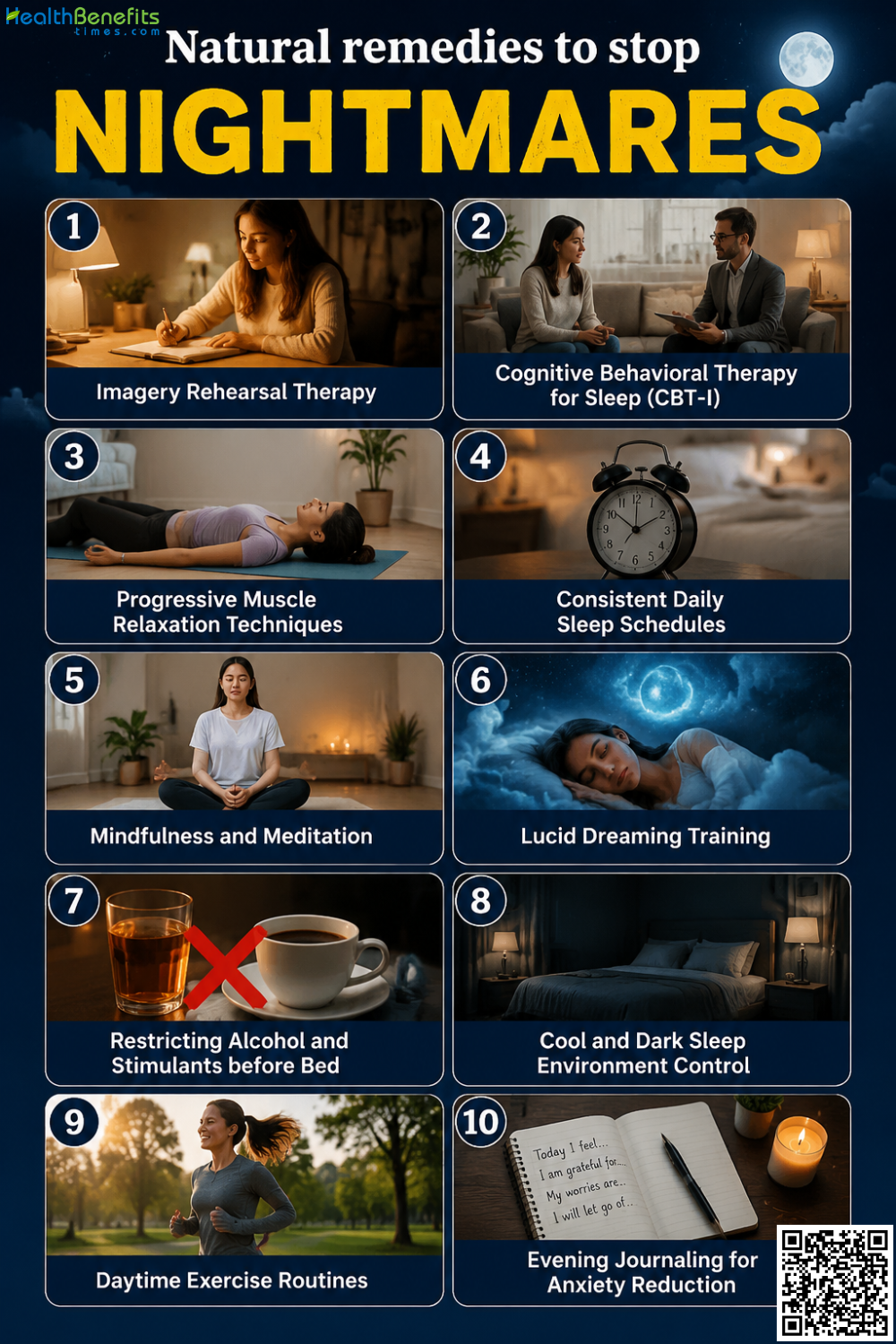
3. Progressive Muscle Relaxation Techniques
How it may help
Progressive muscle relaxation involves systematically tensing and then completely releasing different muscle groups across the body. This process directly lowers physical tension, slows the heart rate, and calms the central nervous system. By reducing physical stress and anxiety before bed, it creates a relaxed state that minimizes nightmare triggers 15.
What research says
Clinical guidelines support relaxation therapies for managing severe sleep disturbances. Research shows that lowering physical and emotional arousal before sleep effectively reduces nightmare frequency. Studies conclude that progressive muscle relaxation significantly improves overall sleep quality and helps prevent the stress-induced awakenings associated with intense bad dreams 4.
How to use it safely
Lie in a comfortable position and focus on slow breathing. Starting at your toes, gently tense the muscles for five seconds, then completely release them. Slowly work your way up through your legs, stomach, arms, and face. You should practice this nightly to build a consistent habit 15.
Potential precautions or side effects
You should avoid tensing any muscles that are currently injured, painful, or severely strained. If focusing intensely on physical sensations causes increased anxiety, stop the exercise and consult a doctor 15.
4. Consistent Daily Sleep Schedules
How it may help
Maintaining a consistent sleep schedule regulates the body’s daily rhythm and prevents sleep deprivation. When a person lacks sleep, the brain later tries to recover by launching into highly active REM sleep, called a REM rebound. Preventing this sudden surge keeps brain activity stable, minimizing the chance of vivid nightmares 16.
What research says
Clinical studies show that irregular sleep habits and sleep loss build up pressure in the brain, forcing it into abnormally intense rapid eye movement (REM) sleep. Research confirms that this sudden increase in REM activity directly triggers more frequent, highly vivid, and emotionally distressing nightmares 16.
How to use it safely
To build this routine safely, you should go to bed and wake up at the exact same times every day, even on weekends. Make sure your schedule allows for seven to nine hours of rest. Shift your bedtime gradually by 15-minute increments to avoid disrupting your sleep cycle 17.
Potential precautions or side effects
Shift workers may find strict schedules difficult. Additionally, obsessing over a perfect bedtime can trigger severe sleep anxiety, which ironically worsens insomnia and increases the risk of nightmares 18.
5. Mindfulness and Meditation
How it may help
Mindfulness and meditation help stop nightmares by calming the central nervous system and reducing daily stress. By focusing on the present moment, these practices lower nighttime mental arousal. This relaxed state makes it much less likely for the brain to generate emotionally charged, distressing dreams during sleep 19.
What research says
Research indicates that mindfulness-based interventions successfully reduce symptoms of severe anxiety and psychological distress, which are primary drivers of nightmares. Clinical evidence shows that regular meditation lowers nervous system arousal and significantly improves overall sleep quality, helping to prevent stress-induced bad dreams 20.
How to use it safely
To practice safely, you should set aside 10 to 15 minutes before bedtime in a quiet, comfortable environment. Close your eyes and focus entirely on your natural breathing pattern. Whenever your mind wanders, gently guide your focus back to your breath without any frustration 20.
Potential precautions or side effects
Meditation is generally safe. However, sitting quietly with your thoughts may sometimes temporarily increase anxiety or trigger intrusive memories, which can initially worsen sleep distress 21.
6. Lucid Dreaming Training
How it may help
Lucid dreaming training teaches individuals to consciously recognize when they are in a dream. Gaining this awareness during a nightmare allows a person to actively change the dream’s frightening storyline, confront the perceived threat, or intentionally wake up, thereby eliminating feelings of helplessness 2.
What research says
Clinical reviews show that lucid dreaming therapy effectively minimizes the frequency, intensity, and emotional distress of recurrent bad dreams. Studies indicate that gaining control over dream content provides significant therapeutic relief, especially for individuals with post-traumatic stress disorder, by transforming terrifying nightmares into manageable experiences 22.
How to use it safely
You should practice daytime reality checks to build self-awareness. Keep a dream journal to identify your specific nightmare triggers. Before sleeping, mentally rehearse recognizing these triggers and visualize yourself successfully altering the frightening dream into a positive or neutral scenario 2.
Potential precautions or side effects
Failed attempts to control a lucid nightmare can cause severe distress. Additionally, the induction training may temporarily disrupt sleep patterns or trigger sleep paralysis in some individuals 23.
7. Restricting Alcohol and Stimulants before Bed
How it may help
Restricting alcohol and stimulants stops nightmares by preventing chemical disruptions in the sleep cycle. As alcohol wears off during the night, the brain overcompensates with highly intense rapid eye movement (REM) sleep. Avoiding these substances stabilizes brain activity, preventing the hyperactive dream states that cause severe nightmares 6.
What research says
Clinical studies confirm that consuming alcohol before sleep fragments rest and directly triggers vivid, distressing dreams. Furthermore, research shows that stimulants like caffeine increase nervous system arousal, which significantly raises nighttime anxiety and the physiological tension linked to frequent nightmares 6.
How to use it safely
You should eliminate caffeine consumption, including coffee and energy drinks, at least six hours before going to bed. Additionally, stop drinking any alcoholic beverages three to four hours before sleep to ensure the alcohol is fully metabolized before your rest begins 24.
Potential precautions or side effects
Suddenly stopping heavy alcohol or caffeine use can cause temporary withdrawal symptoms, including headaches, severe irritability, and a short-term increase in vivid nightmares and sleep disruption 6.
8. Cool and Dark Sleep Environment Control
How it may help
A cool and dark sleep environment helps stop nightmares by stabilizing the body’s natural sleep cycle. Lowering the room temperature allows the core body temperature to drop, which is necessary for uninterrupted rest. Darkness promotes melatonin production, preventing the frequent awakenings and sleep fragmentation that trigger distressing dreams 25.
What research says
Research shows that high ambient temperatures increase physiological arousal and disrupt rapid eye movement (REM) sleep, leading to frequent awakenings and vivid nightmare recall. Clinical studies confirm that minimizing light and keeping the room cool directly decreases nocturnal stress, reducing the likelihood of experiencing severe sleep disturbances 25.
How to use it safely
You should set your bedroom temperature between 60 and 67 degrees Fahrenheit (15 to 19 degrees Celsius). Use blackout curtains or a sleep mask to block external light. Remove electronic screens, as their blue light severely disrupts the hormones needed for stable, nightmare-free rest 26.
Potential precautions or side effects
Setting the room too cold causes shivering, which disrupts sleep. If you have poor circulation or arthritis, prioritize your physical comfort over strict temperature guidelines to prevent joint pain 25.
9. Daytime Exercise Routines
How it may help
Daytime exercise helps stop nightmares by naturally lowering daily stress and anxiety, which are primary psychological triggers for distressing dreams. Physical activity also promotes deeper, more restorative non-REM sleep early in the night. This leaves less time and mental arousal for the intense REM sleep where bad dreams occur 27.
What research says
Clinical research demonstrates that regular moderate physical activity effectively improves overall sleep quality and decreases anxiety. Systematic reviews conclude that consistent exercise stabilizes sleep architecture and minimizes the frequent awakenings that cause individuals to vividly remember bad dreams, thereby significantly reducing the clinical impact of nightmare disorders 28.
How to use it safely
You should aim for at least thirty minutes of moderate aerobic activity, such as brisk walking, cycling, or swimming, most days of the week. Build this routine gradually to avoid physical injury. Always ensure you complete any rigorous workouts at least two hours before your bedtime 24.
Potential precautions or side effects
Exercising vigorously right before bed raises your core body temperature and heart rate. This sudden physical stimulation can disrupt your natural sleep cycle and trigger more nightmares 29.
10. Evening Journaling for Anxiety Reduction
How it may help
Evening journaling helps stop nightmares by allowing individuals to transfer stressful thoughts from their minds onto paper. This cognitive offloading lowers mental arousal. By actively processing daytime worries while awake, the brain has less emotional distress to resolve during sleep, preventing the intense anxiety that fuels bad dreams 30.
What research says
Clinical research demonstrates that expressive writing effectively reduces bedtime anxiety. Studies confirm that patients who spend five minutes writing a specific to-do list or journaling about their emotions experience significantly fewer stress-induced sleep disruptions and nightmares compared to those who do not write before bed 31.
How to use it safely
You should set aside five to ten minutes to journal about one to two hours before your bedtime. Write down your lingering worries, followed by a brief list of tasks or practical solutions for tomorrow to help your mind fully detach from the day’s stress 4.
Potential precautions or side effects
Obsessively writing about deep trauma right before sleep can increase panic and actively trigger nightmares. If journaling makes you feel more upset, immediately stop this practice before bed 31.
Foods to Avoid When You Suffer from Nightmares
1. Alcoholic Beverages
Consuming alcohol fragments sleep and causes a sudden REM rebound as it metabolizes, which directly triggers intense, frightening dreams and increases nightmare frequency 6.
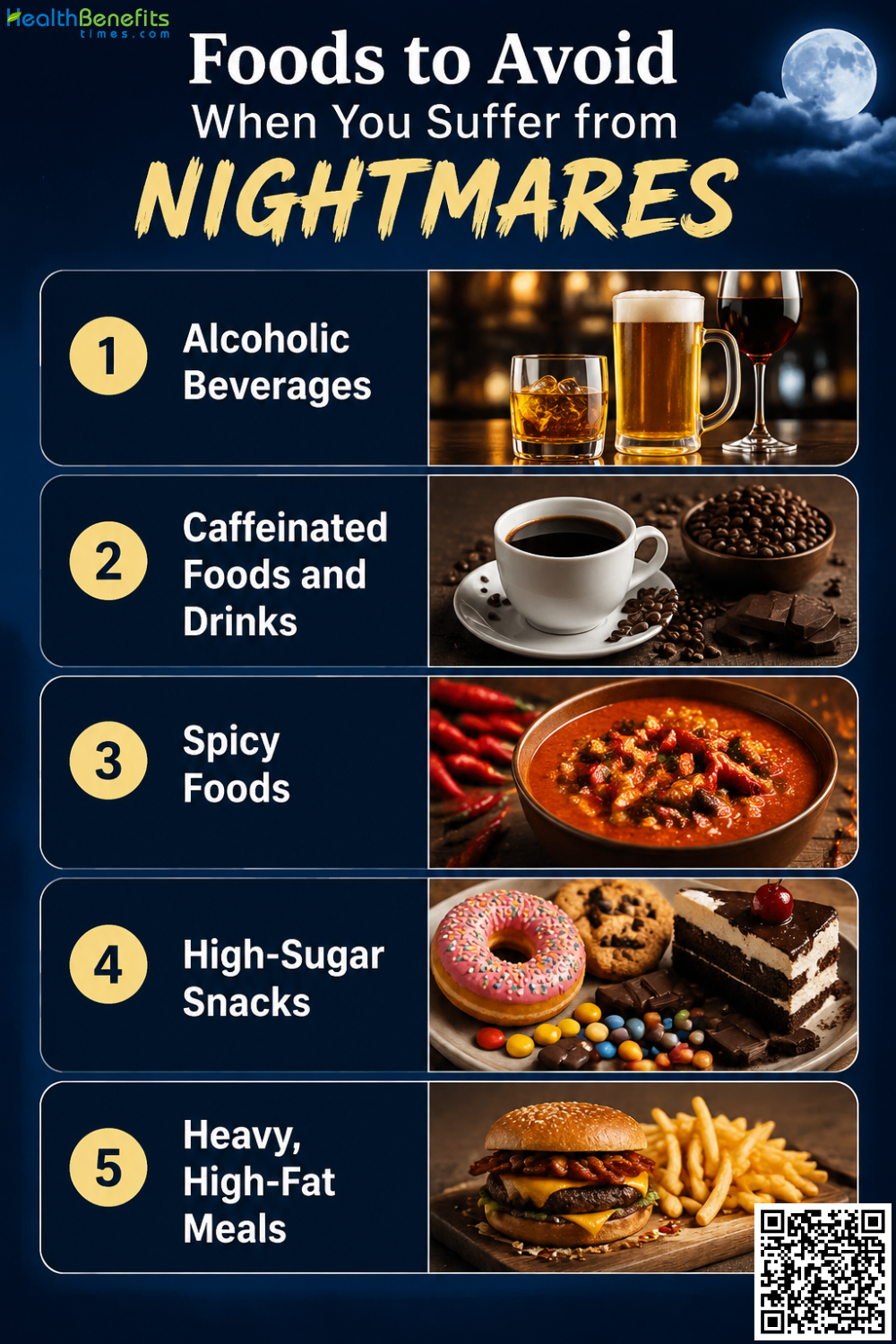
2. Caffeinated Foods and Drinks
Caffeine in coffee, tea, and chocolate increases central nervous system arousal, preventing deep sleep and raising the nighttime anxiety that fuels bad dreams 32.
3. Spicy Foods
Spicy meals elevate core body temperature and cause indigestion. This physical stress disrupts natural sleep cycles and increases the likelihood of vivid, disturbing dreams 25.
4. High-Sugar Snacks
Eating sweet foods right before bed spikes blood glucose levels and accelerates brain activity, which provokes highly active dream states and nightmares 33.
5. Heavy, High-Fat Meals
Large, fatty meals digest slowly, causing acid reflux. This gastrointestinal irritation interrupts stable sleep phases, forcing the brain into active, stress-induced dreaming 34.
When to See a Doctor When You Struggle from Nightmares
1. Frequent Occurrence
You should seek medical evaluation if bad dreams happen more than once a week, preventing restful sleep and indicating a potential clinical nightmare disorder 4.
2. Severe Daytime Impairment
Consult a doctor if sleep disruptions cause excessive daytime fatigue, memory problems, or persistent mood changes that negatively affect your work or social life 3.
3. Active Sleep Avoidance
Professional help is necessary when the intense fear of having another nightmare causes you to actively delay or avoid going to bed, triggering chronic insomnia 8.
4. Physical Acting Out
Immediate medical attention is required if you violently thrash, punch, or shout during a nightmare, as this indicates a more complex neurological sleep condition 35.
5. Recent Trauma or New Medications
See a physician if severe nightmares start immediately after surviving a traumatic event or shortly after beginning a new daily prescription medication 5.
Comments
comments