

Causes of Nasal Polyps
- Asthma: Chronic inflammation of the lower airways often extends upward into the nasal passages and sinuses, creating a swollen environment that significantly increases the likelihood of polyp formation 1.
- Aspirin Sensitivity: A specific abnormal immune reaction to aspirin and other non-steroidal anti-inflammatory drugs (NSAIDs) frequently triggers severe tissue swelling and the rapid, recurrent growth of nasal polyps 1.
- Cystic Fibrosis: This genetic disorder causes the body to produce unusually thick and sticky mucus that prevents proper sinus drainage, leading to chronic sinus infections and subsequent polyp development, particularly in children and young adults 3.
- Allergic Fungal Sinusitis: An overly aggressive immune system response to common airborne fungi or mold spores creates intense, persistent sinus inflammation that directly drives the physical formation of polyps 1.
- Eosinophilic Granulomatosis with Polyangiitis: Formerly known as Churg-Strauss syndrome, this rare autoimmune condition causes inflammation in the blood vessels and overproduction of specific white blood cells, heavily contributing to persistent sinus swelling and polyp tissue growth 1.
Symptoms of Nasal Polyps
- Persistent Nasal Congestion: The physical presence of polyps partially or completely blocks the nasal passages, creating a constant feeling of a stuffed or blocked nose that does not clear up with standard over-the-counter cold medications 1.
- Decreased Sense of Smell and Taste: As the growths expand, they physically prevent air and odor molecules from reaching the specialized olfactory nerves at the top of the nasal cavity, which heavily dulls or completely eliminates the ability to smell and taste 1.
- Runny Nose and Postnasal Drip: The chronically inflamed sinus tissue continuously produces excess mucus, resulting in a persistently runny nose or a highly irritating sensation of thick fluid constantly dripping down the back of the throat 1.
- Facial Pressure and Pain: When polyps grow large enough to block the natural drainage pathways of the sinuses, trapped mucus builds up and creates a heavy, aching pressure around the forehead, eyes, and cheekbones 4.
- Snoring and Sleep Disruption: Because the internal nasal obstruction severely restricts normal airflow, affected individuals are often forced to breathe entirely through their mouths while sleeping, which frequently triggers loud snoring and significantly disrupts overall sleep quality 1.
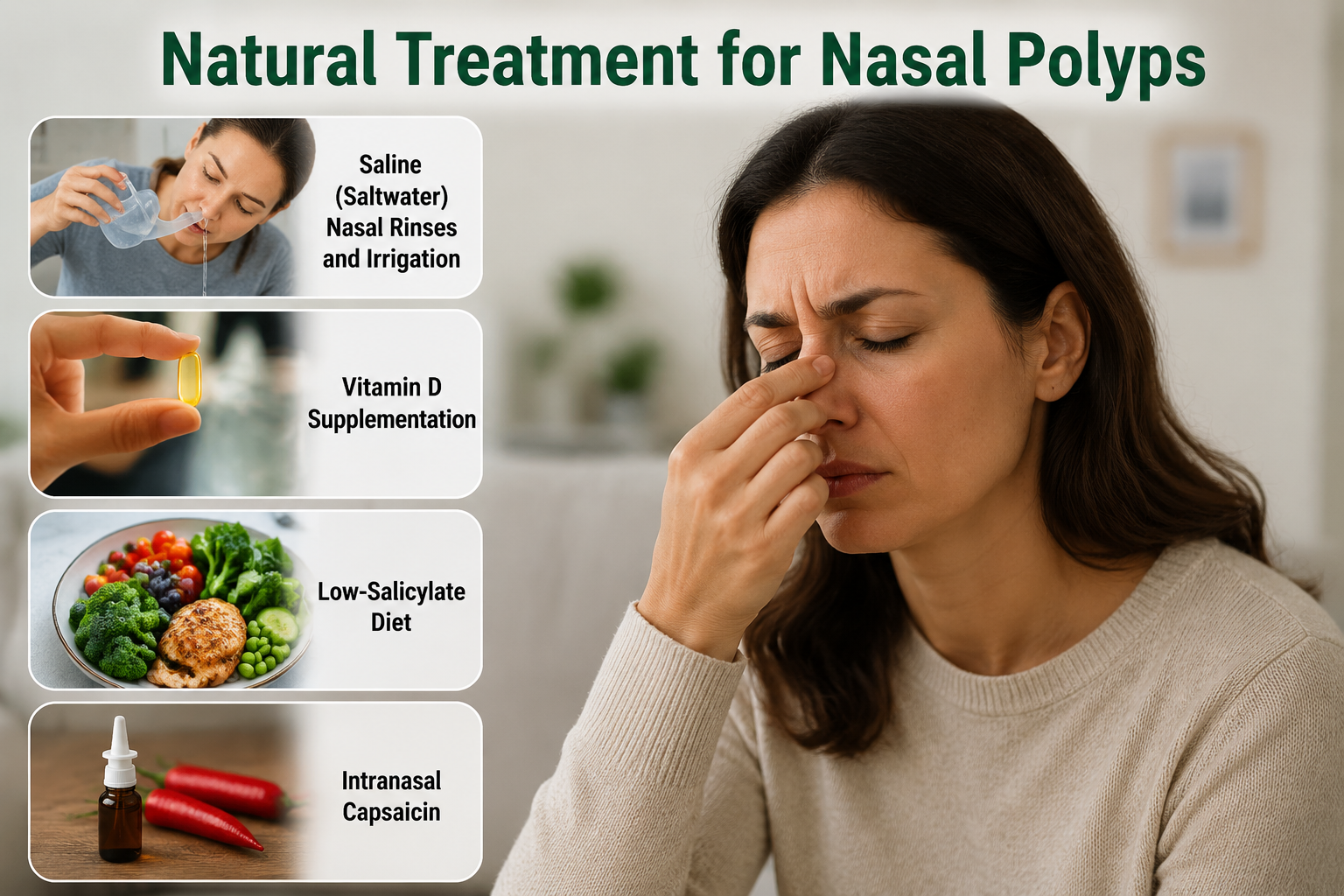
Natural Treatment for Nasal Polyps
1. Saline (Saltwater) Nasal Rinses and Irrigation
How it may help
Saline nasal irrigation physically flushes out trapped mucus, airborne allergens, and inflammatory debris that contribute to polyp growth. By actively rinsing the nasal cavity, it keeps the tissue moist, thins thick mucus, and reduces internal swelling, making it much easier to breathe through the nose 5.
What research says
Clinical evidence demonstrates that regular, large-volume saltwater rinses significantly reduce the severity of sinus symptoms and improve overall quality of life for individuals with nasal polyps 6. Furthermore, research concludes that saline irrigation successfully clears the nasal passages to make prescription steroid sprays much more effective 5.
How to use it safely
To avoid serious infections, you must only use distilled, sterile, or tap water that has been boiled for three minutes and cooled 7. Thoroughly clean your rinse bottle or neti pot with safe water and soap after each use, leaving it open to completely air dry 8.
Potential precautions or side effects
Side effects are generally minimal but can include mild nasal burning, temporary irritation, or a feeling of fullness in the ears if the fluid drains improperly 5.
2. Vitamin D Supplementation
How it may help
Vitamin D functions as a natural regulator for the immune system, helping to calm the overactive immune responses that drive chronic sinus swelling. By decreasing this constant tissue inflammation, adequate vitamin D levels may restrict the rapid cell growth responsible for forming and enlarging nasal polyps 9.
What research says
Research confirms that individuals with severe nasal polyps frequently have significantly lower blood levels of vitamin D than healthy adults 10. Clinical studies conclude that correcting this deficiency with supplements directly reduces the physical size of the growths and improves overall sinus symptoms 11.
How to use it safely
You should ask a healthcare provider for a simple blood test to check your current vitamin D levels before starting supplements. Based on the exact deficiency, your doctor will recommend a safe daily dose, as individual nutritional requirements vary widely 12.
Potential precautions or side effects
Consuming dangerously high amounts of vitamin D causes toxic calcium buildup in the blood, which can trigger severe nausea, muscle weakness, and long-term kidney damage 12.
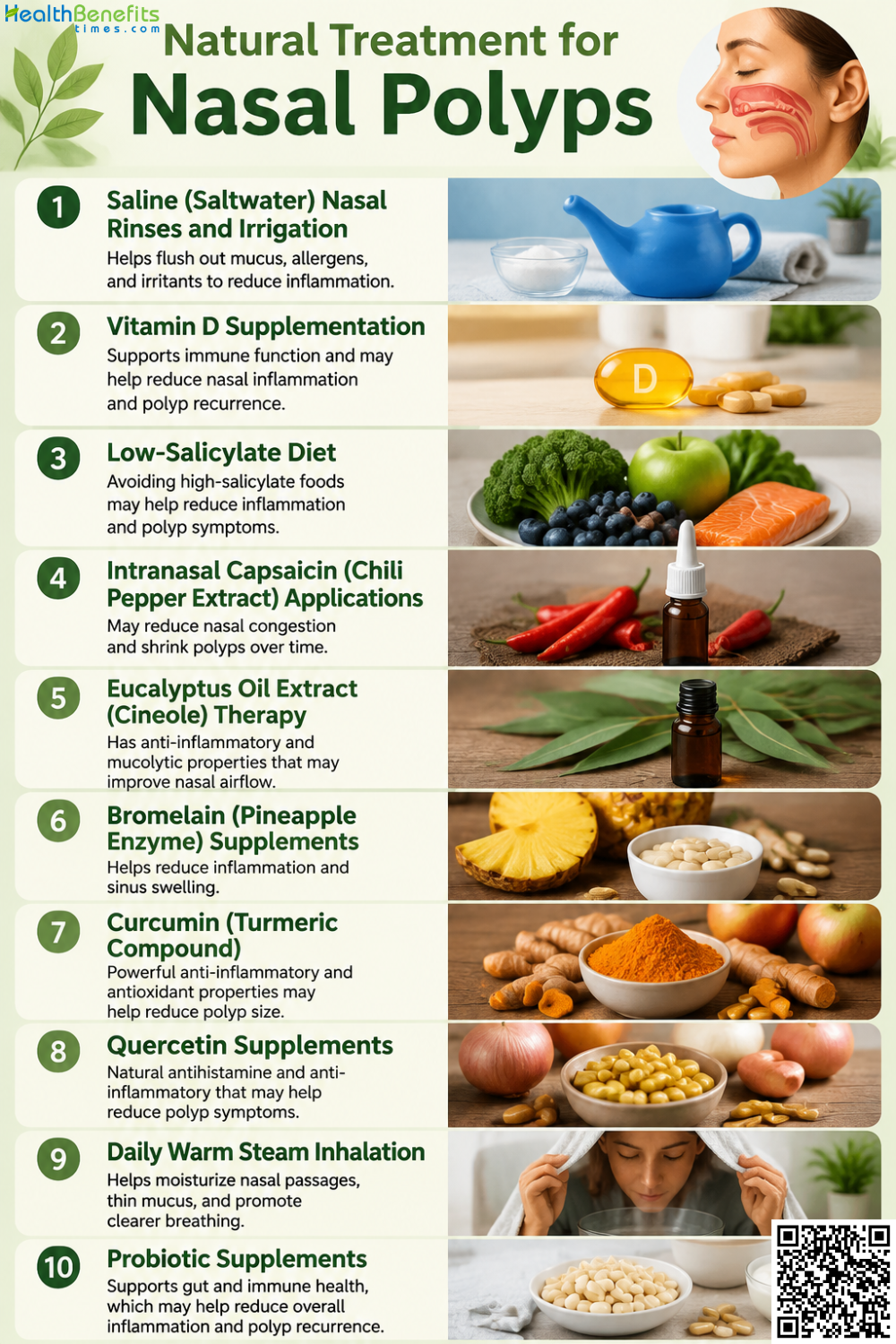
3. Low-Salicylate Diet
How it may help
Salicylates are natural compounds found in many fruits, vegetables, and spices, and they are chemically identical to aspirin. For individuals with aspirin sensitivity, consuming these foods triggers the same immune reaction that causes sinus swelling. Removing these foods prevents this specific inflammatory response, limiting new polyp growth 13.
What research says
Clinical studies confirm that a strictly managed low-salicylate diet significantly reduces nasal congestion and sinus pressure in patients diagnosed with aspirin-exacerbated respiratory disease 13. Furthermore, research concludes that this dietary intervention successfully slows the regrowth of nasal polyps following surgical removal 14.
How to use it safely
You should consult a registered dietitian before starting this regimen, as salicylates exist in many healthy foods. A professional will help you correctly identify and eliminate triggers, such as most berries and spices, while ensuring your daily nutritional needs are fully met 13.
Potential precautions or side effects
Highly restrictive diets can easily lead to serious vitamin and mineral deficiencies over time if you do not actively replace the eliminated fruits and vegetables with safe, low-salicylate alternatives 13.
4. Intranasal Capsaicin (Chili Pepper Extract) Applications
How it may help
Capsaicin, the active compound found in chili peppers, targets and desensitizes the specific nerve endings inside the nasal passages that regulate fluid production and blood vessel swelling. By calming these overactive nerves, capsaicin applications significantly reduce chronic congestion, sneezing, and localized tissue irritation associated with nasal polyps 15.
What research says
Clinical studies conclude that regular, controlled application of intranasal capsaicin provides substantial relief from persistent non-allergic nasal symptoms and improves airflow 15. Furthermore, research demonstrates that this treatment effectively reduces severe nasal hypersensitivity without causing long-term damage to the delicate internal lining of the nose 16.
How to use it safely
You must only use medically formulated and diluted nasal sprays containing capsaicin under a doctor’s direct supervision 15. Never attempt to apply raw chili extracts or kitchen preparations into your nose, as they will cause severe chemical burns and permanent tissue damage 16.
Potential precautions or side effects
Initial applications commonly trigger intense temporary burning, severe stinging, and excessive sneezing until the nasal nerves become fully desensitized 15.
5. Eucalyptus Oil Extract (Cineole) Therapy
How it may help
Cineole, the primary active compound found in eucalyptus oil, acts as a powerful natural anti-inflammatory agent. By targeting the cellular pathways responsible for swelling, cineole helps shrink inflamed nasal tissues, thins trapped mucus, and opens up blocked sinus passages to improve breathing 17.
What research says
Clinical studies conclude that cineole treatment significantly reduces the frequency of acute sinus flare-ups and decreases overall nasal congestion in patients with chronic respiratory conditions 17. Furthermore, research demonstrates that its anti-inflammatory action helps maintain long-term sinus health and clear airflow 18.
How to use it safely
You should only use standardized, enteric-coated cineole capsules orally as directed by a manufacturer or doctor 17. Never apply pure, undiluted eucalyptus essential oil directly inside your nose, as it will cause severe chemical irritation and burns 19.
Potential precautions or side effects
Unfiltered or concentrated oils can trigger intense burning, severe allergic skin reactions, or upper stomach discomfort if swallowed improperly 19.
6. Bromelain (Pineapple Enzyme) Supplements
How it may help
Bromelain is a group of protein-digesting enzymes extracted from pineapples that possesses strong natural anti-inflammatory and swelling-reduction properties. By breaking down inflammatory proteins in the body, bromelain helps decrease internal nasal swelling, thins out thick mucus secretions, and eases sinus blockage 20.
What research says
Clinical studies conclude that bromelain supplementation significantly relieves breathing difficulties and reduces tissue swelling in patients suffering from chronic sinusitis and nasal polyps 20. Furthermore, research demonstrates that these enzymes enhance the effectiveness of standard medical treatments when used alongside them 21.
How to use it safely
You should take standardized bromelain supplements orally between meals to ensure maximum systemic absorption, following the specific dosage instructions provided by a healthcare professional 22. Always select products from reputable manufacturers to guarantee proper enzyme potency and safety 21.
Potential precautions or side effects
Bromelain can cause mild stomach upset, diarrhea, and increased bleeding risks if combined with blood-thinning medications 22.
7. Curcumin (Turmeric Compound)
How it may help
Curcumin, the primary active compound found in turmeric, possesses powerful anti-inflammatory and antioxidant properties. By blocking specific cellular signals that drive chronic inflammation, curcumin helps reduce the swelling of nasal tissues and minimizes the growth of polyps inside the sinus passages 23.
What research says
Clinical studies conclude that curcumin significantly decreases airway inflammation and improves clinical symptoms in patients suffering from chronic respiratory conditions 23. Furthermore, research demonstrates that its targeted anti-inflammatory action helps prevent tissue remodeling and reduces the overall severity of nasal blockage 24.
How to use it safely
You should take standardized curcumin supplements orally with food, ideally alongside black pepper extract to enhance absorption 25. Always consult a healthcare provider to determine the correct daily dosage suitable for your individual health needs 23.
Potential precautions or side effects
High doses can cause mild stomach upset, nausea, or an increased risk of bleeding when combined with blood-thinning medications 25.
8. Quercetin Supplements
How it may help
Quercetin is a natural plant pigment found in many fruits and vegetables that acts as a powerful antioxidant and antihistamine. By stabilizing immune cells and preventing them from releasing inflammatory chemicals, quercetin helps reduce the chronic tissue swelling that leads to the formation and growth of nasal polyps 26.
What research says
Clinical studies conclude that quercetin successfully lowers airway inflammation and alleviates nasal allergy symptoms by suppressing specific immune pathways 26. Furthermore, research demonstrates that its antioxidant activity protects delicate sinus tissues from ongoing cellular damage caused by chronic irritation 27.
How to use it safely
You should take oral quercetin supplements according to the specific dosage recommendations provided by a qualified healthcare professional 26. Always choose products from trusted manufacturers to ensure proper potency and purity 22.
Potential precautions or side effects
High doses can occasionally cause mild headaches, stomach upset, or tingling sensations, and may interact with certain prescription medications 26.
9. Daily Warm Steam Inhalation
How it may help
Inhaling warm steam provides immediate moisture to the nasal passages. This gentle heat helps loosen and thin out the trapped, thick mucus associated with nasal polyps, allowing for better sinus drainage. By physically hydrating irritated tissues, daily steam therapy temporarily reduces uncomfortable facial pressure and improves overall nasal airflow 28.
What research says
Clinical studies indicate that while heated steam inhalation does not physically shrink nasal polyps, it serves as a supportive therapy to temporarily clear secretions and reduce feelings of congestion 29. However, extensive research concludes that it strictly offers subjective symptom relief rather than curing the underlying inflammatory disease 30.
How to use it safely
To minimize risks, you should carefully pour boiled water into a heavy, stable bowl placed securely on a flat table. Sit comfortably, drape a towel over your head, and keep your face a safe distance from the water to gently inhale the vapor 31.
Potential precautions or side effects
The primary danger is severe facial burns or accidental scalding from spilled boiling water. You must never inhale steam directly from a boiling pot on an active stove 31.
10. Probiotic Supplements
How it may help
Probiotics introduce beneficial bacteria into the digestive tract, which helps modulate the body’s overall immune response and reduce systemic inflammation. By supporting a healthy balance of immune cells, probiotics help suppress the chronic allergic and inflammatory reactions that drive the formation and growth of nasal polyps 32.
What research says
Clinical studies conclude that targeted probiotic supplementation significantly reduces the severity of nasal allergy symptoms and improves overall quality of life for patients with chronic sinus conditions 32. Furthermore, research demonstrates that specific bacterial strains help decrease upper airway inflammation 33.
How to use it safely
You should choose high-quality probiotic supplements containing clinically studied bacterial strains and follow the manufacturer’s recommended daily dosage 22. Always consult a healthcare professional before starting any new supplement, particularly if you have an underlying immune system disorder 32.
Potential precautions or side effects
Side effects are generally mild and may include temporary gas, bloating, or digestive discomfort when first starting the supplements 22.
Foods to Avoid When You suffer from Nasal Polyps
1. High-Salicylate Foods
Foods naturally rich in salicylates, such as berries, citrus fruits, and certain spices, can trigger severe immune reactions and worsen sinus inflammation in sensitive individuals 13.
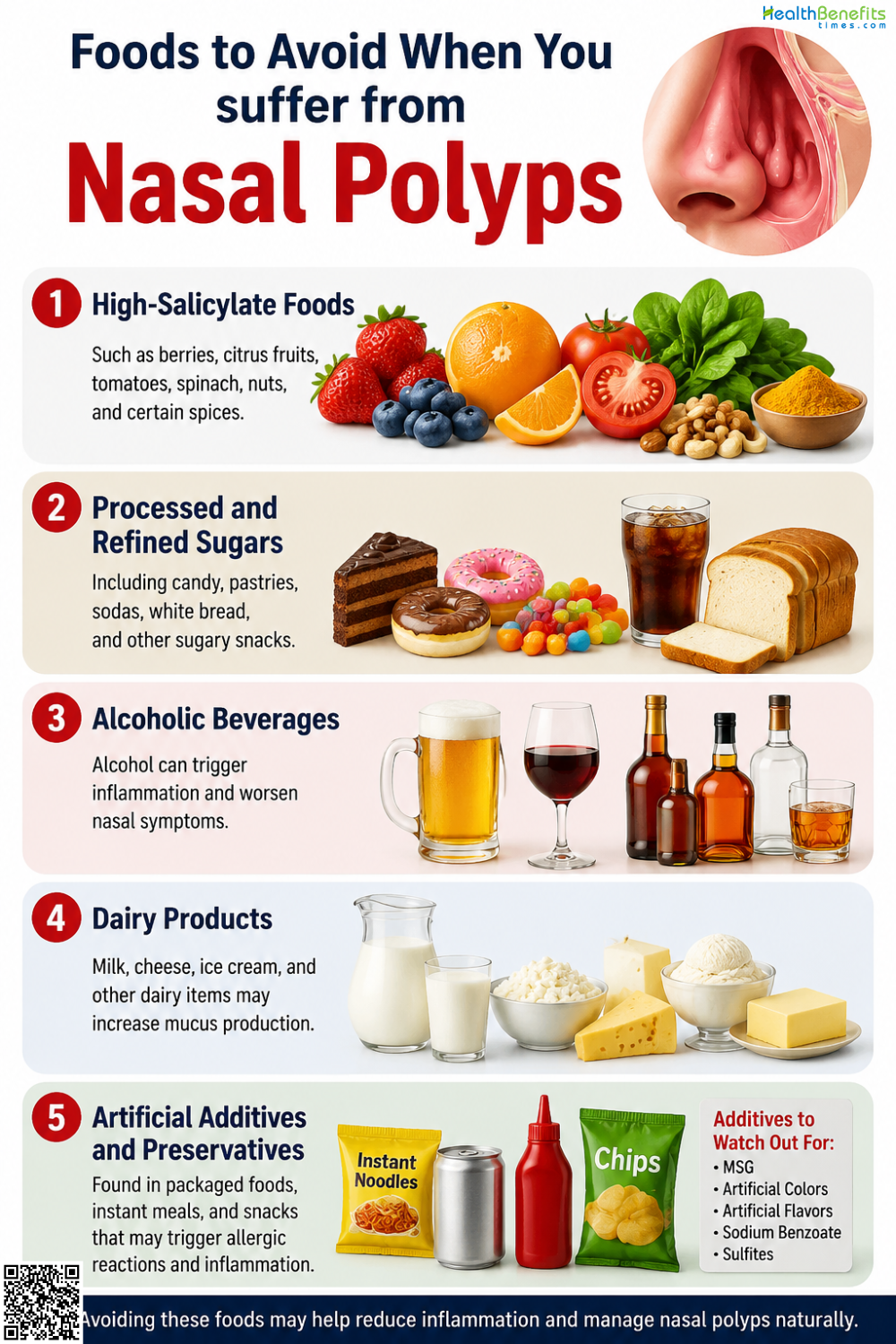
2. Processed and Refined Sugars
Excess dietary sugar intake promotes systemic inflammation throughout the body, which can amplify chronic tissue swelling and aggravate existing nasal polyp symptoms 34.
3. Alcoholic Beverages
Alcohol, particularly wine and beer, contains histamines and sulfites that frequently cause blood vessels in the nasal passages to dilate and trigger severe congestion 35.
4. Dairy Products
For individuals with underlying food sensitivities, conventional dairy can increase mucus production and thicken secretions, leading to worsened sinus blockage and discomfort 36.
5. Artificial Additives and Preservatives
Chemical food colorings and synthetic preservatives can act as inflammatory triggers, stimulating adverse respiratory reactions that complicate chronic sinus conditions 37.
When to see Doctor when you struggle from Nasal Polyps
1. Persistent Breathing Obstruction
You should consult a physician if nasal congestion lasts longer than ten days and fails to improve with standard over-the-counter allergy or cold treatments 2.
2. Severe Vision Changes
Seek immediate medical attention if you experience double vision, reduced sight, or swelling around your eyes, as this indicates potential polyp expansion into eye orbits 2.
3. Worsening Facial Pain
Schedule an appointment if you develop intense, unremitting headaches or severe facial pain accompanied by a high fever and thick colored nasal discharge 2.
4. Sudden Breathing Difficulties
Get urgent medical evaluation if you experience extreme shortness of breath or a sudden worsening of asthma symptoms linked to your nasal blockage 2.
Comments
comments