

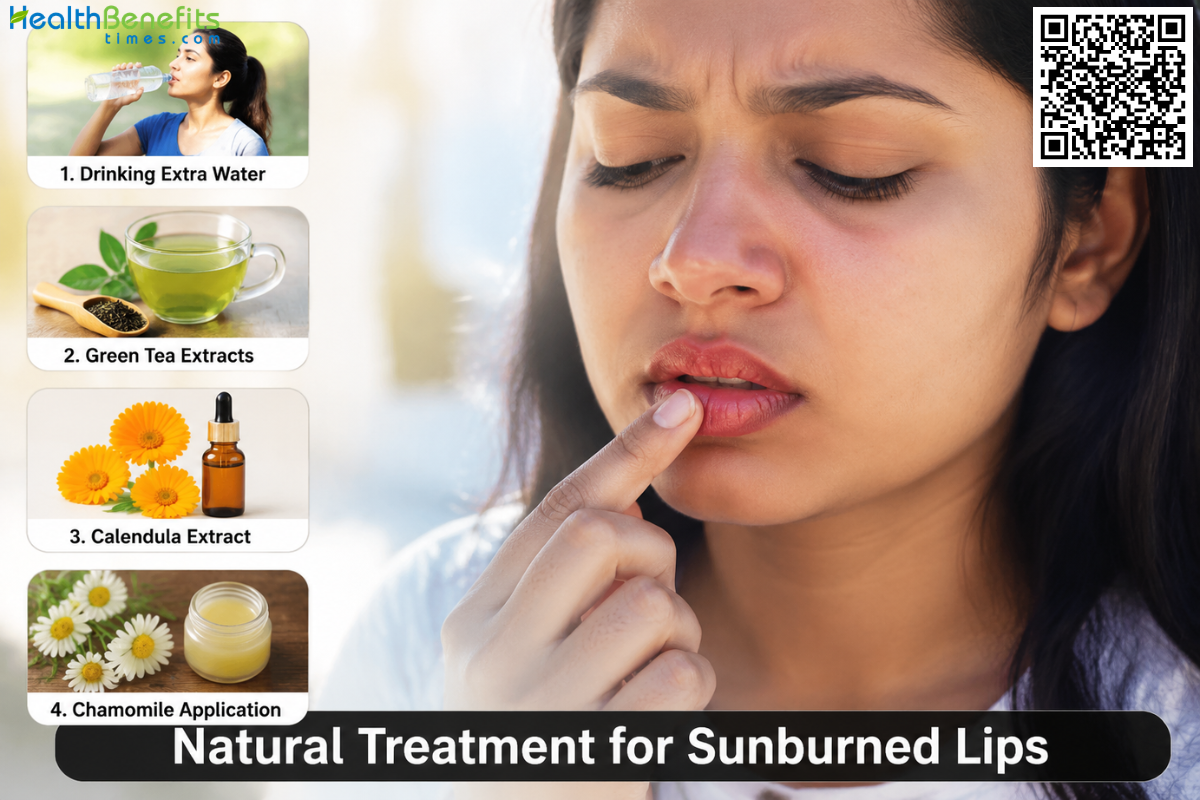
Causes of Sunburned Lips
1. Low Melanin and Thin Skin Structure
The lips feature a very thin outer layer and produce minimal melanin, the natural skin pigment responsible for absorbing and blocking ultraviolet (UV) radiation. Because they lack this biological defense, the lips are inherently vulnerable to cellular damage and can burn much faster than the rest of the face during direct sun exposure 4.
2. Unprotected Sun Exposure
Spending prolonged time outdoors without applying a dedicated broad-spectrum lip screen is a primary cause of lip burns. To prevent UV damage, it is necessary to use a lip product with a Sun Protection Factor (SPF) of 15 or higher. Failing to use SPF, or forgetting to reapply it after sweating, swimming, or eating, leaves the delicate lip tissue completely exposed to both UVA and UVB rays 5.
3. Environmental UV Reflection
Surroundings such as snow, sand, and water significantly amplify UV exposure by reflecting the sun’s rays back toward the body. Clean snow can reflect up to 80% of sunburning UV radiation, while sea foam and beach sand reflect between 15% and 25%, meaning the lips receive intense radiation from both the sky above and the ground below 6.
4. Photosensitizing Medications
Taking certain medications can cause phototoxicity, a chemical reaction that makes the body unusually sensitive to light. Common medications that increase sun sensitivity include specific antibiotics (such as tetracyclines), non-steroidal anti-inflammatory drugs (NSAIDs), diuretics, and acne treatments like retinoids. These drugs can trigger an exaggerated and severe sunburn on the lips even after very minimal time spent in the sun 7.
5. Exposure During Peak Sun Hours
The intensity of solar UV radiation fluctuates throughout the day, peaking when the sun is highest in the sky. Remaining outdoors without shade between the hours of 10:00 a.m. and 4:00 p.m. greatly increases the likelihood of sunburned lips, as the sun’s rays take a more direct path to Earth and deliver their highest and most damaging dose of radiation 5.
Symptoms of Sunburned Lips
1. Intense Redness and Swelling
The affected lips often appear noticeably darker red and significantly puffy. This physical swelling occurs due to sudden tissue inflammation and an increase in blood flow directed to the damaged area to initiate the cellular repair process 8.
2. Persistent Burning and Tenderness
Individuals frequently experience a continuous, sharp stinging or burning sensation. Because the lips possess an extremely high concentration of sensitive nerve endings close to the surface, everyday actions like talking, eating, or drinking cause severe discomfort following an ultraviolet (UV) burn 3.
3. Extreme Dryness and Peeling
Within 24 to 48 hours after heavy sun exposure, the injured outer layer of surface cells begins to die off. This cellular damage results in the lips feeling tight, extremely dry, and eventually scaling, peeling, or flaking off in visible patches 2.
4. Deep Cracking and Bleeding
As the sun-damaged mucosal tissue loses its natural moisture and elasticity, the lips become brittle. Stretching the mouth—such as when smiling, yawning, or eating—can easily cause painful, deep splits, fissures, and minor bleeding along the surface 2.
5. Fluid-Filled Blisters
In instances of severe, second-degree UV exposure, small, clear fluid-filled bumps may erupt across the lip line. These blisters act as a biological protective barrier over the deeper layers of healing tissue and indicate a significant thermal injury that requires careful management to prevent infection 8.
Natural Treatment for Sunburned Lips
1. Applying Cool Water Compresses
How it may help
Applying a cool water compress directly lowers the skin’s surface temperature, pulling heat away from the burned tissue. The cold temperature also helps narrow blood vessels to reduce swelling and temporarily numbs nerve endings, providing immediate relief from the pain and stinging of a lip sunburn.
What research says
Clinical guidelines support using cool, damp cloths as a primary treatment for acute sunburns. Medical research confirms that cooling superficial burns helps stop ongoing tissue damage, reduces local inflammation, and provides effective, immediate pain relief without the need for medications 8.
How to use it safely
Soak a clean, soft washcloth in cool water and wring out the excess. Gently press the damp cloth against your lips for 10 to 15 minutes. You can repeat this process several times throughout the day whenever you experience discomfort.
Potential precautions or side effects
Never apply ice directly to your sunburned lips. Extreme cold can restrict blood flow and cause secondary tissue damage or frostbite on already vulnerable, sensitive skin 8.
2. Applying Pure Aloe Vera Gel
How it may help
Pure aloe vera gel contains active compounds that reduce skin inflammation and provide deep hydration. It acts as a natural protective barrier over the lips, trapping moisture to prevent drying and peeling while cooling the damaged tissue to instantly relieve pain and stinging sensations.
What research says
Clinical research demonstrates that aloe vera promotes faster healing of superficial burns compared to some conventional treatments. Its active compounds possess significant anti-inflammatory properties that accelerate tissue repair, decrease redness, and restore skin integrity following acute ultraviolet radiation damage 9.
How to use it safely
Extract fresh gel directly from an aloe vera leaf or select a commercial product that is 100% pure aloe without added alcohol. Gently apply a thin, even layer to your sunburned lips several times a day until the delicate tissue fully recovers.
Potential precautions or side effects
Stop application if itching occurs, as mild allergic reactions are possible. Avoid commercial aloe gels containing artificial fragrances or numbing agents to prevent further tissue irritation 9.
3. Using Medical-Grade Honey
How it may help
Medical-grade honey acts as a protective, moisture-locking barrier over damaged skin. It reduces local inflammation, soothes the stinging sensation of lip burns, and creates an optimal environment that encourages new cell growth while preventing harmful bacteria from entering cracked or blistered lips.
What research says
Clinical trials conclude that medical-grade honey effectively treats superficial and partial-thickness burns. It possesses strong antibacterial and anti-inflammatory properties that sterilize burn wounds, reduce tissue swelling, and significantly accelerate the overall healing timeline compared to standard treatment dressings 10.
How to use it safely
Gently apply a thin layer of medical-grade honey, such as Manuka honey, directly to your sunburned lips. Leave it on for up to twenty minutes to allow absorption, then gently rinse it away with cool, clean water. Repeat this two to three times daily.
Potential precautions or side effects
Avoid use if allergic to bee pollen. Never apply honey to infants under one year old due to the severe risk of infant botulism 11.
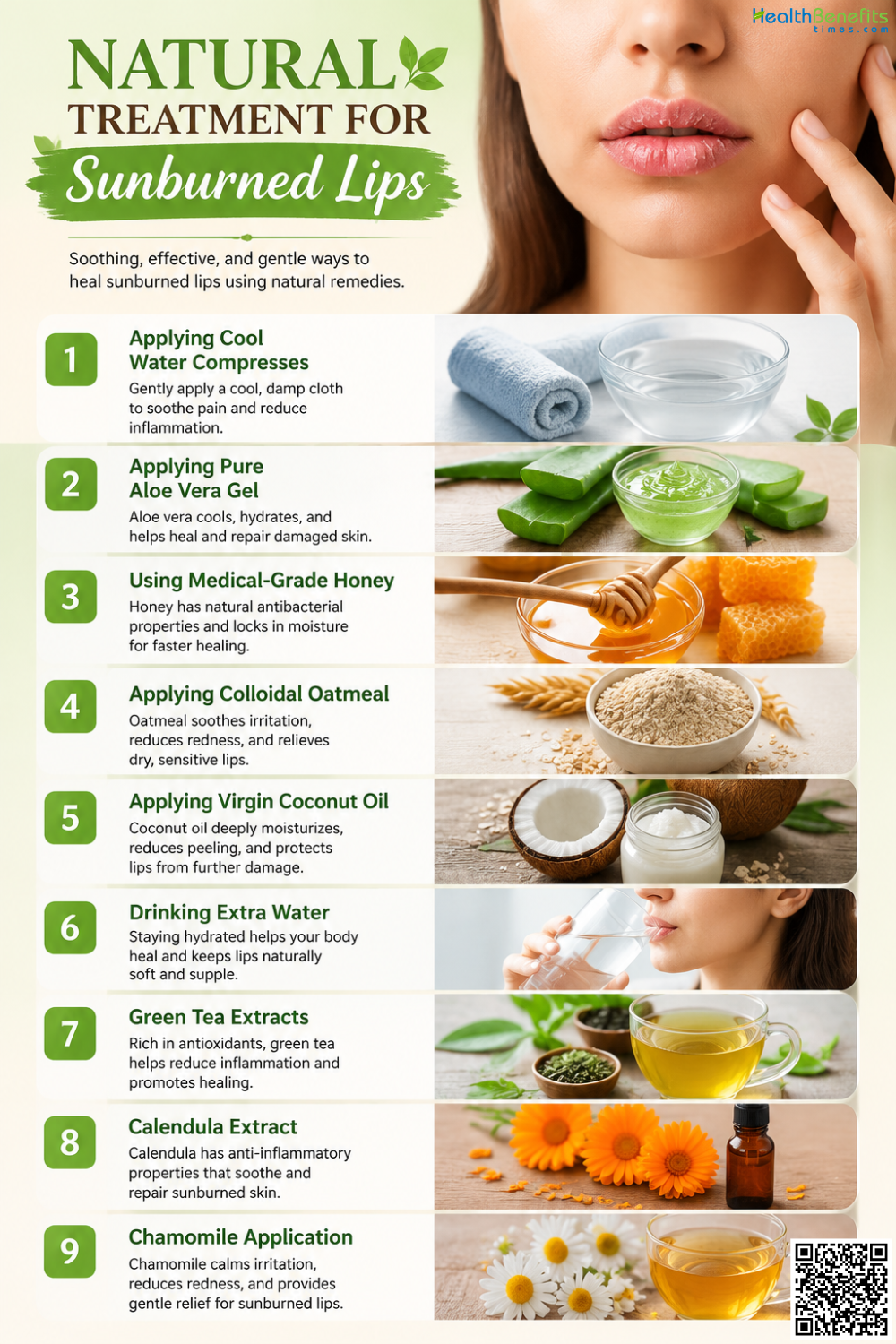
4. Applying Colloidal Oatmeal
How it may help
Colloidal oatmeal binds to the skin to form a protective, moisture-locking barrier. It contains unique compounds called avenanthramides that effectively reduce redness, soothe intense itching, and calm the inflamed tissues of sunburned lips, providing immediate physical relief while supporting the skin’s natural repair process.
What research says
Clinical studies demonstrate that colloidal oatmeal possesses significant antioxidant and anti-inflammatory properties. Research confirms it directly inhibits pro-inflammatory chemicals in the body, which helps repair the weakened skin barrier, deeply hydrates damaged tissue, and effectively reduces the clinical symptoms of burns and severe dryness 12.
How to use it safely
Mix a small amount of fine colloidal oatmeal powder with cool water to create a thick, smooth paste. Gently apply this paste directly to your sunburned lips. Leave it on for ten minutes to soothe the skin, then carefully rinse it away with cool water.
Potential precautions or side effects
Discontinue use immediately if you experience increased redness or swelling, as rare oat allergies can occur. Individuals with celiac disease should ensure the oatmeal is explicitly certified gluten-free.
5. Applying Virgin Coconut Oil
How it may help
Virgin coconut oil acts as a highly effective moisturizer that seals in hydration and prevents further moisture loss from dry, sunburned lips. Its high concentration of beneficial fatty acids helps soothe inflammation, while its natural antibacterial properties protect cracked lip tissue from secondary infections during the healing process.
What research says
Clinical research demonstrates that virgin coconut oil significantly improves skin barrier function and accelerates tissue repair. Studies confirm its active compounds provide measurable antibacterial and anti-inflammatory effects, which effectively reduce skin redness, soothe irritated tissues, and support the healing of minor dermal wounds 13.
How to use it safely
Wait until your lips are completely cool before applying any oil. Gently dab a small amount of cold-pressed, organic virgin coconut oil onto your lips using a clean finger. Reapply it throughout the day as a natural lip balm to keep the repairing tissue hydrated.
Potential precautions or side effects
Never apply coconut oil immediately after a sunburn, as heavy oils trap heat and worsen the burn 8. Avoid use if you have a known coconut allergy.
6. Drinking Extra Water
How it may help
Sunburns draw fluid to the skin’s surface and away from the rest of the body, which can easily lead to systemic dehydration. Increasing daily water intake rehydrates the body from the inside out, supporting cellular repair and providing the internal moisture needed for damaged lip tissue to recover.
What research says
Clinical guidelines emphasize that ultraviolet radiation damage significantly increases internal fluid loss. Medical authorities state that acute sunburns require increased oral fluid intake to counteract this fluid shift, prevent overall dehydration, and facilitate optimal tissue recovery during the healing process 8.
How to use it safely
Drink plain, cool water consistently throughout the day following a lip burn. Aim for at least eight glasses, or enough to keep your urine pale and clear. Avoid excessive caffeine or alcohol, as these beverages act as diuretics and can worsen internal dehydration.
Potential precautions or side effects
While rare, drinking massive amounts of water too rapidly can cause a dangerous electrolyte imbalance. Rely on your natural thirst and steady sips rather than forcing extreme, rapid hydration.
7. Green Tea Extracts
How it may help
Green tea contains powerful antioxidants called polyphenols. When applied to sunburned lips, these natural compounds help neutralize harmful free radicals, significantly reduce local tissue inflammation, and calm the burning sensation, which allows the delicate skin cells to recover faster from ultraviolet radiation damage.
What research says
Clinical studies confirm that topical green tea polyphenols effectively reduce skin redness and inflammation caused by acute ultraviolet exposure. Research demonstrates that these active botanical extracts act as potent photoprotective agents, minimizing cellular DNA damage and accelerating the repair process of sun-damaged tissues 14.
How to use it safely
Steep a pure green tea bag in hot water, then chill it in the refrigerator until it is completely cold. Gently press the damp, cold tea bag against your sunburned lips for five to ten minutes. Repeat this process twice daily until the swelling subsides.
Potential precautions or side effects
Never apply a warm or hot tea bag to a sunburn, as heat worsens tissue damage. Discontinue use if you experience unexpected irritation or an allergic skin reaction.
8. Calendula Extract
How it may help
Calendula extract contains natural plant compounds that reduce swelling and soothe irritated skin. When applied to sunburned lips, it acts as a gentle anti-inflammatory agent that eases pain, hydrates the damaged skin barrier, and stimulates the repair of sensitive lip tissue to speed up recovery.
What research says
Clinical research indicates that calendula possesses significant wound-healing and anti-inflammatory properties. Studies confirm that its active extracts stimulate collagen production and increase blood flow to damaged tissues, which effectively accelerates the healing process of minor superficial burns and reduces localized skin inflammation 15.
How to use it safely
Choose a pure, alcohol-free calendula ointment or lip balm. Wash your hands thoroughly, then gently apply a thin layer directly to your sunburned lips. Reapply the extract two to three times daily to keep the healing skin hydrated and protected.
Potential precautions or side effects
Avoid calendula if you are allergic to plants in the daisy or ragweed family, as it may trigger an allergic skin reaction. Discontinue use if redness or itching worsens.
9. Chamomile Application
How it may help
Chamomile contains natural anti-inflammatory compounds that calm irritated skin and reduce localized swelling. When applied to sunburned lips, it acts as a gentle cooling agent that significantly eases the burning sensation, decreases redness, and creates a soothing environment for the damaged lip tissue to heal.
What research says
Clinical research confirms that chamomile preparations possess strong anti-inflammatory and wound-healing properties. Studies conclude that its active botanical extracts deeply penetrate the skin to reduce pro-inflammatory chemicals, effectively soothing painful skin conditions and accelerating tissue repair after superficial burns 16.
How to use it safely
Steep a pure chamomile tea bag in hot water, then chill it in the refrigerator until completely cold. Gently press the cold, damp tea bag directly against your sunburned lips for five to ten minutes. You can repeat this soothing compress two to three times daily.
Potential precautions or side effects
Avoid chamomile if you have known allergies to plants in the daisy or ragweed family, as it can trigger severe allergic skin reactions and worsen lip swelling 16.
Foods to Avoid When You suffer from Sunburned Lips
1. Spicy Foods
Spicy ingredients contain capsaicin, which activates heat receptors in the skin. Direct contact causes severe stinging and worsens inflammation on already damaged, sensitive lip tissue 17.
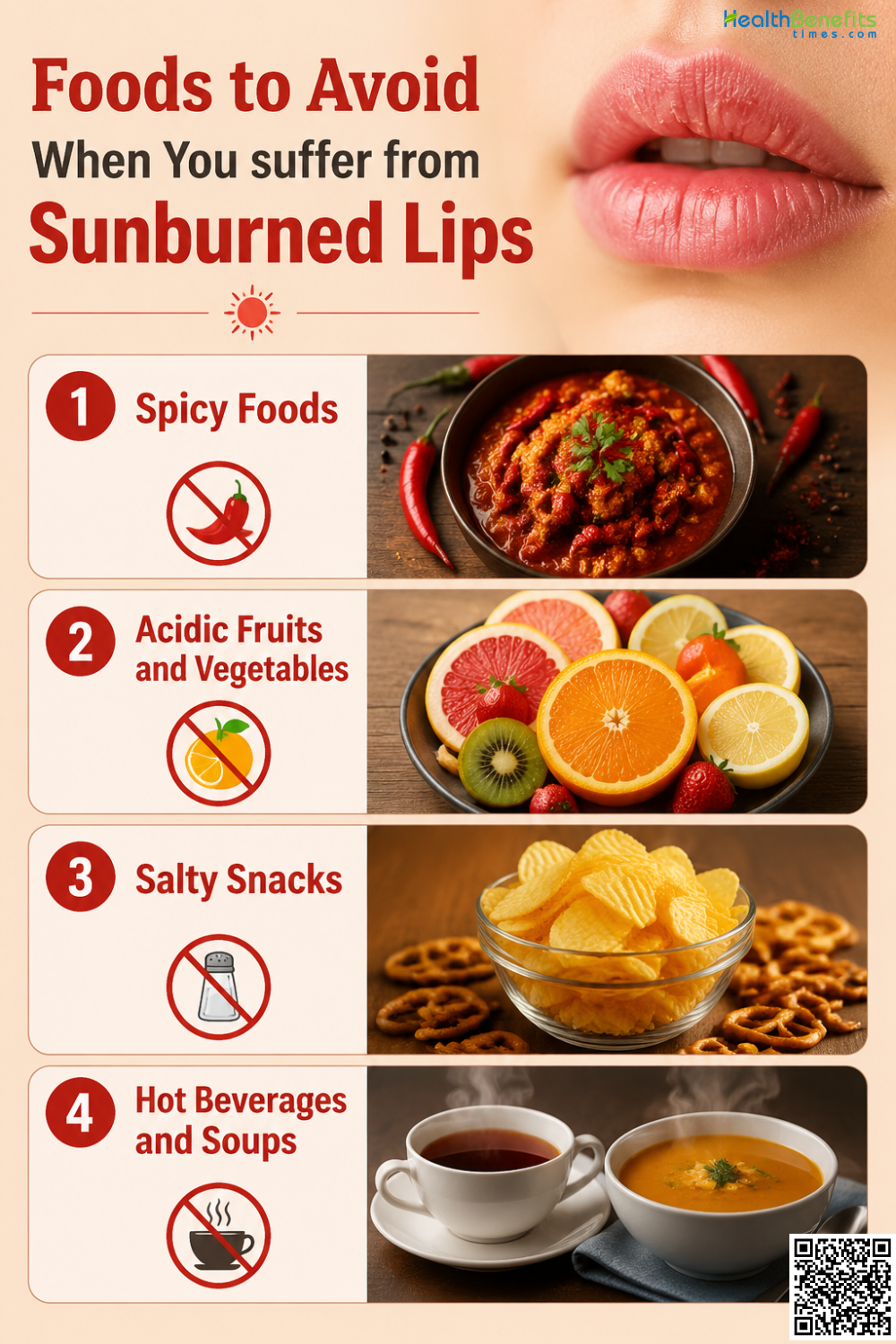
2. Acidic Fruits and Vegetables
High acid levels in citrus and tomatoes severely irritate the compromised skin barrier. This direct contact causes sharp stinging and delays the tissue recovery process 18.
3. Salty Snacks
Salt physically abrades the skin and draws out moisture through osmosis. This process exacerbates local cellular dehydration, leading to painful cracking in healing sunburned lips 19.
4. Hot Beverages and Soups
Consuming hot liquids quickly raises the surface temperature of the lips. This heat dilates local blood vessels, drastically increasing painful swelling and aggravating the burn 8.
When to see Doctor when you struggle from Sunburned Lips
- Severe Blistering: Extensive fluid-filled blisters indicate a partial-thickness burn. Popping them increases infection risk, requiring professional medical evaluation for safe, sterile wound management 8.
- Signs of Infection: The presence of yellow pus, spreading warmth, or honey-colored crusts indicates a secondary bacterial infection that requires targeted prescription antibiotics for complete resolution 8.
- Systemic Symptoms: Developing a high fever, chills, nausea, or confusion alongside lip burns points to severe ultraviolet toxicity or systemic heat illness, demanding immediate medical care 5.
- Extreme Swelling: Severe lip swelling that physically prevents drinking, eating, or speaking requires urgent clinical assessment to prevent dangerous systemic dehydration and protect airway function 8.
- Unmanageable Pain: Intense, throbbing pain that does not improve after using standard over-the-counter pain relievers necessitates professional medical evaluation for advanced pain management protocols 8.
Comments
comments