

Causes of Ingrown Hairs
- Hair removal techniques, notably close shaving, tweezing, and waxing, which cut or pull hair strands and leave sharp tips capable of reentering the skin tissue 1
- Naturally curved hair follicles and structural genetics, which produce tightly curled hair growth patterns that inherently encourage the severed hair shaft to curl sideways and pierce back through the epidermis 2
- Mechanical practices during grooming, such as pulling or stretching the skin taut during shaving or utilizing multi-blade razors where the initial blade pulls the hair upward before a subsequent blade cuts it below the skin line 3
- External physical friction caused by wearing tight-fitting clothing or garments that constantly press against shaved or waxed skin areas, forcing emerging hair strands sideways beneath the surface 4
Symptoms of Ingrown Hairs
- Tiny, swollen, and solid rounded bumps (papules) that form directly in areas subject to recent hair removal such as shaving, waxing, or tweezing 1
- Localized skin irritation accompanied by persistent itching or physical discomfort and pain around the affected hair follicles 5
- Small blister-like lesions or fluid- and pus-filled bumps (pustules) that develop when inflammation intensifies or secondary bacterial involvement occurs 3
- Visible embedded hair shafts trapped beneath the surface, occasionally curving into distinct loop shapes as the growing tip re-enters or stays bound within the skin tissue 1
- Changes in skin pigmentation, presenting as localized areas of redness in lighter skin tones or darker spots and patches (hyperpigmentation) surrounding healed or active bumps in darker skin tones 1
Natural Ways To Get Rid Of Ingrown Hairs
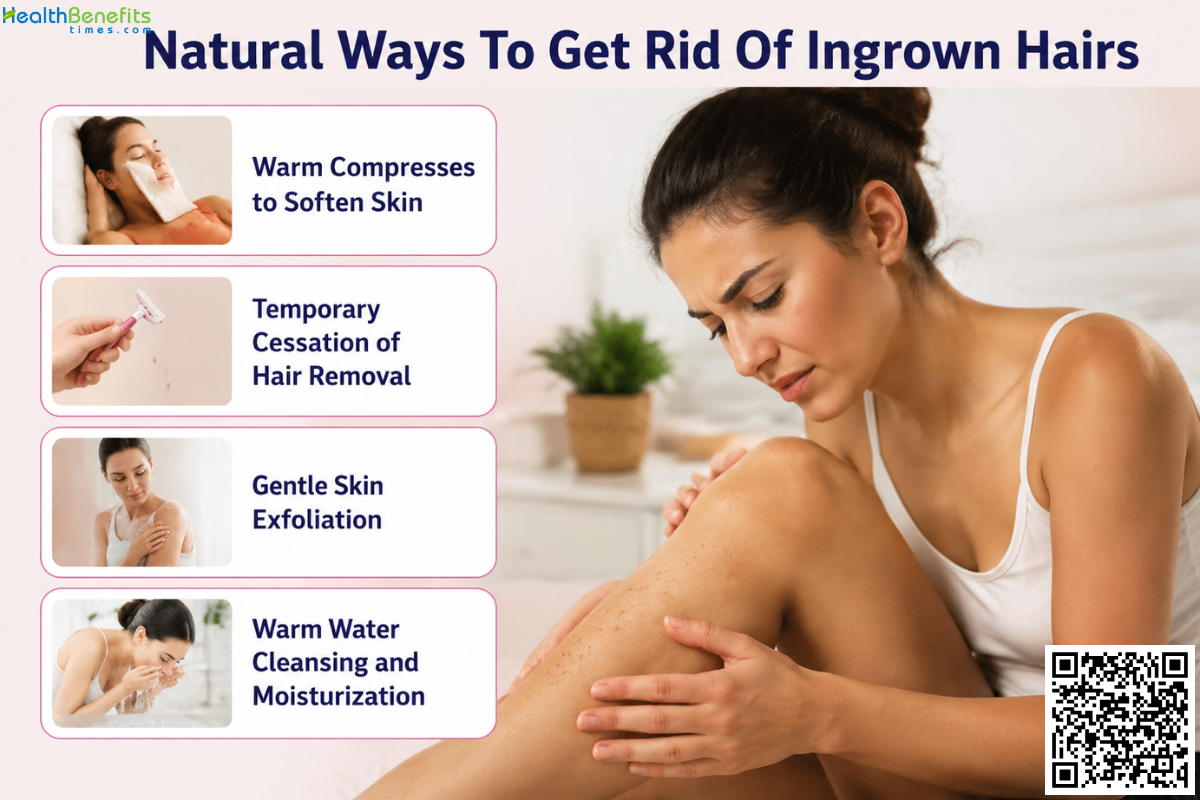
1. Warm Compresses to Soften Skin and Release Trapped Hairs
How it may help
Applying a warm compress increases localized blood flow and softens the outer layer of the skin. This moist heat helps to gently open pores and loosen the trapped hair. By softening the surrounding tissue, it encourages natural drainage of built-up fluid, allowing the hair to surface without manual extraction.
What research says
Clinical guidelines support conservative management of mild ingrown hairs and related inflammation using moist heat. Experts conclude that applying warm compresses multiple times a day promotes drainage of superficial lesions and reduces discomfort, serving as an effective first-line, non-pharmacological treatment for uncomplicated cases 6.
How to use it safely
Soak a clean, soft washcloth in comfortably warm water and wring out the excess. Gently press the cloth against the affected area for 10 to 15 minutes. Repeat this process three to four times daily until the trapped hair naturally emerges above the skin surface.
Potential precautions or side effects
Avoid using excessively hot water, which can burn the skin. Never squeeze, pick, or dig at the ingrown hair, as this increases the risk of scarring and bacterial infection.
2. Temporary Cessation of Hair Removal
How it may help
Temporarily stopping shaving or other hair removal allows the skin to heal and breaks the cycle of hairs curling back into the follicles. When hair is left to grow naturally, it eventually emerges from the skin surface, which stops trapped hairs from causing further inflammation, painful bumps, and continuous irritation 7.
What research says
Clinical evidence confirms that discontinuing hair removal is the most effective management strategy for resolving ingrown hairs and razor bumps 7. Dermatologists state that letting the hair grow out entirely interrupts the cycle of retracted hairs, rapidly reducing the development of inflammatory bumps and lowering the risk of permanent scarring 7.
How to use it safely
To heal your skin, stop all forms of shaving, waxing, or plucking for a few weeks. If grooming is strictly necessary, use electric clippers to trim the hair instead of a blade 7. Trimming leaves short stubble, preventing the blunt hair ends from retracting beneath the skin barrier.
Potential precautions or side effects
You may experience temporary itching as the stubble grows out 8. Avoid scratching or digging at the skin, which can introduce bacteria and cause severe infections or permanent scarring 7.
3. Gentle Skin Exfoliation
How it may help
Gentle skin exfoliation removes the buildup of dead skin cells that block hair follicles. By clearing this outer skin layer, exfoliation frees trapped hairs and prevents them from curling backward into the skin, which directly reduces painful bumps and localized inflammation 9.
What research says
Clinical guidelines state that regular, mild exfoliation prevents the top layer of skin from growing over the hair shaft. Research confirms that physically releasing these trapped hairs early decreases severe inflammation and significantly lowers the chance of developing secondary bacterial infections 9.
How to use it safely
Gently massage the affected area using a warm, wet washcloth or a soft-bristled brush in circular motions. Do this daily prior to any hair removal. Avoid aggressive scrubbing, as excessive friction can damage the skin barrier and worsen existing irritation 9.
Potential precautions or side effects
Over-exfoliating can cause skin redness, micro-tears, and increased sensitivity. Stop exfoliating immediately if the area becomes painful, begins to bleed, or shows visible signs of infection 9.
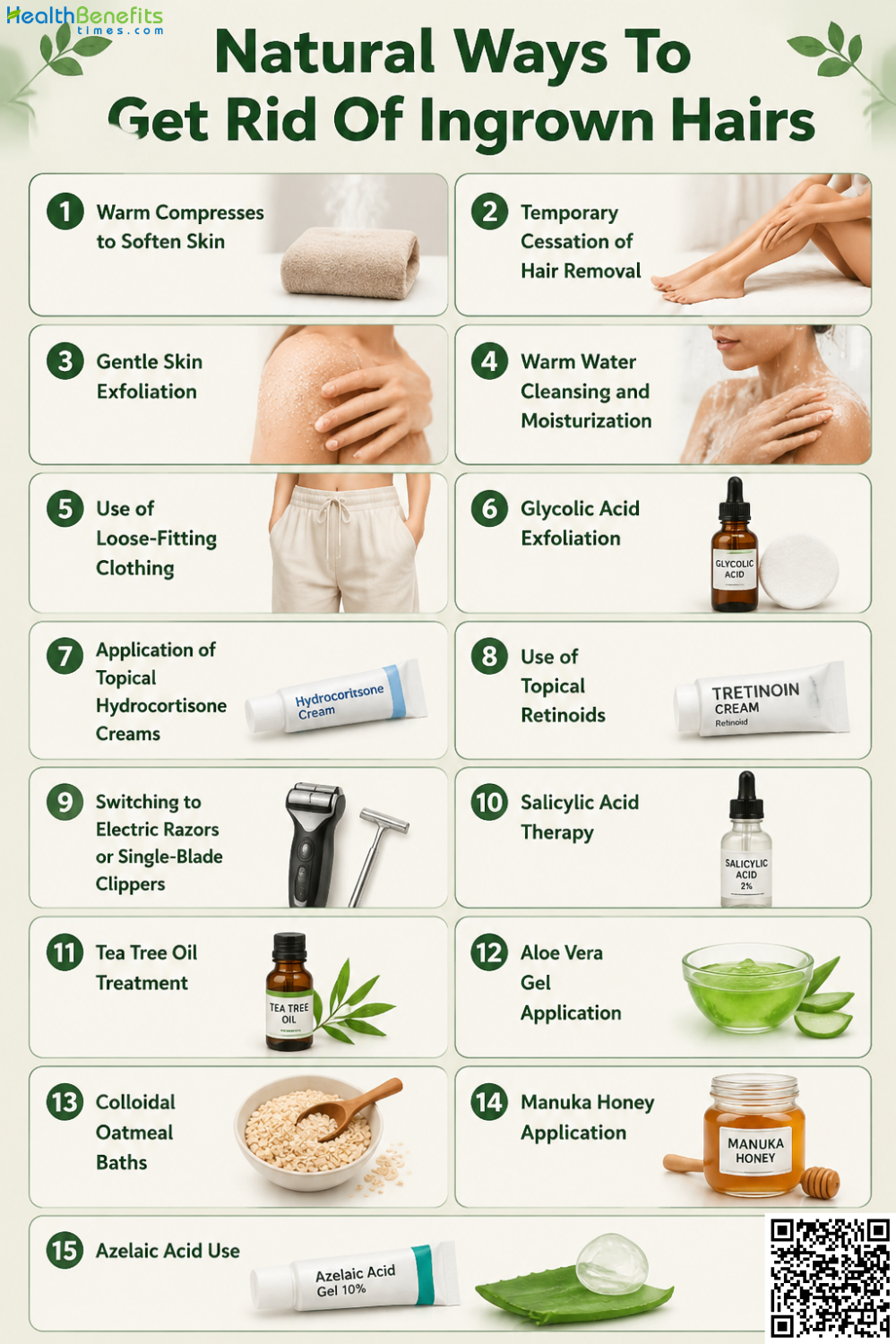
4. Warm Water Cleansing and Moisturization
How it may help
Warm water softens the hair shaft and increases skin elasticity, allowing hairs to be cut smoothly without leaving sharp edges 9. Subsequent moisturization hydrates the outer skin layer, preventing dead cells from hardening and blocking the follicles so new hair can easily penetrate the surface 10.
What research says
Dermatological studies confirm that hydrating hair with warm water before removal reduces the force required to cut it, minimizing the retraction of hair beneath the skin 9. Furthermore, applying emollients repairs the epidermal barrier, significantly lowering inflammation and structural resistance that causes hair to grow backward 10.
How to use it safely
Wash your skin with warm water and a mild, non-comedogenic cleanser for five minutes before hair removal 11. Afterward, apply a fragrance-free lotion or cream containing ceramides or glycerin to lock in moisture without clogging your pores 10.
Potential precautions or side effects
Avoid using scalding hot water, as it strips natural oils and exacerbates skin irritation 11. Heavy, oil-based moisturizers may cause acne breakouts by trapping bacteria in the follicles 10.
5. Use of Loose-Fitting Clothing
How it may help
Wearing loose-fitting clothing minimizes continuous physical friction and pressure against the skin 12. By preventing fabrics from rubbing aggressively against recently shaved or waxed areas, you stop hairs from being forced backward into the follicles, avoiding the mechanical irritation and sweat entrapment that trigger ingrown hairs 13.
What research says
Clinical research identifies tight, occlusive clothing as a primary trigger for mechanical folliculitis and trapped hairs 12. Dermatological studies confirm that restrictive garments create a warm, humid microenvironment that forces hair shafts beneath the skin barrier, significantly increasing localized inflammation and the risk of infected follicles 13.
How to use it safely
Opt for breathable, natural fabrics like cotton or linen, especially immediately after hair removal or during exercise 13. Ensure your garments do not fit tightly across prone areas such as the thighs, groin, or neck to maintain proper airflow and eliminate direct skin friction 12.
Potential precautions or side effects
This preventive measure has no adverse side effects. However, loose clothing alone cannot cure pre-existing severe infections; persistently painful or pus-filled bumps require professional medical evaluation 13.
6. Glycolic Acid Exfoliation
How it may help
Glycolic acid is a chemical exfoliant that dissolves the bonds holding dead skin cells together 14. By chemically shedding this dry, outer epidermal layer, it unblocks hair follicles and clears the hardened surface barrier that forces newly growing hairs to curl backward into the skin 9.
What research says
Clinical evidence demonstrates that regular application of alpha-hydroxy acids, specifically glycolic acid, effectively prevents and treats pseudofolliculitis barbae, or ingrown hairs 9. Dermatological studies conclude that this targeted chemical exfoliation significantly reduces visible inflammatory lesions, limits follicular blockages, and prevents secondary bacterial infections 14.
How to use it safely
Apply a thin layer of a mild glycolic acid solution, typically between 5% and 10% concentration, to clean, dry skin 14. Use the product on non-shaving days, starting two or three times a week to build skin tolerance and avoid triggering contact dermatitis 9.
Potential precautions or side effects
Glycolic acid frequently causes mild stinging, localized redness, and increased sun sensitivity 14. You must wear broad-spectrum sunscreen daily and avoid applying the acid immediately after hair removal 9.
7. Application of Topical Hydrocortisone Creams
How it may help
Topical hydrocortisone is a mild corticosteroid that suppresses localized inflammatory responses. When a hair curls back into the skin, the body treats it as a foreign object, creating inflamed bumps. Hydrocortisone directly reduces this swelling, diminishes redness, and quickly relieves the associated itching 15.
What research says
Clinical guidelines recommend low-potency topical corticosteroids for managing the acute inflammation of ingrown hairs, known medically as pseudofolliculitis barbae 9. Dermatological research concludes that short-term application significantly decreases bump size and provides rapid symptomatic relief from immune-triggered skin irritation 15.
How to use it safely
Apply a thin layer of over-the-counter 1% hydrocortisone cream directly to the inflamed bumps once or twice daily 15. Wash your hands immediately after application. Limit usage to a maximum of one week to prevent adverse skin reactions 9.
Potential precautions or side effects
Prolonged use causes skin thinning, discoloration, and stretch marks 15. Do not apply hydrocortisone to open wounds or pus-filled bumps, as suppressing the immune response can worsen bacterial infections 9.
8. Use of Topical Retinoids
How it may help
Topical retinoids are vitamin A derivatives that accelerate the shedding of dead skin cells. By thinning the outermost layer of the skin, they prevent dead cells from clogging hair follicles. This process stops new hairs from curling backward beneath the skin surface, effectively reducing the formation of painful bumps 16.
What research says
Clinical research demonstrates that topical retinoids effectively treat ingrown hairs by normalizing skin cell turnover and preventing the thickening of the outer skin layer 9. Dermatological guidelines conclude that continuous retinoid use significantly decreases localized inflammation and reduces the dark spots that often remain after ingrown hairs heal 16.
How to use it safely
Apply a pea-sized amount of a mild retinoid cream to clean, dry skin strictly at night 16. Begin by using it every third night to build skin tolerance. You must apply a broad-spectrum sunscreen daily, as retinoids make the skin highly sensitive to ultraviolet rays 9.
Potential precautions or side effects
Common side effects include skin dryness, peeling, burning, and redness 16. Pregnant individuals must strictly avoid retinoids due to the known risk of severe birth abnormalities 9.
9. Switching to Electric Razors or Single-Blade Clippers
How it may help
Multi-blade razors pull hairs and cut them below the surface, causing them to become trapped. Switching to electric razors or single-blade clippers prevents this by leaving a short stubble above the epidermis. This ensures the cut hair ends do not retract into the follicle to grow backward 9.
What research says
Clinical guidelines emphasize that avoiding a close shave is a primary treatment for ingrown hairs 9. Dermatological research concludes that using electric clippers to maintain a hair length of at least one millimeter drastically reduces the occurrence of inflammatory bumps and prevents the structural curling associated with close shaving 9.
How to use it safely
Do not pull your skin taut while shaving. Glide the electric razor or clipper gently over the skin without applying heavy downward pressure 9. Shave in the direction of natural hair growth and sanitize the device blades thoroughly with alcohol after every use to maintain hygiene 9.
Potential precautions or side effects
Failing to sanitize clipper blades introduces harmful bacteria into the skin, causing infections 9. Dull blades may pull hairs, leading to further irritation and mechanical damage.
10. Salicylic Acid Therapy
How it may help
Salicylic acid is an exfoliant that penetrates deeply into pores to dissolve oil and dead skin cells. By clearing these blockages, it allows trapped hairs to emerge naturally through the skin surface, while its anti-inflammatory properties quickly reduce the swelling and redness associated with ingrown bumps 17.
What research says
Clinical studies demonstrate that salicylic acid is highly effective in managing pseudofolliculitis barbae due to its ability to break down keratin buildup in hair follicles 9. Dermatological research concludes that its continuous use significantly decreases both non-inflammatory blockages and severe inflammatory lesions on the skin 17.
How to use it safely
Wash the affected area and apply a product containing a 1% to 2% concentration of salicylic acid 17. Begin using it two to three times a week to prevent excessive drying. Always follow up with a gentle moisturizer to protect the skin barrier 9.
Potential precautions or side effects
Salicylic acid can cause mild stinging, peeling, and skin dryness 17. Stop use if severe redness occurs, and never apply it directly over open wounds or active infections.
11. Tea Tree Oil Treatment
How it may help
Tea tree oil is a botanical extract from the Melaleuca alternifolia plant. When applied to an ingrown hair, its potent antibacterial and anti-inflammatory properties rapidly reduce localized redness and swelling while preventing secondary bacterial infections from developing inside the blocked follicle 18.
What research says
Dermatological studies confirm that terpinen-4-ol, the primary active compound in tea tree oil, effectively disrupts bacterial cell membranes and suppresses inflammatory immune responses 19. This mechanism significantly decreases the severity of infected skin lesions and inflamed follicles associated with trapped hairs 20.
How to use it safely
Always dilute tea tree oil before use to protect the skin barrier. Mix one drop of the essential oil with a teaspoon of a neutral carrier oil. Gently dab this diluted mixture directly onto the inflamed bump daily using a clean cotton swab 18.
Potential precautions or side effects
Applying undiluted tea tree oil causes severe skin irritation, burning, and allergic contact dermatitis 18. Never ingest this essential oil; it is highly toxic if swallowed 18.
12. Aloe Vera Gel Application
How it may help
Aloe vera gel naturally cools and moisturizes the skin while delivering strong anti-inflammatory compounds to the blocked hair follicle. By soothing the localized irritation, it effectively reduces the swelling, redness, and itching associated with painful ingrown hair bumps, allowing the trapped hair to eventually emerge without further friction 21.
What research says
Dermatological studies confirm that Aloe vera gel inhibits inflammatory pathways and contains bradykinase, an enzyme that actively breaks down substances inducing tissue pain and swelling 21. Clinical research concludes that topical application also stimulates collagen synthesis, significantly accelerating the healing of inflamed lesions and structural damage caused by trapped hairs 21.
How to use it safely
Wash and dry the affected area thoroughly. Apply a thin layer of pure, fragrance-free Aloe vera gel directly over the ingrown hair bumps twice daily 21. Let the gel absorb completely into the skin before wearing clothing to prevent the product from rubbing off.
Potential precautions or side effects
Topical Aloe vera may cause redness, burning, stinging, or allergic contact dermatitis in sensitive individuals 21. Always perform a patch test on a small skin area before applying it widely.
13. Colloidal Oatmeal Baths
How it may help
Colloidal oatmeal naturally soothes the skin by providing immediate anti-inflammatory and moisturizing effects. It binds to the epidermis to form a protective barrier, reducing the severe itch, redness, and swelling caused by trapped ingrown hairs while keeping the skin hydrated so hairs can emerge smoothly 22.
What research says
Clinical studies confirm that colloidal oatmeal directly diminishes pro-inflammatory cytokines and provides significant antioxidant activity 23. Dermatological research concludes that applying colloidal oatmeal strengthens the epidermal barrier, rapidly relieving the symptoms of irritated and inflamed skin associated with localized follicular blockages 22.
How to use it safely
Sprinkle one cup of finely milled colloidal oatmeal into a lukewarm bath. Soak the affected skin for ten to fifteen minutes to relieve irritation. Gently pat your skin dry and immediately apply a fragrance-free moisturizer to lock in hydration 22.
Potential precautions or side effects
Colloidal oatmeal is highly tolerated, but rare allergic contact dermatitis can occur. Discontinue use immediately if you experience increased redness, severe itching, or new skin rashes after soaking 24.
14. Manuka Honey Application
How it may help
Manuka honey acts as a powerful natural antibacterial and anti-inflammatory agent. When applied to an ingrown hair, its high sugar content creates a gradient that draws out trapped fluid. Simultaneously, its unique enzymes neutralize bacteria within the blocked follicle, rapidly reducing swelling, redness, and the risk of infection.
What research says
Clinical studies confirm that Manuka honey contains methylglyoxal, a specialized compound that provides broad-spectrum antimicrobial activity against skin infections 25. Research demonstrates that its topical application suppresses inflammatory immune responses, eliminates resistant bacteria, and accelerates the healing of damaged skin tissue surrounding trapped hairs 26.
How to use it safely
Apply a small drop of medical-grade Manuka honey directly onto the inflamed ingrown hair bump. Cover it with a sterile bandage to prevent stickiness and keep the area clean. Leave it on for twenty to thirty minutes before gently rinsing it away with warm water.
Potential precautions or side effects
Avoid using Manuka honey if you have a known allergy to bees or pollen, as topical application can trigger severe allergic contact dermatitis or localized skin rashes.
15. Azelaic Acid Use
How it may help
Azelaic acid helps resolve ingrown hairs by reducing inflammation and clearing dead skin cells that block hair follicles. As an antibacterial and exfoliating agent, it prevents hairs from becoming trapped and significantly lightens post-inflammatory hyperpigmentation, the dark skin spots left behind after severe ingrown hairs heal 27.
What research says
Clinical research demonstrates that azelaic acid effectively treats pseudofolliculitis barbae by reducing perifollicular hyperkeratosis, the overproduction of dead skin that clogs pores 28. Dermatological studies conclude that its topical application suppresses localized inflammation, kills opportunistic bacteria, and efficiently fades dark pigmentation without damaging normal skin cells 27.
How to use it safely
Apply a thin layer of a 10% to 15% azelaic acid gel or cream to clean, dry skin once or twice daily 28. Allow it to absorb fully before applying moisturizers. Consistent use over several weeks is required to see significant improvements in texture and pigmentation 29.
Potential precautions or side effects
Azelaic acid commonly causes mild, temporary stinging, burning, or itching upon application 29. Discontinue use if you experience severe redness, blistering, or an irritation that worsens over time.
When to See a Doctor for Ingrown Hairs
While most ingrown hairs resolve with home management, clinical guidelines from dermatological research indicate that professional medical evaluation is necessary when specific complications arise 9.
1. Persistent or Worsening Infection
If the bumps become filled with pus, spread rapidly, or do not improve after weeks of home care, a physician must evaluate the area for secondary bacterial infections 9.
2. Severe Pain and Swelling
Intense, throbbing pain or large, swollen lumps under the skin can indicate deep tissue inflammation or boil formation requiring medical drainage 13.
3. Signs of Spreading Illness
Seek immediate medical care if you develop systemic symptoms such as fever, chills, or red streaks extending outward from the affected skin 30.
4. Permanent Skin Damage or Scarring
Individuals experiencing severe dark spots, thick raised scars, or permanent hair loss in the affected region should consult a dermatologist for advanced clinical interventions 16.
Comments
comments