


Causes of Valley Fever
1. Fungal Pathogens
The illness is caused by inhaling microscopic spores from two specific types of soil-dwelling fungi, identified clinically as Coccidioides immitis and Coccidioides posadasii 1.
2. Soil Disturbance
These fungal spores rest in the dirt and become airborne hazards when the soil is disrupted by natural events or human activities, including windstorms, earthquakes, agricultural farming, military exercises, and construction projects 2.
3. Geographic Exposure
Contracting the disease requires exposure to specific dry, arid environments where the fungus naturally grows, primarily encompassing the southwestern United States (especially Arizona and California), parts of Mexico, and distinct regions in Central and South America 1.
4. Method of Infection
The infection process begins strictly through inhalation, as breathing in contaminated dust allows the airborne spores to enter the respiratory tract and settle deep within the lungs to reproduce 1.
5. Non-Contagious Nature
The transmission of the disease is exclusively environmental. The fungus does not spread through coughing, sneezing, or physical contact, meaning it cannot be passed from one person to another or from infected animals to humans 4.
Symptoms of Valley Fever
1. Fatigue
Extreme and persistent tiredness that can severely limit daily activities and often lasts for several weeks or months 5.
2. Cough
A continuous, typically dry cough that originates in the lungs and does not respond to standard over-the-counter cold treatments 5.
3. Fever and Night Sweats
Elevated body temperature that is frequently accompanied by sudden chills and intense, drenching sweats during sleep 5.
4. Shortness of Breath
Difficulty drawing in full breaths or feeling quickly winded, similar to the respiratory distress seen in bacterial viral pneumonia 3.
5. Muscle and Joint Pain
Significant body aches and severe joint stiffness or swelling, most commonly affecting the knees and ankles, which medical professionals sometimes refer to as “desert rheumatism” 6.
6. Headache
A constant or throbbing head pain that commonly accompanies the initial flu-like onset of the infection 5.
7. Skin Rash
A distinctive red, patchy, and occasionally painful rash that most frequently develops on the lower legs, upper body, chest, or arms 5.
Natural Ways to Support Valley Fever Recovery
1. Prioritizing Rest
How it may help
Severe fatigue is a primary symptom of Valley Fever, frequently persisting for several weeks or months 3. Prioritizing rest allows the immune system to allocate essential energy toward fighting the fungal infection, helping to alleviate the profound exhaustion that accompanies the body’s natural recovery phase.
What research says
Clinical guidelines confirm that many patients with mild Valley Fever recover completely without prescription antifungal medications by utilizing supportive care. Public health authorities emphasize that getting plenty of rest is a primary, evidence-based medical protocol for resolving the respiratory illness in otherwise healthy individuals 7.
How to use it safely
You should pace your daily activities and carefully monitor your body’s signals. Schedule frequent daytime downtime and ensure extensive overnight sleep to support immune healing. Gradually reintroduce physical exertion only after your respiratory symptoms significantly diminish and your overall energy levels stabilize 7.
Potential precautions or side effects
Prolonged strict bed rest may lead to temporary muscle stiffness. Furthermore, rest alone is inadequate if respiratory distress worsens, necessitating immediate medical evaluation for potential prescription antifungal therapy 7.
2. Taking Over-the-Counter Medications
How it may help
Over-the-counter medications specifically target the most uncomfortable physical symptoms of a Valley Fever infection, including high temperatures, muscle aches, and severe joint pain. Utilizing fever reducers and pain relievers provides essential physical comfort and reduces systemic inflammation, allowing patients to rest more effectively while their immune system actively combats the underlying fungal pathogen 7
What research says
Clinical protocols established by public health authorities state that many patients with uncomplicated Valley Fever infections do not require prescription antifungal therapies. Instead, medical guidelines recommend utilizing standard over-the-counter analgesics to effectively manage fever and joint inflammation, as this supportive care sufficiently controls symptom severity during the natural recovery timeline 7.
How to use it safely
You must strictly follow standard package dosing instructions and consult your healthcare provider before combining different pain relievers. Always take anti-inflammatory medications with food to prevent stomach irritation, and carefully track your daily intake to ensure you never exceed the maximum recommended therapeutic limits for fever reduction 8.
Potential precautions or side effects
Excessive use of over-the-counter pain relievers can cause severe liver damage or gastrointestinal bleeding. Seek immediate medical evaluation if high fevers persist despite taking these standard supportive medications 8.
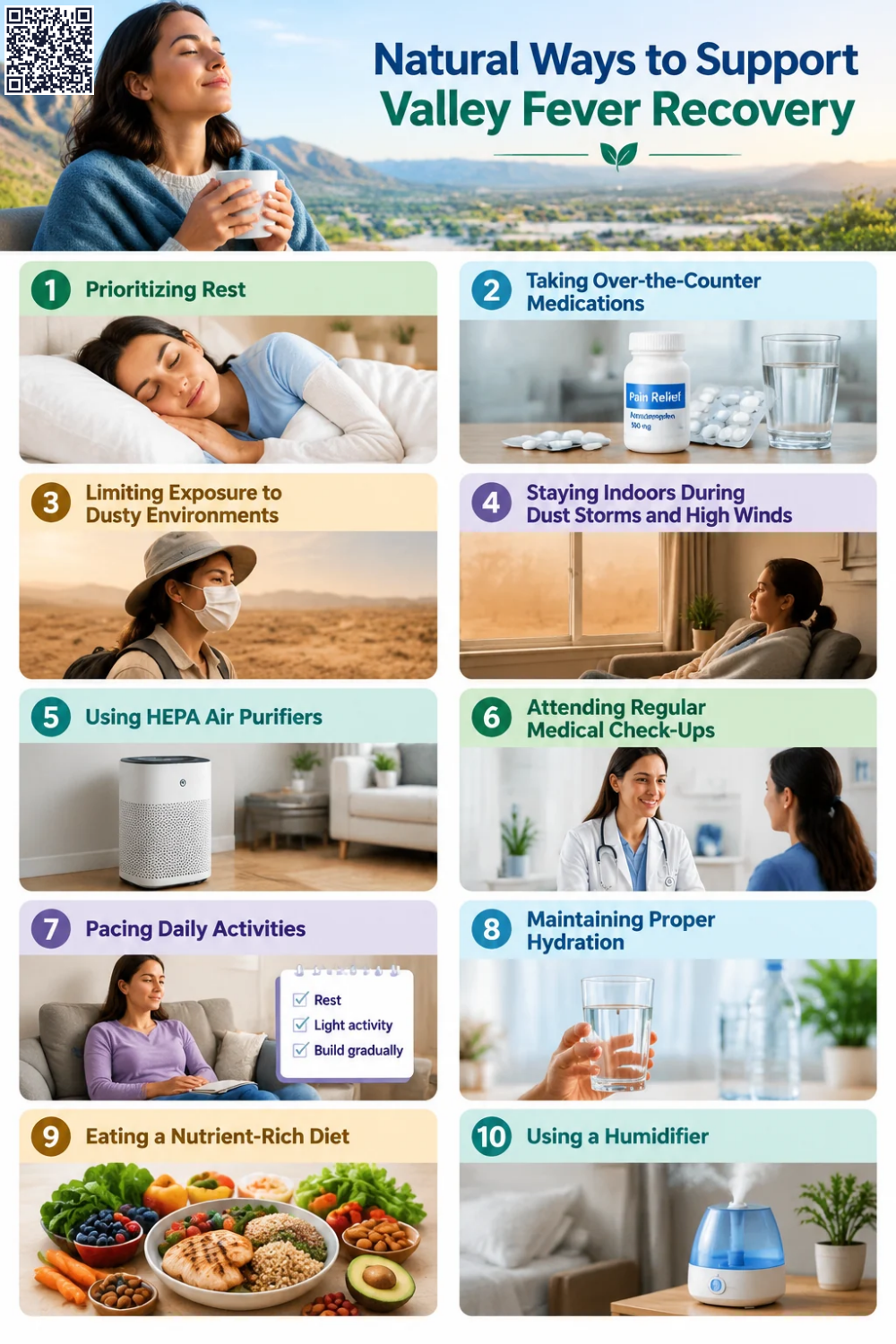
3. Limiting Exposure to Dusty Environments
How it may help
Limiting exposure to airborne dust directly protects recovering lungs from additional irritation. Because Valley Fever causes severe lung swelling, inhaling dirt and dust particles worsens coughing fits and shortness of breath. Minimizing contact with dusty environments allows compromised lungs to heal faster without facing continuous external irritation 4.
What research says
Public health authorities establish that avoiding areas with heavy dust, such as construction sites and farms, significantly reduces breathing complications in affected regions. Clinical guidelines conclude that minimizing dust exposure remains a critical control measure for protecting lung health during the natural recovery timeline 4.
How to use it safely
You should stay indoors and keep windows tightly closed during dust storms or high winds. If you must go outside in a dusty area, wear a properly fitted N95 respirator mask to filter out harmful dirt particles and protect your healing lungs 4.
Potential precautions or side effects
Standard cloth masks cannot adequately filter microscopic dust. You must ensure your N95 respirator creates a tight seal against your face, otherwise irritating particles will still enter your lungs 9.
4. Staying Indoors During Dust Storms and High Winds
How it may help
High winds and dust storms carry vast amounts of airborne dirt and particulate matter. Because Valley Fever already causes severe lung inflammation, inhaling these environmental irritants significantly worsens coughing and respiratory distress. Remaining inside during these severe weather events shields compromised lungs from additional stress, which promotes faster respiratory healing 4.
What research says
Public health guidelines confirm that severe weather events, specifically dust storms and high winds, drastically elevate the amount of airborne respiratory irritants. Clinical advisories conclude that taking shelter indoors during these atmospheric disturbances remains a highly effective environmental control measure to protect vulnerable lung tissues during the recovery process 4.
How to use it safely
You must tightly close all windows and doors before high winds begin. To maintain safe indoor air quality, ensure your home is sealed and strictly avoid using outdoor ventilation fans that pull contaminated, dusty air into your living space 4.
Potential precautions or side effects
Staying indoors is completely ineffective if your home lacks proper weatherproofing. You must quickly seal any open drafts around windows and doors where microscopic dust particles can easily penetrate 4.
5. Using HEPA Air Purifiers
How it may help
High-efficiency particulate air (HEPA) purifiers capture microscopic airborne dirt, dust, and lingering fungal spores before they enter the respiratory system. Because Valley Fever leaves lung tissue severely inflamed, filtering indoor air minimizes environmental irritation, which directly reduces coughing fits and supports the natural respiratory healing process 4.
What research says
Environmental and public health authorities establish that true HEPA filters successfully remove at least 99.97% of airborne dust and particulate matter. Clinical advisories conclude that utilizing these mechanical filtration systems creates a clean indoor breathing environment, which is essential for protecting compromised lungs from further damage during recovery 10.
How to use it safely
You should operate the HEPA purifier continuously in the room where you sleep or rest the most. Keep the doors and windows closed while it runs, and promptly replace the internal physical filters according to the specific timeline provided by the device manufacturer 10.
Potential precautions or side effects
Avoid air purifiers that produce ozone gas, as ozone severely irritates healing lung tissue. Additionally, operating a device with an old or clogged filter drastically reduces its protective benefits 10.
6. Attending Regular Medical Check-Ups
How it may help
Routine medical evaluations track the progression of the fungal infection and ensure lung inflammation is actively resolving. Because symptoms can suddenly worsen, continuous clinical monitoring allows doctors to quickly detect if the fungus has spread beyond the lungs, preventing severe, long-term complications during the recovery timeline 7.
What research says
Clinical protocols established by public health agencies dictate that patients with Valley Fever require periodic chest X-rays and blood tests to monitor antibody levels. Medical guidelines conclude that consistent follow-up care is essential to confirm the immune system is successfully clearing the infection without prescription antifungal intervention 7.
How to use it safely
You must attend all scheduled clinical appointments and complete all required blood work, even if your breathing feels normal. Keep a daily log of your temperature and energy levels, and immediately report any new symptoms, such as severe headaches or skin rashes, to your physician 3.
Potential precautions or side effects
Skipping routine check-ups is highly dangerous. Without clinical monitoring, a mild respiratory infection can quietly spread to the brain or bones, causing permanent tissue damage or fatal complications 7.
7. Pacing Daily Activities
How it may help
Because Valley Fever induces severe, lingering fatigue and shortness of breath, attempting to maintain a normal daily schedule rapidly depletes the body’s energy reserves. Deliberately pacing activities ensures the immune system can continuously direct biological resources toward clearing the fungal infection, which prevents profound physical exhaustion and reduces unnecessary strain on compromised lungs 3.
What research says
Clinical guidelines state that extreme exhaustion associated with this fungal infection frequently persists for several months after the initial illness. Public health authorities emphasize that structured energy conservation is a mandatory supportive care protocol, concluding that strictly managing physical exertion allows patients to recover safely without compromising their respiratory stability 7.
How to use it safely
You should divide necessary daily tasks into small, manageable segments and schedule strict resting periods between them. Prioritize only essential activities and completely avoid strenuous exercise or heavy lifting until your physician confirms your lung inflammation has resolved 7.
Potential precautions or side effects
Pushing through physical exhaustion can severely prolong your overall recovery timeline. Ignoring severe fatigue often exacerbates respiratory distress and increases physical vulnerability to further medical complications 3.
8. Maintaining Proper Hydration
How it may help
Valley Fever frequently causes high fevers, drenching night sweats, and a persistent cough. Maintaining optimal hydration replenishes vital fluids lost through elevated body temperatures. Furthermore, drinking adequate water thins mucus secretions in the respiratory tract, making it significantly easier to clear the lungs and reducing severe coughing fits 3.
What research says
Clinical guidelines for managing fungal respiratory infections emphasize that adequate fluid intake is a fundamental component of supportive care. Medical authorities conclude that consistent hydration prevents systemic dehydration caused by prolonged fevers and supports the body’s natural ability to expel respiratory irritants through loosened lung secretions 7.
How to use it safely
You should consistently drink clear fluids, such as water or caffeine-free broths, throughout the day. Monitor your hydration by ensuring your urine remains pale yellow, and gradually increase your daily fluid intake during periods of high fever or intense night sweats 11.
Potential precautions or side effects
Consuming excessive amounts of plain water rapidly without electrolytes can dangerously lower blood sodium levels. You must consult a physician about fluid limits if you have underlying kidney or heart conditions 11.
9. Eating a Nutrient-Rich Diet
How it may help
Consuming a nutrient-rich diet provides the essential vitamins, minerals, and proteins required to sustain immune system function during a Valley Fever infection. Because the body expends massive amounts of energy fighting the fungal pathogen and repairing inflamed lung tissue, proper nutrition directly fuels cellular recovery and prevents severe malnutrition-related fatigue 12.
What research says
Public health guidelines establish that a balanced diet rich in micronutrients, such as vitamins C and zinc, is critical for supporting the immune response against respiratory pathogens. Clinical authorities conclude that maintaining adequate nutritional intake improves clinical outcomes and actively supports the body’s natural ability to clear environmental lung infections 12.
How to use it safely
You should focus on eating a variety of whole foods, including lean proteins, fruits, and vegetables, to naturally acquire essential nutrients. Consume smaller, frequent meals if extreme fatigue or coughing reduces your appetite, and strictly avoid substituting prescribed medical treatments with unproven dietary supplements 13.
Potential precautions or side effects
Relying on unregulated vitamin supplements instead of whole foods can cause severe organ toxicity. Always consult your physician before starting high-dose supplements, as they may interact with prescription medications 14.
10. Using a Humidifier
How it may help
Valley Fever frequently causes a severe, persistent dry cough and inflamed airways. Using a humidifier adds essential moisture to the surrounding indoor air, which directly soothes irritated respiratory tissues. This increased humidity loosens thick chest secretions and suppresses severe coughing fits, allowing compromised lungs to heal more comfortably 15.
What research says
Clinical respiratory protocols establish that maintaining adequate indoor humidity safely alleviates dry coughs caused by lung infections. Medical authorities conclude that operating a cool-mist humidifier provides highly effective supportive care by preventing excessive airway dryness, which subsequently reduces tissue irritation and minimizes severe chest pain during recovery 15.
How to use it safely
You should run a cool-mist humidifier in your primary resting area. Strictly use distilled or demineralized water to prevent dispersing irritating mineral dust into your airways. You must empty the tank daily, wipe all surfaces completely dry, and refill it before every use 16.
Potential precautions or side effects
Dirty humidifier tanks quickly breed dangerous mold and bacteria. Inhaling this contaminated mist severely damages healing respiratory tissue and can trigger life-threatening secondary bacterial lung infections 16.
Foods to Avoid When You suffer from Valley Fever
1. Grapefruit and Grapefruit Juice
Grapefruit interferes with liver enzymes, dangerously altering how the body metabolizes specific prescription antifungal medications commonly used to treat this infection 17.

2. Alcoholic Beverages
Drinking alcohol significantly elevates the risk of severe liver toxicity when combined with the prescription azole antifungal therapies required for respiratory recovery 18.
3. Low-Nutrient Processed Foods
Highly processed, sugary foods fail to deliver the essential vitamins and proteins your immune system desperately needs to efficiently repair inflamed lung tissue 12.
When to see Doctor when you struggle from Valley Fever
1. Difficulty Breathing or Chest Pain
Seek immediate medical evaluation if you experience severe shortness of breath or sudden chest pain, as these symptoms indicate significant respiratory distress and potential lung complications 3.
2. Persistent Flu-Like Symptoms
Consult a physician if your flu-like symptoms, particularly a persistent dry cough and extreme fatigue, last for more than a week without noticeable improvement 3.
3. Severe Headaches and Neck Stiffness
Immediate emergency care is required for intense headaches or neck stiffness, which strongly indicate the fungal infection has dangerously spread to the brain and spinal cord 3.
4. High-Risk Health Status
Contact a healthcare provider immediately upon symptom onset if you are pregnant, have diabetes, or possess a weakened immune system, as severe complications can develop rapidly 19.
5. New Skin Rashes or Swollen Joints
Request a clinical examination if you develop unexplained skin lesions, painful rashes, or swollen joints, because these signs suggest the fungus has disseminated beyond the lungs 3.
Comments
comments