

Causes of Perichondritis
- Cartilage Piercings: High ear piercings that pass through the upper ear cartilage are the most frequent cause, as they create a direct pathway for bacteria to enter the deeper tissue layers.
- Physical Trauma: Cuts, blunt force injuries, or severe scrapes to the outer ear break the protective skin barrier and allow infectious bacteria to reach the cartilage.
- Burns: Thermal or chemical burns damage the protective skin layer of the outer ear, making the underlying perichondrium highly vulnerable to bacterial invasion 1.
- Surgical Procedures: Medical incisions, reconstructive surgeries, or cosmetic alterations performed on the external ear carry a risk of introducing bacterial pathogens directly into the tissue.
- Untreated Ear Canal Infections: Severe outer ear infections, such as advanced swimmer’s ear, can spread outward from the ear canal and infect the surrounding structural cartilage.
- Minor Puncture Wounds: Small breaks in the skin caused by insect bites, splinters, or acupuncture needles can provide entry points for common bacteria like Pseudomonas aeruginosa or Staphylococcus aureus.
Symptoms of Perichondritis
- Severe Ear Pain: Individuals experience intense pain and extreme tenderness when touching the upper and middle sections of the outer ear.
- Redness and Swelling: The infected ear cartilage becomes noticeably swollen, red, and warm to the touch, specifically leaving the lower earlobe unaffected because it does not contain cartilage.
- Fluid or Pus Discharge: As the bacterial infection worsens, clear fluid or visible pus may begin to drain from the original wound or piercing site.
- Fever: A mild to high body temperature may develop alongside the ear pain, indicating that the immune system is actively fighting the bacterial infection.
- Structural Deformity: In advanced or untreated stages, severe swelling and trapped pus can block blood flow to the tissue, causing the cartilage to die and resulting in a permanently misshapen ear.
Remedies for Perichondritis
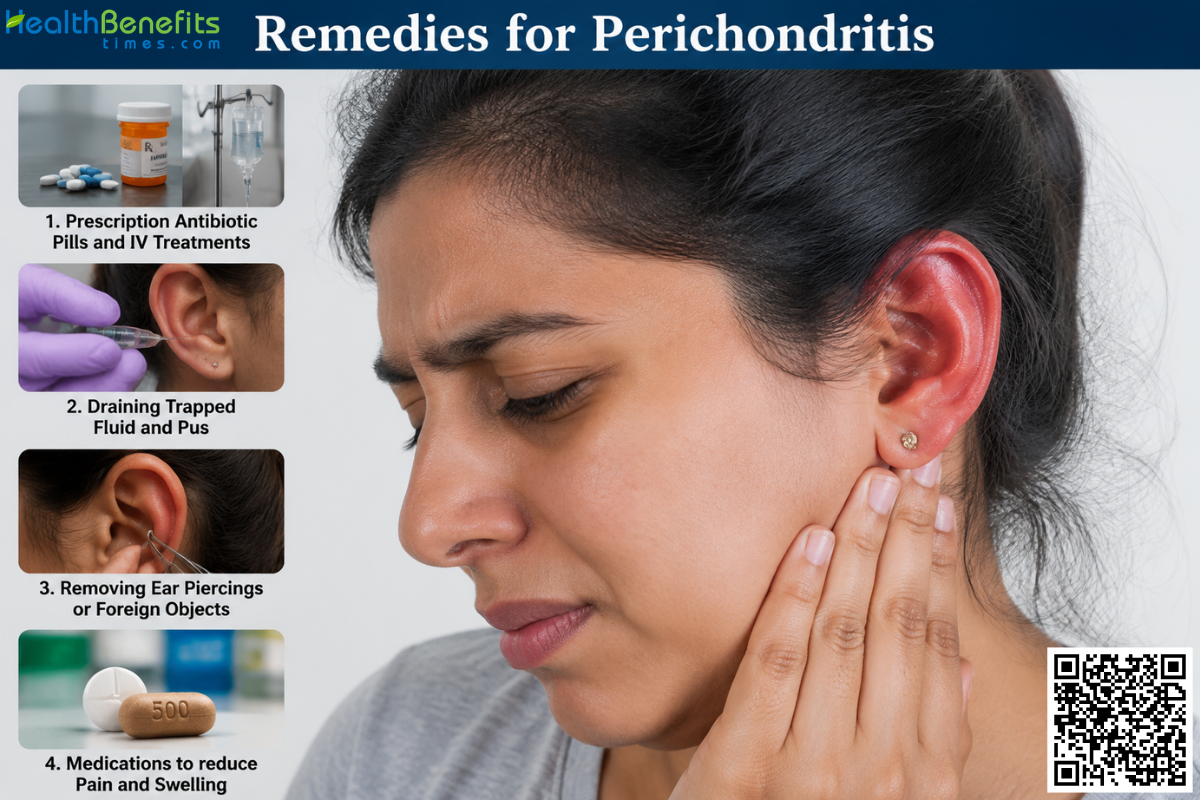
1. Prescription Antibiotic Pills and IV Treatments
How it may help
Antibiotics are the primary treatment for perichondritis because they directly attack and kill the bacteria causing the infection, most commonly Pseudomonas aeruginosa. Prompt use of oral pills for mild cases, or intravenous (IV) treatments for severe infections, stops the bacteria from spreading and damaging the ear’s underlying cartilage.
What research says
Clinical studies show that early treatment with antibiotics targeting Pseudomonas, such as fluoroquinolones, significantly reduces the risk of permanent ear deformity. Without prompt antibiotic intervention, the infection can quickly destroy the cartilage, leading to a structural collapse known as cauliflower ear 4.
How to use it safely
You must take the exact dosage prescribed by your doctor and complete the entire course of medication, even if your ear looks and feels better. Stopping the pills early allows surviving bacteria to multiply, causing the infection to return and become resistant to future treatments 5.
Potential precautions or side effects
Side effects include nausea, diarrhea, and dizziness. Some antibiotics carry risks for allergic reactions or tendon damage. Immediately report any sudden rash or severe joint pain to your doctor 4.
2. Draining Trapped Fluid and Pus
How it may help
Draining a trapped pocket of pus relieves pressure on the ear cartilage. Because the ear’s cartilage relies on the closely attached skin for its blood supply, removing fluid buildup prevents the tissue from suffocating and dying. This medical procedure reduces intense pain and stops permanent physical damage.
What research says
Clinical evidence shows that if fluid collects, antibiotics alone cannot cure the infection. Medical experts conclude that a doctor must surgically drain the trapped pus to prevent the cartilage from dying. Immediate drainage, followed by a tight bandage, prevents a permanent deformity known as cauliflower ear 4.
How to use it safely
You must never attempt to squeeze or puncture a swollen ear at home. A healthcare professional must perform this drainage in a sterile clinical setting. After the procedure, keep the doctor’s pressure bandages dry and firmly in place to prevent the fluid from returning 6.
Potential precautions or side effects
The primary complication is fluid re-accumulating if bandages shift. Attempting to drain the ear yourself guarantees worse bacterial infections, severe scarring, and permanent structural collapse 4.
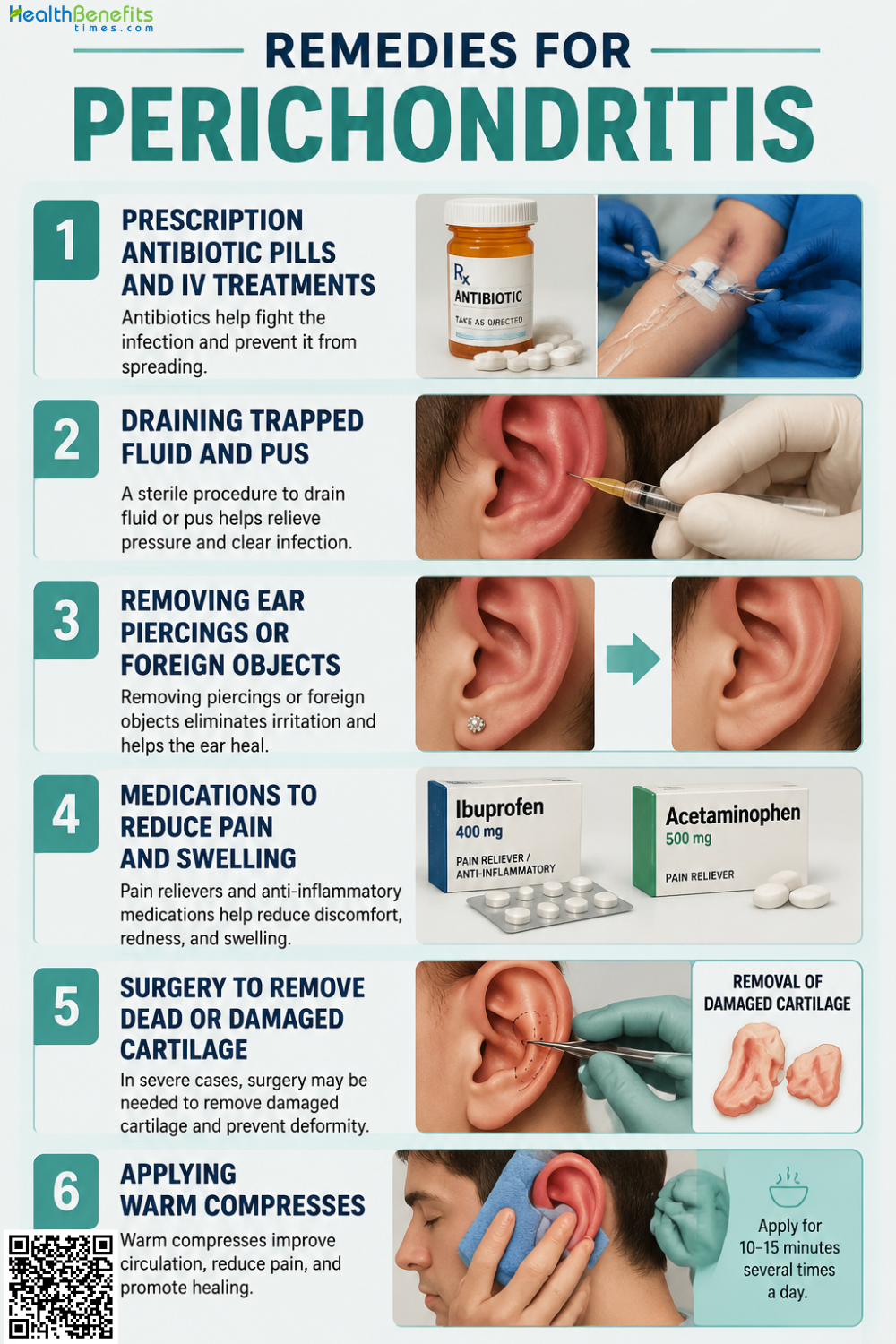
3. Removing Ear Piercings or Foreign Objects
How it may help
Removing an infected ear piercing or splinter eliminates the physical pathway that allows bacteria to enter the injured tissue. Because foreign metal or plastic harbors bacteria, taking the object out removes the constant source of contamination. This allows the immune system and prescribed antibiotics to clear the infection faster.
What research says
Clinical guidelines state that high ear cartilage piercing is a primary cause of perichondritis. Medical studies conclude that the infection will not resolve if the foreign body remains in the ear. Removing the jewelry is a mandatory first step in medical treatment protocols to prevent permanent cartilage destruction 4.
How to use it safely
You should wash your hands thoroughly with soap and water before touching your infected ear. Carefully remove the jewelry or have a doctor do it. Do not reinsert any earrings into the cartilage until a healthcare professional confirms the infection is completely gone.
Potential precautions or side effects
Removing the jewelry may cause the piercing hole to close, potentially trapping fluid inside. Always have a doctor evaluate the ear to ensure it drains properly after removal 4.
4. Medications to reduce Pain and Swelling
How it may help
Over-the-counter pain relievers help manage the severe discomfort and inflammation caused by perichondritis. While these medications do not cure the infection, reducing the tissue swelling eases the intense, throbbing pain in the ear cartilage, making the recovery process more comfortable while prescription antibiotics fight the bacteria.
What research says
Clinical guidelines state that analgesics and nonsteroidal anti-inflammatory drugs (NSAIDs) provide essential supportive care for perichondritis. Medical experts conclude these medications effectively control symptomatic inflammation, but they do not eliminate the bacterial infection and must only be used in combination with appropriate antibiotic therapy 4.
How to use it safely
Take over-the-counter pain relievers exactly as directed by the packaging or your healthcare provider. You must not exceed the recommended maximum daily dosage. Always consume NSAIDs, such as ibuprofen, with food to prevent stomach irritation, and avoid combining multiple medications containing acetaminophen 7.
Potential precautions or side effects
Common side effects include stomach upset, heartburn, and an increased risk of bleeding. Excessive use can potentially cause kidney or liver damage, so consult a doctor if pain persists 7.
5. Surgery to Remove Dead or Damaged Cartilage
How it may help
When a severe infection causes the ear cartilage to die, antibiotics can no longer reach the area. A surgeon removes this dead tissue to stop the infection from spreading deeper. This procedure clears out the damaged cartilage so the surrounding healthy ear tissue can properly heal.
What research says
Clinical protocols mandate the surgical removal of dead tissue if the infection destroys the ear cartilage. Medical experts conclude that leaving dead cartilage in place prevents recovery and worsens the infection. Prompt surgical intervention is crucial to minimize permanent structural collapse and severe ear deformity 4.
How to use it safely
You must carefully follow all post-surgery instructions to protect the healing ear. Keep the surgical bandages dry and firmly in place as directed by your doctor. Attend all follow-up appointments to ensure the wound is draining correctly and continue taking your prescribed antibiotics until finished.
Potential precautions or side effects
Surgical risks include bleeding, temporary numbness, and visible scarring. Because damaged cartilage is removed, you may experience a permanent change in the ear’s shape, commonly known as cauliflower ear.
6. Applying Warm Compresses
How it may help
Applying a warm compress increases blood circulation to the outer ear, which helps reduce the painful swelling associated with perichondritis. The gentle heat soothes the irritated tissue, providing temporary relief from the intense, throbbing discomfort while prescription antibiotics work to clear the underlying bacterial infection.
What research says
Clinical literature on ear infections shows that applying localized heat is an effective supportive therapy for managing severe discomfort. While a warm compress cannot kill the bacteria attacking the ear cartilage, research supports its use as a supplementary treatment to temporarily relieve pain and ease tissue stiffness 8.
How to use it safely
Soak a clean washcloth in warm water and wring out the excess liquid. Gently press the damp cloth against your infected ear for 10 to 15 minutes a few times a day. You must never use a heating pad because the sensitive ear skin burns easily.
Potential precautions or side effects
Always test the water temperature to prevent skin burns. If the warm compress increases your pain or worsens the swelling, stop using it immediately and consult a doctor.
Foods to Avoid When You suffer from Perichondritis
While medical science does not outline a specific diet to cure perichondritis, proper nutrition plays a critical role in supporting the body’s recovery. Because perichondritis is a severe bacterial infection of the ear cartilage, you should avoid foods that suppress the immune system, increase physical inflammation, or interfere with your prescribed antibiotic treatments.
1. High-Sugar Foods
Excess dietary sugar temporarily impairs white blood cell function, reducing your immune system’s ability to efficiently destroy the bacteria attacking your ear cartilage 9.

2. Alcoholic Beverages
Alcohol suppresses vital immune defenses and often causes harmful interactions with the prescription antibiotics necessary for treating perichondritis, delaying overall tissue recovery 10.
3. Ultra-Processed Foods
Highly processed meals contain unhealthy fats that trigger bodily inflammation, which can worsen the painful swelling and redness of your infected ear 11.
4. High-Sodium Foods
Excessive salt intake promotes fluid retention and alters immune cell function, potentially increasing the pressure and throbbing discomfort within the inflamed ear tissue 12.
When to see Doctor when you suffer from Perichondritis
1. Worsening Pain and Redness
If you experience intense pain and the outer ear turns increasingly red and swollen, immediate medical evaluation is necessary to prevent tissue damage 6.
2. Fluid or Pus Drainage
Seek urgent care if any yellow or green pus drains from the ear or a piercing, as this indicates an active bacterial infection 4.
3. Development of a Fever
A high body temperature combined with ear swelling signals that the local infection may be spreading, requiring immediate systemic antibiotic treatment 6.
4. Changes in Ear Shape
If the ear cartilage feels mushy or starts bending out of its normal shape, doctors must intervene immediately to prevent permanent deformity 4.
5. Unresponsiveness to Treatment
Contact your doctor if symptoms do not improve within 48 hours of starting prescribed antibiotics, as you might need stronger intravenous medication 4.
Comments
comments