

Nutritional Profile of Navy Beans
Based on the provided PDF, here are the top 16 nutritional values for Navy Beans (mature seeds, cooked, boiled, without salt).
Serving Size: 100g 1
| Nutrients | Amount | DV% |
| Water | 63.8 g 2 | N/A |
| Energy | 140 kcal 3 | 7% |
| Protein | 8.23 g 4 | 16% |
| Fiber, total dietary | 10.5 g 5 | 38% |
| Folate, total | 140 µg 6 | 35% |
| Carbohydrate | 26 g 7 | 9% |
| Manganese | 0.527 mg 8 | 23% |
| Copper | 0.21 mg 9 | 23% |
| Thiamin (Vitamin B1) | 0.237 mg 10 | 20% |
| Iron, Fe | 2.36 mg 11 | 13% |
| Magnesium, Mg | 53 mg 12 | 13% |
| Phosphorus, P | 144 mg 13 | 12% |
| Zinc, Zn | 1.03 mg 14 | 9% |
| Potassium, K | 389 mg 15 | 8% |
| Calcium, Ca | 69 mg 16 | 5% |
| Total lipid (fat) | 0.62 g 17 | < 1% |
| Total Sugars | 0.37 g 18 | < 1% |
Percent Daily Values (%DV) are based on a 2,000-calorie diet. Individual nutritional needs may vary depending on age, gender, activity level, and overall health.
Source: usda.gov
Science Backed Health Benefits of Navy Beans
#1. Boost Heart Health
Cardiovascular disease (CVD) refers to a cluster of disorders affecting the heart and blood vessels, often precipitated by prolonged dyslipidemia, such as abnormal cholesterol levels, which can manifest as early as childhood. 1 Dietary strategies utilizing specific functional foods play a pivotal role in mitigating these risks by biologically altering lipid metabolism. The ingestion of navy beans provides critical bioactive components, including dietary fiber, amino acids, and distinct phytochemicals like trigonelline and pipecolate, which exert cardioprotective effects. 1 Mechanistically, these nutrients function by binding bile acids to prevent intestinal reabsorption and modulating hepatic gene expression to suppress cholesterol synthesis. 2 Furthermore, metabolic profiling indicates that consumption reduces circulating free fatty acids associated with metabolic disease, such as palmitate, while simultaneously upregulating endogenous anti-inflammatory lipids like endocannabinoids, thereby actively countering the metabolic precursors of heart disease. 1
What Research Says:
- According to a randomized controlled pilot trial conducted by researchers at Colorado State University and University of Colorado Health, dietary interventions involving navy beans are both tolerable and effective for children with elevated cholesterol. 2 3
- The study, which monitored 38 children aged 8 to 13 over 4 weeks, demonstrated that daily intake of cooked navy bean powder significantly modulated lipid profiles, specifically resulting in higher high-density lipoprotein (HDL) cholesterol levels compared to control groups. 2 3
- Advanced metabolomic analysis revealed that this dietary regimen influenced 71 specific plasma compounds, shifting the metabolic landscape away from lipid dysfunction by increasing cardioprotective vitamins and decreasing inflammatory fatty acids 1
- These findings suggest that even short-term supplementation increases total dietary fiber intake and initiates favorable changes in blood lipid metabolism, supporting the potential of navy beans to reduce long-term CVD risk. 2 3
#2. Regulate Blood Sugar Levels
Diabetes Mellitus, specifically Type 2 (T2DM), manifests as chronic hyperglycaemia and insulin resistance, often driven by the rapid absorption of dietary sugars which elevates oxidative stress. 4 5 To counteract this, the consumption of Phaseolus vulgaris varieties, such as navy beans, modulates glucose kinetics through a complex nutrient matrix rather than a single compound. 5 High concentrations of viscous soluble fibre and resistant starch—particularly amylose—form a gel-like substance in the gut that physically delays gastric emptying and carbohydrate digestion. 5 6 Additionally, phytochemicals including phytic acid and phenolic compounds bind to essential cations like calcium, effectively inhibiting alpha-amylase enzymatic activity. 4 This biochemical interference retards the breakdown of starch into glucose, resulting in a blunted postprandial glycaemic response beneficial for preventing and managing T2DM. 4 5
What Research Says:
- Research published by Cambridge University Press indicates that consuming unleavened bread made from navy bean flour significantly reduces the blood glucose area under the curve (AUC) by 64% compared to white wheat bread. 4
- Further investigations reveal that this regulatory effect is chemically specific; removing phytic acid from navy bean flour resulted in a 141% increase in the glycaemic AUC, confirming that antinutrients play a critical role in inhibiting starch digestion. 4
- According to a review by Hutchins et al., the physical form of the food is also clinically relevant; consuming whole beans maintains cell wall integrity, which provides a physical barrier to digestion that processed powders may not fully replicate. 5
- Studies utilizing mixed-meal protocols demonstrate that adding beans to high-glycaemic foods like rice produces an intermediate glucose response, effectively dampening the sugar spike of the entire meal. 4 6
#3. Support Digestive Health
Digestive diseases often stem from a compromise in the intestinal epithelial barrier and a dysbiotic microbiome, which can precipitate chronic inflammation and metabolic dysfunction. To counteract these pathologies, dietary strategies rich in fermentable non-digestible carbohydrates and phenolic compounds are crucial for maintaining mucosal integrity and regulating host immune responses. 7 When ingested, these bioactive nutrients resist upper gastrointestinal digestion and serve as substrates for colonic bacteria, undergoing fermentation to produce short-chain fatty acids (SCFAs) such as butyrate and propionate. 8 These metabolites function as essential energy sources for colonocytes and upregulate the expression of tight junction proteins, effectively reducing intestinal permeability or “leaky gut” associated with obesity and metabolic syndrome. 9 10 Furthermore, specific phytochemicals identified in these legumes modulate glutathione metabolism and detoxification pathways, offering a chemo-preventive potential against colorectal cancer by enhancing antioxidant defenses and regulating cell proliferation. 11 By fostering a robust microbial community and reinforcing the gut barrier, these nutrients help mitigate risks associated with colitis, obesity-related dysbiosis, and systemic inflammation. 12
What Research says:
- Researchers at the University of Guelph demonstrated that supplementing high-fat diets with cooked navy bean powder significantly remodeled the fecal microbiota in obese models, notably restoring the abundance of the beneficial bacterium Akkermansia muciniphila and increasing SCFA-producing genera like Prevotella and S24-7. 9 10
- In a randomized controlled trial with colorectal cancer survivors conducted by Colorado State University, daily consumption of navy beans modulated the stool metabolome, resulting in a 5.25-fold increase in ophthalmate and distinct shifts in lysine and fatty acid metabolism, which suggest improved gut health and cancer control mechanisms. 11
- Comparative animal studies revealed that while these beans effectively reduced systemic pro-inflammatory cytokines (IL-1β, TNFα) and enhanced mucosal defense proteins (Reg3γ, Relmβ), their impact on acute colitis is complex, as they lowered systemic inflammation but potentially aggravated local tissue damage during active disease flares. 7 8
- Further investigations indicate that introducing navy beans into an established high-fat diet improves intestinal barrier function (increased ZO-1 and Claudin-2 expression) and reduces adipose tissue inflammatory markers (NFκBp65, STAT3) more effectively than weight loss induced by caloric restriction alone. 12 10
#4. Promote Healthy Weight Management
Obesity is a complex condition defined not merely by excess mass but by chronic low-grade inflammation, gut dysbiosis, and metabolic dysfunction. Incorporating navy beans into the diet addresses these systemic issues through their rich content of fermentable non-digestible carbohydrates—specifically soluble fiber and resistant starch—and bioactive phenolic compounds. 13 Upon consumption, these nutrients resist digestion in the upper gastrointestinal tract and reach the colon , where they undergo fermentation by commensal bacteria to produce Short-Chain Fatty Acids (SCFAs) like butyrate, acetate, and propionate. 13 These metabolites are crucial for weight management as they strengthen the intestinal epithelial barrier and suppress inflammatory signaling in visceral adipose tissue. 13 Consequently, this dietary intervention helps manage central adiposity, evidenced by reductions in waist circumference and improvements in metabolic risk factors, rather than simply reducing total scale weight. 14
What Research Says:
- Research involving overweight and obese adults demonstrated that adding five cups of commercially available canned navy beans to a weekly diet for four weeks resulted in a significant reduction in waist circumference, measuring a decrease of 2.5 cm in females and 2.1 cm in males. 14
- According to preclinical studies conducted by the University of Guelph, supplementing a high-fat diet with cooked navy bean powder significantly improved the “obese phenotype” by restoring the abundance of beneficial gut bacteria such as Akkermansia muciniphila, which is often depleted in obesity. 13
- Data indicates that while bean supplementation may not always drastically lower total body weight in high-fat contexts, it effectively reduces specific inflammatory proteins in adipose tissue, such as IL-6 and MCP-1, thereby improving overall metabolic health. 13
#5. Reduce Inflammation
Inflammation often manifests as a chronic, low-grade systemic condition or a compromised intestinal barrier, driving comorbidities such as obesity and metabolic dysfunction (501). 10 Navy beans alleviate this burden through their rich composition of fermentable non-digestible carbohydrates—specifically soluble fiber, resistant starch, and oligosaccharides—as well as bioactive polyphenols like apigenin and ferulic acid. 15 When consumed, these nutrients undergo fermentation by the gut microbiota to produce Short-Chain Fatty Acids (SCFAs), including butyrate and propionate. 10 These metabolites biologically dampen inflammation by suppressing signaling pathways such as NF$kappa$B and STAT3 in visceral adipose tissue while simultaneously fortifying the intestinal wall through increased mucin production and tight junction protein expression. 10 This internal modulation targets both colonic and adipose tissue inflammation, effectively attenuating obesity-associated inflammatory phenotypes. 10
What Research Says:
- Research conducted by the University of Guelph and Agriculture and Agri-Food Canada demonstrated that in mice with established obesity, a diet supplemented with 15.7% cooked navy bean powder significantly reduced inflammatory cytokines (IL-6, MCP-1, MIP-1alpha) and transcription factors (NF kappa$B, STAT3) in adipose tissue, even without weight loss. 10
- The “BE GONE” clinical trial at MD Anderson Cancer Center found that high-risk obese patients consuming one cup of navy beans daily for eight weeks showed a significant increase in gut microbiome diversity and the relative abundance of beneficial bacteria like Faecalibacterium and Bifidobacterium. 15
- These clinical findings further revealed that navy bean consumption elevated circulating levels of pipecolic acid, a metabolite linked to anti-inflammatory effects, while simultaneously decreasing pro-inflammatory markers such as IL-10 receptor-alpha and CXCL1, underscoring the legume’s potential in managing systemic immune responses. 15
#6. Strengthen Immune Function
Immune dysfunction manifests as either compromised defense against pathogens or chronic inflammation, conditions that can be mitigated by specific dietary interventions. Bioactive peptides and lectins identified in these legumes effectively enhance the body’s interferon response, a critical pathway for halting viral replication in infections like H1N1. 16 Beyond antiviral defense, the ingestion of these beans fosters the production of short-chain fatty acids (SCFAs) and phenolic compounds that modulate the gut mucosa, reducing pro-inflammatory cytokines involved in colitis and obesity-related metabolic risks. 8 Whether utilized as fermented extracts to block viral attachment or consumed whole to regulate host metabolites like pipecolic acid, these nutrients fundamentally recalibrate the immune system to prevent both acute infections and long-term inflammatory dysregulation. 15 16
What Research Says:
- Research conducted by Chonnam National University indicates that fermented navy bean extracts (FBE) and a specific antifungal peptide (AFL) significantly inhibit Influenza A (H1N1) replication by upregulating key antiviral genes such as IFN-α, STAT1, and ISG15, while also physically binding to viral hemagglutinin to block cellular entry. 16
- According to the BE GONE trial at MD Anderson Cancer Center, adding a daily cup of navy beans to the diet of colorectal cancer survivors increased gut microbial diversity and beneficial Faecalibacterium, which correlated with decreases in systemic inflammatory markers like IL-10ra and CXCL1. 15 17
- Studies from the University of Guelph demonstrated that while navy bean diets paradoxically increased mucosal damage scores in acute colitis models, they successfully reduced the expression of inflammatory cytokines IL-6, IFN-γ, and IL-17A both locally in the colon and systemically in the blood. 8
#7. Manage Cholesterol Levels
Cholesterol is a vital lipid required for cellular structure and function, yet elevated concentrations in the blood are a primary risk factor for cardiovascular pathology. Medical literature indicates that Navy Beans actively manage these levels through a complex matrix of nutrients, primarily soluble and insoluble dietary fibers, alongside specific bioactive phytochemicals. When consumed, these fibers bind to bile acids within the intestinal tract, impeding their reabsorption and facilitating fecal excretion. 18 19 This physiological mechanism forces the liver to sequester circulating cholesterol to synthesize new bile acids, thereby effectively reducing serum lipid concentrations. Furthermore, unique phytochemicals such as ferulic acid and amino acid metabolites like pipecolate and S-methylcysteine exert antioxidant effects and modulate lipid metabolism pathways. 3 20 These nutrients specifically target and lower Low-Density Lipoprotein (LDL) and Total Cholesterol, while also influencing High-Density Lipoprotein (HDL) dynamics to support vascular health. 21 22
What Research Says:
- Research conducted by Colorado State University utilizing non-targeted metabolomics revealed that children consuming cooked navy bean powder for four weeks exhibited significant alterations in plasma lipid metabolites, including reduced levels of pro-inflammatory lipids such as arachidonate and palmitate. 3 20
- A multicenter randomized crossover study involving adults with elevated LDL found that a daily intake of one cup of canned beans, including navy beans, resulted in a statistically significant decrease in both Total Cholesterol and LDL cholesterol compared to a white rice control. 21
- According to clinical observations published in the Canadian Journal of Dietetic Practice and Research, the consumption of canned navy beans was shown to reduce metabolic risk factors in adults, specifically lowering Total Cholesterol by 11.5% and LDL by 18% in male participants. 22
- Additional findings from pilot trials suggest that while short-term navy bean supplementation is tolerable and increases dietary fiber intake, higher daily doses or longer intervention periods may be necessary to observe broad statistical changes in serum lipid profiles across all pediatric demographics. 18 19 23
Health Risks and Precautions of Navy Beans
Side Effects
- The primary documented side effect of consuming navy beans is gastrointestinal (GI) discomfort. In a clinical trial involving children, some participants reported changes in flatulence and stool consistency, as well as bloating, during the initial phase of increasing navy bean intake. 2 3 These symptoms were generally mild and did not significantly interfere with daily activities. 2 Furthermore, one participant withdrew from the same study due to GI issues. 2 3 It is important to note that these discomforts often subside as the body adjusts to a higher fiber intake. 2
- In a study using a mouse model of acute colitis, a diet containing cooked navy bean flour was found to have both beneficial and adverse effects. While it reduced inflammatory biomarkers, it also exacerbated dextran sodium sulphate (DSS)-induced colonic damage. This was indicated by an increased histological injury score and a higher rate of apoptosis (cell death) within the colon epithelium, as shown by increased cleaved caspase-3 and FasL mRNA expression. 8 This suggests that in the context of active colitis, navy bean consumption might aggravate mucosal damage.
- The primary known adverse effect of consuming navy beans is mild to moderate gastrointestinal discomfort. In the BE GONE trial, which involved obese patients with a history of colorectal neoplasia, some participants reported bloating, flatulence, and changes in bowel habits such as constipation or loose stool. 15 15 17 These effects were sometimes attributed to the intervention, but similar, unattributable bowel habit changes were also reported by a small percentage of participants while consuming their usual diet without beans 15 15 17
- Consumption of navy beans can lead to minor gastrointestinal (GI) discomforts, including changes in flatulence, stool consistency, and bloating. These symptoms were reported in some children during a 4-week dietary intervention, although they did not majorly interfere with daily activities and were reported at similar rates in the control group not consuming navy beans. 8 18 In a mouse model of induced colitis, a diet containing 20% cooked navy bean flour was associated with an increase in colonic mucosal damage, indicated by higher histological injury scores and increased apoptosis (cleaved caspase-3) in the colon epithelium. The same study also noted that the bean diet increased the expression of FasL mRNA, which is involved in apoptosis pathways. However, it is important to note that the mice in this study were subjected to a chemical (DSS) to induce colitis, and these adverse effects on the colon may be related to an interaction between the bean diet and the disease model (604). 19
- The primary documented side effect associated with increased navy bean consumption is minor and temporary gastrointestinal (GI) discomfort. In a study where participants consumed 35g of cooked navy bean powder daily, a few individuals reported GI discomforts, such as bloating or changes in stool consistency and flatulence. However, these symptoms were manageable, often alleviated by eating the study meals in smaller portions throughout the day, and did not lead to any participants withdrawing from the study. 23 Another study confirmed that no major gastrointestinal issues were reported with increased consumption, and a validated questionnaire revealed that any perceived GI distress was minimal and did not interfere with daily activities. The study also highlighted that blinding participants to whether they were consuming navy beans may have helped reduce the misconception that these high-fiber foods cause significant discomfort. 24
Food Incompatibilities
N/A
Timing & Conditions
- The research suggests caution regarding navy bean consumption specifically during active colonic inflammation. In the same mouse model of colitis, the bean-supplemented diet led to increased colonic damage. The researchers hypothesized that this might be due to the bean components increasing gastrointestinal transit time, which could prolong the colon’s exposure to the irritant (DSS) and thereby induce greater mucosal damage. This indicates that during periods of active inflammatory bowel disease (IBD) or colitis, consumption of navy beans might not be advisable and requires further investigation. The potential for an interaction between the complex food matrix of beans and the inflammatory disease state was noted as a limitation of using this particular colitis model. 8
Contraindications
- In a study using a mouse model of acute colitis (inflammation of the colon), a diet containing 20% cooked navy bean flour aggravated the colonic damage caused by the chemical used to induce the condition (604). While the authors suggested this might be related to the specific model, it indicates that consumption during active, chemically-induced colitis may be inadvisable. The raw, unprocessed beans contain anti-nutritional components such as lectins, which can be toxic. However, the documents emphasize that proper preparation methods, like soaking and heating (cooking), are effective at reducing the content of these harmful substances. 8
- The provided documents do not list any specific medical conditions or diseases that make navy bean consumption unsafe. The studies included in the documents actively involved overweight and obese adults, as well as colorectal cancer (CRC) survivors, without indicating that navy beans are contraindicated for these groups. 25 23 24 However, one study did note a protocol exclusion criterion for individuals with a history of gallstones, suggesting a potential precaution for this condition. 25
Drug Interactions
- While the documents do not specify direct drug interactions, one study noted a decrease in the drug compound omeprazole in the plasma of children consuming navy beans, suggesting a possible interaction that warrants further investigation. 3
External Pesticides and Mold
N/A
Comments
comments
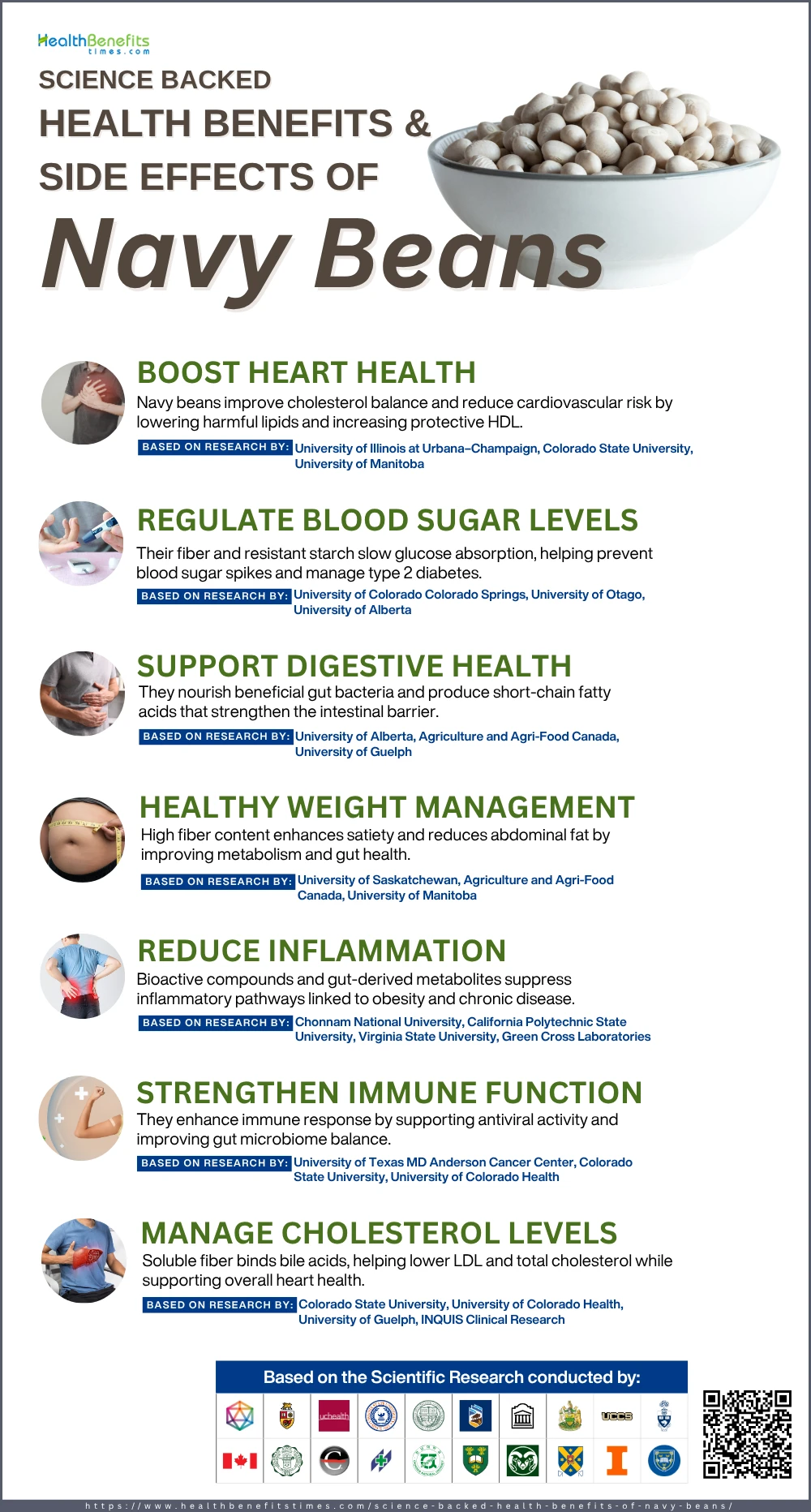
This article is based on Scientific Research Conducted by following Research Organization:
- Navy Bean and Rice Bran Intake Alters the Plasma Metabolome of Children at Risk for Cardiovascular Disease–University of Illinois at Urbana–Champaign, United States
- A Pilot Randomized Controlled Clinical Trial to Assess Tolerance and Efficacy of Navy Bean and Rice Bran Supplementation for Lowering Cholesterol in Children–Colorado State University, United States
- Navy Bean and Rice Bran Intake Alters the Plasma Metabolome of Children at Risk for Cardiovascular Disease–University of Manitoba, Canada
- Phaseolus beans: impact on glycaemic response and chronic disease risk in human subjects–University of Colorado Colorado Springs, United States
- Phaseolus beans: impact on glycaemic response and chronic disease risk in human subjects–University of Colorado Colorado Springs, United States
- Health Benefits of Plant-Based Nutrition: Focus on Beans in Cardiometabolic Diseases–University of Otago, New Zealand
- Navy and black bean supplementation primes the colonic mucosal microenvironment to improve gut health–University of Alberta, Canada
- Cooked navy and black bean diets improve biomarkers of colon health and reduce inflammation during colitis–Agriculture and Agri-Food Canada, Canada
- Navy bean supplemented high-fat diet improves intestinal health, epithelial barrier integrity and critical aspects of the obese inflammatory phenotype–University of Guelph, Canada
- Navy Bean Supplementation in Established High-Fat Diet-Induced Obesity Attenuates the Severity of the Obese Inflammatory Phenotype–Louisiana State University, USA
- Navy Beans Impact the Stool Metabolome and Metabolic Pathways for Colon Health in Cancer Survivors–Colorado State University, USA
- Dietary pulses as a means to improve the gut microbiome, inflammation, and appetite control in obesity–University of Ottawa, Canada
- Canned Navy Bean Consumption Reduces Metabolic Risk Factors Associated with Obesity–University of Saskatchewan, Canada, Agriculture and Agri-Food Canada, Canada, University of Manitoba, Canada
- Modulating a prebiotic food source influences inflammation and immune-regulating gut microbes and metabolites: insights from the BE GONE trial–University of Texas MD Anderson Cancer Center, USA
- Antiviral activity of navy bean (Phaseolus vulgaris) extract against influenza A virus via haemagglutinin interaction and interferon pathway modulation–Chonnam National University, Republic of Korea, California Polytechnic State University, USA, Virginia State University, USA, Green Cross Laboratories, Republic of Korea
- Modulating a prebiotic food source influences inflammation and immune-regulating gut microbes and metabolites: insights from the BE GONE trial–University of Texas MD Anderson Cancer Center, USA
- A Pilot Randomized Controlled Clinical Trial to Assess Tolerance and Efficacy of Navy Bean and Rice Bran Supplementation for Lowering Cholesterol in Children–Colorado State University, USA, University of Colorado Health (Medical Center of the Rockies), USA
- Navy Bean and Rice Bran Intake Alters the Plasma Metabolome of Children at Risk for Cardiovascular Disease–Colorado State University, USA, University of Colorado Health (Medical Center of the Rockies), USA
- Canned Beans Decrease Serum Total and LDL Cholesterol in Adults with Elevated LDL Cholesterol in a 4-wk Multicenter, Randomized, Crossover Study–University of Guelph, Canada, Agriculture and Agri-Food Canada (Guelph Research and Development Centre), Canada, INQUIS Clinical Research, Canada
- Canned Navy Bean Consumption Reduces Metabolic Risk Factors Associated with Obesity–Mount Saint Vincent University, Canada, University of Toronto, Canada
- A randomized-controlled trial to increase navy bean or rice bran consumption in colorectal cancer survivors–Colorado State University, USA
- Feasibility of Increased Navy Bean Powder Consumption for Primary and Secondary Colorectal Cancer Prevention–Colorado State University, USA, University of Colorado Health – Cancer Center of the Rockies, USA
- Navy Beans Impact the Stool Metabolome and Metabolic Pathways for Colon Health in Cancer Survivors–Colorado State University, USA