

Causes of Evans Syndrome
Evans syndrome occurs when the immune system produces antibodies that mistakenly attack and destroy the body’s own healthy blood cells. Medical professionals classify the causes of this immune system malfunction into two main categories: primary and secondary. Primary (or idiopathic) Evans syndrome means that the condition develops independently without any identifiable underlying cause. In contrast, secondary Evans syndrome is triggered by another existing medical condition, genetic defect, or external infection.
The known underlying causes and triggers of secondary Evans syndrome include:
- Systemic Autoimmune Diseases: Existing autoimmune conditions, where the body’s immune system attacks healthy tissues, can trigger the syndrome. Systemic lupus erythematosus (SLE) is the most frequently associated autoimmune disease, though it can also occur alongside rheumatoid arthritis and autoimmune hepatitis 3.
- Primary Immunodeficiencies: These are inherited immune system disorders that prevent the body from fighting off threats properly. Conditions such as autoimmune lymphoproliferative syndrome (ALPS) and common variable immunodeficiency (CVID) are common underlying causes of the syndrome, particularly in young children 5.
- Specific Genetic Mutations: Inherited errors in specific genes that regulate immune responses can lead to the syndrome. Deficiencies in vital immune-regulating proteins, such as CTLA-4, LRBA, and TPP2, disrupt normal immune balance and cause severe immune dysregulation 3.
- Blood and Lymph Node Cancers: Malignancies that affect the white blood cells and the lymphatic system are established causes of the syndrome, primarily in older adults. These cancers include chronic lymphocytic leukemia (CLL) and non-Hodgkin lymphoma 6.
- Viral and Bacterial Infections: Certain infections can confuse the immune system and prompt it to attack healthy blood cells. Infectious triggers shown to cause the syndrome or provoke relapses include the Epstein-Barr virus (EBV), cytomegalovirus (CMV), hepatitis B and C, the human immunodeficiency virus (HIV), parvovirus B19, and the SARS-CoV-2 virus responsible for COVID-19 1, 7.
Symptoms of Evans Syndrome
The clinical presentation of Evans syndrome varies depending on which specific blood cells the immune system attacks and the severity of the cell destruction. Individuals typically experience a combination of symptoms related to the depletion of red blood cells, platelets, and, occasionally, white blood cells.
- Symptoms of Autoimmune Hemolytic Anemia (Low Red Blood Cells): When the immune system destroys red blood cells faster than the bone marrow can replace them, the body’s tissues receive insufficient oxygen. This manifests as profound fatigue, general weakness, pallor (abnormal paleness of the skin), and shortness of breath during routine physical exertion. The rapid breakdown of red blood cells also releases excess bilirubin into the bloodstream, frequently causing jaundice (a yellowish discoloration of the skin and the whites of the eyes) and abnormally dark urine 1.
- Symptoms of Immune Thrombocytopenia (Low Platelets): Platelets are specialized cell fragments essential for normal blood clotting. Their destruction leads to frequent and unexplained bleeding complications. Affected individuals often develop petechiae (tiny, non-raised red or purple dots on the skin caused by broken capillaries) and purpura (larger purple patches or severe bruising that appears without injury). Other common symptoms include frequent nosebleeds, bleeding gums, and unusually heavy menstrual periods 3.
- Symptoms of Autoimmune Neutropenia (Low White Blood Cells): In roughly 15% of cases, Evans syndrome also targets neutrophils, a critical type of white blood cell responsible for fighting off bacterial and fungal infections. Patients with this depletion exhibit a severely compromised immune response, leading to a high susceptibility to frequent, recurrent infections that are often accompanied by persistent or unexplained fevers 5.
- Systemic and Organ-Related Symptoms: The excessive destruction and filtration of abnormal blood cells force the body’s organs to work much harder than usual. This overexertion frequently leads to hepatosplenomegaly (the physical enlargement of the liver and spleen), which can cause discomfort or a persistent feeling of fullness in the upper abdomen. Patients may also develop swollen lymph nodes during active disease flares {% https://pmc.ncbi.nlm.nih.gov/articles/PMC6497206/
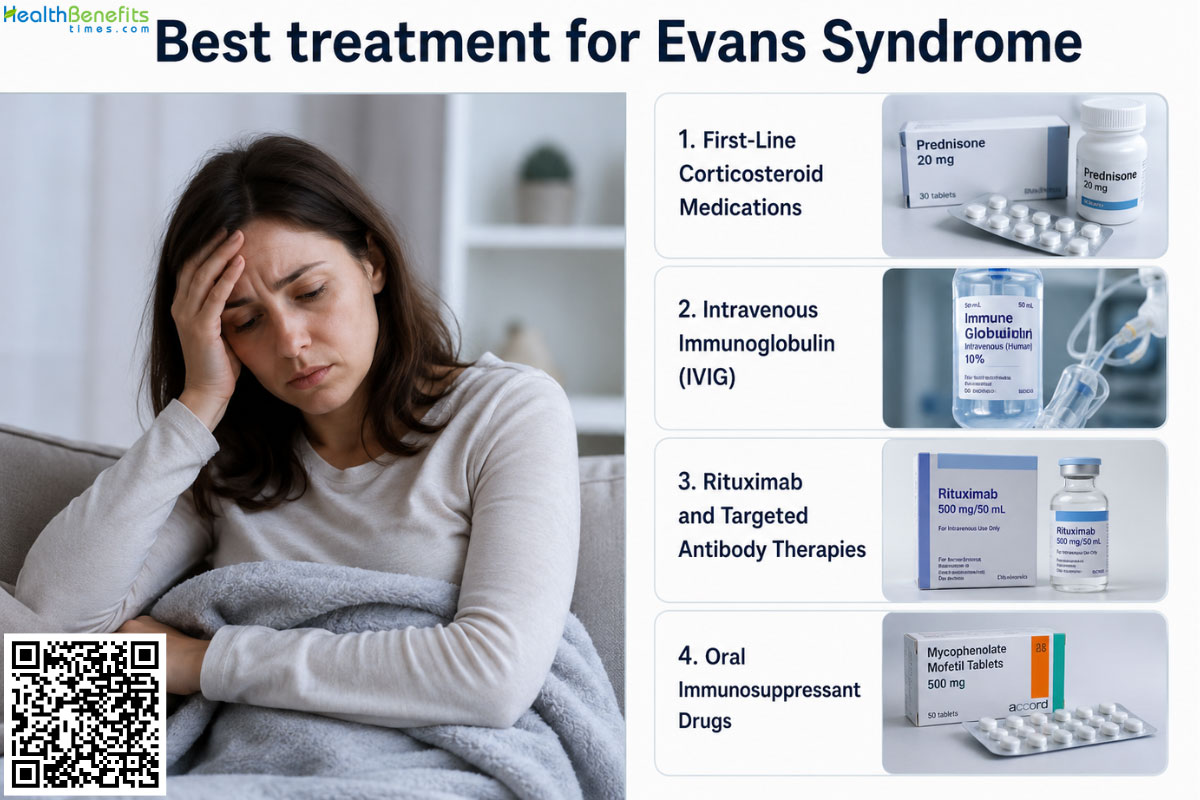
Best Treatment for Evans Syndrome
1. First-Line Corticosteroid Medications
How it may help
Corticosteroids are the established primary treatment for Evans syndrome. By directly suppressing the immune system, they reduce the destruction of red blood cells and platelets caused by abnormal autoantibodies 5. This action helps restore normal blood counts, reverses severe anemia, and prevents potentially life-threatening bleeding episodes 8.
What research says
Clinical evidence confirms that the majority of patients respond well to initial corticosteroid therapy, experiencing rapid stabilization 5. However, research indicates that long-term remission is uncommon, and more than half of patients eventually relapse 5. Steroids remain crucial for early intervention, though secondary immunosuppressive medications are frequently needed later 3.
How to use it safely
You must take corticosteroids exactly as prescribed by your healthcare provider. The medication is typically given at a high starting dose and slowly tapered off over weeks or months 5. Never stop taking this medication abruptly, as sudden withdrawal can cause dangerous complications and trigger a disease relapse.
Potential precautions or side effects
Prolonged corticosteroid therapy increases your susceptibility to severe infections, elevated blood sugar, weight gain, and osteoporosis 3. Regular medical monitoring is essential to manage these serious adverse effects safely.
2. Intravenous Immunoglobulin (IVIG)
How it may help
Intravenous Immunoglobulin (IVIG) provides rapid stabilization during severe episodes of Evans syndrome. It works by blocking the immune system’s receptors, preventing immune cells from destroying red blood cells and platelets (Giannotta, n.d.) 9. This quickly increases blood cell counts, controlling life-threatening bleeding and massive hemolysis (Jaime-Pérez et al., 2018) 3.
What research says
Research indicates IVIG is a critical first-line therapy, especially when patients experience severe bleeding (Shaikh, n.d.) 5. While it successfully induces rapid responses in most patients, clinical studies conclude these benefits are temporary, requiring secondary long-term immunosuppressive therapies to maintain remission and prevent relapses (Giannotta, n.d.) 9.
How to use it safely
You must receive IVIG infusions strictly in a monitored medical setting. To prevent adverse reactions, your healthcare provider will administer the dose slowly and may provide premedications like antihistamines (Arumugham, n.d.) 10. Stay well-hydrated before the infusion to reduce the risk of kidney strain (Arumugham, n.d.) 10.
Potential precautions or side effects
Common side effects include headaches, fever, and nausea (Arumugham, n.d.) 10. Seek emergency care for rare complications like severe allergic reactions, blood clots, or kidney failure (Arumugham, n.d.) 10.
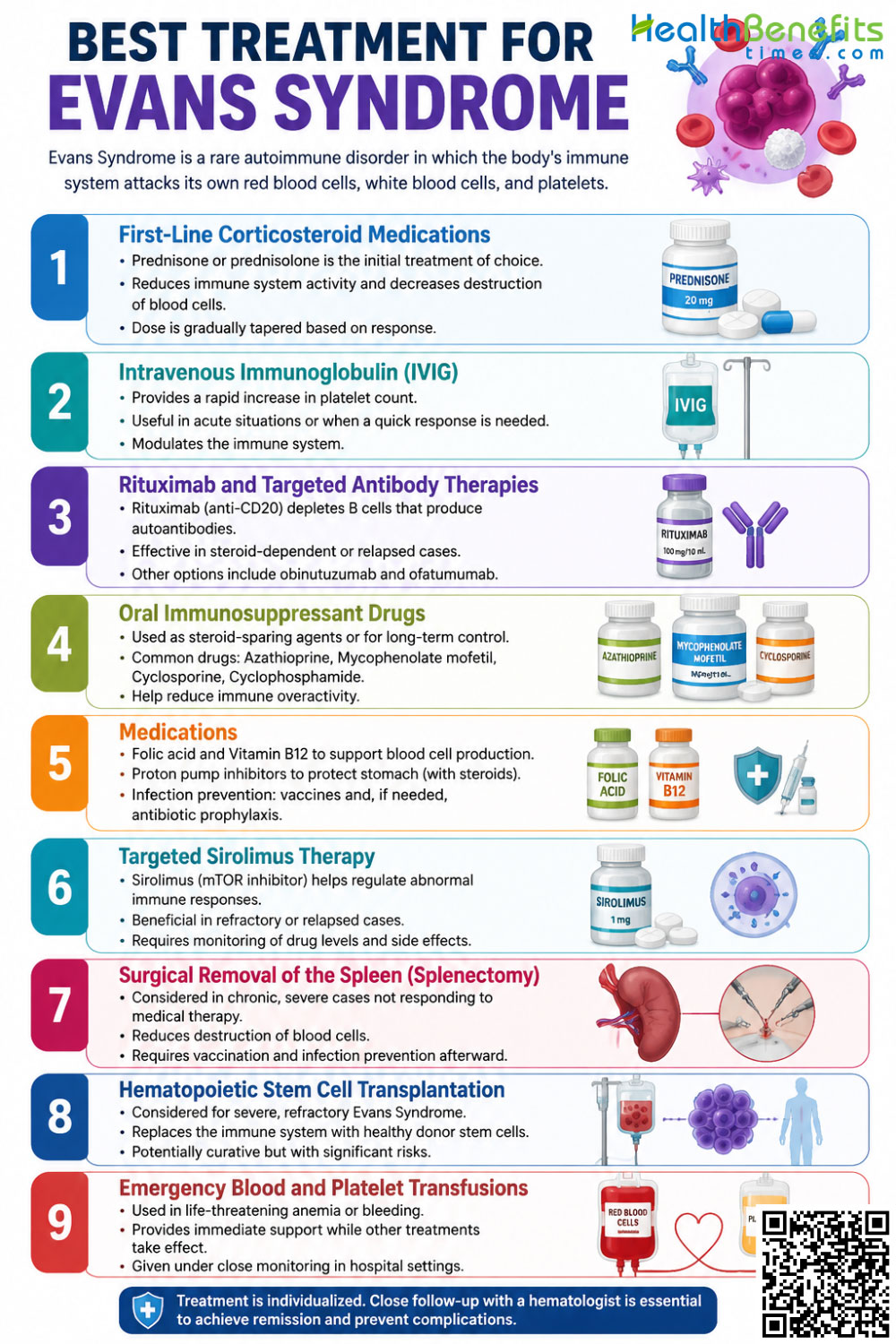
3. Rituximab and Targeted Antibody Therapies
How it may help
Rituximab is a targeted monoclonal antibody that identifies and destroys specific immune cells, called B-cells, which are responsible for producing harmful autoantibodies 3. By reducing the number of these abnormal cells, rituximab stops the immune system from attacking red blood cells and platelets, allowing blood counts to recover 11.
What research says
Research establishes rituximab as a highly effective second-line therapy for patients who do not respond to or relapse after initial corticosteroid treatment 3. Clinical studies show it achieves a successful response in most patients, providing long-term remission, though some may require repeated courses if symptoms return 3.
How to use it safely
You must receive rituximab through an intravenous infusion in a closely monitored clinical setting. To prevent severe allergic reactions, your healthcare provider will give you premedications, such as antihistamines and fever reducers, before each session 12. Attend all scheduled blood tests to monitor your recovery.
Potential precautions or side effects
Common side effects include fever, rash, and nausea during infusion 3. Because the medication depletes your immune cells, you face a significantly increased risk of severe infections for several months 11.
4. Oral Immunosuppressant Drugs
How it may help
Oral immunosuppressants, such as mycophenolate mofetil or cyclosporine, work by broadly dampening an overactive immune system 5. By suppressing the production and activity of specific immune cells, these daily medications prevent the continuous destruction of red blood cells and platelets, steadily stabilizing blood counts over time 3.
What research says
Clinical research identifies oral immunosuppressants as a vital second-line or steroid-sparing therapy for patients who repeatedly relapse or cannot tolerate long-term corticosteroids 3. Studies conclude that while they do not cure the disease, these medications successfully maintain long-term remission and significantly reduce the need for continuous interventions 13.
How to use it safely
You must take these medications consistently at the exact prescribed dose, as missing doses can trigger sudden relapses. Because these drugs suppress your immune system, you should avoid sick individuals and attend all scheduled laboratory tests to monitor your organ function and blood counts 5.
Potential precautions or side effects
These drugs significantly increase your risk of severe infections, liver toxicity, and gastrointestinal distress 3. Long-term use may also elevate the risk of developing certain secondary cancers 5.
5. Medications to Stimulate Platelet Production (TPO-RAs)
How it may help
Thrombopoietin receptor agonists (TPO-RAs), such as eltrombopag and romiplostim, directly stimulate the bone marrow to increase the production of platelets 3. By boosting platelet generation, these medications compensate for the rapid destruction of blood cells caused by Evans syndrome, successfully stabilizing platelet counts and preventing severe bleeding.
What research says
Clinical studies establish TPO-RAs as a highly effective second-line therapy for the thrombocytopenia component of Evans syndrome in patients who relapse or fail initial corticosteroid treatments 14. Multicenter research demonstrates strong response rates for restoring platelets, though these drugs do not improve the autoimmune hemolytic anemia component 14.
How to use it safely
Take oral TPO-RAs exactly as prescribed or attend all scheduled weekly clinic visits for subcutaneous injections. You must undergo frequent blood testing during treatment so your healthcare provider can carefully monitor your platelet counts and adjust your dosage, preventing your levels from rising dangerously high 14.
Potential precautions or side effects
These medications significantly increase your risk of dangerous venous and arterial blood clots 15. Additional side effects include headaches, muscle pain, joint pain, and potential liver toxicity 3.
6. Targeted Sirolimus Therapy
How it may help
Sirolimus is a targeted immunosuppressant that works by inhibiting the mTOR pathway, calming an overactive immune system. It directly reduces the excessive activity of lymphocytes, preventing the production of harmful autoantibodies that destroy red blood cells and platelets 16. This effectively stabilizes blood counts and shrinks an enlarged spleen.
What research says
Clinical trials establish sirolimus as a highly effective, steroid-sparing therapy for patients with relapsed or refractory Evans syndrome 16. Multicenter research demonstrates that monotherapy successfully induces durable, long-term remission in most patients who fail standard treatments, proving especially beneficial for those with underlying autoimmune lymphoproliferative disorders 17.
How to use it safely
You must take this daily oral medication exactly as prescribed. Attend all scheduled laboratory appointments to monitor the drug concentration in your blood. Your healthcare provider will use these routine tests to precisely adjust your dosage and maintain a safe therapeutic range 18.
Potential precautions or side effects
Common side effects include mouth sores, mild hypertension, and altered liver enzymes. Because the medication reduces immune function, it increases your susceptibility to infections 19.
7. Surgical Removal of the Spleen (Splenectomy)
How it may help
Surgical removal of the spleen directly eliminates the primary organ responsible for trapping and destroying blood cells 3. By removing this major site of cellular destruction, the procedure stops the rapid loss of red blood cells and platelets, effectively raising blood counts and resolving severe bleeding complications.
What research says
Clinical studies indicate that while splenectomy was traditionally a standard second-line option, its use has significantly declined due to the availability of newer targeted medications 13. Research shows that while it induces temporary remission in many patients, long-term success is unpredictable, and most individuals eventually experience a relapse 5.
How to use it safely
Because the spleen filters bacteria, you must receive specific vaccines against pneumonia, meningitis, and influenza weeks before the surgery 20. Post-surgery, you must seek emergency medical attention for any fever, as minor illnesses can quickly escalate into fatal complications.
Potential precautions or side effects
The most severe lifelong complication is an overwhelming, life-threatening bacterial infection 5. Removing the spleen also significantly increases your risk of developing dangerous internal blood clots 13.
8. Hematopoietic Stem Cell Transplantation
How it may help
Hematopoietic stem cell transplantation completely replaces a defective immune system with healthy stem cells. By eliminating the source of abnormal lymphocytes and generating a new, healthy immune response, this procedure can permanently stop the continuous destruction of blood cells, offering a potential cure 3.
What research says
Research identifies this procedure as a rare, last-resort therapy for patients who fail all standard medical interventions 5. Although it remains the only potentially curative option for refractory Evans syndrome, experts strictly reserve it for extreme cases due to high toxicity and treatment-related mortality 3.
How to use it safely
You must undergo this rigorous procedure exclusively within a specialized transplant center. Before receiving new stem cells, you will require intensive chemotherapy to eliminate your existing bone marrow. Afterward, you must remain in strict medical isolation to prevent life-threatening infections while your new immune system develops.
Potential precautions or side effects
This procedure carries extreme risks. You face a high susceptibility to fatal systemic infections, severe organ toxicity, and potentially lethal graft-versus-host disease when receiving donor stem cells 21.
9. Emergency Blood and Platelet Transfusions
How it may help
Emergency transfusions deliver an immediate supply of healthy red blood cells or platelets during life-threatening crises. While not a cure, this rapid replacement prevents fatal cardiovascular collapse from severe anemia and stops catastrophic bleeding, keeping the patient stable until primary immunosuppressive medications begin working 3.
What research says
Clinical guidelines classify transfusions as a temporary, supportive intervention strictly reserved for severe, symptomatic cases 5. Research confirms that transfused cells are rapidly destroyed by the same circulating autoantibodies causing the disease, meaning survival of these donor cells is extremely short-lived and provides only transient stabilization 3.
How to use it safely
You must receive transfusions strictly in a hospital under continuous medical supervision. Because your autoantibodies complicate blood typing, specialized laboratory cross-matching is required to find the safest compatible donor blood 5. Report any chills, fever, or shortness of breath immediately during the procedure.
Potential precautions or side effects
Transfusions risk severe allergic reactions, fluid overload, and the development of new antibodies against donor blood, which severely complicates your future treatment and cross-matching options 5.
Foods to Avoid When You suffer from Evans Syndrome
Evans syndrome is a rare autoimmune disorder where the body mistakenly destroys its own red blood cells and platelets 22. Dietary management of this condition primarily focuses on reducing the adverse side effects of standard clinical therapies. The standard treatments for Evans syndrome include corticosteroids, such as prednisone, and various immunosuppressive drugs 23. Extended use of these medications frequently causes metabolic complications, including fluid retention, elevated blood sugar, and unwanted weight gain 24. Furthermore, because immunosuppressive therapies significantly weaken the immune system, patients face a heightened risk of acquiring severe, opportunistic foodborne infections 25. Consequently, clinical guidelines emphasize avoiding foods that interact with drug metabolism or carry high amounts of bacteria. When managing your condition, you should strictly avoid high-risk foods to protect your immune system and prevent treatment-related complications.
1. Raw or Undercooked Meat and Seafood
Immunosuppressive therapies lower your body’s natural defenses. You must avoid raw or undercooked animal products, as they frequently harbor dangerous bacteria that cause severe foodborne illness 25.

2. Unpasteurized Dairy Products
Unpasteurized milk and soft cheeses often contain Listeria, a dangerous bacterium. Consuming these products poses an extreme infection risk when your immune system is compromised by medical therapy 25.
3. Grapefruit and Grapefruit Juice
Grapefruit interferes with the liver enzymes responsible for breaking down drugs. This dangerously increases the absorption and toxicity of certain immunosuppressant medications used in your treatment 26.
4. High-Sodium Processed Foods
Because prolonged corticosteroid use commonly triggers fluid retention and elevated blood pressure, you should strictly avoid heavily salted foods like canned soups, deli meats, and processed snacks 24.
5. High-Sugar Foods and Beverages
Corticosteroid medications routinely cause elevated blood sugar and promote excessive weight gain. You should avoid refined sugars and sugary drinks to maintain healthy energy levels during your treatment 24.
When to See a Doctor When You Suffer From Evans Syndrome
Evans syndrome is a rare, chronic autoimmune disorder characterized by the body’s destruction of its own red blood cells, platelets, and occasionally white blood cells. Because the condition involves unpredictable periods of remission and sudden, severe exacerbations, close medical monitoring is essential to prevent life-threatening complications 27. Sudden drops in blood cell counts can trigger massive red blood cell destruction or catastrophic internal hemorrhage, both of which are leading causes of mortality requiring immediate clinical intervention 3. Furthermore, the immunosuppressive therapies used to manage the disorder, alongside potential immune neutropenia, significantly heighten the risk of severe, rapid-onset infections 28. While routine follow-ups are a standard part of care, certain acute clinical manifestations demand emergency evaluation. You should seek prompt medical attention if you experience sudden, unexplained, or severe symptoms that indicate a critical drop in your blood cell levels.
1. Uncontrollable or Spontaneous Bleeding
Seek immediate care for continuous nosebleeds, bleeding gums, blood in your urine or stool, or heavy menstrual bleeding. These indicate severe platelet destruction and carry a high hemorrhage risk 29.
2. Sudden or Severe Shortness of Breath
Difficulty breathing, especially while resting, can signal a dangerous drop in oxygen-carrying red blood cells or cardiovascular complications triggered by severe anemia. You require urgent clinical evaluation 29.
3. Chest Pain or Rapid Heartbeat
Severe anemia forces your heart to work harder to deliver oxygen. Chest discomfort or a racing pulse may indicate acute cardiac strain or inadequate blood flow 28.
4. High Fever or Signs of Infection
Because Evans syndrome and its treatments can drastically lower your protective white blood cells, a sudden fever or chills indicates an opportunistic infection requiring immediate medical treatment 27.
5. Rapid Development of Bruises or Petechiae
If you notice widespread, unexplained bruising or tiny, flat red spots on your skin, your platelet count may have dropped to dangerously low levels, increasing internal bleeding risks 3.
6. Sudden Jaundice or Dark Urine
The sudden yellowing of your skin or eyes, coupled with dark urine, indicates an acute, massive destruction of red blood cells that necessitates emergency hospital intervention 27.
Comments
comments