

If you have ever felt overwhelmed by this choice, you are not alone. It is one of the most common dilemmas in natural wellness. As botanical medicine becomes increasingly integrated with conventional health practices, the whole herb versus extract debate has moved from traditional apothecaries right into mainstream scientific research.
The short answer? Neither is universally “better.” The right choice depends entirely on your specific health goals, how your body absorbs nutrients, and the specific plant in question.
Medical Disclaimer: The information provided in this article is for educational and informational purposes only and does not constitute medical advice. Always consult with a qualified healthcare provider before starting any new dietary supplement, especially if you are taking prescription medications, are pregnant, or are managing a chronic health condition.
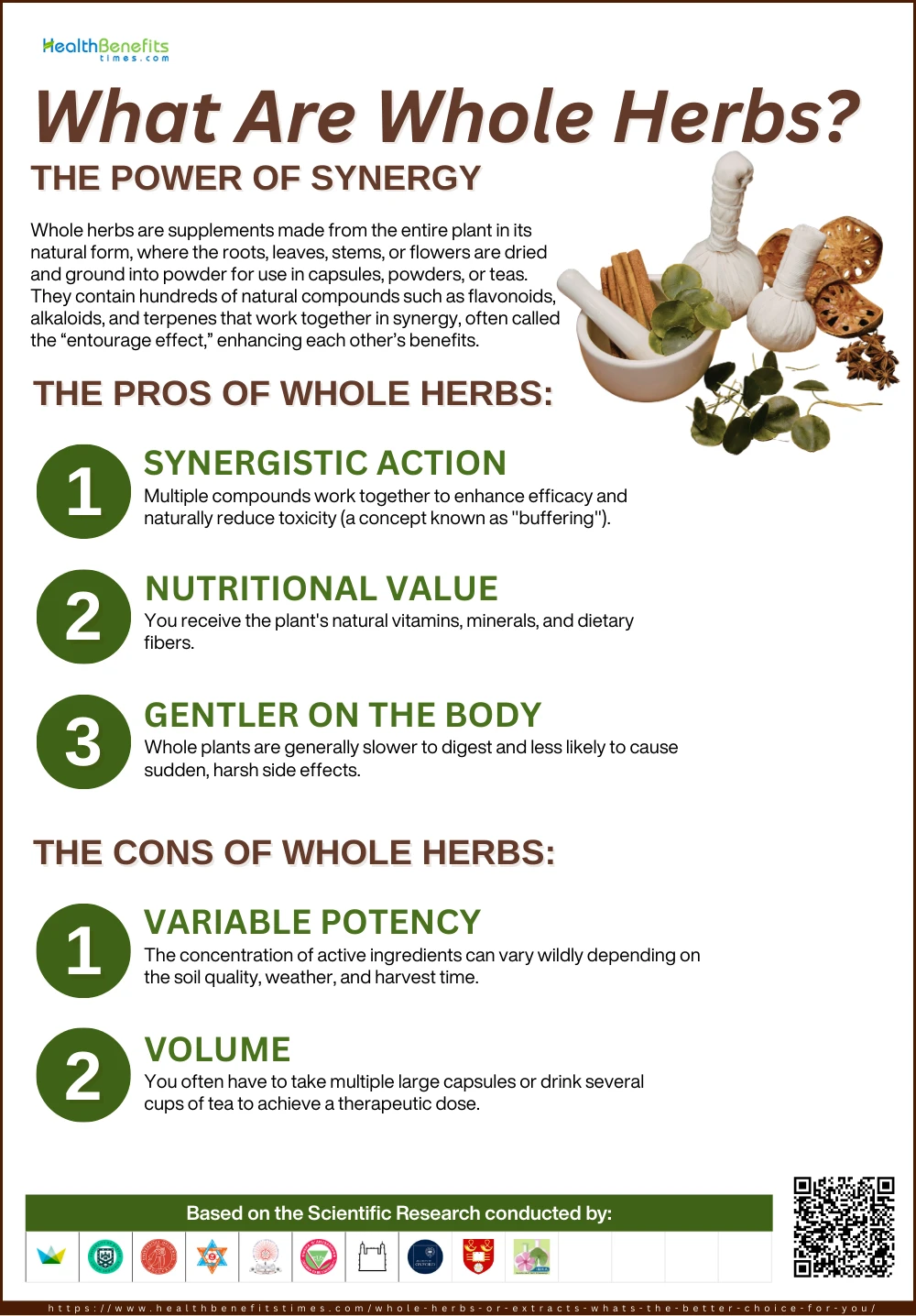
What Are Whole Herbs? The Power of Synergy
When you choose a whole herb supplement, you are getting the plant in its most natural, unpurified state. The roots, leaves, stems, or flowers are simply dried, crushed into a powder, and packed into a capsule, or left loose for teas.
The greatest scientific advantage of whole herbs lies in a concept called polypharmacology or pharmacodynamic synergy. Plants are incredibly complex biochemical factories that produce hundreds of different compounds, including primary active ingredients and secondary metabolites like flavonoids, alkaloids, and terpenes.
Traditional herbalists and modern researchers alike have found that these compounds are often meant to work together. When you consume the whole herb, you benefit from the “entourage effect.” The trace compounds can buffer the harsher side effects of the primary active ingredient, or they can work synergistically to enhance the overall therapeutic outcome.
For example, researchers studying Artemisia annua (sweet wormwood) for malaria treatment discovered that the plant’s natural flavonoids—which have no anti-malarial properties on their own—can actually enhance the action of the main compound, artemisinin, by up to five times. Similarly, studies on Bacopa monnieri have shown that different bacopasides act in synergy to produce cognitive and cellular benefits that single isolated compounds struggle to replicate. The trace elements act as a supporting cast, making the star player much more effective.
The Pros of Whole Herbs:
- Synergistic Action: Multiple compounds work together to enhance efficacy and naturally reduce toxicity (a concept known as “buffering”).
- Nutritional Value: You receive the plant’s natural vitamins, minerals, and dietary fibers.
- Gentler on the Body: Whole plants are generally slower to digest and less likely to cause sudden, harsh side effects.
The Cons of Whole Herbs:
- Variable Potency: The concentration of active ingredients can vary wildly depending on the soil quality, weather, and harvest time.
- Volume: You often have to take multiple large capsules or drink several cups of tea to achieve a therapeutic dose.
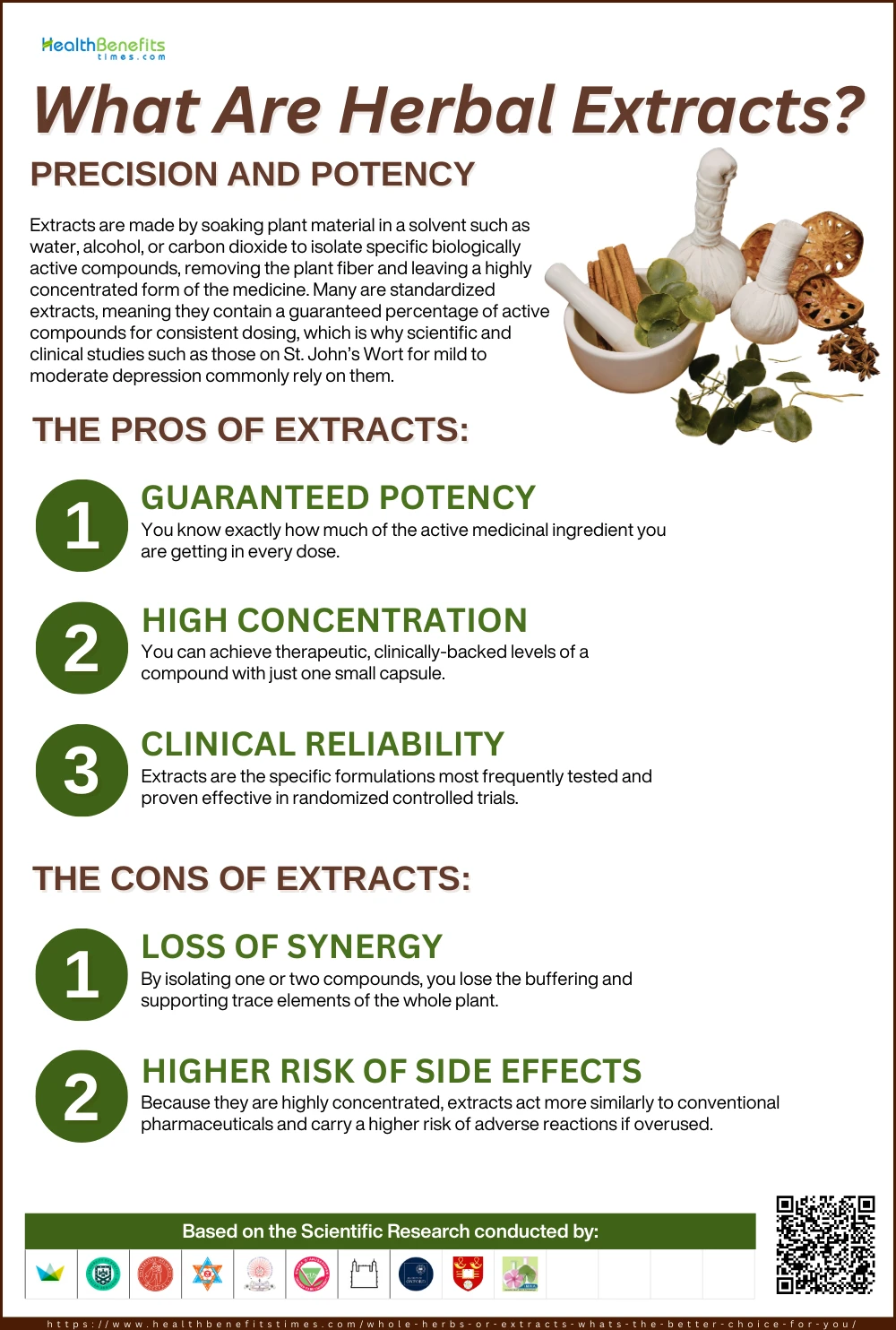
What Are Herbal Extracts? Precision and Potency
If whole herbs are a complex symphony, an extract is a spotlight on the lead violinist. Extracts are created by soaking the plant material in a solvent—such as water, alcohol, or carbon dioxide—to pull out specific biologically active compounds. The inert plant fiber is discarded, leaving behind a highly concentrated version of the medicine.
Often, you will see these labeled as “standardized extracts.” This means the manufacturer guarantees that a specific, exact percentage of the active compound is present in every single batch. For instance, a standardized turmeric extract might be engineered to contain exactly 95% curcuminoids.
From a clinical and scientific standpoint, standardized extracts are the gold standard. In rigorous clinical trials evaluating treatments for conditions like depression or cognitive decline, researchers rely almost exclusively on extracts because they require exact, reproducible dosing. You cannot conduct a reliable scientific study if one batch of herbs is twice as potent as the next. For example, the extensive clinical evidence supporting St. John’s Wort for mild to moderate depression is based on extracts standardized to specific levels of hypericin and hyperforin.
The Pros of Extracts:
- Guaranteed Potency: You know exactly how much of the active medicinal ingredient you are getting in every dose.
- High Concentration: You can achieve therapeutic, clinically-backed levels of a compound with just one small capsule.
- Clinical Reliability: Extracts are the specific formulations most frequently tested and proven effective in randomized controlled trials.
The Cons of Extracts:
- Loss of Synergy: By isolating one or two compounds, you lose the buffering and supporting trace elements of the whole plant.
- Higher Risk of Side Effects: Because they are highly concentrated, extracts act more similarly to conventional pharmaceuticals and carry a higher risk of adverse reactions if overused.
Bioavailability: Which Form Does Your Body Actually Use?
Bioavailability refers to the proportion of a substance that successfully enters your bloodstream and has an active effect. You can swallow the most expensive supplement on the market, but if your gastrointestinal tract cannot absorb it, you are simply creating expensive waste.
The bioavailability debate between whole herbs and extracts is highly nuanced and depends entirely on the specific botanical.
With some plants, the whole herb is notoriously difficult to absorb. The active medicinal compounds are locked away within tough, indigestible plant cell walls (the cellular matrix). When you take a concentrated extract, this matrix has already been broken down by the extraction process, giving your digestive system a massive head start.
However, science has also shown the exact opposite to be true. Some isolated extracts have terrible bioavailability on their own. Returning to the turmeric example: isolated curcumin is incredibly poorly absorbed by the human digestive tract. It actually requires the natural oils and resins found in the whole turmeric root (or the addition of piperine from black pepper) to successfully cross the intestinal wall. In cases like this, stripping away the plant’s natural companion compounds significantly harms your body’s ability to utilize the medicine.
Navigating Safety and Herb-Drug Interactions
Whether you choose a whole herb or a potent extract, you must treat botanical supplements with the same respect you would give conventional pharmaceuticals. “Natural” does not mean “harmless.”
Because whole herbs contain dozens of different phytochemicals, they present a broader risk for unpredictable Herb-Drug Interactions (HDIs). Even trace compounds can affect the metabolic enzymes in your liver (like the cytochrome P450 system) and the transporters in your pharmacokinetic pathways. If you take prescription medications, the complex chemical makeup of a whole plant introduces multiple variables that could either block your medication from working or cause it to build up to toxic levels in your bloodstream.
Standardized extracts, while having a narrower and more predictable chemical profile, present a different danger: high-dose toxicity. Because they are meticulously concentrated, an accidental overdose of an extract can put severe stress on your liver or kidneys.
According to pharmacogenomic research published by the National Institutes of Health (NIH), the increasing prevalence of concurrent herbal and conventional drug use makes understanding these metabolic interactions crucial. Always run your chosen supplement through an interaction checker with your doctor or pharmacist.
How to Make the Right Choice for You
So, which bottle should you actually put in your cart? The answer is about finding the option that aligns with your specific health strategy.
Choose Whole Herbs When:
- You Want Daily Wellness and Prevention: If you are looking to support your overall health gently over a long period, whole herbs are an excellent, balanced choice.
- You Need Digestive Support: Herbs used to soothe the gut (like slippery elm, ginger, or peppermint) often work best in their whole form or as teas, where the physical plant mucilage and broad spectrum of compounds can physically coat and calm the digestive tract.
- You Are Seeking Nutritional Support: Plants like stinging nettle or dandelion are packed with trace minerals and vitamins that are best consumed holistically.
Choose Standardized Extracts When:
- You Have Targeted Therapeutic Goals: If you are trying to manage a specific, acute symptom—such as taking Saw Palmetto for prostate health or Ginkgo biloba for cognitive function—you need the precise, potent dosing that only a standardized extract can provide.
- You Want to Replicate Clinical Studies: If you read a peer-reviewed medical study showing that an herb improves a specific condition, that study almost certainly used a standardized extract. To replicate those results, you need to use the exact same form the researchers used.
- You Have Weak Digestion: If your body struggles to break down tough plant fibers, an extract bypasses that step for you.

The Best of Both Worlds: Broad-Spectrum Extracts
If you are still torn, look for a modern compromise: broad-spectrum or full-spectrum extracts. These are manufactured using advanced extraction technologies (like supercritical CO2 extraction) that highly concentrate the main active ingredients while deliberately preserving the secondary supporting compounds. This gives you the clinical potency of an extract alongside the natural synergy of the whole herb.
Conclusion
The next time you are standing in the supplement aisle, you do not have to guess. Remember that whole herbs offer the brilliant, complex synergy of nature, perfect for gentle, long-term wellness. Extracts offer the concentrated precision of modern science, ideal for targeted, therapeutic results.
By understanding the scientific differences between the two, you can make an empowered, evidence-based decision that perfectly aligns with your unique health needs and goals.
Raw URL Sources (National Institutes of Health / PubMed Central):
- https://pmc.ncbi.nlm.nih.gov/articles/PMC3059462/
- https://www.ncbi.nlm.nih.gov/books/NBK92773/
- https://pmc.ncbi.nlm.nih.gov/articles/PMC9579558/
- https://pmc.ncbi.nlm.nih.gov/articles/PMC4363646/
- https://pmc.ncbi.nlm.nih.gov/articles/PMC2600134/
- https://www.ncbi.nlm.nih.gov/books/NBK536964/
Comments
comments
This article is based on Scientific Research Conducted by following Research Organization:
- Whole plant extracts versus single compounds for the treatment of malaria: synergy and positive interactions–IMRA, Madagascar, University of Bradford, United Kingdom, Department of Primary Health Care, University of Oxford, United Kingdom, Fiocruz (Oswaldo Cruz Foundation), Brazil
- Chapter 1: Herbal Medicine
- Plant-derived natural products for drug discovery: current approaches and prospects–Siksha 'O' Anusandhan (Deemed to be University), India, Rama Devi Women’s University, India
- Pharmacogenomics and Herb-Drug Interactions: Merge of Future and Tradition–Tribhuvan University, Nepal, University of Oslo, Norway
- Herbal medicine: buy one, get two free–University of Exeter, United Kingdom
- Herbal Supplements–StatPearls Publishing, United States