


Understanding Eczema
Eczema, also known as atopic dermatitis, is a chronic inflammatory skin condition characterized by dry, itchy, and inflamed skin. It often manifests in cycles of flare-ups and remissions, impacting quality of life significantly. The condition can result from a combination of genetic predisposition and environmental factors. (5)
Several factors can exacerbate eczema, including allergens like pollen and pet dander, irritants such as harsh soaps and detergents, and environmental conditions like extreme temperatures or humidity. (6) Additionally, stress and dietary choices are recognized as triggers that can intensify symptoms. (7)
Natural remedies offer a holistic approach to managing eczema by reducing inflammation, soothing irritation, and supporting the skin’s barrier function. For example, plant-based treatments like calendula and rosehip oil have shown efficacy in reducing redness and promoting healing. (8) Furthermore, dietary interventions rich in anti-inflammatory foods and the use of probiotics have demonstrated promising results in mitigating flare-ups. (9)
10 Proven Natural Ways to Manage Eczema
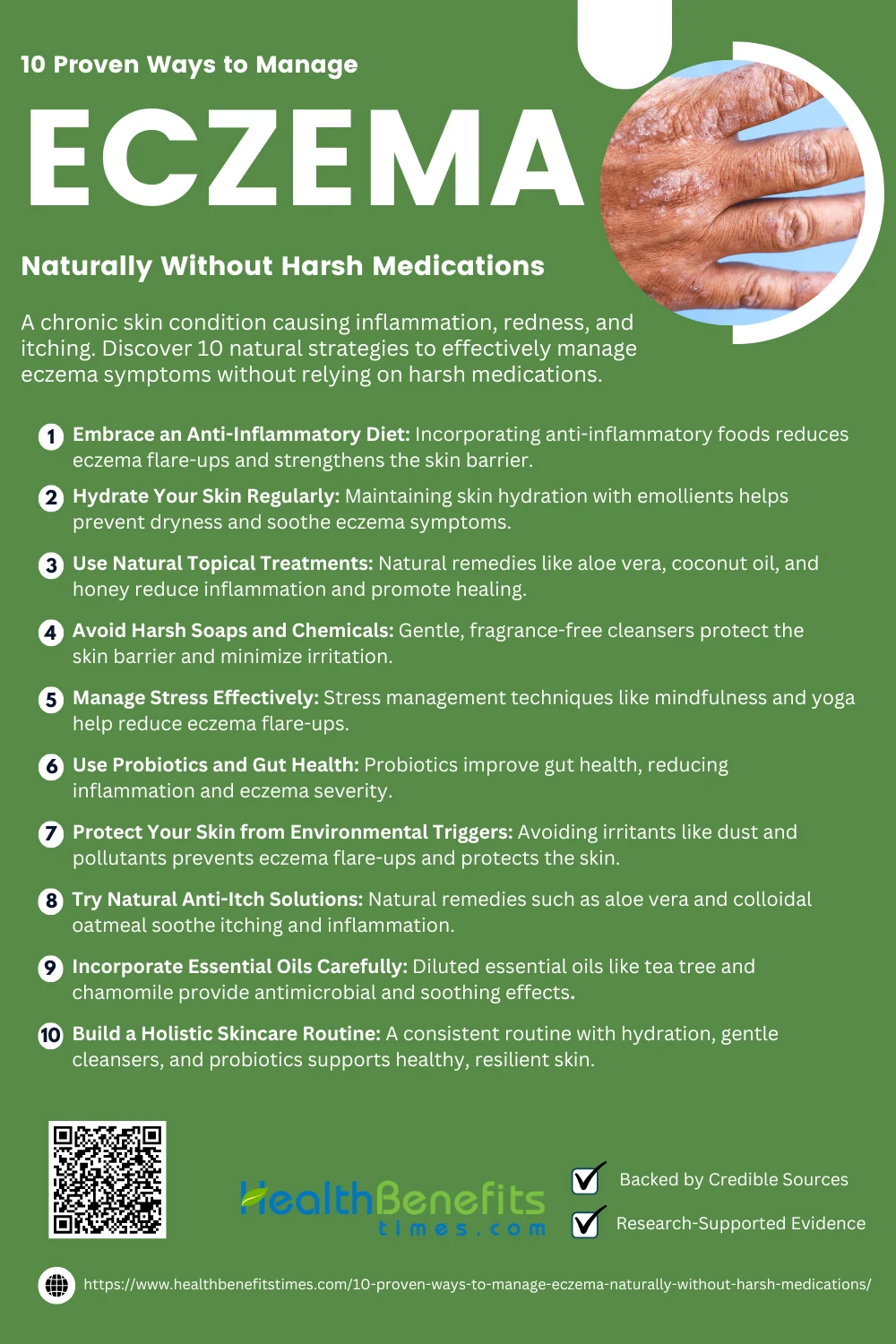
Managing eczema naturally involves understanding triggers, moisturizing with natural products, adopting an anti-inflammatory diet, using herbal remedies, and practicing stress management to soothe skin and reduce flare-ups.
Incorporating an anti-inflammatory diet can significantly aid in managing eczema by reducing flare-ups and soothing inflamed skin. Foods rich in omega-3 fatty acids, like salmon and walnuts, combat inflammation, while antioxidants from fruits and vegetables strengthen the skin’s barrier function. Probiotics in fermented foods like yogurt can also enhance gut health, impacting skin conditions positively. (10) Avoiding known allergens like dairy and gluten is also crucial. (11)
2. Hydrate Your Skin Regularly
Keeping the skin well-hydrated is a proven way to manage eczema and reduce inflammation. Regular use of emollients helps restore the skin barrier, preventing moisture loss. (12) Studies highlight the efficacy of natural moisturizing agents in reducing itching and flare-ups. (8) Proactive hydration regimens significantly improve the skin’s resilience and promote comfort. (13) (14)
3. Use Natural Topical Treatments
Natural topical treatments are effective in managing eczema by soothing inflammation and promoting skin repair. Aloe vera gel, known for its anti-inflammatory properties, calms irritation and hydrates the skin. (10) Coconut oil combats dryness while providing antibacterial benefits. (12) Honey accelerates wound healing and reduces bacteria on the skin. (8) Calendula cream alleviates inflammation effectively. (14) Chamomile, another excellent choice, minimizes swelling. (13)
4. Avoid harsh soaps and Chemicals
Avoiding harsh soaps and chemicals is critical in managing eczema as these substances strip the skin of its natural oils and disrupt its protective barrier. Gentle, fragrance-free cleansers help maintain hydration and reduce irritation. (15) Emollient-rich products alleviate dryness while minimizing exposure to irritants. (16) Natural alternatives like oatmeal-based cleansers soothe sensitive skin. (13) Reducing exposure to strong detergents also limits flare-ups. (17)
5. Manage Stress Effectively
Effectively managing stress is vital for controlling eczema flare-ups, as stress can exacerbate inflammation. Techniques like mindfulness and meditation significantly reduce stress-related triggers. (10) Regular physical activities, such as yoga, have been shown to regulate cortisol levels, promoting skin healing. (8) Sleep hygiene also plays a crucial role in reducing stress. (13) Natural therapies like aromatherapy provide relaxation and support skin health. (14)
6. Use Probiotics and Gut Health
Probiotics play a pivotal role in managing eczema by restoring gut health and reducing inflammation. Strains like Lactobacillus rhamnosus have shown significant benefits in improving the skin barrier and reducing eczema severity. (18) Clinical trials confirm that probiotics help balance gut microbiota, reducing flare-ups. (12) The gut-skin axis demonstrates how probiotics influence immune responses and skin health. (19) Regular intake of probiotic-rich foods enhances these therapeutic benefits. (20)
7. Protect Your Skin from Environmental Triggers
Protecting skin from environmental triggers is essential for managing eczema effectively. Common irritants like dust mites, harsh weather, and pollutants can exacerbate symptoms, making protective measures vital. (21) Emollients and physical barriers such as cotton clothing reduce direct exposure to irritants. (22) Ensuring proper air humidity also minimizes skin dryness. (23) Avoidance of known allergens and irritants strengthens skin resilience. (13)
8. Try Natural Anti-Itch Solutions
Natural anti-itch solutions provide relief for eczema symptoms by soothing inflamed skin. Aloe vera’s cooling properties help alleviate itching and reduce redness. (24) Colloidal oatmeal baths restore skin hydration and calm irritation. (13) Essential oils like tea tree and chamomile also provide antimicrobial and soothing effects. (22)
9. Incorporate Essential Oils Carefully
Using essential oils carefully is beneficial for managing eczema. Tea tree oil’s antimicrobial properties reduce infections and inflammation. (25) Lavender oil soothes itching and promotes relaxation, but must be diluted to prevent irritation. (26) Chamomile oil is effective against redness and dryness. (16) Proper blending with carrier oils like coconut oil enhances absorption and minimizes sensitivity. (27)
10. Build a Holistic Skincare Routine
A holistic skincare routine tailored for eczema emphasizes hydration, gentle cleansing, and anti-inflammatory care. Using emollients like colloidal oatmeal strengthens the skin barrier. (28) Cleansers with a pH balance minimize irritation while protecting natural oils. (29) Integrating probiotics and vitamin E-rich products enhances skin resilience. (30) Regular moisturization combats dryness, a key trigger for eczema flare-ups. (13)
Conclusion
In conclusion, managing eczema naturally without harsh medications is achievable through consistent care and holistic practices. By identifying triggers, adopting skin-friendly habits, and incorporating natural remedies like moisturizers, anti-inflammatory diets, and stress reduction techniques, you can effectively soothe symptoms and improve skin health. Remember, finding the right combination of strategies takes time and patience, as every individual’s eczema journey is unique. Always consult a healthcare professional if symptoms persist or worsen to ensure your approach is safe and effective.
Comments
comments