

By Dr. Ekta Gupta, BAMS, MD (Ayurveda) — Medical Reviewer, The Yeti Life
Persistent tiredness is one of the most common complaints in modern clinical practice, and it is rarely about a single cause. Sleep loss, nutrient deficiencies, untreated thyroid issues, declining muscle mass, chronic low-grade inflammation, and the sheer cognitive load of always-on lifestyles all stack on top of each other. By the time most adults notice that something has changed, several of these drivers are usually contributing at once.
The good news is that the body responds quickly when the right levers are pulled in the right order. Natural remedies for fatigue and low energy work best as a coordinated reset — sleep, movement, nutrition, stress regulation, and, in some cases, well-studied botanicals — rather than as a single supplement bought on an impulse. This guide lays out the causes, symptoms, and evidence-supported natural strategies an Ayurvedic and integrative physician would actually recommend, plus the safety caveats and the point at which fatigue stops being a lifestyle problem and starts being a medical one.
Causes of Fatigue and Low Energy
Fatigue is a symptom, not a diagnosis. The most common drivers seen in clinic are:
1. Unpaid Sleep Debt
Chronic short sleep (under six hours a night) and fragmented sleep architecture (less deep sleep and REM) reduce daytime alertness, glucose tolerance, and physical recovery. Midlife sleep in particular becomes lighter and more easily disturbed by alcohol, late screens, and shifting hormones.
2. Mitochondrial Inefficiency
Mitochondria — the energy factories inside every cell — gradually decline in number and efficiency with age, sedentary lifestyles, and chronic inflammation. Less mitochondrial output is felt as effort intolerance: walks feel harder, recovery takes longer, mental stamina shortens.
3. Nutrient Deficiencies
Low iron, ferritin, vitamin B12, vitamin D, and magnesium are common, often undiagnosed contributors. Iron deficiency is especially frequent in menstruating women and in vegetarian populations; B12 deficiency is increasingly common in plant-based diets and after long-term use of certain reflux medications.
4. Thyroid and Hormonal Shifts
Subclinical hypothyroidism, perimenopause, andropause, and adrenal stress responses all express themselves as fatigue. These need a blood panel, not guesswork, to identify.
5. Chronic Psychological Stress
Sustained sympathetic-nervous-system activation depletes energy reserves and disrupts sleep, appetite, and motivation. Modern adults frequently underestimate how much of their fatigue is downstream of an over-stimulated nervous system.
6. Loss of Lean Muscle Mass
After thirty-five, adults lose roughly one percent of muscle a year unless they actively work against it. Muscle is the body’s largest metabolic organ — losing it reduces functional energy capacity directly.
Symptoms of Persistent Fatigue
Beyond simply feeling tired, persistent fatigue often presents as:
- Difficulty getting out of bed even after seven to eight hours of sleep
- An afternoon energy crash, usually around 2 to 4 pm
- Brain fog, poor short-term recall, and slower task-switching
- Reduced exercise tolerance — workouts that used to feel routine now feel taxing
- Increased sensitivity to caffeine or, paradoxically, no response to it
- Low motivation, anhedonia, or a flatter emotional baseline
- Cold hands and feet, hair thinning, or unusual dryness of skin
- Recurrent infections, slow recovery from minor illness
Fatigue and Low Energy Facts
A few sourced statistics worth knowing:
- Roughly one in three adults report regular feelings of significant fatigue in primary-care surveys, with the figure rising in women aged 40–60.
- Iron deficiency without anaemia can cause measurable fatigue even when haemoglobin is in the normal range — ferritin under 30 ng/mL is the threshold many integrative physicians treat.
- A 2026 Cureus pilot study in active adults reported reduced fatigue and lower CRP (inflammation) after 28 days of purified shilajit supplementation — small but mechanistically interesting data.
- Adults who perform two short resistance-training sessions per week report significantly better daytime energy than those who only do cardio.
- A 2025 BMC Chemistry analysis of commercial shilajit products found detectable heavy metals (including thallium) in some unpurified samples — a reminder that source quality matters when supplementing.
- Magnesium intake in the general adult population is below the recommended daily allowance in roughly half of surveyed adults, and replacement frequently improves sleep quality and muscle recovery.
- Sleep restriction to six hours a night for two weeks has been shown to produce cognitive performance deficits comparable to a full night of total sleep deprivation.
Best Natural Remedies for Fatigue and Low Energy
The following remedies are listed roughly in order of leverage — that is, the ones that produce the biggest energy return when done consistently are first. None of these is a magic switch. All of them work in combination.
1. Restore Sleep Architecture
This is the single most powerful intervention for daytime energy and the one most adults underrate. Aim for seven to nine hours in bed at a consistent wake time, including weekends. Stop caffeine by 2 pm, avoid alcohol within three hours of bedtime, and keep the last 90 minutes of the day free from bright screens. A cool, dark, quiet room is non-negotiable. Two weeks of disciplined sleep does more for energy than any supplement on this list.
2. Two Short Resistance Sessions a Week
Squats, hinges, presses, rows, and loaded carries — performed with progression in load over time — rebuild the lean muscle and mitochondrial density that fatigue erodes. Two 30–40 minute sessions weekly is the minimum effective dose. Cardio matters for cardiovascular health, but for the specific symptom of low everyday energy, the strength sessions are the lever.
3. Protein-First, Plate-Anchored Meals
Build each meal around 25–35 g of protein and eat the protein and vegetables before the starches. This flattens the post-meal glucose curve and shortens the post-lunch energy crash that most adults attribute (incorrectly) to a need for caffeine. A 10–15 minute walk after meals adds further glucose-flattening benefit and is one of the cheapest interventions available.
4. Iron, Ferritin, B12 and Vitamin D Replacement
Before adding supplements blindly, get tested. A standard blood panel — full iron studies including ferritin, vitamin B12, vitamin D (25-hydroxyvitamin D), TSH and free T4, and a complete blood count — identifies the deficiencies that account for most non-trivial fatigue. Replacing a documented deficiency typically produces a clearer energy lift than any adaptogen.
5. Magnesium-Rich Foods or Supplementation
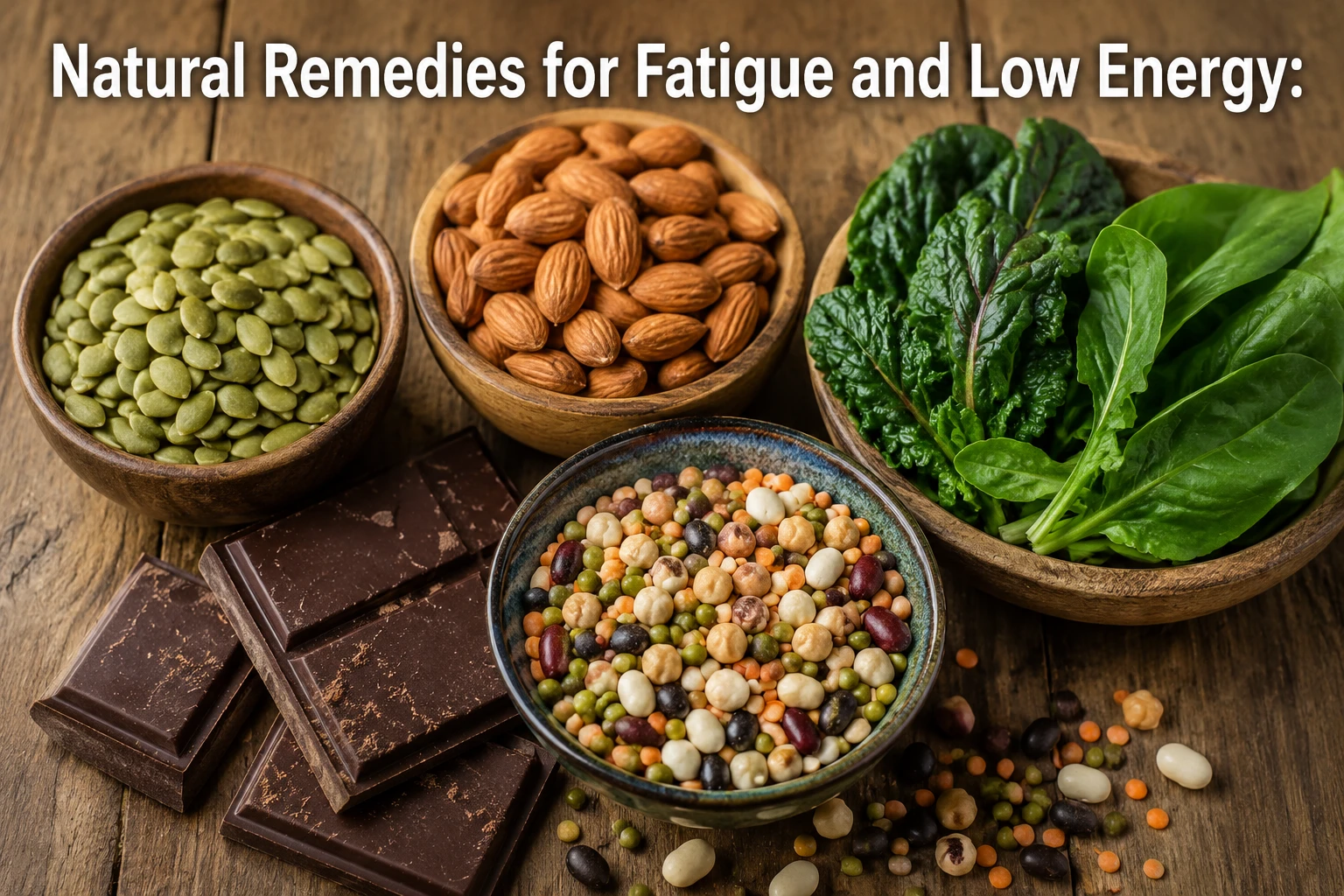
Magnesium supports over 300 enzymatic reactions including those involved in ATP (cellular energy) production. Pumpkin seeds, almonds, dark leafy greens, dark chocolate, and legumes are excellent dietary sources. Where dietary intake is inadequate, magnesium glycinate or magnesium citrate at bedtime is generally well tolerated and frequently improves both sleep quality and muscle recovery.
6. Ashwagandha (Withania somnifera)
The strongest evidence base among classical Ayurvedic Rasayana herbs for stress-related fatigue. Multiple randomised trials at doses of 300–600 mg of a standardised root extract daily for 60–90 days have shown modest improvements in perceived stress, sleep quality, and energy in adults with chronic stress. Avoid in hyperthyroidism and in pregnancy.
7. Purified Shilajit (Mineral Pitch from the Himalayas)
Shilajit is a sticky resin that seeps from Himalayan rock and is used in Ayurveda as a Rasayana for stamina and recovery. Its principal active compound is fulvic acid, an antioxidant that appears to support mitochondrial energy production. The most-cited modern study (Pandit et al., Andrologia 2016) found a modest rise in testosterone in men aged 45–55 over 90 days; a 2026 Cureus pilot in active adults reported reduced fatigue and lower inflammation after 28 days. The evidence is promising but small — not magic, not anabolic, and not a replacement for fixing sleep, training, and nutrient deficiencies first. For the curious, the peer-reviewed research on shilajit is worth reading before deciding whether it earns a place in your routine. Typical dosing in trials has been 250 mg twice daily of a purified, standardised extract; effects build gradually over 8–12 weeks.
8. Daylight in the First Hour After Waking
Ten to fifteen minutes of outdoor light early in the day calibrates the circadian rhythm, supports cortisol’s morning peak, and improves sleep onset later that night. It is free, takes minutes, and is one of the most reliably effective interventions in chronobiology research.
9. Slow Nasal Breathing and Brief Stress Resets
Five minutes of slow nasal breathing (a six-second inhale, six-second exhale pattern) twice a day measurably reduces sympathetic-nervous-system tone. Adults who feel “tired but wired” — exhausted yet unable to wind down — often benefit more from this single practice than from any energy supplement.
10. Hydration and Electrolyte Balance
Mild dehydration produces fatigue, headache, and reduced cognitive performance before it produces thirst. Aim for two to three litres of fluid daily, more in hot weather or with heavy training. A pinch of salt and a squeeze of citrus in the morning glass is a sensible, low-cost electrolyte routine for active adults.
Foods and Activities to Avoid When You Suffer from Fatigue
- Caffeine after 2 pm — even if you fall asleep, sleep quality is measurably worse.
- Late, heavy dinners — they fragment sleep and impair next-day energy.
- Refined-carbohydrate-heavy meals eaten alone — they spike then crash blood glucose, which is felt as the afternoon slump.
- Alcohol within three hours of bedtime — costs you REM and deep sleep, even if you fall asleep faster.
- Long, unbroken sedentary blocks — a five-minute movement break every 60–90 minutes preserves alertness.
- Late-night screen exposure without blue-light reduction or, ideally, screens at all.
- Skipping protein at breakfast — sets up an unstable glucose curve for the rest of the day.
- Sustained over-training without adequate recovery days — a frequent and unrecognised cause of “unexplained” fatigue in fit adults.
- Loading up on energy drinks or pre-workouts as a substitute for sleep — masks fatigue, does not address it.
Myths and Misconceptions About Fatigue
Myth: “I just need more coffee.” Caffeine masks tiredness by blocking adenosine receptors; it does not produce energy. Beyond a moderate dose it disrupts sleep and creates a tolerance loop that worsens baseline fatigue.
Myth: “Sleeping in on weekends makes up for short weekday sleep.” Catching up on sleep does not fully reverse the metabolic and cognitive costs of weekday sleep restriction. A consistent schedule outperforms a binge-and-recover pattern.
Myth: “Energy supplements will fix it.” Supplements work as small nudges on a solid foundation. Without sleep, training, and replaced deficiencies in place, even good supplements produce disappointing results.
Myth: “Shilajit boosts testosterone dramatically.” The most-cited human study found a modest, physiological rise in middle-aged men over 90 days — useful, but nowhere near anabolic or a TRT substitute. Marketing claims commonly overstate the effect size.
Myth: “More cardio is always better for energy.” Excessive endurance work without strength training or recovery actively depletes energy reserves. The pattern most predictive of strong midlife energy in clinic is two strength sessions plus moderate daily walking — not high-volume cardio.
Myth: “If my haemoglobin is normal, my iron is fine.” Ferritin (stored iron) can be low even with a normal haemoglobin reading, and low ferritin alone produces real fatigue. Ask for ferritin specifically when getting bloodwork.
Special Considerations
Women, Particularly in Perimenopause
Fatigue in women aged 40–55 is frequently driven by a combination of iron-deficiency anaemia (or low ferritin without anaemia), perimenopausal sleep disturbance, and thyroid dysfunction. A complete blood panel including ferritin, TSH, and free T4 is essential before chasing supplements. Both shilajit and ashwagandha have been studied primarily in men; women should consult a clinician before starting either.
Athletes and Highly Active Adults
Persistent fatigue in trained adults often signals overtraining, under-fuelling, or low energy availability — not a need for more supplements. A reduction in training volume by 30–40 percent for two weeks, combined with a deliberate increase in calories and carbohydrates, is the first-line clinical test.
Vegetarians and Vegans
Plant-forward diets are excellent for many health markers but require deliberate attention to B12, iron, omega-3, and zinc — all of which can drift low without supplementation and produce fatigue.
Adults Taking Lithium or Levothyroxine
Shilajit can interact with both lithium and levothyroxine (thyroid medication). Anyone on these medications should consult a prescribing clinician before adding shilajit or any mineral-rich supplement.
Pregnancy and Breastfeeding
Many of the herbal Rasayana remedies on this list — including shilajit and ashwagandha — have not been adequately studied in pregnancy and breastfeeding and should be avoided during these periods.
Precaution Before Use of Natural Remedies When You Have Fatigue
Three rules cover most of the avoidable mistakes:
- Test before you treat. A standard blood panel rules out the conditions most commonly mistaken for lifestyle fatigue. Treating a missed deficiency or undiagnosed hypothyroidism with adaptogens delays real care.
- Source matters more than label claims. With botanicals and mineral-pitch supplements like shilajit, the gap between a clean, lab-tested product and an unpurified one is the difference between benefit and harm. Always look for a brand that publishes its per-batch heavy-metal and fulvic-acid lab results; cheap or raw resin scraped from rock can carry heavy metals, as a 2025 BMC Chemistry analysis confirmed.
- One change at a time. Adding three supplements simultaneously makes it impossible to know what helped. Introduce one new variable, evaluate over four to six weeks, then iterate. The natural-remedy stack is small and well-chosen, not endlessly accumulated.
When to See a Doctor
Fatigue should be evaluated medically — not treated with self-prescribed remedies — when any of the following apply:
- Fatigue lasting longer than six weeks despite adequate sleep, food, and exercise
- Fatigue accompanied by unexplained weight loss, fever, night sweats, or persistent pain
- Shortness of breath at rest or on minimal exertion
- Severe morning stiffness, joint swelling, or new neurological symptoms
- Marked changes in mood, hopelessness, or thoughts of self-harm
- Heavy or prolonged menstrual bleeding alongside fatigue (suggesting iron loss)
- Recurrent infections, mouth ulcers, or unexplained bruising
- Fatigue developing after a viral illness and not resolving within a few weeks
These are not features to manage with home remedies. They warrant a clinician visit and appropriate investigations.
About the Author
Dr. Ekta Gupta holds a BAMS and an MD in Ayurveda, with a clinical focus on Rasayana (rejuvenation) herbs and metabolic medicine. She is Medical Reviewer at The Yeti Life, where she audits supplement claims against international evidence standards. This article is general health information, not medical advice — anyone managing a chronic condition or taking regular medication should consult their own clinician before making changes.
Comments
comments