

For many people requiring oxygen therapy at home, an oxygen concentrator can be a more convenient alternative to relying on oxygen cylinders. Unlike cylinders, which have a finite oxygen supply and need to be refilled or replaced, a concentrator can continuously produce oxygen from the surrounding air as long as it has a reliable power supply. This can make day-to-day oxygen therapy considerably easier, particularly for patients who need oxygen for several hours each day.
However, choosing an oxygen concentrator is not simply about picking the machine with the highest flow rate or the lowest price. Oxygen concentration, performance at different flow rates, power consumption, noise, reliability, safety features, warranty, portability, and after-sales service can all make a significant difference. With a growing number of oxygen concentrator brands and models available in India, understanding these factors can help you choose a machine that is genuinely suited to your needs.
How We Compared These Oxygen Concentrators
The comparison considers factors that are relevant to home oxygen therapy, including maximum flow, oxygen concentration specifications, weight, power consumption, monitoring and safety features, warranty, portability and overall practicality for regular home use. Product specifications are based on manufacturer information and published product documentation where available. This comparison is not based on independent laboratory testing or clinical effectiveness.
Editor’s note: This is an editorial comparison based on published specifications, features, usability, warranty and overall value for home users. The products are not presented in order of clinical effectiveness, and the comparison does not constitute independent laboratory testing or medical advice.
This guide compares five established 5 LPM oxygen concentrators available for home use in India, based on their published specifications, features and practical considerations:
- Oxysure Home 5L
- Philips Oxygenate 5
- AirSep VisionAire 5
- Nidek Nuvo Lite
- DeVilbiss 525KS
Quick Comparison
| Model | Maximum Flow | Approx. Weight | Notable Feature |
| Oxysure Home 5L | 5 LPM | 13.9 kg | Live oxygen purity monitoring |
| Philips Oxygenate 5 | 5 LPM | 18 kg | Philips respiratory-care ecosystem |
| AirSep VisionAire 5 | 5 LPM | 13.6 kg | Low power consumption |
| Nidek Nuvo Lite | 5 LPM | 14.5 kg | Compact traditional design |
| DeVilbiss 525KS | 5 LPM | 16.3 kg | Monitoring and safety alarms |
- Oxysure Home 5L — Feature-Rich Option for Indian Home Buyers
For buyers in India comparing price, features, portability and warranty, the Oxysure Home 5L is an option worth considering.
It is a 5 LPM stationary oxygen concentrator designed for continuous home oxygen therapy. The machine provides oxygen flow from 0.5 to 5 LPM, with fine flow adjustment.
One of its notable features is the real-time oxygen purity display, allowing the user to see the oxygen concentration while the machine is operating rather than relying only on an alarm.
The machine weighs approximately 13.9 kg, making it relatively easy to move around the home compared with many traditional 5 LPM concentrators.
Key features
- Continuous oxygen flow up to 5 LPM
- 0.5–5 LPM flow range
- Fine 0.1 LPM flow adjustment
- Real-time oxygen purity display
- Floating-ball flowmeter
- Approximately 13.9 kg
- Fire Safety Valve
- Integrated nebuliser
- 3-year warranty
- Designed for continuous home use
Why consider it?
One of the notable aspects of the Oxysure Home 5L is the combination of live oxygen purity monitoring, fine flow adjustment and relatively low weight. These features may be relevant for buyers comparing equipment for regular home use.
- Philips Oxygenate 5 — Established Respiratory Brand
Philips has a long history in respiratory-care equipment, and the Oxygenate 5 is a 5 LPM stationary oxygen concentrator designed for home oxygen therapy.
The machine delivers continuous oxygen up to 5 LPM and provides fine flow adjustment. At approximately 18 kg, it is heavier than some of the other machines in this comparison.
The Oxygenate 5 incorporates several practical features for home use, including oxygen concentration monitoring on applicable configurations, a turn-off timer and a humidifier bottle holder.
Its design also provides access to replaceable or washable filters, which can be useful for routine maintenance.
Key features
- Continuous flow up to 5 LPM
- 0.5–5 LPM flow range
- Fine flow adjustment
- Oxygen concentration monitoring on applicable variant
- Turn-off timer
- Flow-memory function
- Approximately 18 kg
- 3-year warranty
Why consider it?
The main attraction is the Philips name and established presence in respiratory care. It is a sensible option for someone who prefers a conventional home concentrator from a well-known international healthcare company. The main consideration is its weight.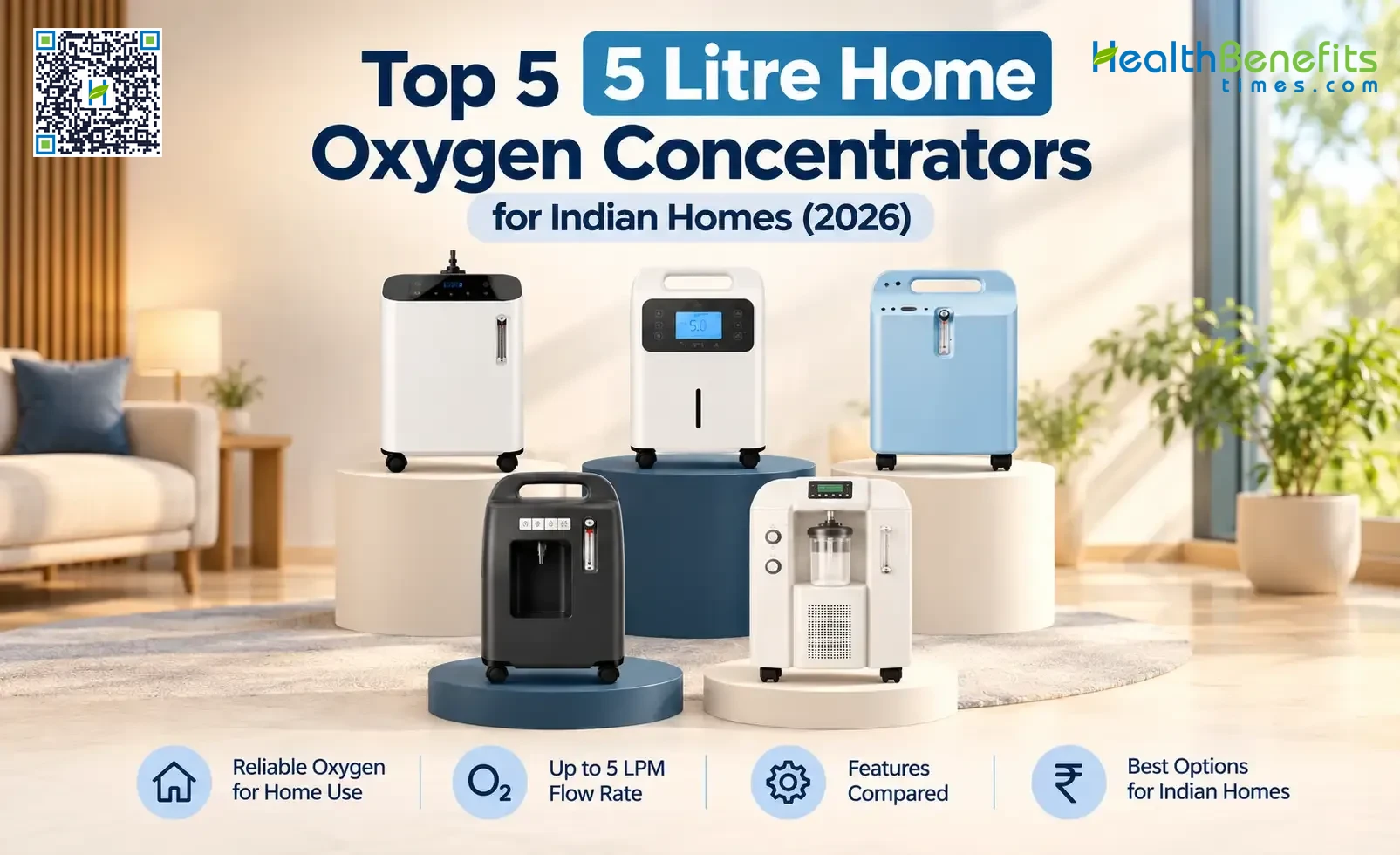
3. AirSep VisionAire 5 — Lightweight and Energy Efficient
The AirSep VisionAire 5 is manufactured by CAIRE, a company specialising in oxygen therapy equipment.
The VisionAire is designed around a relatively simple concept: provide continuous oxygen while keeping the machine compact, lightweight and energy efficient.
The 5 LPM model weighs approximately 13.6 kg, putting it among the lightest machines in this comparison. CAIRE lists power consumption at approximately 290 watts, which is also relatively low for a stationary 5 LPM concentrator.
The machine uses a conventional flowmeter and includes an hour meter and system alarms.
Key features
- Up to 5 LPM continuous flow
- Approximately 13.6 kg
- Approximately 290 W power consumption
- Compact design
- Conventional flowmeter
- Hour meter
- System alarms
- Humidifier bottle holder
Why consider it?
The VisionAire is particularly interesting if weight and electricity consumption are important considerations. Its design focuses on providing continuous oxygen in a compact package, and its relatively low power consumption can be useful for households where the concentrator operates for long periods.
4. Nidek Nuvo Lite — Compact Traditional Design
The Nidek Nuvo Lite is another established stationary oxygen concentrator designed for home oxygen therapy.
The 5 LPM version provides continuous oxygen flow up to 5 LPM and follows a fairly traditional concentrator design.
The 230V version weighs approximately 14.5 kg and has average power consumption of around 300 watts.
The manufacturer specifies oxygen concentration in the range of approximately 87–95.5% at maximum flow, under its stated operating conditions.
Safety features include low-oxygen concentration alerts, electrical protection and a fire-break system at the oxygen outlet.
Key features
- Up to 5 LPM flow
- Approximately 14.5 kg
- Around 300 W average power consumption for the 230V 5 LPM model
- Low-oxygen alarm
- Fire-break protection
- Electrical protection
- Traditional controls
Why consider it?
The Nuvo Lite is aimed at buyers who prefer a simple and established oxygen concentrator design. Its straightforward controls, safety systems and relatively compact size make it a practical traditional option.
5. DeVilbiss 525KS — Proven Design With Safety Monitoring
The DeVilbiss 525KS is a well-established 5 LPM stationary oxygen concentrator used for home oxygen therapy.
It provides continuous flow from 0.5 to 5 LPM. Drive DeVilbiss specifies oxygen concentration of approximately 93% ±3% from 1 to 5 LPM under the specified operating conditions.
The machine weighs approximately 16.3 kg.
One of its strengths is the range of monitoring and alarm systems built into the machine. Depending on the operating condition, the concentrator can provide warnings for low oxygen concentration, power failure and low pressure.
Key features
- 0.5–5 LPM continuous flow
- Approximately 16.3 kg
- Approximately 93% ±3% oxygen concentration from 1–5 LPM
- Oxygen concentration monitoring
- Low-oxygen alarm
- Power-failure alarm
- Low-pressure alarm
Why consider it?
The 525KS is worth considering if you prefer a traditional concentrator with extensive monitoring and alarm features. It is not the lightest machine in this comparison, but its established design and safety monitoring make it a familiar option for home oxygen therapy.
How Do These Oxygen Concentrators Compare?
The five machines have the same basic purpose, but they approach it differently.
- Oxysure Home 5L: Focuses on value, modern monitoring features and relatively low weight. The live oxygen purity display is particularly useful for users who want more information about the machine’s operation.
- Philips Oxygenate 5: Offers a well-known international respiratory-care brand with practical home-use features, although its approximately 18 kg weight makes it one of the heavier choices.
- AirSep VisionAire 5: Emphasises low weight and low power consumption, making it interesting for households where the concentrator operates for long periods.
- Nidek Nuvo Lite: Takes a simple and traditional approach, with straightforward controls and several built-in safety systems.
- DeVilbiss 525KS: Combines a conventional design with oxygen monitoring and multiple alarm systems, making it a familiar choice for long-term home use.
What to Look For When Buying an Oxygen Concentrator
- Oxygen Flow Requirement
First determine the oxygen flow prescribed by the doctor. A machine being capable of 5 LPM does not mean that the patient should automatically use it at 5 LPM. The prescribed flow should be followed unless the treating doctor changes it.
- Oxygen Concentration
Look at the manufacturer’s oxygen concentration specifications across the operating range. Oxygen concentration can vary depending on flow rate and operating conditions, so a single purity number does not tell the entire story.
- Hours of Daily Use
A machine that operates for 8–12 hours every day has different requirements from one used occasionally. For frequent use, consider power consumption, cooling, reliability, maintenance requirements and availability of replacement parts.
- Noise
If the concentrator is going to operate beside a bed, noise becomes particularly important. A machine that seems reasonably quiet during the day may be much more noticeable when operating in a quiet bedroom at night.
- Weight and Mobility
A 13–14 kg machine is considerably easier to move than an 18 kg machine. If the concentrator will stay in one room, this may not matter much. If it needs to be moved regularly, weight becomes a more important consideration.
- Safety Features
Look for features such as power-failure alarms, low-oxygen alarms, low-pressure warnings, circuit protection and fire protection. The exact features vary between models.
- Warranty and Service
A concentrator is not a disposable appliance. It can operate for thousands of hours over its lifetime. Before purchasing, check warranty period, service-centre availability, availability of spare parts, compressor and sieve-bed replacement support, and the cost of routine maintenance.
Which Oxygen Concentrator Should You Buy?
There isn’t one oxygen concentrator that is appropriate for every user. Your choice should depend on the prescribed oxygen flow, expected hours of use, budget, portability requirements and availability of service in your area.
The Oxysure Home 5L may appeal to buyers who prioritise a combination of features, portability, warranty coverage and price.
Those who prioritise a well-established international respiratory brand may consider the Philips Oxygenate 5. Buyers focused on low power consumption and portability may look at the AirSep VisionAire 5, while the Nidek Nuvo Lite and DeVilbiss 525KS offer more traditional designs with established safety features.
The important thing is to compare the complete package rather than choosing purely on the lowest price. Consider the machine’s specifications, expected hours of use, service support, warranty and practical features before making a decision.
An oxygen concentrator should be selected based on the patient’s prescribed oxygen requirement, and the prescribed flow rate should not be changed without medical guidance.
And whichever machine you choose, use it at the oxygen flow prescribed by your doctor.
Comments
comments