

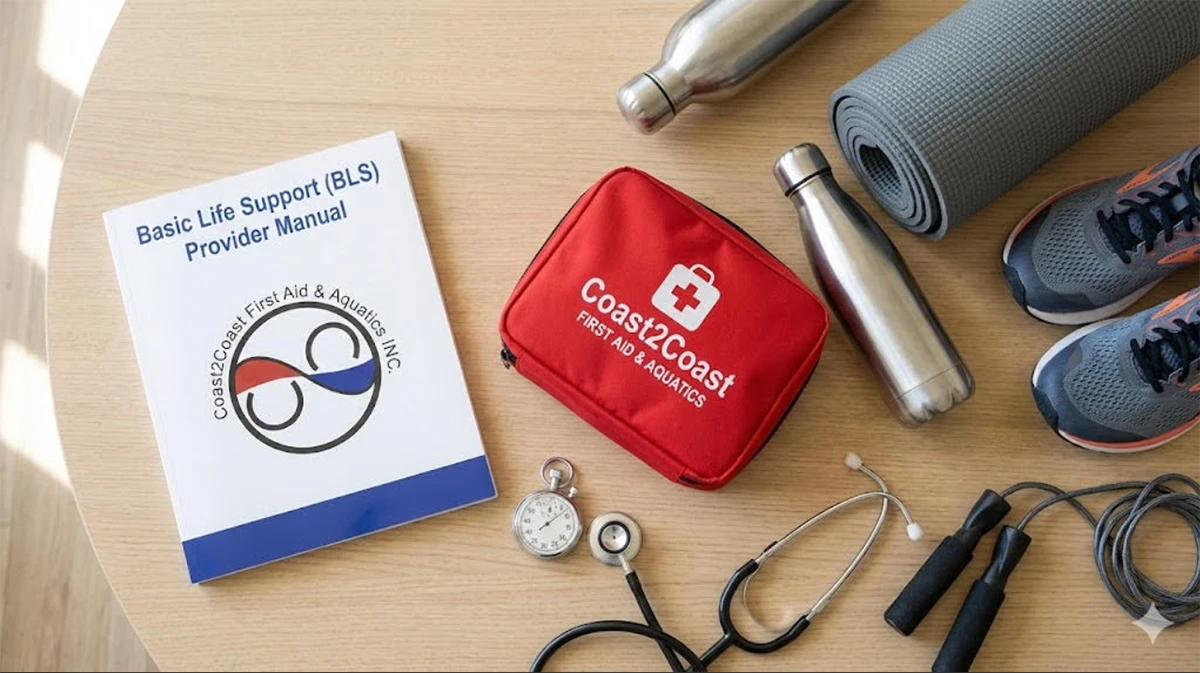
But there is a critical gap in the average person’s “health stack.” We focus so much on keeping ourselves healthy that we often forget to prepare for the moments when health suddenly fails.
Sudden Cardiac Arrest (SCA) does not discriminate. It happens to marathon runners, fitness enthusiasts, and office workers alike. In those critical seconds, your organic diet and deadlift PR won’t help. What helps is knowledge. Specifically, the knowledge of Basic Life Support (BLS).
Here is why adding life-saving skills to your repertoire is the ultimate wellness power move.
1. The “Bystander Effect” is Real (And Dangerous)
We often assume that if a medical emergency happens—at the gym, the grocery store, or a park—a doctor or nurse will magically appear. The reality is much starker.
In Canada, the majority of cardiac arrests happen outside of a hospital. The survival rate depends almost entirely on the actions of the immediate bystanders. If you freeze, the clock runs out. If you act, you double or triple the victim’s chance of survival.
Learning BLS gives you the confidence to break the “bystander effect.” It transforms you from a helpless witness into an active responder.
2. It’s More Than Just CPR
Many people confuse standard CPR with Basic Life Support (BLS). While they are related, BLS is a higher standard of care often reserved for healthcare providers—but increasingly valuable for the general public, especially those in fitness and health coaching.
BLS covers high-performance CPR, team dynamics, airway management, and the rapid use of an AED (Automated External Defibrillator). It teaches you to think critically under extreme pressure.
For those living in major urban centers, accessing this high-level training is easier than ever. For example, fitness professionals and health students often seek out BLS Certification Ottawa to ensure they are meeting the highest standard of safety for their clients. It signals to your community that you take their well-being seriously, far beyond just writing a workout plan.
3. The Mental Health Benefit of Preparedness
Anxiety often stems from the unknown. What if something happens to my parents? What if my child chokes?
Carrying this low-level anxiety affects our cortisol levels and overall mental health. Preparedness is the antidote to panic. When you complete a certification course, you leave with a sense of agency. You know that you have the tools to handle the worst-case scenario. That peace of mind is a tangible health benefit that doesn’t come in a pill bottle.
4. A Skill That Travels With You
Unlike a gym membership or a meal plan, life-saving skills are portable. Whether you are hiking in the Gatineau Hills or traveling abroad, your ability to recognize a stroke, manage a choking incident, or perform compressions is always with you.
Conclusion
True wellness is about resilience. It is about building a body and a mind that can withstand challenges. By ignoring First Aid and BLS training, we leave a massive vulnerability in our lifestyle.
So, the next time you are planning your “health goals” for the quarter, look beyond the scale. Book a class. Learn the skills. Be the person who knows what to do when it matters most.
Because the healthiest body in the world still needs a beating heart.
Comments
comments