

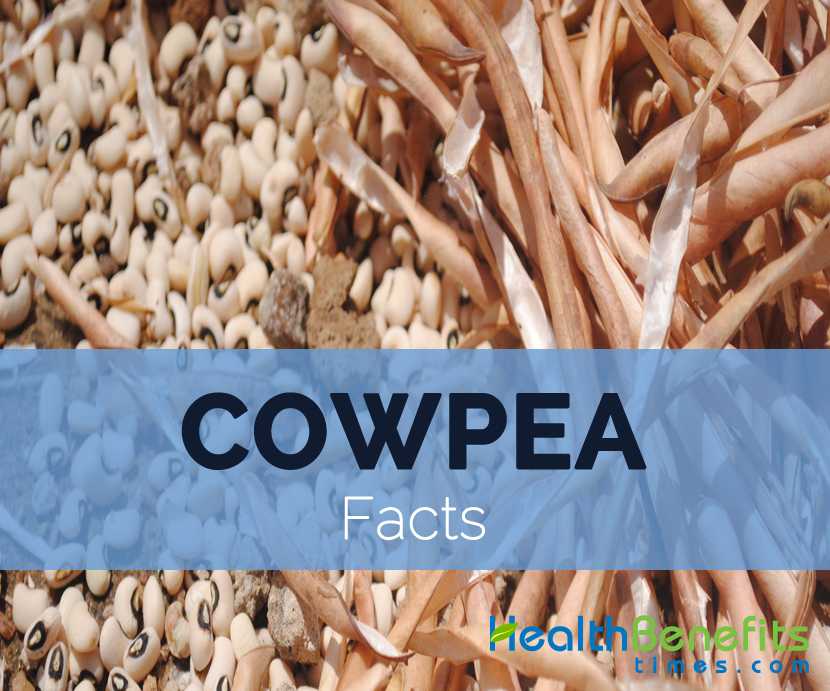
| Name | Cowpea |
|---|---|
| Scientific Name | Vigna unguiculata |
| Native | Africa and widely grown in Africa, Southeast Asia, southern United States and Latin America. The cowpea was introduced in India and Europe around 200 BC and 300 BC respectively. |
| Common/English Name | Bachapin Bean, Black Eyed Dolichos, Black-Eyed Bean, Common Cowpea, Cowgram, Black Eyed Cowpea, China Bean, Crowder Pea, Black-Eyed Pea, Cowpea, Crowder Bean, Kafir Bean, Field Pea, Macassar Bean Marble Pea, Cultivated African Cowpea, Red Pea, Southern Pea, Poona Pea, Rope Bean. |
| Name in Other Languages | Afrikaans: Akkerboon, Koertjie; Arabic: Mash, Lûbyâ’ Baladî; Argentina: Poroto Caupi; Bolivia: Frijol Camba , Cumandá; Brazil: Feijão De Corda, Feijão Caupe,; Central America: Frijol De Costa; Chinese: Da Jiao Dou, Jiang Dou; Columbia: Frijol Caupi; Cuba: Frijol Carita; Danish: Vignabønne, Koaert; Domincan Republic: Caupi, Anconi; East Africa: Kunde; Ecuador: Tumbe; Finnish: Lehmänpapu; French: Dolique À Oeil Noir; German: Augenbohne, Langbohne; Honduras: Frijol Alacin; India:- Bengali: Ghangra, Hindu: Chauli, Kulath, Kannada: Alasabde, Alasande, Malayalam: Perumpayar, Marathi: Chavali, Alasunda, Sanskrit: Rajamasah, Mahamasah, Tamil: Kaattu Ulundu, Thattapayir, Telugu: Kaaraamanulu, Alasandalu; Indonesia: Kacang Tunggak; Italian: Fagiolino Piccolo, Fagiolo Dall’occhio Nero; Japanese: Sasage; Kenya: Likhubi; Khmer: Sândaèk Ângkuy, Sândaêk Kâng; Korean: Tongpu; Laotian: Thwàx Do; Latin America: Caupi; Malaysia: Kacang Bol, Kacang Toonggak; Mexico: Chicharo De Vaca, Frijol Yorimón; Nicaragua: Frijol Alacin Frijol De Vara; Panama: Frijol Ojo Negro; Peru: Frijol Castilla, Chiclayo; Philippines:- Bisayan: Batong, Otong, Kibal, Tagalog: Sitaw-Turo, Paayap,; Portuguese: Feijão-Frade, Feijão-Miúdo; Russian: Vigna Kitaiskaia; Senegal: Niao, Seub; Spanish: Caupi, Chicharo Tropical, Costeñ; Swahili: Kunde; Swedish: Vignaböna; Thai: Tua Dam; Turkish: Börülce; Uganda:- Acholi: Boo, Ngor, Alur & Jonam: Amuli, Obo, Bugisu: Likote, Kakwa: Laputu, Nyele, Karamajong: Maruet “Wild”, Langi: Eggobe, Mpindi, Luganda: Bojo, Runyankore: Enkoole Omugobe, Runyoro: Omugobe, Rutooro: Omugobe, Teso: Lmere, Eboo; Venezuela: Frijol; Vietnamese: Dôu Den, Dôu Tua; West Africa: Ewa, Wake; Zulu: Imbumba, Isihlumaya |
| Plant Growth Habit | Herbaceous legume which is grown annually |
| Growing Climate | Warm and enough rainfall |
| Soil | Well-drained, sandy soils or sandy loams |
| Plant Size | 24 inches |
| Lifespan of seed | 5 years |
| Root | Taproot and abundant lateral roots spreading in a soil |
| Branchlets | Branchless |
| Stem | Smooth, striate, hairy, purple shades and length: 3 m |
| Leaf | Dark green, lanceolate- ovate, shiny to dull and 10 cm long |
| Edible parts of the plants | Roots: Consumed roasted Green leaves: Boiled or fried Immature pods: Boiled or steamed Seeds: Consumed directly Green seeds: Roasted |
| Flower | Bell shaped, dirty yellow, white, pale blue, pink, or purple |
| Seed shape & size | Kidney shaped, Length: 6–12 mm |
| Seed color | Green, red, white, cream, black , and buff brown |
| Pod shape and size | Slightly curved and cylindrical, length: 6 to 10 inch |
| Pod color | Green, purple or yellow |
| Flavor/aroma | Nutty |
| Varieties/Types |
|
| Season | Warm-season, temperate zones and humid tropics |
| Major Nutritions | Vitamin B9 (Folate, Folic acid) 356 µg 89.00% Iron, Fe 4.29 mg 53.63% Copper, Cu 0.458 mg 50.89% Phosphorus, P 267 mg 38.14% Tryptophan 0.162 g 36.82% Manganese, Mn 0.812 mg 35.30% Histidine 0.41 g 33.28% Isoleucine 0.537 g 32.12% Valine 0.629 g 29.78% Total dietary Fiber 11.1 g 29.21% Vitamin B1 (Thiamin) 0.345 mg 28.75% Threonine 0.503 g 28.58% Leucine 1.012 g 27.38% Carbohydrate 35.5 g 27.31% Lysine 0.894 g 26.73% |
| Health Benefits |
|
| Calories in 1 cup (171 g.) | 198 Kcal. |
| Traditional uses |
|
| Precautions | One should consult a diet professional before consuming cowpeas. |
| How to Eat |
|
| Other Facts |
|
Comments
comments