

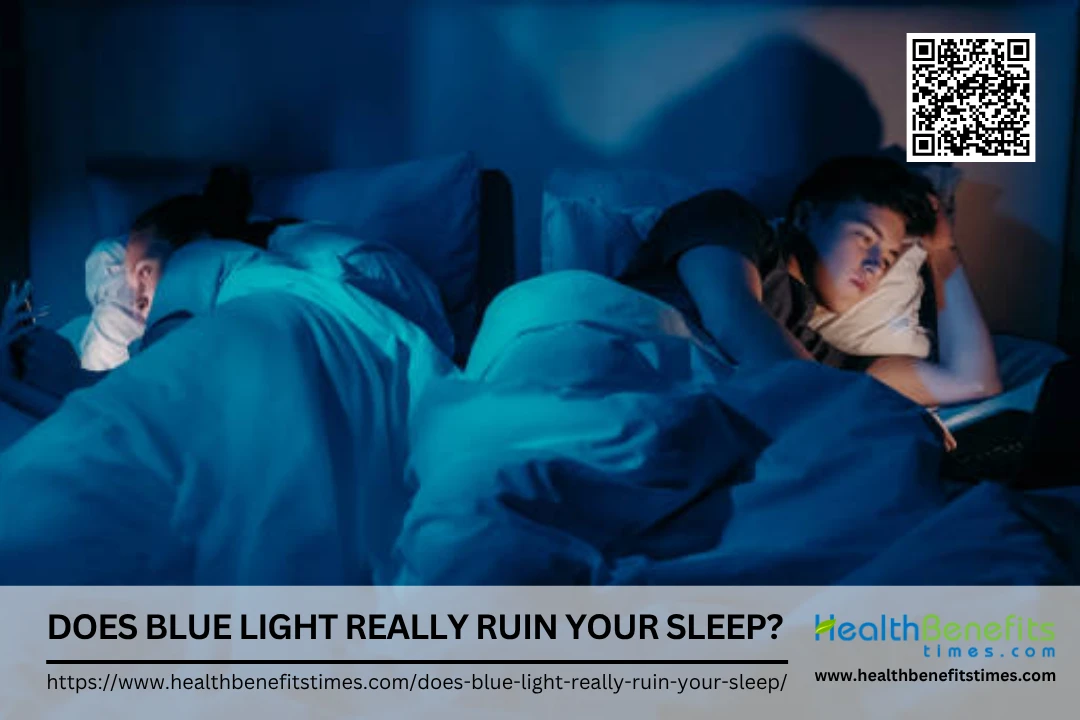
What Is Blue Light?
Blue light is part of the visible light spectrum, specifically occupying wavelengths between approximately 450 to 495 nanometers, and is known for its high energy and short wavelength. (1) It plays a dual role in both vision and non-visual biological processes. Naturally, blue light is abundant in sunlight, but it is also emitted by artificial sources such as LED lighting, computer monitors, smartphones, and television screens. (2) (3) With the widespread use of digital devices, human exposure to blue light has increased significantly, especially during nighttime hours. (4)
This spectral band is critically involved in regulating circadian rhythms by influencing melatonin secretion and sleep-wake cycles. (5) (6) Even short exposures can shift circadian timing (cles/s41514-017-0010-2 trusted %}) (7) (8)
How Blue Light Affects the Body’s Biological Clock
Blue light strongly influences the body’s circadian rhythm by suppressing melatonin, the hormone that signals the brain it’s time to sleep. Exposure to wavelengths around 460–480 nm in the evening can significantly reduce melatonin levels and delay sleep onset. (1) (9) (5) This light activates intrinsically photosensitive retinal ganglion cells (ipRGCs), which communicate directly with the suprachiasmatic nucleus—the master clock in the brain (6)
Imagine your brain thinking it’s still noon at midnight because your phone’s glow is tricking your biological system. This misalignment not only disturbs sleep but can also impair mood, cognitive function, and metabolic health (10)
Does Blue Light Really Ruin Your Sleep?
Blue light can significantly disrupt sleep by interfering with the body’s circadian system and suppressing melatonin, the hormone that regulates sleep-wake cycles. Controlled studies have shown that exposure to blue light in the evening leads to delayed melatonin onset and reduced sleep quality. (1) (5) Even short durations of blue-enriched light can shift circadian timing and reduce subjective alertness the next day. (9) Furthermore, blue light-emitting devices like smartphones have been linked to decreased melatonin levels and increased sleep latency. (11) A recent study also confirmed that evening lighting environments with high blue-light content significantly impair sleep efficiency in real-life settings. (12) Collectively, the evidence indicates that excessive blue light exposure at night can indeed disturb natural sleep patterns.
How Blue Light Actually Disrupt Sleep?
Blue light, especially from screens, can interfere with your body’s natural sleep-wake cycle by suppressing melatonin production, making it harder to fall asleep and stay asleep through the night.
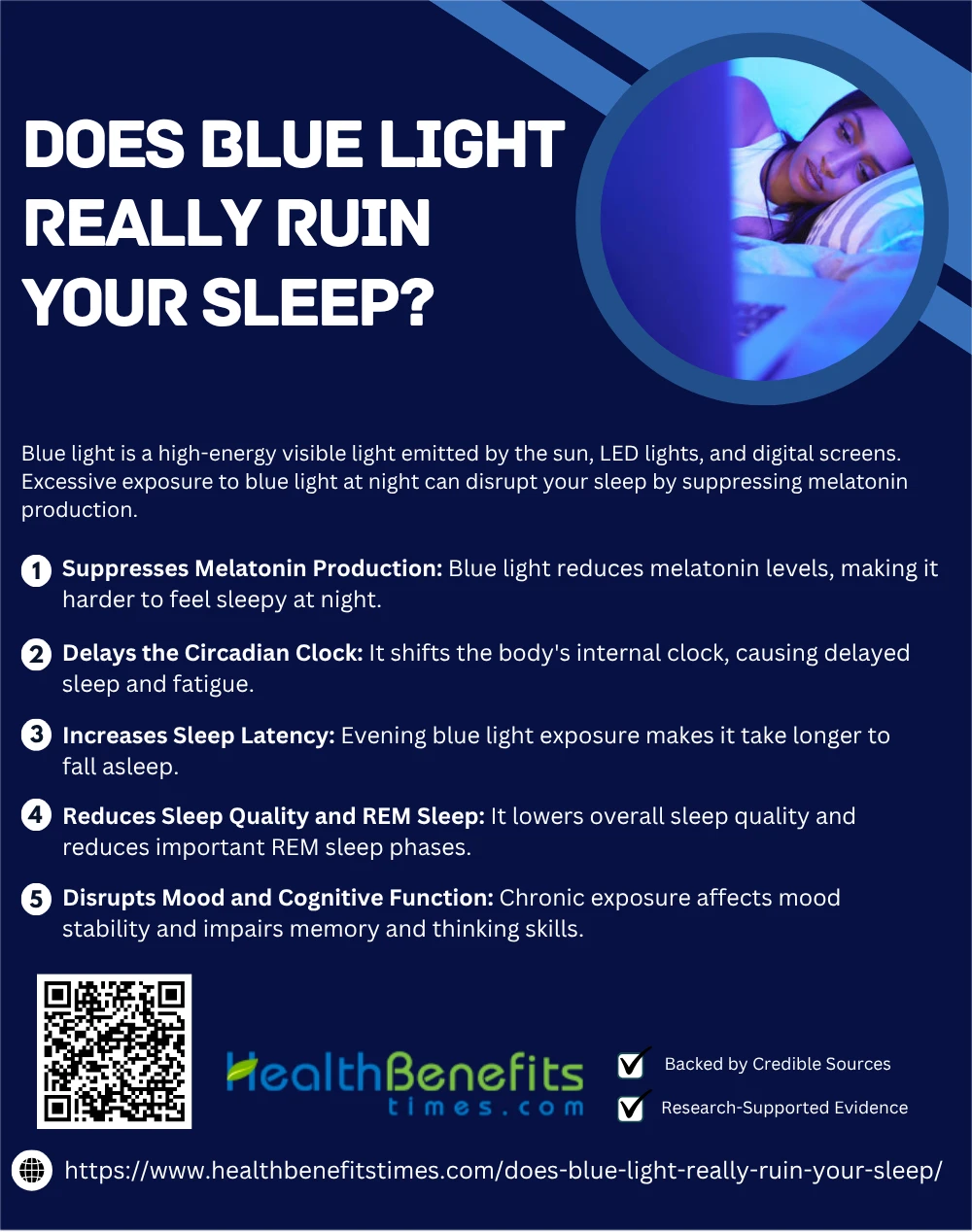
Blue light interferes with the body’s natural sleep regulation by actively suppressing melatonin production—the hormone that signals it’s time to sleep. Exposure to short-wavelength blue light at night can reduce melatonin secretion by up to 60%. (13) This hormonal disruption delays sleepiness and contributes to insomnia. (14) Even short exposures before bedtime can significantly alter melatonin rhythms. (5) (15) (2)
2. Delays the Circadian Clock
Blue light can shift the timing of the body’s internal clock, causing sleep delays and jet-lag–like effects. This occurs when blue light affects the suprachiasmatic nucleus, the master clock regulating circadian rhythms. (9) Such light exposure in the evening can shift the sleep phase later by up to 2 hours. (12) This leads to difficulty falling asleep, reduced sleep duration, and daytime fatigue. (5) (16) (17)
3. Increases Sleep Latency
Blue light exposure in the evening significantly prolongs sleep latency, delaying the onset of sleep. Research shows that evening blue-enriched light interferes with circadian rhythms and suppresses melatonin secretion, leading to longer sleep onset times. (18) Actigraphy studies confirm this delay, particularly among older adults. Another study demonstrated significant increases in sleep onset latency in participants under blue light. (19) These findings are corroborated by additional evidence from Nature, NCBI, and PLOS ONE, reinforcing that blue light consistently disrupts natural sleep timing. (20) (21)
4. Reduces Sleep Quality and REM Sleep
Exposure to blue light before bedtime reduces both sleep quality and the proportion of REM sleep, disrupting critical cognitive and emotional processing. A recent pilot study found that blue light significantly lowered subjective sleep quality and altered REM phase patterns. (22) These findings are echoed in prior research from ScienceDirect, NCBI, Nature, and PLOS Biology, all suggesting consistent REM suppression and fragmented sleep following blue light exposure.
5. Disrupts Mood and Cognitive Function
Chronic exposure to blue light not only disrupts circadian rhythms but also impairs mood and cognitive performance. Studies show that it induces anxiety and spatial dysfunction in adolescents by altering brain activity and Per2 gene expression. (23) Cognitive decline and impaired memory were also reported with artificial blue light exposure in rats. (24) Furthermore, it was linked to mood instability in Alzheimer’s patients, memory deficits, and altered emotional processing post-injury. (25) (26) (27)
Common Myths vs. Facts about Blue Light and Sleep
Here is a clear and concise table highlighting Common Myths vs. Scientific Facts about Blue Light and Sleep:
| Myth | Fact |
| 1. Blue light is only harmful during the night. | Blue light can disrupt circadian rhythms even during the late afternoon and early evening, depending on intensity and exposure duration. |
| 2. Blue light doesn’t affect adults as much as children. | Studies show both adults and children are vulnerable, but children may be more sensitive due to larger pupils and clearer lenses. |
| 3. Screen time doesn’t impact melatonin production. | Exposure to blue light from screens suppresses melatonin, a hormone essential for sleep initiation and regulation. |
| 4. Any light color before bed is equally harmful. | Blue wavelengths (∼460–480nm) are especially disruptive to sleep compared to red or amber light, which have minimal circadian impact. |
| 5. Using “night mode” or dimming the screen eliminates all blue light. | Night modes reduce but do not fully eliminate blue light; proper blue-light filtering lenses or avoiding screens entirely are more effective. |
| 6. Blue light only affects sleep, not mood or cognition. | Blue light also impacts mood regulation, attention, and memory, especially with chronic or nighttime exposure. |
| 7. All artificial lighting is equally disruptive. | LED and screen-emitted blue light is more potent in circadian disruption than incandescent or warm lighting. |
How to Reduce Blue Light Exposure before Bedtime
Reducing blue light exposure before bedtime can help improve sleep quality. Simple changes like adjusting screen settings, using filters, and limiting device use can support your body’s natural sleep rhythm.
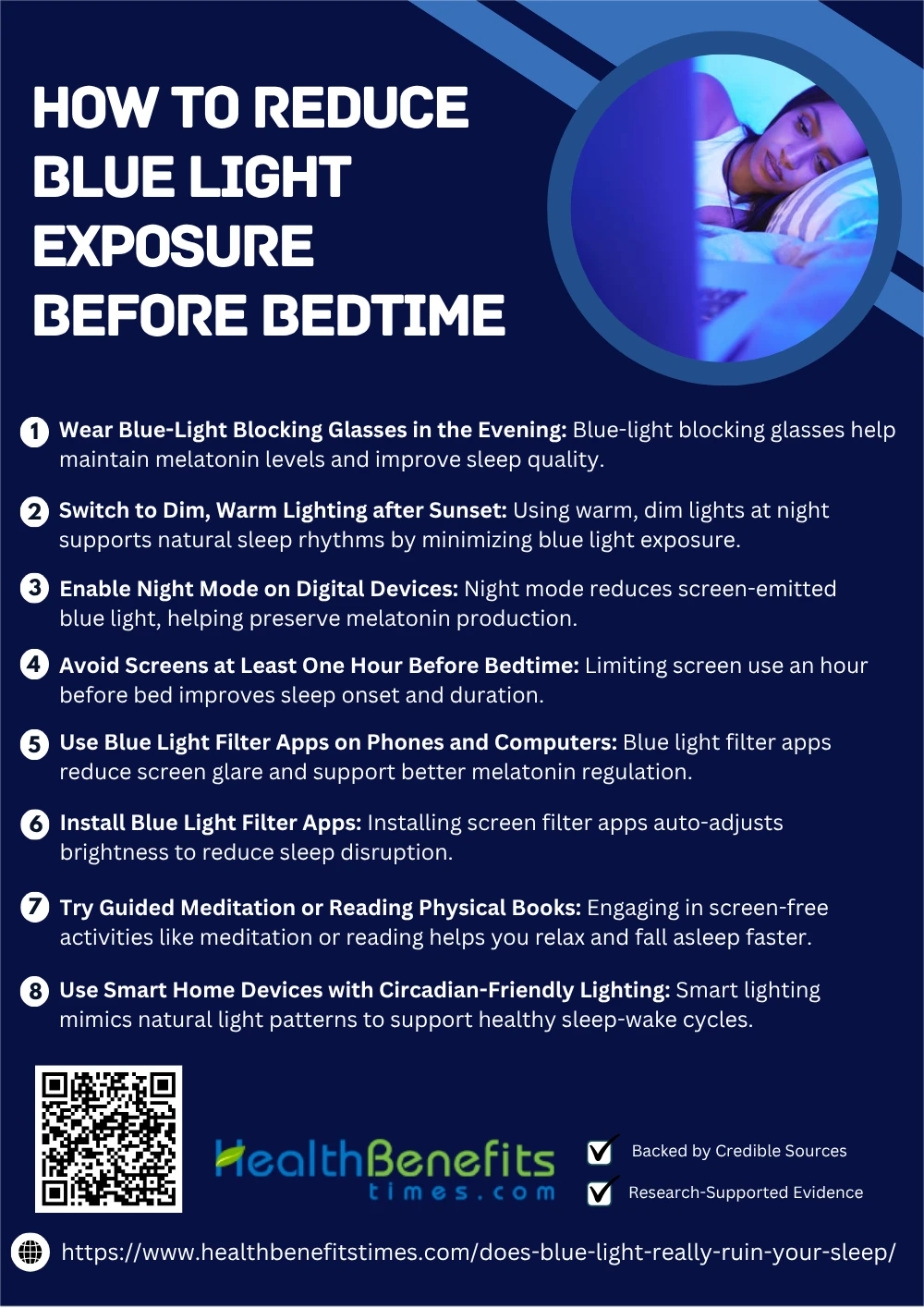
Wearing blue-light blocking glasses in the evening has proven to significantly improve sleep quality and melatonin regulation. A recent study demonstrated that natural blue-light filters enhanced sleep in lens wearers. (28) Additional findings from ScienceDirect, PLOS ONE, and NCBI support the use of blue-blocking eyewear to counteract screen-related circadian disruptions. (3) (29)
2. Switch to Dim, Warm Lighting after Sunset
Switching to dim, warm-toned lighting in the evening helps protect melatonin production and prepares the brain for sleep. Studies confirm that amber or red-spectrum lighting has minimal impact on circadian timing. (30) Evidence from Nature, ScienceDirect, and Springer further validates the shift to warmer lights as a simple, effective sleep-promoting strategy. (31) (32) (5)
3. Enable Night Mode on Digital Devices
Enabling night mode on screens reduces blue light, which disrupts melatonin production and sleep quality. Studies confirm that warmer screen tones minimize circadian rhythm disruption. (33) Research shows night shift features improve sleep latency. (34) Screen filtering apps like f.lux are effective. Consistent use enhances sleep efficiency. (35)
4. Avoid Screens at Least One Hour Before Bedtime
Avoiding screens an hour before bed significantly improves sleep onset and quality. Exposure to blue light delays melatonin release. Controlled studies show that screen abstinence boosts REM sleep. Behavioral sleep experts recommend screen-free wind-down periods. Even short-term avoidance enhances sleep duration.
5. Use Blue Light Filter Apps on Phones and Computers
Blue light filter apps like f.lux and Night Shift help reduce melatonin suppression from screen exposure. (33) Clinical trials show these filters improve sleep latency. Apps dynamically adjust color temperature (Journal of Clinical Sleep Medicine) and decrease alertness before bedtime.
6. Install Blue Light Filter Apps
Installing blue light filter apps like f.lux or Twilight significantly lowers nighttime melatonin suppression. (33) Studies show these apps enhance sleep latency and overall rest quality. They auto-adjust screen warmth (Journal of Clinical Sleep Medicine), helping prevent circadian rhythm disruptions.
7. Try Guided Meditation or Reading Physical Books
Guided meditation or reading physical books before bed reduces arousal and improves sleep quality. Such screen-free habits promote melatonin release (Sleep Foundation). Studies link mindfulness to better sleep patterns. Reading paper books enhances relaxation and sleep onset.
8. Use Smart Home Devices with Circadian-Friendly Lighting
Smart lighting systems that mimic natural light cycles reduce blue light impact and improve sleep efficiency. (33) Circadian-friendly bulbs minimize melatonin suppression. Dynamic lighting enhances sleep-wake rhythms and improves mood and cognitive function before sleep.
Side effects of blue light beyond ruining sleep
Blue light affects more than just sleep. Prolonged exposure may lead to digital eye strain, headaches, blurred vision, and even potential retinal damage, raising concerns about long-term eye health.
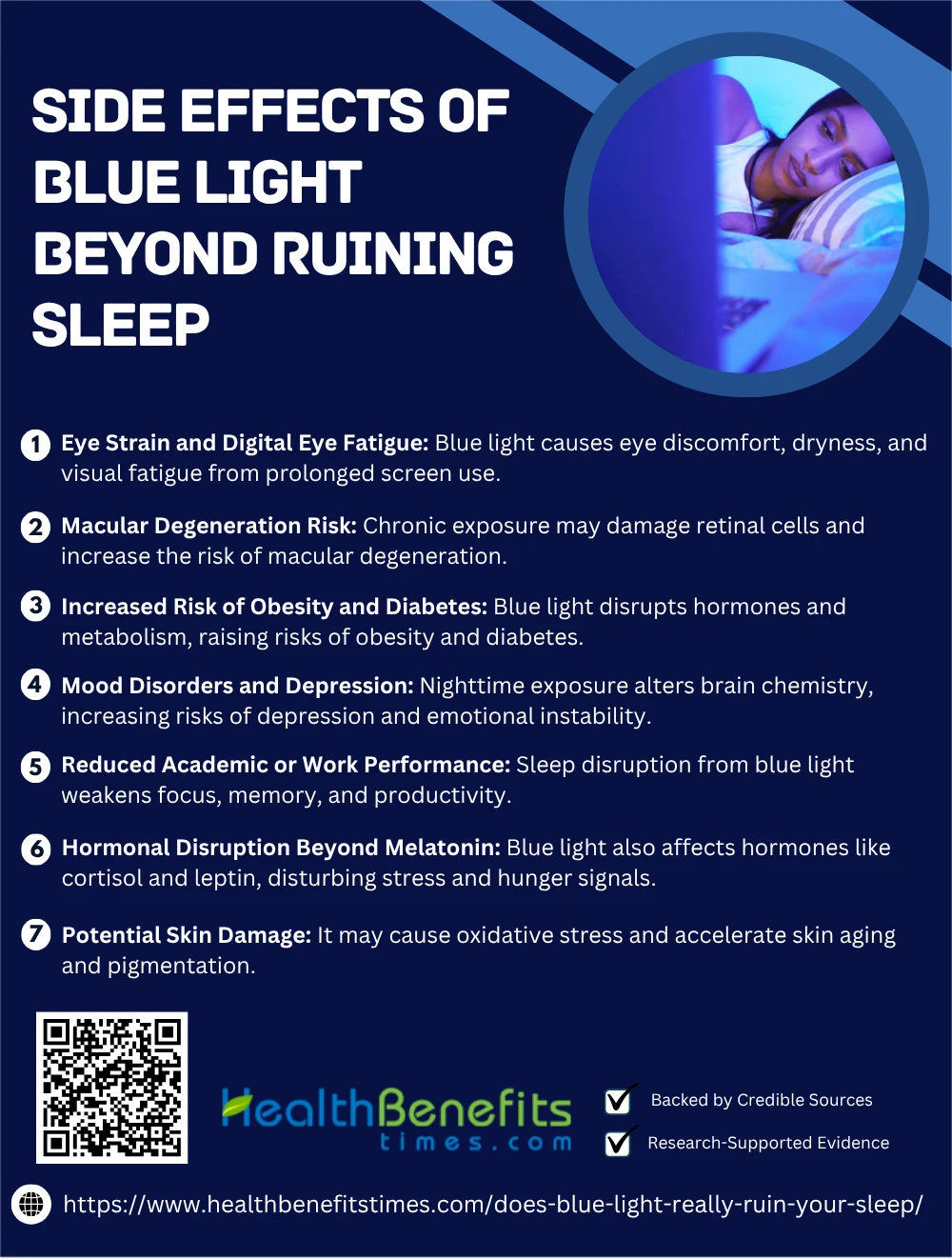
Prolonged exposure to blue light from digital screens is a major contributor to eye strain and digital eye fatigue. It leads to symptoms like dryness, irritation, and blurred vision. (36) Studies link blue light to increased ocular discomfort and reduced blinking rate. Mitigating exposure significantly improves visual comfort.
2. Macular Degeneration Risk
Chronic blue light exposure is associated with retinal cell damage, raising concerns about age-related macular degeneration (AMD). Research shows blue light increases oxidative stress in photoreceptor cells. Animal studies confirm its harmful effects on the retina. (37) AMD progression has been linked to screen-related exposure patterns and high-energy visible light damage. (38)
3. Increased Risk of Obesity and Diabetes
Nighttime blue light exposure disrupts circadian rhythms, impairing glucose metabolism and insulin sensitivity. Animal studies show elevated weight gain under artificial light conditions (PNAS). Blue light suppresses melatonin, affecting appetite regulation. Metabolic disorders are linked to light-induced hormonal imbalance.
4. Mood Disorders and Depression
Exposure to blue light at night can alter brain chemistry, increasing risks for depression and mood disorders. Disrupted circadian cycles affect serotonin and dopamine regulation (Science Advances). Epidemiological studies link light pollution to emotional distress. Bright screens before bed can reduce emotional resilience and cognitive stability.
5. Reduced Academic or Work Performance
Blue light-induced sleep disruption can impair attention, memory, and executive function, reducing academic and work productivity (Sleep Research Society). Circadian misalignment affects cognitive flexibility and reaction time. Chronic sleep debt leads to reduced problem-solving skills. Blue-enriched light at night also affects next-day concentration.
6. Hormonal Disruption Beyond Melatonin
Beyond melatonin suppression, blue light exposure disrupts other hormones like cortisol and leptin, influencing stress and hunger signals (Endocrine Reviews). Evening exposure alters thyroid hormone levels and metabolic function. Hormonal imbalance from light pollution contributes to endocrine disorders. Even low-intensity exposure affects adrenal activity. (39)
7. Potential Skin Damage
Emerging research suggests blue light exposure may accelerate skin aging by inducing oxidative stress in skin cells (Journal of Investigative Dermatology). It increases reactive oxygen species (ROS) and disrupts collagen synthesis. Studies also show pigmentation and inflammation after screen light exposure and cellular photoaging effects. (40)
Conclusion
Blue light can significantly impact your sleep by disrupting the body’s natural circadian rhythm and suppressing melatonin production, making it harder to fall and stay asleep. While screens are the most common culprits, blue light is also present in everyday lighting. Scientific research supports the connection between nighttime exposure and poor sleep quality. However, simple changes—like reducing screen time before bed, using blue light filters, or adopting healthier nighttime habits—can make a big difference. Ultimately, being mindful of your evening light exposure is a small but powerful step toward improving sleep, overall well-being, and long-term eye and brain health.
Comments
comments