Month: September 2020
-
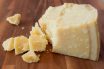
Parmesan
Parmesan takes its name from Parma, a region in northern Italy where this cheese originated. Today, only cheese that is actually made in Parma is allowed by the European Court of Justice to be called parmesan, a restriction that also applies to Parma ham. Parma, in turn, probably acquired its name from parma, meaning shield,…
-

Papillote
Since the mid eighteenth century papillote has referred to a colourful paper frill tied as a decoration to the bone end of a drumstick, lamb chop, or pork chop. The word derives from the French papillon, meaning butterfly, so called because the colourful frills resemble the wings of that insect. In turn, the French papillon…
-
Pap
Pap is any semi-liquid food, such as bread soaked in milk or even the namebrand Pablum, that infants employ to reduce the coefficient of friction that obtains between their palms and the surface of their highchairs. The word apparently originated in the early fifteenth century as a representation of the sound babies make when they…
-
Pantry
Although pantries now contain almost any manner of foodstuff, they originally contained only bread, as is suggested by the origin of the word: the Latin panis, meaning bread. Other words in English, such as companion, impanation, and pannier (originally a bread basket) also derive from the Latin panis, although pan itself, as in frying pan,…
-

Pancake
In England, the original pancake was called afroise, a fried cake of dough that often contained bacon. Froise appeared in the early fourteenth century, and may have derived, through French, from the Latin frigere, meaning to fry. Pancake itself appeared in the early fifteenth century, an obvious compound of pan and cake. Although usually considered…
-
Pablum
Pablum is the trademark name of a gruel fed to infants and other individuals too weak to defend themselves. The brand name was first registered in the United States in 1932 and derives from pabulum, a word meaning nourishment or food, which was borrowed directly from Latin in the early eighteenth century. Much further back,…
-

Oyster
Although ostracism and Osterizer both resemble the word oyster, only one of them is actually related to the name of that tasty mollusc. The ancient Greek word for oyster was ostreon, a word that derived from an Indo-European source meaning bone. From the same Indo-European source developed the Greek word os, meaning bone (as in…
-
Oven
The ultimate source of the word oven is an Indo-European word meaning firepot and pronounced something like ukwnos. This Indo-European word evolved into the Germanic uhwnaz, which developed into the Old English ofn, first recorded in the tenth century and respelt as oven by the fourteenth century. The Indo-European ukwnos also developed along a different…
-
Ounce
In one sense, an ounce is an inch, at least in so far as the names of both units derive from a Latin source meaning one twelfth, an inch being a twelfth of a foot, and a troy ounce being a twelfth of a pound. This Latin source—uncia—developed differently as it made its way though…
-
Ort
An ort was originally a scrap of food or leftover fodder not eaten by cattle or pigs. The word then came to be applied to leftovers from the kitchen table, leftovers that were also known as relief or relics. Ort appeared in the mid fifteenth century as a compound of the prefix oor, meaning not,…