Category: S
-
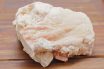
Suet
The chopped up animal fat that my mother used to strew on snow banks for sparrows to eat is called suet, a product also added to steamed puddings and mincemeat (in the Middle Ages it was also rubbed on swords and iron hinges to keep them from rusting). The name of this multi-purpose animal-product derives,…
-
Subaltern’s luncheon
In the British military a subaltern is an officer who ranks below a captain; as a result of his low status, a subaltern is often asked to work through the meal hour, leading to the phrase subaltern’s luncheon, a meal the officer partakes of by drinking a glass of water and tightening his belt. The…
-
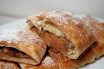
Strudel
Centuries ago, a German sailor would leap out of bed with his heart in his throat if someone on deck shouted these dreadful words: “Mem Gott! Der Strudel! Der Strudel!” The fear paralyzing these sailors was evoked not by a chance encounter with the sweet and sticky pastry, but by the natural phenomenon it is…
-

Strawberry
In the Middle Ages, women stopped eating strawberries while they were pregnant because they feared that the berry would cause their child to be born with red birthmarks; a blemish still known as a strawberry mark. The word strawberry, however, is as innocuous as it sounds, deriving simply from straw—the hollow, dried stems of certain…
-

Stein
When beer is gulped from a stein, what the drinker holds in his hand is, from an etymological point of view, a stone, or at least an earthenware mug that is stonelike in its weight and texture. This German word for stone was adopted by English as a synonym for beer mug in the mid…
-
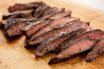
Steak
Although tigers may not seem to have anything in common with steaks, they do: tigers and steaks derive their names from a single, Indo-European source, one that also evolved into the words stick and stigma. This Indo-European source—pronounced something like stei and meaning to pierce—evolved into the Old Persian tighri, meaning piercing weapon or arrow,…
-
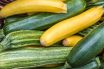
Squash
The squash that means edible gourd is a completely different word than the squash that means painful racquet sport. Squash, the sport, gets its name from the small, hollow ball being squashed into a little disk each time it hits a wall of the court or a shoulder blade of an opponent. In turn, the…
-
Square meal
The term square meal, denoting a satisfying, hearty meal, dates back to at least the late nineteenth century and probably arose from the association of square with right a square’s angles are right angles, so if something is square it is right, and things that are done right—like a meal—are usually satisfying. In the early…
-
Spumante
The sparkling wine called spumante takes its name from the Italian spuma, meaning foam, as does the ice-cream dessert known as spumoni. Both words appeared in the early twentieth century, although the related word spume has been used since the fifteenth century to describe froth that results from beating an egg.
-
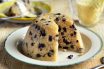
Spotted dick
Although you might expect spotted dick—a kind of suet pudding—to have been given its name by a man prone to whimsy or hypochondria, the name of the dish actually has a very sober origin. Since the early nineteenth century, dick referred to a cheese made in Suffolk, one of England’s many counties; the name of…