Category: S
-
Spoil pudding
The term spoil pudding refers not to a pudding, but to a person, or rather a parson, one whose sermons are so long mat the congregation’s Sunday puddings are left too long in the oven, thus spoiling them. The term appeared in the late eighteenth century.
-

Spinach
The spinach plant is native to Persia, but because it was introduced to most of Europe from Spain (where it had been brought by Arabs), it was sometimes referred to by sixteenth-century scholars as Hispanicum holus, Latin for Spanish herb. It is tempting to assume that the first part of this Latin name—Hispanicum—was simply corrupted…
-

Spikenard
Spikenard (also known as Indian Root, Life-of-Man, and American Spikenard. Spikenard is a bitter extract obtained from the plant of the same name; in ancient and medieval times, spikenard was commonly used to flavour sauces and meat dishes, but fell out of favour as new spices were introduced from the Far East. The plant’s name…
-

Spignel
Spignel, spigurnel, and baldmoney are not partners in a downtown law firm but rather are alternative names for a plant whose root, during the sixteenth and seventeenth century, was dried, ground, and used as a spice. The oldest of these names, baldmoney, dates back to the late fourteenth century but has nothing to do with…
-
Spick and span
Although it makes no sense to say that a kitchen is spick or that a cupboard is span, everyone knows what it means for either of these to be spick and span. This expression has changed greatly over the last seven hundred years. It first appeared in the mid seventeenth century as a shortened form…
-

Spatch cock
A spatch cock is a chicken served for dinner after skinning it, splitting it in two, and roasting it on a grill. The name of this Irish dish was originally dispatch cock, so named because it was easily dispatched: in fact, because it could be prepared with such ease and speed, the spatch cock became…
-
Spam
Despite the success of Wrigley’s, a gum whose brand name makes me think of worms in a rain storm, most marketing experts concur that a product cannot succeed with a bad name. A good name should be short and evocative, and should contain strong, explosive sounds like b and p. Spam has all these qualities:…
-

Souvlaki
The Greek dish known as souvlaki, made by grilling pieces of lamb on a skewer, takes its name from a shoemaker’s tool, the awl, a pointed rod used to poke holes into leather. The Latin name for this tool—subula, which derives from the older suere, meaning to sew—was adopted by Greek as soublion. In Modern…
-

Sorrel
Long used as an herb for flavouring soup, sorrel takes its name, via French, from an ancient Germanic word, pronounced something like suraz, meaning sour. This Germanic word is also the source of the word sour itself, and also of the Modern German sauer, as in sauerkraut, literally meaning sour cabbage (during World War I,…
-
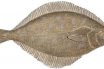
Sole
Sole was the fish of choice in the kitchens of ancient Rome, as is suggested by its Latin name: solea Jovi, meaning sandal of Jove, Jove being the supreme deity in the Olympic pantheon. The specific identification of this fish with a variety of footwear was inspired by its perfectly oval form, reminiscent of the…