Mindblown: a blog about philosophy.
-
Falls
The drooping outer perianth segments in an Iris flower. To drop accidentally to the floor, ground, or lower level (e.g., into a chair).
-
Dioecious plants
Those plants with male and female flowers on separate individual plants (only male flowers on some, only female on others).
-
Digitate leaf
A palmate leaf, the leaflets of which are narrow and finger-like.
-
Corolla-tube
The tube formed when the petals are fused together below.
-
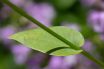
Clasping leaf
A (usually stalkless) leaf with basal lobes that project backwards and appear to clasp the plant’s stem.
-
Casual
A plant that is introduced, occurs sporadically, only persisting in any given population for a short time and has not become naturalised. A casual species is therefore dependent on constant re-introduction. An alien or introduced plant that occasionally grows wild in places but cannot maintain itself for long.
-
Bog
An area of waterlogged acid peat, usually with vegetation composed of Sphagnum moss species (which form the bulk of the peat) and of sedges, low shrubs of the Heath family etc.
-
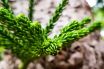
Awl-shaped leaf
A leaf tapering from a cylindrical base to a fine point.
-

Arrow-shaped leaf
A wide-based leaf, tapering to a point above, with two backward-directed pointed or rounded basal lobes.
-
Alternate leaves
Leaves alternating up a stem, occurring first on one side, then on the other. Springing, one by one, from first one side of the stem and then the other. Whether the leaves are alternate or opposite is an important aid in plant identification.
Got any book recommendations?