Mindblown: a blog about philosophy.
-
Biocompatibility
Condition whereby the body does not respond to a foreign substance (e.g., metal) but recognizes it immunologically as self. Biocompatible materials do not lead to acute or chronic inflammatory responses nor do they prevent proper differentiation of implant‐surrounding tissues. The compatibility of a donated organ or artificial limb with the living tissue into which it…
-
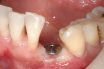
Bio‐Col technique
Technique developed to preserve the ridge in the esthetic zone. A tooth is extracted via a low‐trauma technique to maintain intact bony walls and surrounding gingival anatomy without flap reflection. The extraction socket is grafted up to the alveolar crest with an anorganic bovine bone substitute, covered with a collagen plug, and sutured in place…
-
Bioceramics
Specially designed and fabricated ceramics for the repair or reconstruction of diseased, damaged, or missing parts of the body.
-
Bioadhesion
Result of a process whereby a chemical attachment between biologic and other materials is obtained.
-
Bioactivity
Effect of implant material that allows interaction and bond formation with living tissues. Implant bioactivity may depend upon material composition, topography, and chemical or physical surface variations.
-
Bioactive glass
Ceramic material that stimulates or otherwise promotes biologic activity. It consists of silicophosphate chains that bond ionically to compounds such as CaO, CaF2, Na2O, ZnO, TiO2, and NiO, among others. It may undergo ionic translocations in vivo, or exchange ions or molecular groups in an osseous recipient site, and thereby osseointegrate. Bioactive glass may be…
-
Bioactive fixation
Stabilization involving direct physical and/or chemical attachment mechanism(s) between biological tissues and a dental implant surface at the ultrastructural level.
-
Bioactive
Having an effect on, or eliciting a response from, living tissue. A chemical that is biologically active. A neuroactive chemical affects nerve cells. Neurotransmitters are bioactive because they result in a change in activity. Producing an effect in living tissue or in a living organism.
-
Bioacceptability
The quality of compatibility in a living environment in spite of adverse or unwanted side effects.
-
Bioabsorbable material
Solid polymeric material that can dissolve in body fluids without any change of the polymer or decrease in molecular mass.
Got any book recommendations?