


Understanding Screen Fatigue and its causes
Screen fatigue, also referred to as digital eye strain, arises from prolonged exposure to digital screens, resulting in a variety of symptoms including eye strain, headaches, blurred vision, and difficulty focusing. (6) These symptoms are exacerbated by excessive blue light exposure, which disrupts circadian rhythms and impairs sleep quality. (7) The physiological strain is further compounded by the close proximity of screens and the need for constant focus, which can lead to accommodative discomfort and fatigue. (8)
The causes of screen fatigue are multifaceted. Additionally, multitasking on digital platforms increases cognitive load, leading to mental exhaustion. (9) Poor workstation design and prolonged static postures also contribute to musculoskeletal discomfort, exacerbating the overall effects of screen fatigue. (10) Addressing these causes requires a holistic approach, including regular screen breaks, ergonomic adjustments, and reduced blue light exposure. (11)
How Does a Digital Detox Reduce Screen Fatigue?
In today’s tech-driven world, screen fatigue affects millions, causing eye strain, headaches, and stress. Discover how a digital detox can refresh your mind, body, and energy by reducing digital overexposure.
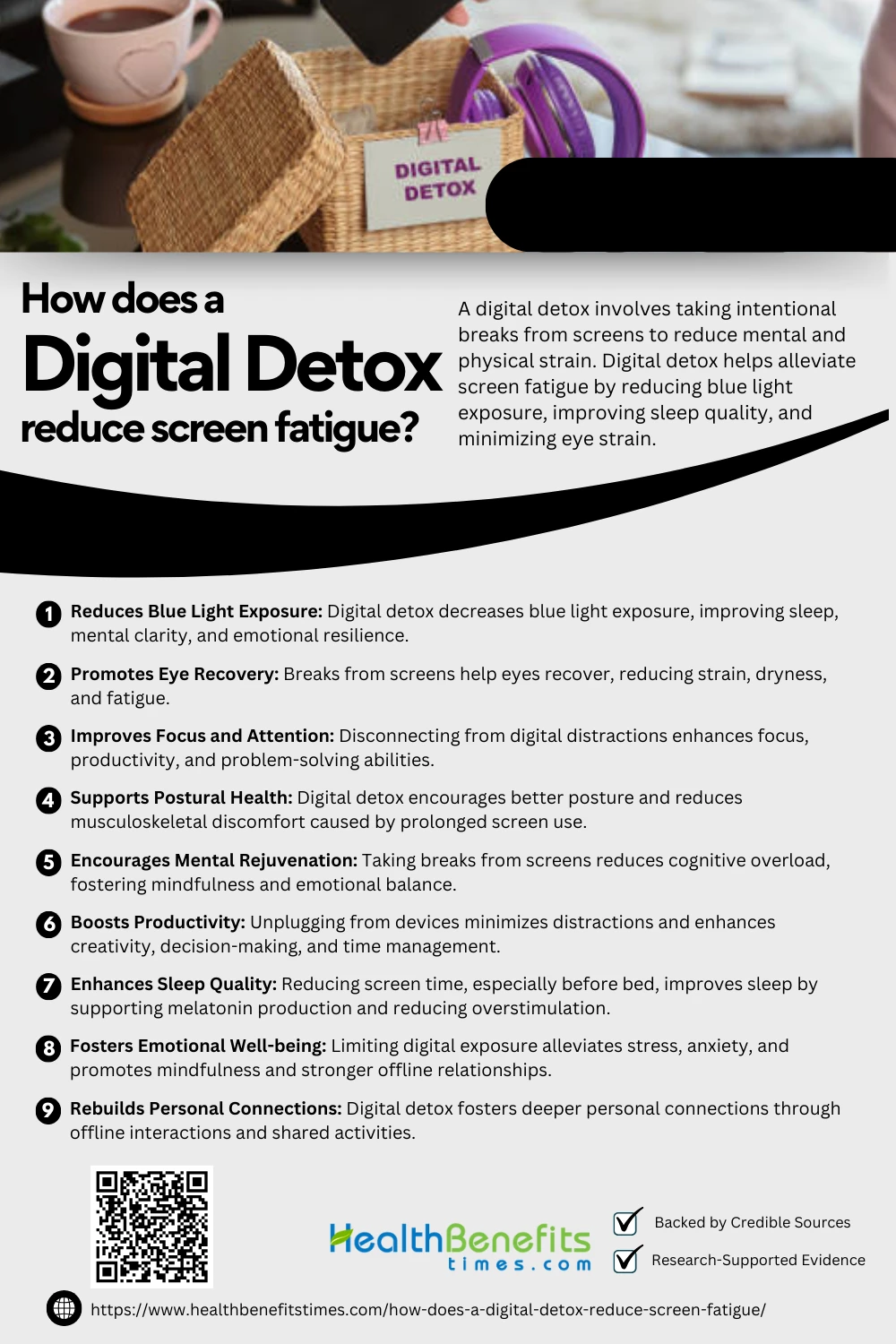
A digital detox, characterized by scheduled breaks from screens, minimizes blue light exposure that disrupts circadian rhythms and impairs sleep quality. (3) Blue light, emitted by digital devices, interferes with melatonin production, leading to insomnia and eye strain. (12) Reducing screen time improves cognitive function and mental clarity, especially in youth, and promotes emotional resilience. (13) (14)
2. Promotes Eye Recovery
Engaging in a digital detox allows the eyes to recover from the strain caused by prolonged screen use. By minimizing exposure to digital devices, the eyes can restore their natural lubrication and reduce symptoms of digital eye strain, such as dryness and fatigue. (15) Regular breaks also promote improved visual focus and reduce the risks of long-term eye damage. (16)
3. Improves Focus and Attention
A digital detox enhances focus and attention by reducing cognitive distractions caused by constant notifications and multitasking. Disconnecting from digital devices allows the brain to reset, improving concentration and productivity. (17) Research shows that taking regular breaks from screens mitigates mental fatigue and boosts problem-solving skills. (18) It also improves memory retention and encourages mindfulness, fostering sustained attention in daily tasks. (13) Organizations promoting digital detox report improved employee efficiency. (19)
4. Supports Postural Health
A digital detox encourages better posture by breaking prolonged periods of screen time, reducing the risk of musculoskeletal issues such as neck and back pain caused by poor ergonomics. (2) Research highlights that minimizing sedentary digital habits fosters spinal alignment and promotes overall physical well-being. (20) Implementing regular digital detox routines is linked to improved workplace productivity and reduced discomfort. (21) Additionally, incorporating physical activity during detox periods bolsters postural health and alleviates tension. (22)
5. Encourages Mental Rejuvenation
A digital detox promotes mental rejuvenation by reducing cognitive overload and enhancing mindfulness. Taking regular breaks from screens allows individuals to disconnect from digital stressors, fostering emotional balance and focus. (23) Mindful practices like meditation and outdoor activities during detox periods significantly improve mental health and clarity. (24) Studies show that detoxing minimizes anxiety and enhances creativity by encouraging offline engagement. (25)
6. Boosts Productivity
A digital detox enhances productivity by reducing distractions and fostering focus. By unplugging from digital devices, individuals minimize cognitive overload, enabling clearer thinking and better time management. (26) Studies reveal that stepping away from screens improves creativity and decision-making, particularly in workplace environments. (27) Additionally, mindfulness practices during detox periods encourage balanced work routines. (5) Companies adopting digital detox initiatives report heightened employee efficiency and job satisfaction. (13)
7. Enhances Sleep Quality
Engaging in a digital detox improves sleep quality by reducing blue light exposure from screens, which disrupts melatonin production and circadian rhythms. (16) Studies show that limiting screen time before bedtime promotes deeper and more restorative sleep. (24) Digital detox practices also reduce anxiety and mental overstimulation, further contributing to better sleep. (28) Structured detox programs are particularly effective for individuals experiencing sleep disruptions due to excessive device usage. (29)
8. Fosters Emotional Well-being
A digital detox helps foster emotional well-being by reducing stress and promoting mindfulness. Limiting screen time alleviates the constant pressure of notifications and digital demands, creating space for introspection and self-care. (24) Studies show that intentional breaks from digital devices lower anxiety levels and enhance mental clarity. (30) Moreover, detoxing from social media enables stronger offline relationships and emotional resilience. (31) By encouraging positive behavioral changes, digital detox provides a pathway to sustained emotional balance and improved overall well-being. (5)
9. Rebuilds Personal Connections
A digital detox fosters meaningful personal connections by encouraging offline interactions and reducing distractions from digital devices. (32) By stepping away from screens, individuals focus on nurturing face-to-face communication and improving relationship quality. (33) Research highlights that families and friends engaging in shared offline activities experience strengthened bonds. (34) Digital detox initiatives, such as group retreats, also emphasize the value of interpersonal connections and emotional well-being. (35)
Practical Steps for a Successful Digital Detox
Achieving a successful digital detox requires mindful strategies. Discover practical steps to unplug, recharge, and foster healthier screen habits.
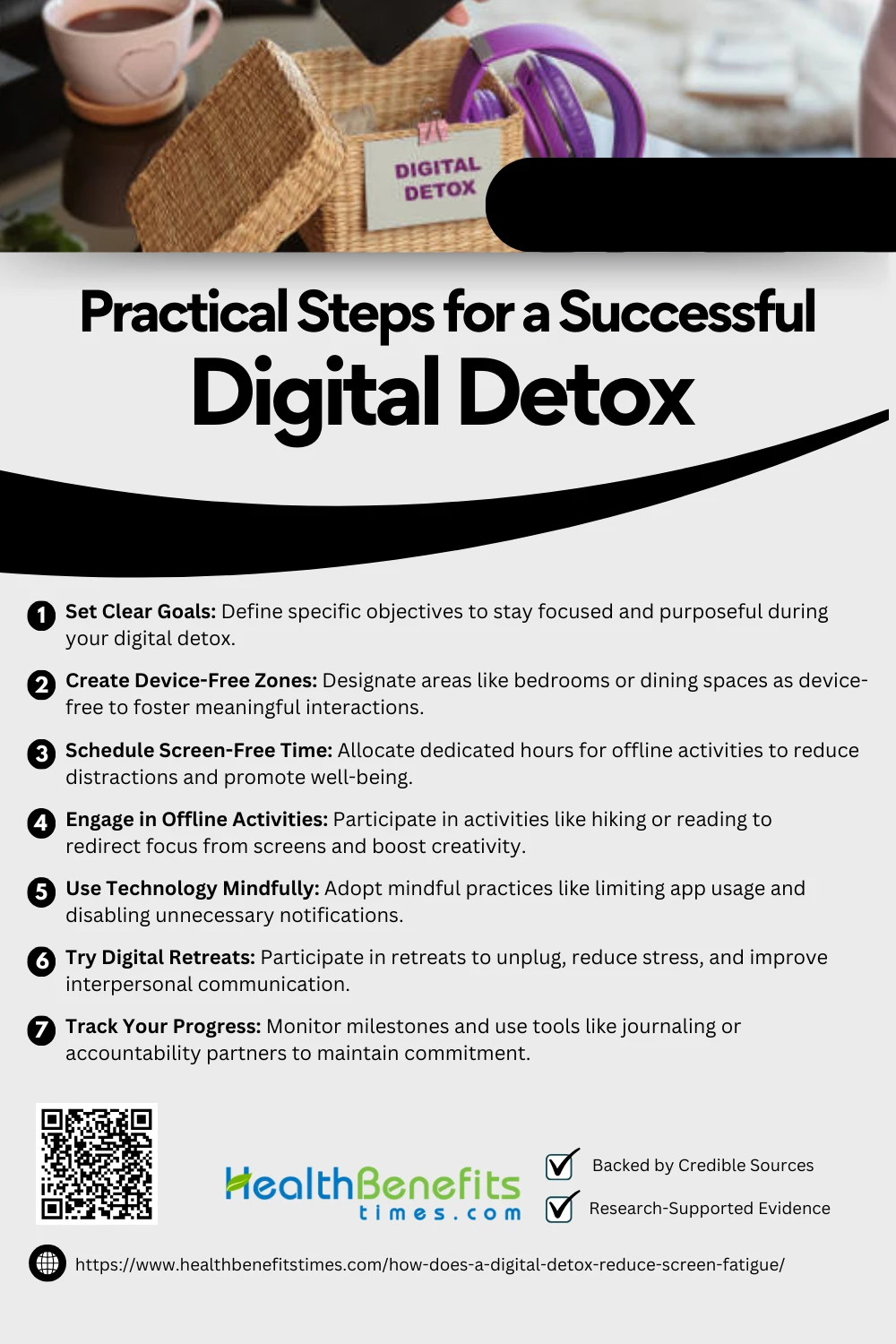
Setting clear goals is the cornerstone of a successful digital detox. Goals help identify specific outcomes, such as improving focus, reducing stress, or reconnecting with offline relationships. (17) Defined objectives ensure that detox efforts remain purposeful, preventing relapse into habitual screen use. (36)
2. Create Device-Free Zones
Designating device-free zones, such as bedrooms or dining areas, fosters meaningful interactions and reduces digital dependency. (13) These zones encourage mindfulness and focus, supporting overall mental health. (25) Research also highlights their role in improving family dynamics and communication. (37)
3. Schedule Screen-Free Time
Scheduling screen-free time promotes mindfulness and restores focus by reducing digital distractions. Allocating specific hours daily for offline activities like exercise or family interactions enhances mental clarity and emotional balance. (5) This practice fosters deeper relationships while improving overall well-being. (13) Structured screen-free intervals help individuals develop healthier digital habits. (25) Integrating these intervals into daily routines ensures long-term success in achieving digital balance. (38)
4. Engage in Offline Activities
Engaging in offline activities, such as hiking, reading, or painting, is an essential aspect of a digital detox. These activities redirect attention away from screens, fostering mindfulness and creativity (16) Research suggests that replacing digital habits with offline pursuits enhances mental clarity and emotional balance. (39) Structured offline time also helps individuals develop healthier routines, improving overall well-being. (13) These efforts cultivate resilience against the distractions of the digital age. (40)
5. Use Technology Mindfully
Mindful technology use is crucial for a successful digital detox. Practices like disabling non-essential notifications and setting app usage limits help reduce distractions and promote focus. (13) Leveraging digital well-being tools enables better time management and screen usage tracking. (5) Prioritizing meaningful digital interactions over mindless scrolling encourages intentional usage. (25) These strategies foster a balanced approach to technology, aligning with detox goals. (40)
6. Try Digital Retreats
Digital retreats are emerging as a powerful solution for achieving a successful digital detox. These retreats focus on disconnecting from technology to reduce stress, improve mental clarity, and enhance overall well-being. Research highlights their effectiveness in promoting mindfulness and reducing screen addiction. (41) Retreats also improve interpersonal communication by encouraging face-to-face interactions. (42)
7. Track Your Progress
Tracking progress is essential for a successful digital detox, providing motivation and measurable milestones. Research indicates that self-monitoring enhances commitment and reduces screen dependency. (43) Regular journaling can help identify triggers and progress. (44) Engaging accountability partners further strengthens adherence to goals. (45)
Challenges of Digital Detox
Embarking on a digital detox presents challenges, such as overcoming tech dependency, managing FOMO, and balancing work demands. Learn strategies to tackle these obstacles effectively.
Withdrawal symptoms are a significant challenge in digital detox efforts, causing anxiety, irritability, and restlessness as individuals disconnect from technology. (46) These symptoms are linked to dopamine disruption from prolonged digital use dopamine and digital habits. Addressing these effects requires mindfulness strategies and gradual reduction plans stepwise detox approach. (47)
2. Social Isolation
Engaging in a digital detox, while promoting mindfulness and reducing tech reliance, can inadvertently lead to social isolation, as individuals lose critical online connections that maintain modern relationships. (48) This withdrawal can trigger anxiety or alienation due to abrupt lifestyle changes, highlighting its psychological complexities. (49) Effective detox strategies should emphasize interpersonal engagement to combat feelings of exclusion. (18)
3. Difficulty in Breaking Habits
Breaking habitual digital dependency during detox efforts proves challenging, as ingrained behaviors often resist change, requiring intentional strategies for replacement activities. (20) Emotional and psychological barriers further hinder success, intensifying difficulties in establishing new routines. (16) Structured interventions demonstrate promise, yet flexibility remains key to accommodating diverse adjustment periods. (18) Finally, addressing technology’s pervasive role through gradual transitions mitigates anxiety while fostering sustainable change. (50)
4. Fear of Missing Out (FOMO)
Digital detox efforts are often hindered by the pervasive Fear of Missing Out (FOMO), as individuals struggle with anxiety over being disconnected from social or professional networks. (51) This emotional response exacerbates dependence on digital platforms, complicating detox strategies. (52) Practical solutions like structured activities and mindful reframing have shown promise in mitigating FOMO-related stress. (53) Additionally, fostering offline community interactions reduces the psychological impact of disconnection. (54)
5. Dependence on Technology for Tasks
Dependence on technology complicates digital detox efforts, as individuals often rely on devices for task management and communication. (55) Challenges include adapting to alternative methods while maintaining productivity. (56) Neurocognitive interventions further support transition efforts, addressing underlying behavioral patterns. (57)
6. Lack of Support Systems
Lack of support systems poses a significant challenge to digital detox, as individuals often lack social or institutional backing to reduce digital dependency. (58) Support mechanisms like counseling or guided detox programs can mitigate these challenges. (57) Community-driven approaches foster accountability, enabling a smoother transition. (59) Lastly, integrating technology into solutions, like app-based reminders or detox trackers, enhances self-regulation. (60)
7. Short-Term Detox Effects
Short-term digital detox effects often include withdrawal symptoms like anxiety, restlessness, and a sense of deprivation, which can disrupt emotional stability. (61) These challenges highlight the importance of gradual detox strategies for sustainable transitions Smith, 2024.
Conclusion
A digital detox is a powerful tool to combat screen fatigue by giving your eyes, mind, and body a much-needed break from continuous screen exposure. By reducing blue light, encouraging mindful habits, and promoting healthier routines, a detox helps alleviate symptoms like eye strain, headaches, and mental exhaustion. Incorporating regular breaks from digital devices not only enhances physical and mental well-being but also fosters a more balanced lifestyle. Start small and reap the transformative benefits today.
Comments
comments