

What Is Functional Fitness?
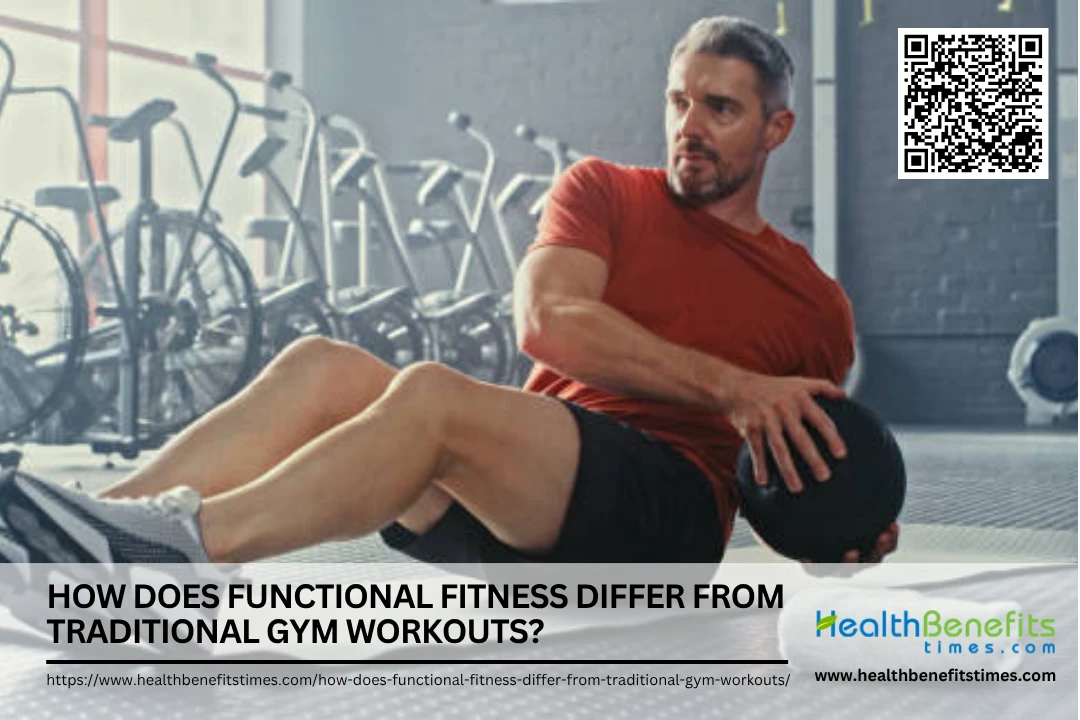
Functional fitness refers to exercises that mimic real-life movements and improve daily performance, such as lifting, bending, reaching, and walking. It emphasizes multi-joint, multi-muscle movements that build coordination, stability, and strength across the body. Common examples include squats, lunges, kettlebell swings, battle ropes, and bodyweight exercises like push-ups or planks. These workouts are designed to train the body for practical use, rather than aesthetic goals, enhancing mobility and reducing injury risk. According to the American Council on Exercise, this approach supports better posture, balance, and functional strength. Mayo Clinic also highlights its effectiveness for older adults. ({% trusted %})
What Are Traditional Gym Workouts?
Traditional gym workouts typically involve machine-based or isolated muscle group training, such as bicep curls or leg presses, designed to target specific muscles for strength or size. This method prioritizes aesthetic improvements, strength gains, and isolated muscle hypertrophy, making it a popular approach among bodybuilders and strength athletes. The equipment used often includes dumbbells, barbells, resistance machines, and treadmills, which support controlled, repetitive movements. According to the American Council on Exercise, this training style enhances muscular endurance and size. Healthline also notes its benefits for focused muscle development and rehabilitation purposes.
Key Differences between Functional Fitness and Traditional Workouts
Here is a detailed comparison table showing the key differences between Functional Fitness and Traditional Workouts across multiple dimensions:
| Aspect | Functional Fitness | Traditional Workouts |
| Definition | Training that mimics real-life movement patterns and tasks | Focused on muscle isolation for strength or hypertrophy |
| Primary Goal | Improve daily performance, mobility, and coordination | Increase muscle size, strength, and body aesthetics |
| Movement Type | Multi-joint, multi-muscle, dynamic compound movements | Isolated, single-joint or machine-guided movements |
| Examples of Exercises | Squats, lunges, kettlebell swings, battle ropes, TRX rows | Bicep curls, leg presses, bench press, lat pulldowns |
| Equipment Used | Kettlebells, resistance bands, medicine balls, balance boards, bodyweight | Dumbbells, barbells, resistance machines, treadmills |
| Training Environment | Circuit-based, often includes unstable surfaces or varied terrain | Controlled, stable environment like gyms with fixed machines |
| Core Engagement | Core is constantly activated across all movements | Core engagement is often secondary unless targeted |
| Balance & Coordination | Emphasizes improving balance, agility, and neuromuscular control | Less emphasis on balance; machines support stability |
| Transfer to Daily Life | High – movements simulate real-world activities (e.g., lifting, twisting) | Low – movements rarely mirror everyday motion |
| Injury Risk | Lower if performed correctly; promotes injury prevention through mobility training | May cause overuse or imbalance injuries if muscles are trained unevenly |
| Target Audience | Athletes, seniors, rehab patients, general population focused on function | Bodybuilders, powerlifters, and individuals with physique or strength-specific goals |
| Progress Measurement | Functional capacity, mobility tests, performance improvements | Strength gains (1RM), muscle size, body measurements |
Health Benefits of Functional Fitness
Functional fitness offers a range of health benefits by improving strength, balance, flexibility, and coordination. It enhances everyday movement, reduces injury risk, and supports long-term physical and mental well-being.
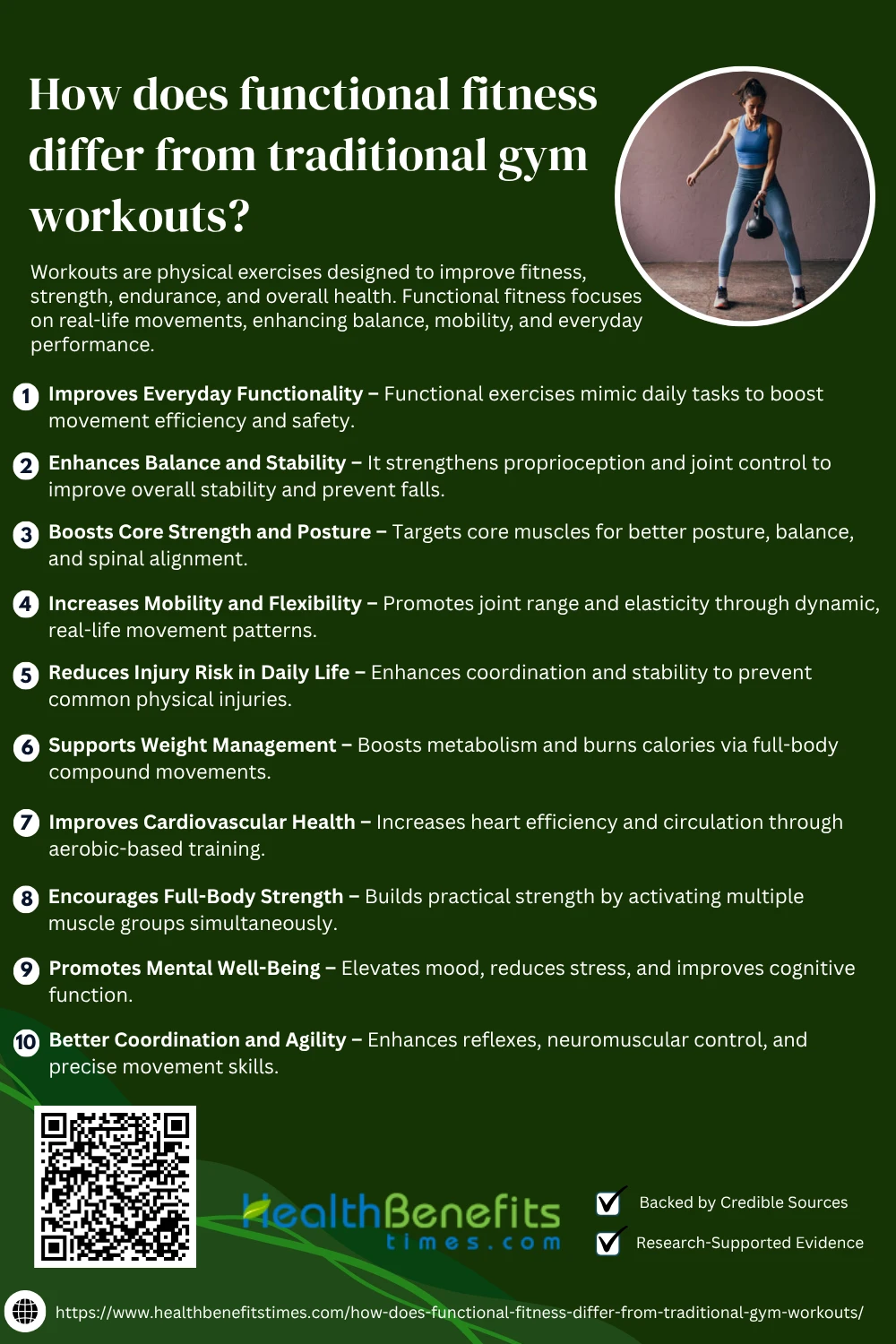
Functional fitness focuses on movements that mirror real-life tasks, improving the body’s ability to perform daily activities efficiently and safely. Exercises like squats, lunges, and step-ups help with walking, lifting, and climbing stairs. (1) According to Healthline, these exercises train muscles to work together. ACE Fitness also highlights their role in fall prevention. Additionally, NIH research confirms improved mobility in aging adults. (2)
2. Enhances Balance and Stability
Balance and stability are crucial for injury prevention and functional independence. Functional fitness challenges the body through unstable movements like single-leg exercises and planks, training proprioception and joint control (Healthline). The American Council on Exercise emphasizes balance training’s importance for all ages. According to Mayo Clinic, such training reduces fall risk. NIH-supported studies also show improved neuromuscular response with consistent practice. (3) (4)
3. Boosts Core Strength and Posture
Functional fitness plays a pivotal role in enhancing core strength and posture by targeting stabilizing muscle groups used in daily activities. According to Healthline, a strong core improves balance, posture, and mobility while reducing injury risk. (5) The Mayo Clinic notes that core exercises lead to better movement coordination and physical performance. (6) Research by MedCrave highlights high EMG activation in functional movements. (7) These exercises also aid in pain prevention and spinal alignment. (5)
4. Increases Mobility and Flexibility
Functional fitness significantly enhances mobility and flexibility, supporting better joint range and muscle elasticity. A study summarized by ACE Fitness outlines how dynamic movement patterns mimic real-life motions, improving overall movement efficiency. The Harvard Health Blog emphasizes stretching within functional routines to prevent stiffness. (8) Research in PubMed Central shows functional movements improve neuromuscular control. (9) Additionally, Verywell Fit highlights how these exercises reduce injury risk through enhanced joint flexibility.
5. Reduces injury risk in daily life
Functional fitness reduces injury risk by enhancing balance, coordination, and muscular stability essential for everyday movements. According to The Club PS, studies show significant decreases in injury rates due to improved flexibility and core stability. The National Library of Medicine supports this by noting that such training minimizes strain on joints. ACE Fitness emphasizes movement safety benefits. (10) Verywell Fit adds that functional exercises prepare the body for real-life physical demands.
6. Supports Weight Management
Functional fitness contributes to weight management by increasing metabolic activity, building lean muscle mass, and improving calorie burn through compound movements. The Mayo Clinic notes that consistent exercise prevents weight gain and helps maintain fat loss. (11) According to CrossFit Telford, functional strength workouts enhance efficiency with lighter, sustainable loads. (12) Quora highlights how these movements mimic daily tasks to burn fat. (13) Additionally, Quora shows resistance-based functional training improves body composition effectively. (14)
7. Improves Cardiovascular Health
Functional fitness significantly improves cardiovascular health by integrating full-body movements that enhance heart rate variability and vascular efficiency. According to a systematic review in PMC, aerobic-based functional workouts increase cardiac performance over time. (15) The NHLBI states that consistent moderate to vigorous activity strengthens the heart muscle. (16) Sunfox explains that exercise promotes vasodilation, improving circulation. (17) Additionally, Johns Hopkins Medicine confirms these routines lower blood pressure and heart strain. (18)
8. Encourages Full-Body Strength
Functional fitness enhances full-body strength by engaging multiple muscle groups through compound, real-life movement patterns. According to ACE Fitness, this training improves muscle coordination and force generation across the kinetic chain. Verywell Fit notes that exercises like squats and pushes activate major muscle groups efficiently. Research from CrossFit Telford highlights improvements in muscle balance. (12) Additionally, Healthline confirms that functional workouts build practical strength essential for everyday activities.
9. Promotes Mental Well-Being
Functional fitness positively influences mental well-being by reducing stress, improving mood, and enhancing cognitive performance. According to the Mayo Clinic, physical activity releases endorphins and lowers stress hormones. (19) Verywell Mind highlights that functional workouts improve sleep and reduce anxiety. Harvard Health emphasizes exercise as a natural treatment for depression. (20) Additionally, Psychology Today confirms enhanced mental clarity and emotional resilience through functional movement.
10. Better coordination and agility
Functional fitness enhances coordination and agility by improving neuromuscular control, movement accuracy, and reflex timing. According to Hinge Health, targeted movement exercises like lunge-to-knee raises significantly develop balance and agility. (21) Primal Play explains how functional workouts improve motor skills for daily activity. (22) The concept of neuromuscular efficiency underlines improved precision and muscle response. (23) Furthermore, BMC Sports Science provides evidence of enhanced performance through functional movement programs. (24)
Health Benefits of Traditional Gym Workouts
Traditional gym workouts provide structured training that builds muscle strength, improves endurance, and supports weight management. They enhance physical appearance, boost metabolism, and contribute to overall cardiovascular and musculoskeletal health.
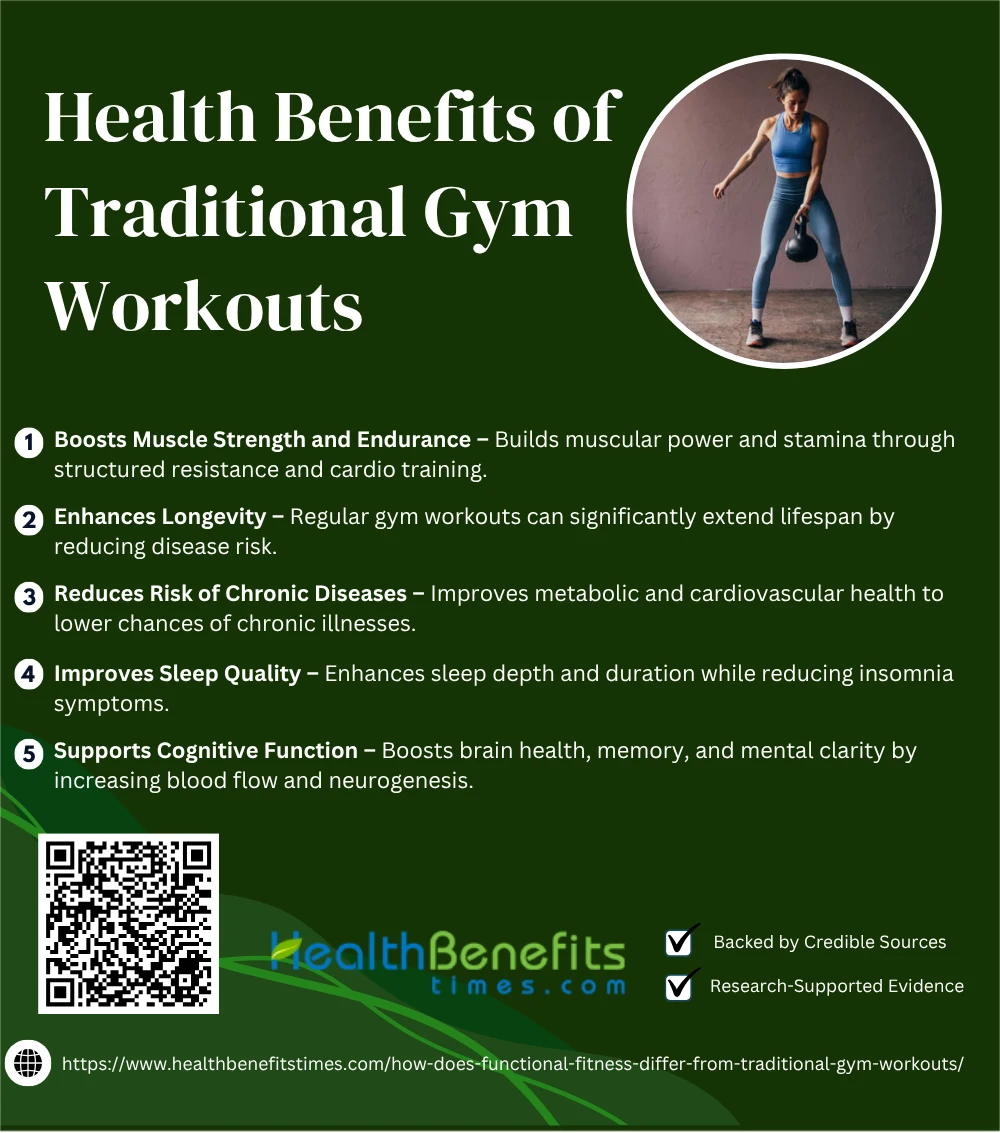
Traditional gym workouts effectively enhance muscle strength and endurance through structured resistance and cardiovascular training. According to ACE Fitness, weight training increases muscular power and stamina. The Mayo Clinic highlights how consistent strength routines improve muscle function and energy levels. (25) Harvard Health confirms benefits in joint stability and injury prevention. (26) Moreover, NHS UK supports these exercises for maintaining mobility and daily function. (27)
2. Enhances Longevity
Traditional gym routines contribute to increased longevity by reducing disease risk and improving overall physical function. A study from the AMA reports that regular gym workouts lower mortality risk by up to 42%. (28) Allina Health shows a correlation between exercise and life expectancy increase. (29) Blue Zones emphasizes regular movement for optimal health. (30) Additionally, Baptist Health links walking and aerobic activity to up to 11 additional years of life. (31)
3. Reduces Risk of Chronic Diseases
Traditional gym workouts are proven to reduce the risk of chronic diseases by improving metabolic health, cardiovascular function, and immune response. A University of Iowa study showed that individuals exercising over 150 minutes weekly lowered their risk for 19 chronic conditions. A PMC review links exercise to prevention of CVD, diabetes, and cancer. (32) Versa Gripps supports weight training’s role in managing disease. The AMA also endorses exercise for disease prevention.
4. Improves Sleep Quality
Traditional gym workouts are closely linked to improved sleep quality, offering both physiological and psychological benefits. A study in PMC found that regular exercisers slept longer and more deeply than non-exercisers. (33) Healthline supports that exercise promotes relaxation and reduces insomnia symptoms. (34) ScienceDirect confirms that strength and cardio training enhance sleep stages. (35) Quora adds that weightlifting regulates cortisol and melatonin, promoting deeper, more restful sleep. (36)
5. Supports Cognitive Function
Traditional gym workouts significantly enhance cognitive function by stimulating neurogenesis, improving blood flow, and reducing mental fatigue. According to Pegasus Senior Living, regular exercise promotes the formation of new brain cells and mental sharpness. (37) Harvard Health states that strength and aerobic training improve memory and executive function. (38) CDC confirms exercise slows cognitive decline. Additionally, NIH research highlights its role in protecting aging brains.
Side effects of Functional Fitness
While functional fitness is generally safe, improper form, overtraining, or lack of guidance can lead to injuries like strains or joint pain. It may also challenge beginners with complex, high-intensity movements.
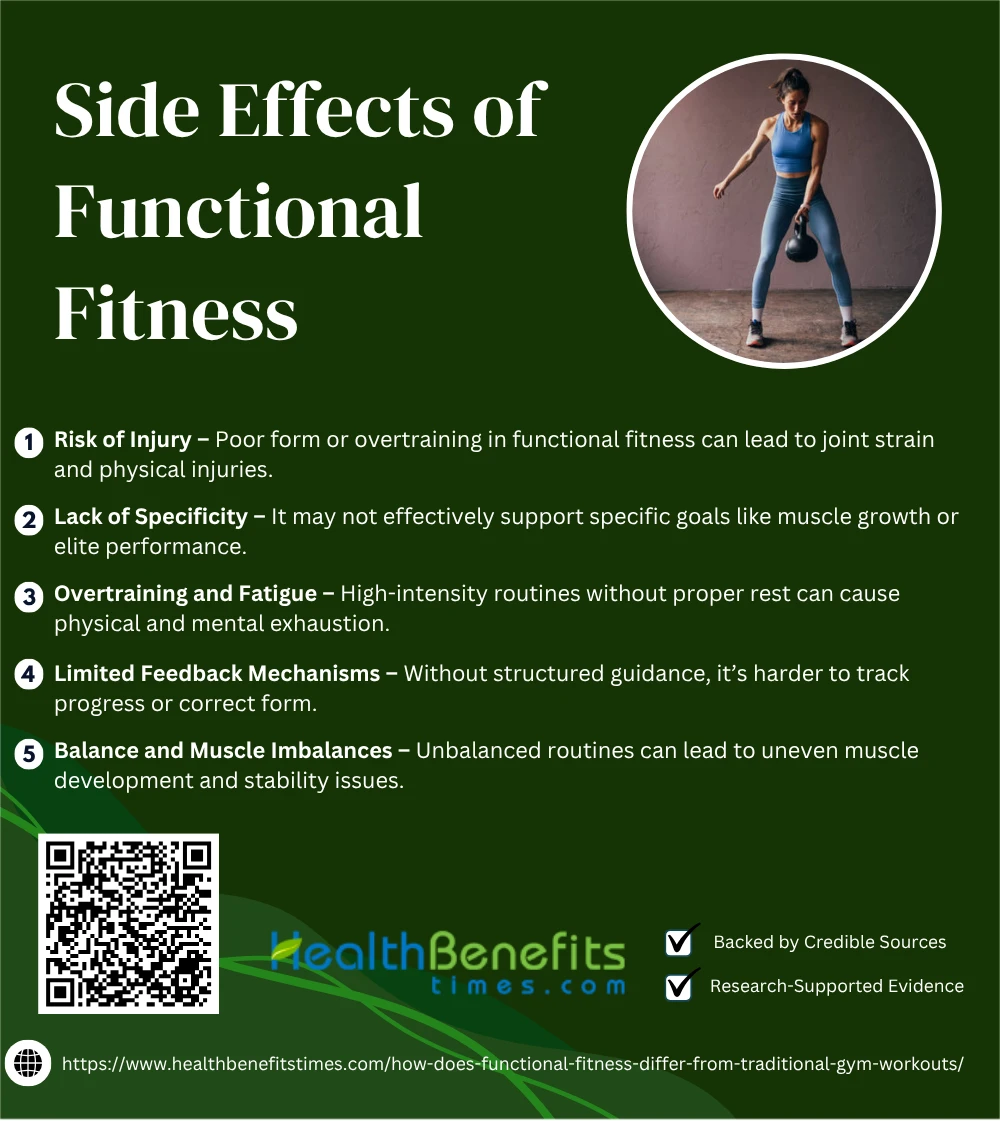
While beneficial, functional fitness may increase injury risk when exercises are performed with poor form or excessive load. According to The Bioneer, overtraining without rest can lead to strains. (39) LinkedIn highlights injury from balance-based exercises. (40) Healthline warns of joint stress in complex movements. Furthermore, David Lloyd Blog emphasizes the need for proper progression to avoid injury.
2. Lack of Specificity
Functional fitness can lack specificity, limiting its effectiveness for targeted goals like muscle hypertrophy or elite performance. LinkedIn explains it may not align with individual needs. (40) BMJ Open Sport notes generalized movements may miss specialized outcomes. (24) David Lloyd Blog suggests it may not challenge advanced lifters. Additionally, The Bioneer warns it often lacks progression necessary for measurable growth. (39)
3. Overtraining and Fatigue
Excessive or improperly structured functional fitness routines can lead to overtraining and fatigue, impairing both physical and mental performance. Peloton identifies fatigue and mood changes as symptoms of overtraining syndrome. Hospital for Special Surgery explains how pushing beyond recovery can break down the body. MindBodyDad differentiates overreaching from damaging overtraining. (41) Also, JOI Online links constant exhaustion to overly demanding exercise regimens. (42)
4. Limited Feedback Mechanisms
Functional fitness can suffer from limited feedback mechanisms, making it harder for participants to track progress or correct form. LinkedIn notes the lack of structured feedback as a key limitation. (40) Without proper coaching, users may plateau or reinforce poor habits. BMJ Open Sport suggests functional training often lacks built-in progression systems. (24) Pressbooks emphasizes the importance of physiological feedback, often missing in unmonitored routines. David Lloyd Blog also stresses this gap in traditional setups. (43)
5. Balance and Muscle Imbalances
Improperly programmed functional fitness routines may lead to balance and muscle imbalances, especially when dominant muscle groups are overtrained. STIWELL explains that overload and asymmetrical movement patterns contribute to muscular imbalance. Park North Physical Therapy warns that underused muscles in daily life can worsen this issue during exercise. The Paseo Club links repetitive sport-like movements to asymmetry. (44) Even Quora notes the need for balanced unilateral training to correct discrepancies. (45)
Side effects of Traditional Gym Workouts
Traditional gym workouts can cause muscle imbalances, joint strain, or overuse injuries if not done correctly. Excessive focus on aesthetics over function may neglect flexibility, coordination, and real-world movement patterns.
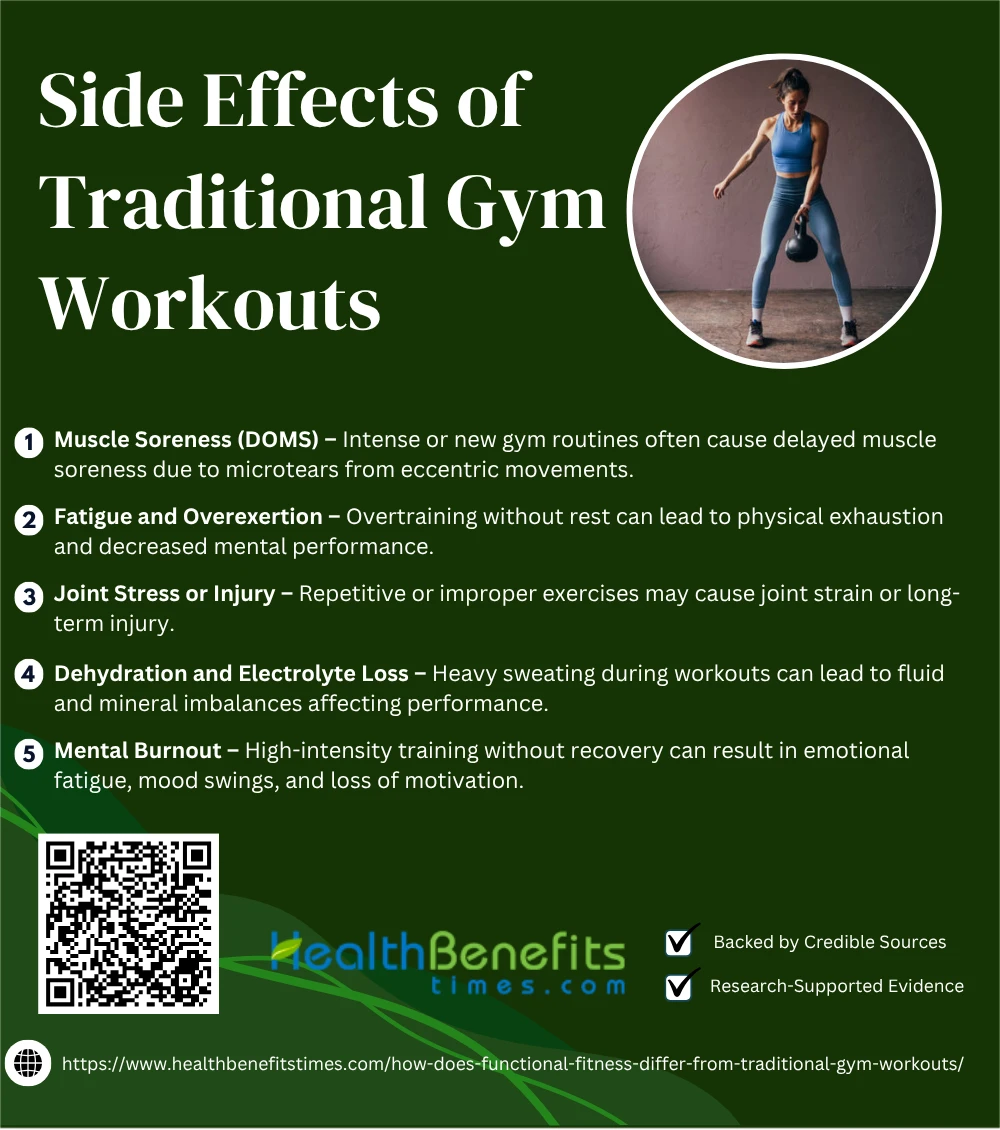
Traditional gym workouts often lead to Delayed Onset Muscle Soreness (DOMS), particularly after intense or new routines. According to UW Medicine, DOMS peaks 24–72 hours post-exercise. MedicineNet explains eccentric contractions are most responsible. Physiopedia adds that these movements disrupt muscle structure. Additionally, Kayla Itsines notes DOMS as a normal adaptation response to challenging workouts. (46)
2. Fatigue and Overexertion
Overdoing traditional gym workouts without proper rest can lead to fatigue and overexertion, reducing both physical and mental performance. UCLA Health warns that excessive training lowers endurance and affects mood. (47) WebMD explains that overexertion stresses muscles and joints. (48) JOI Online connects fatigue with depleted glycogen levels. Additionally, Quora highlights post-workout tiredness due to high energy expenditure. (49)
3. Joint Stress or Injury
Traditional gym workouts, especially those involving repetitive high-impact or improper form, may lead to joint stress or injury. According to Dr. Trace Alexander, overexercising weakens supportive muscles, stressing joint components. (50) Nuffield Health notes even mild discomfort signals joint strain. (51) Mayo Clinic emphasizes moderation to avoid aggravation. (52) Orthopedic Associates of Michigan advises low-impact alternatives to protect joint integrity. (53)
4. Dehydration and Electrolyte Loss
Intense gym sessions can result in dehydration and electrolyte loss, especially in warm environments or prolonged workouts. Piedmont Healthcare highlights that sweating depletes sodium, potassium, and magnesium. Better Health Channel warns that fluid loss affects performance and increases heat stress risk. (54) UPMC lists sweating as a top cause of imbalance. (55) PubMed Central further links dehydration to nerve excitability and muscle cramps. (56)
5. Mental Burnout
Engaging in high-frequency or intense gym routines without proper recovery can cause mental burnout, leading to reduced motivation and mood swings. Peloton notes that relentless training may provoke emotional fatigue and sleep issues. Stylist highlights symptoms like irritability and energy crashes. (57) Better Health Channel stresses the need for balanced workouts. (58) PsychPlus links elevated cortisol to post-workout depressive symptoms. (59)
Who Should Choose What?
Choosing between functional fitness and traditional gym workouts depends on your goals, lifestyle, and physical condition. Functional fitness suits daily movement and balance, while gym workouts target strength and muscle building.
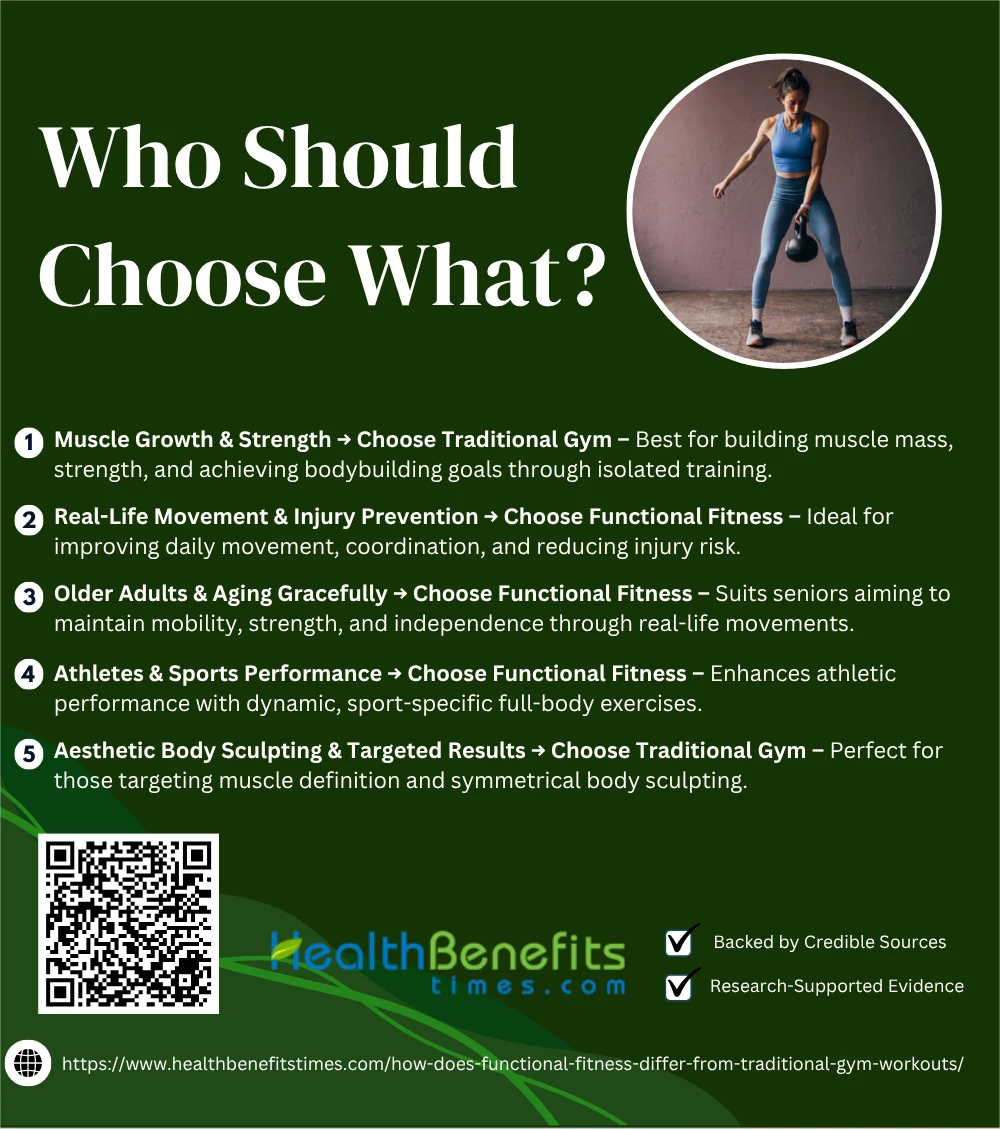
If your primary goal is to build muscle mass, increase maximum strength, or engage in bodybuilding, then traditional gym workouts are the most effective approach. These workouts focus on isolated muscle training using machines and free weights, which allows for precise control of resistance and progression. This method is ideal for hypertrophy and strength development. According to Fitness Premier, traditional strength training is superior for increasing muscle size and power. (60)
2. Real-Life Movement & Injury Prevention → Choose Functional Fitness
Functional fitness is best suited for those who aim to enhance daily movement efficiency, coordination, and injury prevention. It emphasizes compound, multi-joint exercises that replicate real-world movements, promoting balance and agility. Polar highlights its benefits in improving physical functionality outside the gym, making it ideal for individuals with active lifestyles or rehabilitation needs. (61)
3. Older Adults & Aging Gracefully → Choose Functional Fitness
For older adults, functional fitness offers a low-impact, mobility-focused solution to maintain strength, flexibility, and independence. By simulating everyday movements—like squatting, reaching, or lifting—this method helps seniors remain self-sufficient and reduces fall risk. Age UK promotes functional fitness as a way to age better, boost joint stability, and enhance quality of life. (62)
4. Athletes & Sports Performance → Choose Functional Fitness
Athletes benefit more from functional fitness due to its focus on explosive power, stability, and dynamic movement patterns. It supports sport-specific training by enhancing neuromuscular coordination and energy transfer through full-body exercises. As Centr notes, functional training boosts athleticism by mimicking the multidirectional demands of competitive environments. (63)
5. Aesthetic Body Sculpting & Targeted Results → Choose Traditional Gym
Those seeking a sculpted physique with precise muscular definition should opt for traditional gym workouts. By isolating individual muscle groups, you can customize your routine for symmetry, tone, and specific size goals. Traditional machines also reduce injury risk for beginners by guiding form. Fitness Premier affirms its effectiveness for structured, measurable body transformation. (60)
Can You Combine Both?
Yes, combining functional fitness and traditional gym training creates a comprehensive workout strategy that maximizes strength, mobility, and overall performance. According to LinkedIn, integrating compound movements and circuit styles enhances total-body fitness. (64) Centr suggests using both for strength and agility. PhuketFit highlights gains in endurance and fat loss. (63) Fitness Premier recommends alternating modalities for muscle balance. (60) Finally, Polar supports the hybrid model to improve real-life movement and injury prevention. (61)
Conclusion
Functional fitness and traditional gym workouts each offer unique benefits tailored to different fitness goals. Functional fitness focuses on improving everyday movement, balance, and coordination through multi-joint, practical exercises. In contrast, traditional gym workouts emphasize muscle isolation, strength gains, and aesthetic development using machines and weights. Understanding these differences can help you make a more informed choice based on your lifestyle, goals, and preferences. While functional fitness enhances real-world performance, traditional workouts are ideal for structured muscle growth. Ultimately, combining both approaches can create a balanced, effective fitness routine that supports overall health, strength, and long-term physical well-being.
Comments
comments