

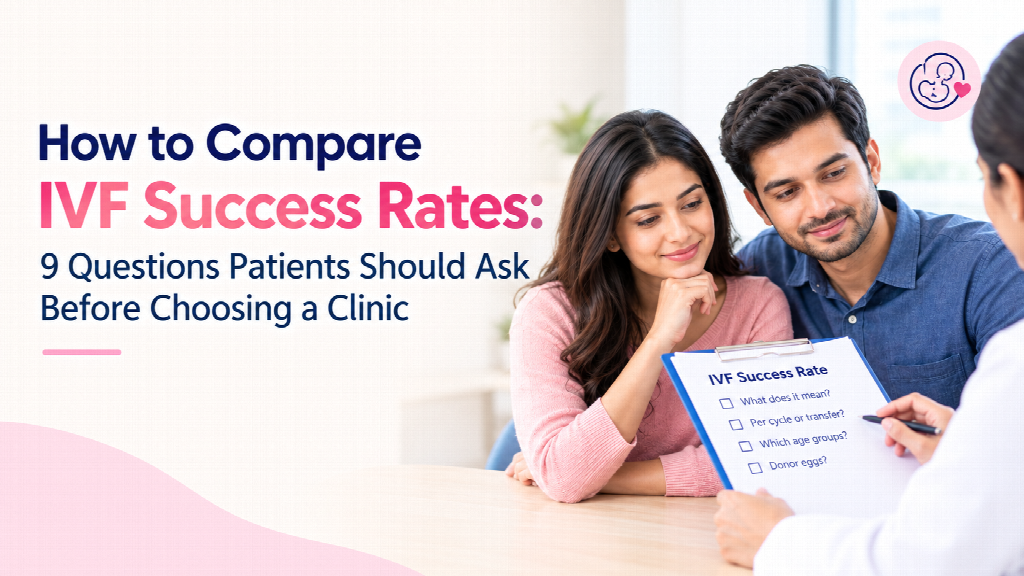
Before comparing IVF success rates in India or choosing a fertility clinic, patients should understand what each number actually represents.
What does IVF success rate mean?
IVF success can be measured in several ways, including a positive pregnancy test, a clinical pregnancy confirmation by ultrasound, embryo implantation, an ongoing pregnancy or a live birth. These outcomes are not identical.
Patients should ask the clinic whether the number refers to pregnancy or live birth. A pregnancy rate does not necessarily represent the chance of having a baby. The clinic should also explain whether its figure is calculated per IVF treatment cycle, egg retrieval, embryo transfer or patient.
Is the result measured per cycle or transfer?
The calculation method can significantly change the percentage. A clinic may calculate results using every cycle started, every egg retrieval, every embryo transfer, or cumulative outcomes across several cycles.
For example, a rate calculated per embryo transfer may appear higher than one calculated per cycle started, because some cycles may be cancelled before transfer. A trustworthy clinic should explain its method clearly instead of publishing a percentage without context.
Which age groups are included?
Age is one of the most important factors affecting IVF outcomes because egg quality and ovarian reserve generally decline over time. A success rate based mainly on patients below 35 cannot be applied directly to someone in their late thirties or forties.
Ask whether the clinic reports outcomes separately by age group. Also ask whether the figures relate to their own eggs or donor eggs, as these categories should not be combined when making comparisons.
Are donor-egg results reported separately?
Donor-egg IVF may be recommended when egg quality or ovarian reserve is significantly reduced. Since donor eggs usually come from younger donors, outcomes may differ from those achieved with a patient’s own eggs.
If a clinic combines donor-egg and own-egg cycles into one overall success rate, the figure may not accurately reflect the treatment option being considered. Transparent reporting should clearly separate these categories.
Does the diagnosis affect the comparison?
IVF outcomes vary according to the underlying fertility condition. PCOS, endometriosis, blocked fallopian tubes, low ovarian reserve, male-factor infertility, and unexplained infertility may require different approaches.
Patients should ask whether the clinic has experience treating their specific diagnosis. An overall clinic percentage may be less useful than information about outcomes among patients with a similar medical profile.
Are fresh and frozen transfers included?
Fresh embryo transfer and frozen embryo transfer involve different preparation and timing. A clinic should explain whether its published figures include fresh transfers, frozen transfers, or both.
Embryo quality, endometrial health, and laboratory procedures can affect outcomes. Transferring more embryos does not automatically increase the chance of a healthy birth. Current IVF treatment often focuses on transferring an appropriate number of high-quality embryos while reducing the risk of multiple pregnancy.
How many patients does the success-rate data represent?
A percentage based on a small number of cycles may not represent typical results. Ask:
- How many cycles were included?
- What period does the data cover?
- Are cancelled cycles included?
- Are the results from one centre or multiple locations?
- Are unsuccessful fertilisation and embryo-transfer cycles included?
Patients should also check when the information was last updated. IVF technology and laboratory protocols change, so older figures may not reflect current practice.
What should patients compare besides percentages?
The highest success rate is not always the most important reason to choose a clinic. Patients should also consider:
- Fertility specialist experience
- Embryology and laboratory standards
- Quality-control procedures
- Communication and follow-up
- Individualised treatment planning
- Counselling and emotional support
- Transparent pricing
- Continuity of care
When comparing the IVF success rate, make sure each clinic is using similar definitions and reporting methods. A percentage from one centre may not be directly comparable with another if the clinics treat different patient groups.
When is an individual assessment necessary?
Online statistics provide general information, but they cannot predict an individual patient’s exact outcome. A fertility specialist may assess ovarian reserve, egg and sperm health, uterine factors, previous treatment history, and other medical conditions before recommending a plan.
Bottom Line
The best question is not simply, “Which clinic has the highest IVF success rate?” Instead, ask how the rate was calculated, which patients it represents and how relevant it is to your own situation.
Understanding the reported outcome, age group, treatment type and data quality helps couples make more informed decisions. A personalised consultation can then turn general statistics into realistic, medically appropriate guidance.
Comments
comments