

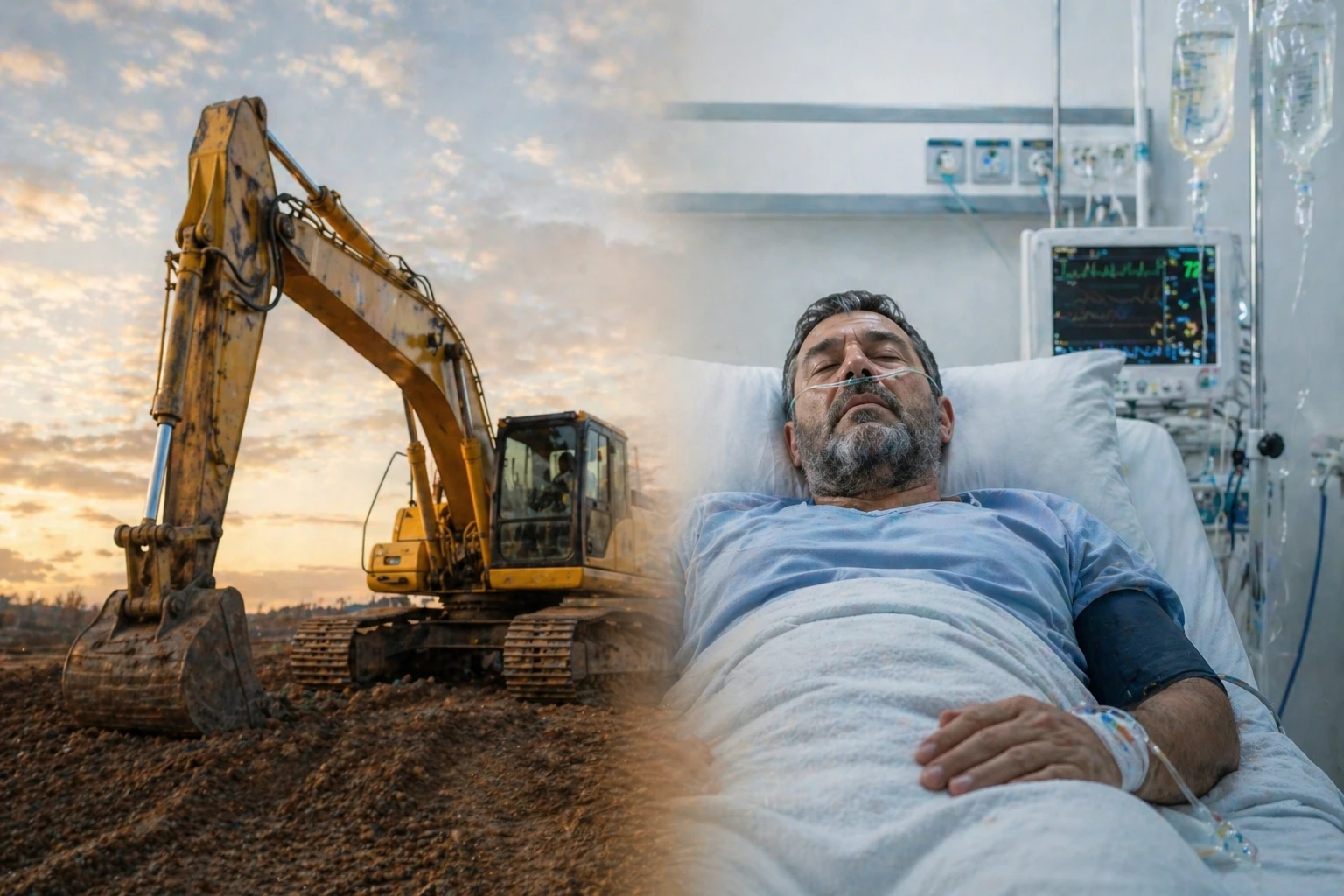
Although it’s good to focus on immediate safety risks, you can’t overlook the cumulative strain, prolonged exposure to hazardous conditions, and the mental demands of operating equipment where one small mistake can have devastating consequences. Understanding the potential long-term risks can help you avoid preventable injuries and major health problems that can develop over time.
Here’s what you need to know.
Workplace accidents can happen to anyone
Just because you’ve never experienced an injury in the workplace doesn’t mean it can’t happen to you. Equipment like forklifts, excavators, and cranes can cause catastrophic harm in mere seconds if someone makes an error. Forklifts are the perfect example because they’re common and seem simple to operate, yet are responsible for a high number of workplace accidents. And that’s exactly why OSHA requires formal safety certification to operate one.
According to OSHA, around 85 people are killed in forklift accidents every year, and over 34,900 people are seriously injured. Forklifts present several serious dangers that come from blind spots, heavy loads, improperly balanced loads, and unstable surfaces.
Without proper training, even an experienced operator can misjudge their turning radius and tip over. OSHA requires operators to be trained and certified because training reduces forklift accident rates by formally training workers on how to handle loads, be aware of hazards, and maneuver safely around the warehouse.
Human error is always going to be the biggest risk factor around heavy machinery. Studies show that the majority of accidents are caused by operator error and not equipment failure. All it takes is fatigue, distraction, or lack of training to cause an accident.
Heavy machinery can cause long-term musculoskeletal damage
Even if you manage to avoid major accidents, working with heavy equipment can slowly tear up your body. Repetitive movements, awkward seating, and constant vibration can all contribute to chronic musculoskeletal issues. You may not notice it for a while until the pain starts to affect your work and personal life.
Whole body vibration is linked to spinal degeneration and lower back pain. If you’re constantly operating machinery that exposes you to heavy vibration there’s a chance you might end up with herniated disks and chronic pain that won’t go away.
Repetitive motions like steering, lifting, and operating controls can take a toll on your body over time. And once these injuries impair your mobility, you might not be able to continue working the same job or even other jobs that require physical labor. This can significantly reduce your employment options and your pay.
Most heavy machinery isn’t built with ergonomics in mind. While some manufacturers try to design their equipment ergonomically, the benefits don’t always exist in the real world. In many cases, any comfort is erased by the constant vibration and grueling nature of the work. You aren’t just sitting in a piece of equipment driving around. You’re constantly starting and stopping, making micro movements, moving your body, adjusting your position, twisting around, and getting into unnatural postures all day long. No amount of ergonomic design can overcome that.
Noise exposure can cause hearing loss
Heavy equipment is loud, and even when you have proper hearing protection, it can still do damage. The threshold for hearing damage is 85 decibels, and most equipment operates above that level. Hearing loss is cumulative and permanent. If you go any length of time without hearing protection, thinking you’re fine, you may find out the hard way when you finally notice you can’t hear as well as before. And when you lose your hearing, it makes you a liability in the workplace. If you can’t hear warnings, alarms, or your coworkers shouting “head’s up!,” you’re a safety risk.
Hearing loss will impact your personal life as well. You’ll start to experience communication breakdowns, miss key details in conversations, misunderstand instructions, and you’ll have to ask people to repeat themselves multiple times. You’ll have a harder time participating in fast-paced discussions and having conversations in general might become exhausting. Many people end up withdrawing from life when they can’t hear as well. It can put a strain on relationships and cause anxiety and even depression.
When your hearing is impaired, your brain works harder to fill in the blanks of what you missed. This can lead to total exhaustion and burnout. If you’re still working the same job, you’ll be less productive and your boss will probably notice.
Exposure to hazardous substances can do damage
If you’re working with gas-powered machinery, you’re exposed to diesel exhaust, hydraulic fluids, solvents, lubricants, and other hazardous materials by default. The National Cancer Institute classifies diesel exhaust as a known carcinogen. If you’re moving or transporting hazardous materials, that only increases your exposure. Over time, the health consequences can add up. You can reduce your exposure by wearing protective gear and always ensuring you have proper ventilation when possible.
The fatigue is real
You might be sitting down to operate a machine all day, but the amount of attention required to do your job is exhausting. You have to constantly manage your controls, monitor your surroundings, and make split-second decisions. Combined with the constant vibration, over time, just doing your normal job can cause serious fatigue that can directly impact your health and put your safety at risk. Fatigue slows your reaction time similarly to alcohol. Even if you’re experienced and skilled, one small oversight caused by fatigue can cause an accident that wouldn’t have happened otherwise.
Protect your health if you work with heavy machinery
Working with heavy machinery, like forklifts, can have a long-term detrimental impact on your physical and mental health. The key to avoiding preventable health problems is to treat safety as part of your job rather than an afterthought.
Comments
comments