

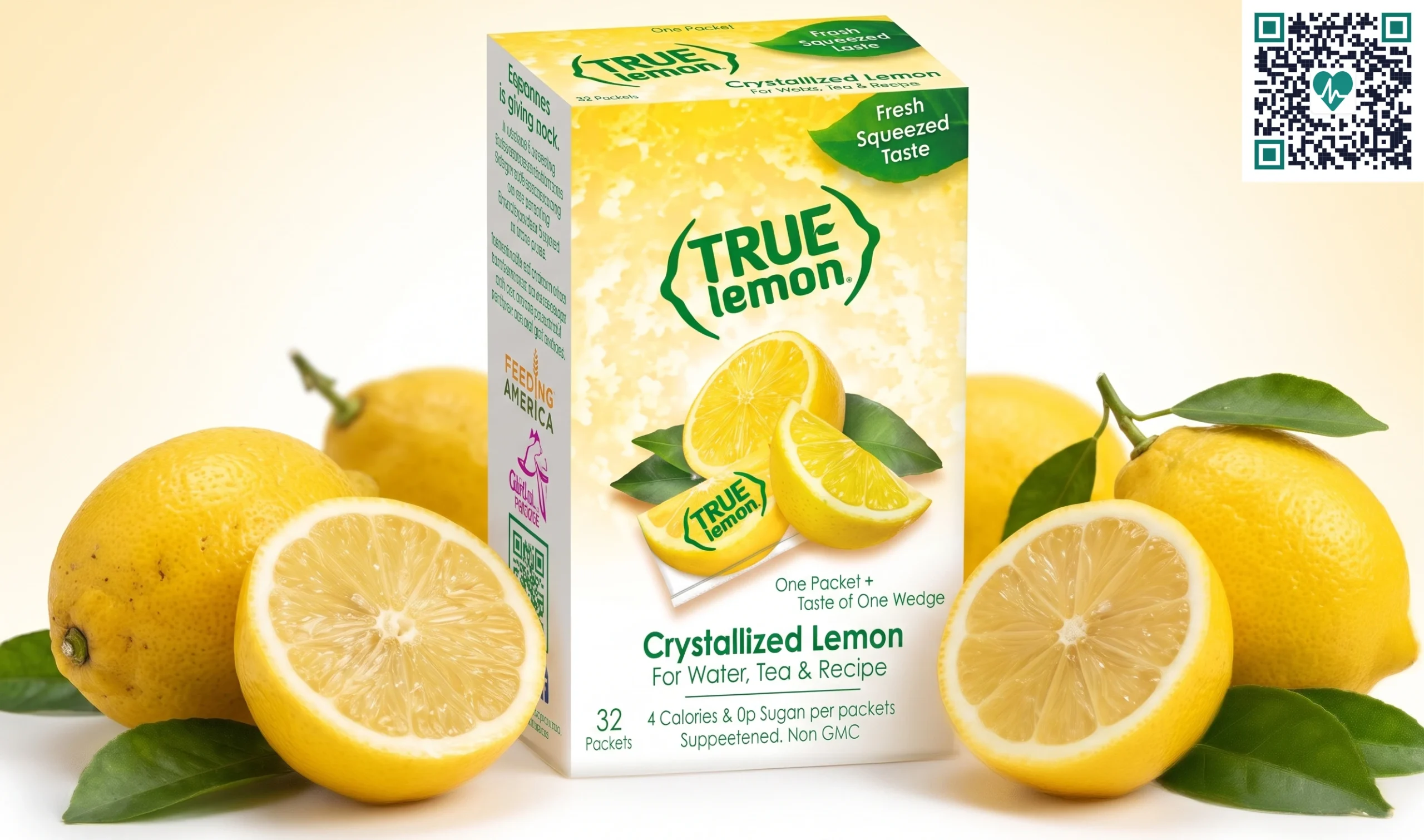
The honest answer is that it depends on what the packet replaces and what is printed on the box. Here is a plain look at what you are getting, what you are not, and how to decide whether it belongs in your routine.
What a crystallized lemon packet is
Crystallized lemon is lemon flavor in a dry, dissolvable form. Instead of squeezing a lemon, you tear open a packet and stir it into water. The format is the point: it is light, it does not spoil the way cut fruit does, and it fits in a pocket.
True Citrus makes the original True Lemon packets unsweetened, and the company lists them at zero calories, zero sugar and zero sodium. The ingredient list is short too: crystallized lemon made from citric acid, lemon oil and lemon juice, and the packets are non-GMO. Those numbers and that list are the first things to check on any flavoring product, because they tell you what the packet adds to your day.
What the label tells you
Reading a flavoring label takes about 20 seconds if you know where to look.
- Nutrition Facts. On the original unsweetened packets, calories, sugar and sodium are listed at zero. On US labels, “sugar free” means less than half a gram per serving and “calorie free” means fewer than five calories, so a zero on the panel can mean a trace. That rarely matters for one packet, but it is worth knowing if you use several a day.
- Ingredient list. This is where you see sweeteners, colors and preservatives. Because the original packets are unsweetened, they do not depend on added sweeteners to taste like lemon, which is one reason people who avoid artificial sweeteners look at them.
- Which product you are holding. True Citrus also sells lemonade mixes sweetened with cane sugar and stevia leaf extract, and wellness mixes with added ingredients such as vitamin C or electrolytes. “True Lemon” can mean any of them, so read the box.
What a packet does not do
It is a flavoring, not a vitamin. Fresh lemons contain vitamin C and plant compounds, but a flavored powder is not a substitute for fruit, and you should not count one as a serving of produce. If a product advertises vitamin C, it will say so on the Nutrition Facts panel. If it does not, assume it does not provide it.
It also will not hydrate you better than water. What it can do is make water more appealing, which matters because the best hydration habit is the one you actually keep.
Is it healthy?
“Healthy” depends on the comparison.
Compared with soda, juice or sweetened drink mixes, an unsweetened lemon packet adds none of the sugar or calories those drinks carry. For someone cutting back, swapping one sweetened drink a day for flavored water is a small change that can add up over weeks.
Compared with fresh lemon, a packet is less of an ingredient and more of a flavor. Fresh lemon gives you juice and a bit of fruit. The packet gives you taste and convenience.
Compared with plain water, plain water is still the baseline. A packet is not better for you than water. It is a tool that helps you drink more of it.
A few things worth knowing
Lemon is acidic, whether it comes from a fruit or a packet. Many dental professionals suggest that people who sip acidic drinks all day drink them with meals, use a straw and rinse with plain water afterward, because constant exposure can wear on tooth enamel over time. Some people with acid reflux find citrus drinks bothersome. If that sounds like you, start with a lighter mix and talk to your clinician.
Because the original packets list zero sodium, they are easy to fit into a low-sodium eating plan, though anyone on a medically supervised diet should confirm with their care team.
Common questions
Can you use it every day? Most people can. If you are drinking a lot of acidic flavored water through the day, follow the dental tips above.
Is it fine for kids? The original packets are unsweetened and taste quite tart. Using less in a larger glass is an easy way to start. If your child has dental or medical concerns, check with your pediatrician or dentist.
Does it break a fast? The label lists zero calories, but “zero” on a US label can mean fewer than five. People who fast strictly should read the panel and decide what fits their approach.
How strong is it? The label suggests one packet in 8 to 16 ounces of water, so use the larger amount if you like it mild.
A 30-second label checklist
Whatever flavoring you use, run through the same five checks:
- Serving size. Confirm how much of the product counts as one serving.
- Calories and sugar per serving. These are the numbers that change your day.
- Read the ingredient list for sugar, sugar alcohols, stevia or sucralose, and decide what you are comfortable with.
- Added vitamins, minerals or caffeine. Some mixes include them, and they are easy to miss if you only read the front of the box.
- How you will actually use it. A flavor you enjoy is the one you will keep drinking, so choose something you like rather than something that merely looks good on paper.
How people use them
Water is the obvious one, a packet in 8 to 16 ounces. Beyond that:
- Stir into iced or hot tea.
- Add to sparkling water for a lemon seltzer with no added sugar.
- Stir into marinades, dressings or sauces, or use it as a salt-free seasoning on fish, chicken or vegetables.
- Keep a few in a travel bag, a desk drawer or a gym bag.
The bottom line
True Lemon is not a health food, and it does not need to be. The original unsweetened packets add flavor without adding calories, sugar or sodium, which makes them a useful tool for anyone trying to drink more water or less sugar. The label is the best guide. Confirm which product you have, read the Nutrition Facts, and treat it as a habit helper, not a supplement.
Comments
comments