

Asthma is a chronic lung disease that affects your airways — the tubes responsible for carrying air in and out of your lungs. 1 When you have asthma, the lining of your airways becomes inflamed, the muscles around them tighten, and excess mucus can build up, all of which make it harder for you to breathe. 2 This leads to recurring episodes of wheezing, coughing, chest tightness, and shortness of breath. 3 These episodes can range from mild inconveniences to severe, life-threatening attacks. About 1 in 13 people in the United States have asthma, and it affects people of all ages, though it often begins during childhood. 4 Globally, an estimated 262 million people were affected by asthma in 2019, and it caused roughly 455,000 deaths that year. 2 There is currently no cure for asthma, but with proper treatment, trigger avoidance, and lifestyle changes, most people with asthma can manage their symptoms and live active, fulfilling lives. 4
Asthma Facts
| Symptoms 2 1 | • Wheezing (a whistling sound when you breathe)
• Persistent or recurring cough, especially at night or early morning • Shortness of breath • Tightness or pressure in the chest • Difficulty sleeping due to breathing problems |
| Causes 5 | • The exact cause is unknown, but genetics and environment both play a role
• Exposure to allergens (pollen, dust mites, pet dander, mold) • Respiratory infections in early childhood • Tobacco smoke exposure • Air pollution and occupational chemicals • Obesity |
| Types 6 1 | • Allergic asthma (triggered by allergens like pollen, mold, or pet dander)
• Non-allergic asthma (triggered by stress, cold air, exercise, or illness) • Exercise-induced asthma • Occupational asthma (caused by workplace irritants) • Adult-onset asthma |
| How Does It Spread? 2 | • Asthma is not contagious and does not spread from person to person
• However, respiratory infections (like colds and flu) that trigger asthma attacks are contagious |
| Regions Where It Is Found 7 8 | • Asthma is found worldwide, with higher prevalence in high-income countries
• Prevalence by continent: Oceania (~8.33%), North America (~8.29%), Europe (~5.69%), South America (~4.90%), Africa (~3.67%), and Asia (~3.44%) • Most asthma-related deaths occur in low- and middle-income countries |
| You Might Be at Higher Risk If You 2 5 | • Have a family history of asthma, especially a parent with asthma • Have other allergic conditions like eczema or hay fever • Were exposed to tobacco smoke as a child • Were born prematurely or had low birth weight • Are overweight or obese • Are frequently exposed to air pollution or workplace chemicals |
| How Doctors Diagnose 3 1 | • Review of medical history and physical exam
• Spirometry (a breathing test that measures airflow obstruction) • Peak expiratory flow (PEF) testing • Allergy skin or blood tests • Bronchoprovocation tests (methacholine challenge) • Fractional exhaled nitric oxide (FeNO) testing |
| Treatment and Medications 9 10 1 | • Quick-relief (rescue) medicines such as short-acting beta-agonists (SABAs)
• Long-term controller medicines such as inhaled corticosteroids (ICSs) • Leukotriene receptor antagonists (LTRAs) • Long-acting beta-agonists (LABAs) used with ICSs • Biologic therapies like omalizumab for severe allergic asthma • Bronchial thermoplasty for severe, uncontrolled cases |
| Methods of Prevention 2 5 | • Avoiding known triggers (allergens, smoke, pollution)
• Keeping your home free of dampness and mold • Following an asthma action plan created with your doctor • Getting annual flu and pneumonia vaccinations • Maintaining a healthy weight • Adding more fruits and vegetables to your diet |
| Additional Facts | • Asthma is the most common chronic disease among children 2
• Around 300 million people have asthma worldwide, and it may reach 400 million by 2025 7 • Childhood asthma is more common in boys, while adult asthma is more common in women 7 • Reducing environmental allergens in the bedroom can decrease asthma symptoms in at-risk children 9 |
Natural Remedies for Asthma
While natural remedies should never replace your prescribed asthma medications, certain complementary approaches may support your overall respiratory health and help reduce the frequency or severity of symptoms. Below is a list of research-backed natural remedies, herbs, and holistic approaches that you may discuss with your doctor.
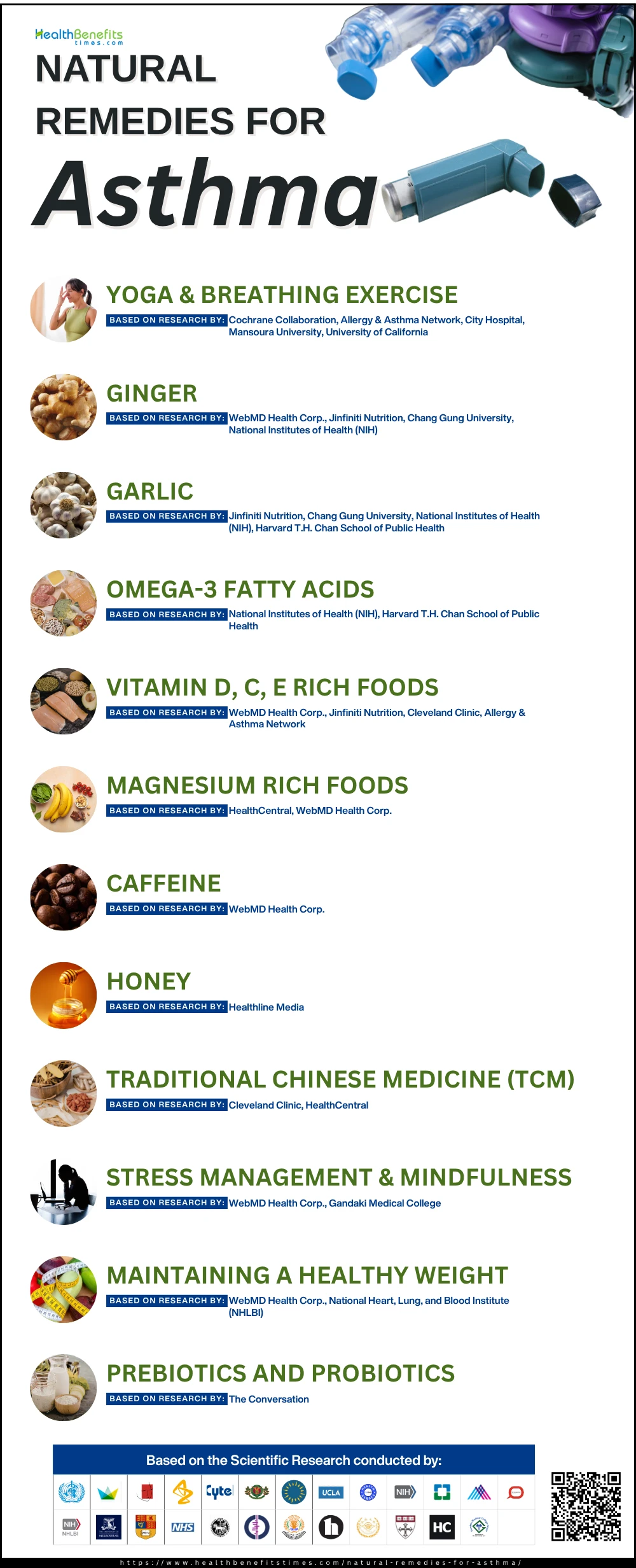
- Breathing Exercises
Breathing exercises are among the most studied natural approaches for asthma management. A Cochrane review of 22 studies involving 2,880 adults found that breathing exercises may improve quality of life and reduce hyperventilation symptoms in people with mild to moderate asthma. 11 Several techniques have gained attention:
Buteyko Breathing Technique: This method, developed in the 1950s, focuses on breathing retraining — specifically, reducing the depth and frequency of breaths and emphasizing nasal breathing at all times. 12 A randomized controlled trial published in Thorax found that Buteyko breathing improved asthma symptoms and reduced the need for rescue bronchodilators, though it did not change lung function measurements. 13 Another study among school-age children showed that implementing the Buteyko technique improved asthma severity control over four weeks. 14
Yoga and Pranayama: Yoga breathing exercises (pranayama) involve slow, deep breathing patterns that may help improve lung function and reduce asthma-related stress. 15 A clinical trial showed that pranayama breathing improved airway reactivity, peak expiratory flow rate, and symptom scores in patients with mild asthma. 16 Fourteen of the 22 studies in the Cochrane review used yoga as the primary breathing intervention. 17
Diaphragmatic Breathing: Also called belly breathing, this technique trains you to breathe deeply using your diaphragm rather than taking shallow chest breaths. It can help prevent hyperventilation during asthma episodes and promotes relaxation. 15
- Anti-Inflammatory Herbs and Spices
Ginger: Ginger contains a compound called 6-gingerol, which has demonstrated anti-inflammatory effects on the lungs in animal studies. Research suggests ginger may help relax trachea and airway muscles. 18 A clinical trial investigating ginger’s therapeutic potential in asthma has been registered with ClinicalTrials.gov. 19 You can steep fresh ginger in hot water and drink it as a tea. 20
Turmeric: The active compound in turmeric — curcumin — is well known for its anti-inflammatory properties. A randomized trial with 60 asthma patients found that nano-curcumin supplementation improved lung function and quality of life compared to a placebo. 21 Curcumin may help reduce the body’s inflammatory response in the airways, though more large-scale human studies are needed.
Garlic: Garlic has long been recognized for its anti-inflammatory and immune-boosting properties. A laboratory study showed that garlic extract had a protective role against allergen-induced airway inflammation in mice. 22 While definitive evidence in humans is still lacking, incorporating garlic into your cooking may offer complementary benefits. 18 20
- Omega-3 Fatty Acids
Omega-3 fatty acids — particularly EPA and DHA found in fish oil — are widely recognized for their anti-inflammatory properties. Research from NIH suggests that omega-3 supplementation may help reduce inflammation in the lungs, improve lung function, and decrease the severity of asthma exacerbations. 23 Some randomized controlled trials have found that omega-3 supplementation during pregnancy may reduce the incidence of asthma in children. 23 The large-scale VITAL trial at Brigham and Women’s Hospital examined the effects of vitamin D and omega-3 supplementation on respiratory outcomes in thousands of participants. 24 Good food sources of omega-3s include fatty fish (salmon, mackerel, sardines), walnuts, flaxseeds, and chia seeds.
- Vitamins and Minerals
Vitamin D: Many people with asthma have been found to have low vitamin D levels. A systematic review of 15 studies found that vitamin D supplementation improved breathing capacity in patients with chronic respiratory conditions. 21 You can get vitamin D from sunlight, fortified milk, eggs, and fatty fish. 20
Vitamin C: This powerful antioxidant may help reduce oxidative stress in the airways. Some studies have associated low vitamin C levels with worsened asthma symptoms. Citrus fruits, bell peppers, strawberries, and broccoli are excellent dietary sources. 25
Vitamin E: Found in almonds, spinach, and sunflower seeds, vitamin E has antioxidant properties that may help protect lung tissues from damage caused by environmental pollutants. 25
Magnesium: Magnesium helps relax the smooth muscles of the bronchial tubes. In hospital settings, intravenous magnesium is sometimes used during severe asthma attacks. While the evidence for oral magnesium supplementation is still mixed, dark leafy greens, beans, and whole grains are good dietary sources. 26 27
- Dietary Approaches
A healthy, anti-inflammatory diet rich in fruits and vegetables may help reduce airway inflammation. Colorful produce is loaded with antioxidants like beta-carotene and vitamins C and E, which can fight inflammation throughout your body, including your lungs. 20 A review published in Nutrition Reviews found that diets high in fat and low in fiber were associated with worse lung function and higher airway inflammation. 28 Mediterranean-style and plant-rich diets have been highlighted as particularly beneficial. You should also watch out for sulfites — preservatives found in wine, dried fruit, pickles, and shrimp — which can trigger asthma symptoms in some people. 20
- Caffeine
Caffeine acts as a mild bronchodilator, meaning it can help open your airways slightly. Some research suggests it may improve lung function for up to four hours after consumption. However, it is only mildly effective and should not be relied on as a treatment for asthma attacks. 20
- Honey
Honey has traditionally been used to soothe the throat and reduce coughing. An animal study found that inhaled honey reduced airway inflammation in a rabbit model of chronic asthma. 18 While evidence in humans is limited, mixing honey with warm herbal tea may offer some comfort when you experience mild symptoms.
- Traditional Chinese Medicine (TCM)
Several traditional Chinese herbal formulas have been studied for their potential anti-asthma effects. A formula known as ASHMI (Anti-Asthma Herbal Medicine Intervention) has undergone controlled clinical trials showing anti-inflammatory and bronchodilatory effects. 29 Some Chinese herbs like ding-chan tang (DCT) are believed to reduce airway inflammation and relieve bronchospasm. 26 However, herbal medicine should always be discussed with your healthcare provider because herbs can interact with medications and may cause side effects.
- Stress Management and Mindfulness
Stress is a well-known trigger for asthma attacks. Techniques like meditation, mindfulness-based stress reduction, and tai chi may help reduce stress-related flare-ups. A 2022 study in Brain, Behavior, & Immunity found that mindfulness-based stress reduction had clinically relevant benefits in people with asthma. 30 Regular yoga practice, which combines breathing exercises with physical postures and relaxation, can complement your asthma management plan. 20
- Maintaining a Healthy Weight
Being overweight or obese is a recognized risk factor for developing asthma, and it can also make existing symptoms worse. 5 Regular physical activity combined with a balanced diet can help you reach and maintain a healthy weight, which may improve your asthma control over time. If exercise triggers your asthma, talk to your doctor about strategies like warming up slowly or taking medication before workouts. 20
- Prebiotics and Probiotics
Emerging research suggests that the gut microbiome may play a role in asthma and allergic diseases. Studies have shown that asthma patients often have altered gut bacteria. One study found that taking prebiotics for three weeks reduced the severity of exercise-induced asthma in adults by approximately 40%. 31 While this area of research is still in its early stages, eating probiotic-rich foods like yogurt, kefir, and fermented vegetables may support your overall immune health.
When Natural Remedies Are Not Enough — The Role of Conventional Treatment
It is important to understand that natural remedies are meant to supplement, not replace, evidence-based medical treatment. The Allergy & Asthma Network emphasizes that alternative or natural treatments should not be used as stand-alone therapies for asthma. 27 Your asthma action plan — developed with your healthcare provider — should remain the foundation of your management strategy. This plan typically includes prescribed rescue inhalers, daily controller medications, and clear instructions on when to seek emergency care. 1 10 If your symptoms are worsening or if you find yourself relying on your rescue inhaler more than twice a week, that is a sign to consult your doctor rather than turning to natural remedies alone. 3
Precautions Before Using Natural Remedies
Before you incorporate any natural remedy into your asthma management routine, you should keep the following precautions in mind:
Always consult your doctor first. Some natural products can interact with your prescribed asthma medications or other drugs you may be taking. For example, certain herbs used for asthma have been found to interact with other medicines. 26 Your healthcare provider can help you determine which complementary approaches are safe for your specific situation.
Be cautious with herbal supplements. Many herbal remedies are not regulated by the FDA in the same way prescription medications are, which means quality, purity, and dosage can vary widely between products. The herb Ma Huang (ephedra), once used as a bronchodilator, was banned by the FDA due to serious safety concerns. 26 Always choose reputable brands and verify ingredients.
Beware of allergic reactions. Some natural products — including bee pollen, certain herbs, and essential oils — can themselves trigger allergic reactions or asthma attacks in sensitive individuals. 25 The Allergy & Asthma Network specifically warns that many essential oils can release harmful substances into the air and trigger asthma symptoms, despite popular claims about their benefits. 27
Never stop your prescribed medications. Discontinuing your asthma medications without your doctor’s approval can have very serious, even life-threatening, consequences. Natural remedies should be used alongside — never instead of — your prescribed treatment plan. 25 26
Watch for side effects. If you experience nausea, vomiting, rapid heartbeat, anxiety, insomnia, diarrhea, or skin rashes after taking any herbal product, stop using it immediately and contact your healthcare provider. 26
Be skeptical of miracle cures. There is no natural cure for asthma. Websites or products that claim to cure asthma naturally should be treated with caution. The evidence for many complementary treatments remains limited, and more rigorous human studies are needed before definitive conclusions can be drawn. 25 27
Keep your doctor informed. Whether you start drinking ginger tea, begin yoga classes, or add an omega-3 supplement, let your healthcare team know about every complementary approach you try. This way, they can monitor your overall health and ensure nothing conflicts with your medical care.
Comments
comments
This article is based on Scientific Research Conducted by following Research Organization:
- What is asthma?
- Asthma–World Health Organization, International
- Asthma–StatPearls Publishing, United States
- What Is Asthma?–National Heart, Lung, and Blood Institute (NHLBI), United States
- Causes and Triggers–National Heart, Lung, and Blood Institute (NHLBI), United States
- Overview: Asthma–StatPearls Publishing, United States
- Epidemiology of Asthma in Children and Adults–University of Melbourne, Australia, Institute for Breathing and Sleep, Australia, Imperial College London, United Kingdom
- Global Burden of Asthma, and Its Impact on Specific Subgroups: Nasal Polyps, Allergic Rhinitis, Severe Asthma, Eosinophilic Asthma–AstraZeneca, United Kingdom, Imperial College London, United Kingdom, East and North Hertfordshire NHS Trust, United Kingdom, Cytel Inc., United States / Canada, London School of Hygiene and Tropical Medicine, United Kingdom, University of the Philippines Open University, Philippines
- Managing Asthma Symptoms
- Asthma Care Quick Reference–National Heart, Lung, and Blood Institute (NHLBI), United States
- Breathing exercises for adults with asthma–Cochrane Collaboration, International
- Breathing Exercises for Asthma–Allergy & Asthma Network, United States
- Effect of two breathing exercises (Buteyko and pranayama) in asthma: a randomised controlled trial–City Hospital, United Kingdom
- Effect of the Buteyko breathing technique on asthma severity control among school age children–Mansoura University, Egypt
- How to use breathing exercises to improve asthma–University of California, Los Angeles (UCLA Health), United States
- Effect of yoga breathing exercises (pranayama) on airway reactivity in subjects with asthma–Respiratory Medicine Unit, City Hospital, Nottingham, United Kingdom
- Breathing exercises for adults with asthma–Cochrane Collaboration, International
- 14 Natural Ways to Help Treat Severe Asthma–Healthline Media, United States
- Ginger's Therapeutic Potential in Asthma (GINGER)–National Center for Complementary and Integrative Health (NCCIH), United States
- Natural Ways to Ease Asthma Symptoms–WebMD Health Corp., United States
- 11 Supplements to Support Lungs and Respiratory Health–Jinfiniti Nutrition, United States
- The Protective Role of Garlic on Allergen-Induced Airway Inflammation in Mice–Chang Gung University, Taiwan
- Omega-3 Fatty Acids–National Institutes of Health (NIH), United States
- Lung VITAL: Rationale, design, and baseline characteristics of an ancillary study evaluating the effects of vitamin D and/or marine omega-3 fatty acid supplements on acute exacerbations of chronic respiratory disease, asthma control, pneumonia and lung function in adults–Harvard T.H. Chan School of Public Health, United States
- Natural Remedies for Asthma–WebMD Health Corp., United States
- Should You Try an Alternative Asthma Treatment?–Cleveland Clinic, United States
- Alternative and Natural Asthma Treatments–Allergy & Asthma Network, United States
- Your Guide to Natural Remedies for Asthma–HealthCentral, United States
- Traditional Chinese herbal remedies for Asthma and Food Allergy–Mount Sinai School of Medicine, United States
- Clinically relevant effects of Mindfulness-Based Stress Reduction in individuals with asthma–Gandaki Medical College, Nepal
- Why scientists use vitamin D, turmeric and other supplements–The Conversation, International