


Causes of Migraine
Uncovering the precise reasons behind these agonizing attacks requires looking closely at how the brain communicates with the body’s blood vessels. While scientists are still working to uncover every detail of the condition, several key physical and biological causes have been identified:
1. Genetic Patterns and Heritability: Sufferers of this condition often share a genetic legacy, with up to eighty percent of patients having a first-degree biological relative who also experiences these debilitating attacks 4.
2. Trigeminal Nerve Hypersensitivity: Sensory pathways linked to the trigeminal nerve, which is the major pain pathway in the face and head, become overactive and send faulty signals straight to the brainstem 5.
3. Vasoactive Neuropeptide Release: Activated nerve fibers release powerful chemical messengers, especially calcitonin gene-related peptide (CGRP), which cause cranial blood vessels to widen and trigger localized inflammation 6.
4. Cortical Spreading Depression: A slow-moving wave of electrical activity travels across the cerebral cortex, temporarily disrupting normal brain function and serving as the primary driver behind the sensory distortions known as aura 7.
5. Fluctuations in Neurotransmitters: Rapid drops in serotonin levels alter how pain signals are processed, leaving the brain highly vulnerable to sensory triggers 8.
6. Barometric Pressure Shifts: Sudden drops in air pressure force fluid into nasal and sinus tissues, causing fluid imbalances that directly trigger blood vessel swelling in sensitive individuals 9.
Symptoms of Migraine
Tracking how a migraine behaves becomes easier when patients learn to recognize the wide array of physical warnings that occur across the four distinct phases of a migraine:
- The Prodrome Stage (Up to 24 hours before):
- The Aura Stage (5 to 60 minutes before or during the headache):
- Visual disturbances, including flashing lights, blind spots, or geometric zigzag lines in the field of vision 7.
- Sensory issues, such as a tingling or “pins and needles” feeling crawling up one arm or affecting one side of the face 5.
- Speech and language troubles, which may present as slurring words or struggling to understand what others are saying 12.
- The Headache Stage (4 to 72 hours of pain):
- The Postdrome Stage (The “Hangover” phase lasting up to 48 hours):
Migraine Facts
| #Symptoms | Severe, throbbing or pulsing pain on one or both sides of the head 4.Nausea, vomiting, and loss of appetite 8.Extreme sensitivity to light, noise, and smells 5.Visual distortions like zigzag lines, flashing spots, or blind spots 7. |
| # Causes | Inherited genetic variations from biological parents 4.Activation of pain pathways within the trigeminal nerve system 5.Over-release of vascular inflammatory peptides like CGRP 16.Imbalances in brain chemistry, including drops in serotonin 6. |
| # Types of Migraine | Migraine with aura (also known as complicated migraine) 8.Migraine without aura (common migraine) 8.Silent migraine (sensory or visual aura without head pain) 8.Hemiplegic migraine (temporary weakness or paralysis on one side) 8.Chronic migraine (experiencing attacks 15 or more days per month) 8. |
| # How does spread | This condition is a non-communicable neurological disease, meaning it does not spread from person to person 1.The physiological “spread” inside the brain refers to cortical spreading depression, which is a wave of altered electrical activity that slowly travels across the cortex 7. |
| # Age Group | Often begins during puberty or early adolescence, affecting both boys and girls equally until that point 15.Peaks in frequency and severity between the ages of 18 and 44 years 17.Declines gradually as people grow older, with lower rates observed in adults over the age of 75 17. |
| # You might be at a higher risk for exposure of this disease if you: | Have a first-degree biological relative who also suffers from severe headaches 4.Are biologically female, as women are three times more prone after puberty due to hormonal changes 15.Overuse over-the-counter pain medications or caffeine 2.Suffer from comorbid conditions such as depression, anxiety, epilepsy, or sleep apnea 5. |
| # How doctors diagnose | Conducting a detailed review of medical history and symptoms 18.Performing clinical, physical, and neurological examinations to assess reflexes and coordination 8.Evaluating symptom frequency and checking if they meet diagnostic thresholds, such as having at least five specific attacks 4.Tracking patterns using a patient’s headache or migraine diary 8.Using MRI or CT brain scans to rule out other serious secondary medical conditions 8. |
| # Other facts | Affects more than 1 billion people worldwide, ranking among the world’s most disabling conditions 2.Medication-overuse headaches develop in individuals who take acute pain pills too frequently 8.Only half of those with migraines have sought medical care in the past 12 months 1.Substantial economic losses occur annually, with sufferers losing about 10 days of work productivity per year 2. |
Natural Remedies to relief Migraine
Taking a holistic approach to healing can help you manage your migraines without relying entirely on pharmaceutical drugs. These natural remedies target the chemical imbalances and physical tension in your body, offering gentle yet effective relief.
1. Ginger (Zingiber officinale)
Reaching for ginger when you feel a migraine coming on is one of the most effective ways to stop the pain in its tracks 19. This spicy, aromatic root is packed with active compounds like gingerols and shogaols, which work by blocking inflammatory pathways in your brain that are closely linked to migraine attacks 20. Clinical trials have shown that ginger can significantly reduce your head pain within two hours of taking it, providing relief that is comparable to standard prescription triptans, but with a much lower risk of side effects 21. If you struggle with severe stomach upset or throwing up during your attacks, you will be happy to know that ginger also drastically cuts down on migraine-induced nausea 19.
Note: You can easily use this remedy by brewing a fresh cup of hot ginger tea using sliced raw root or by swallowing a 400 mg ginger powder capsule at the first warning sign of a headache 20.
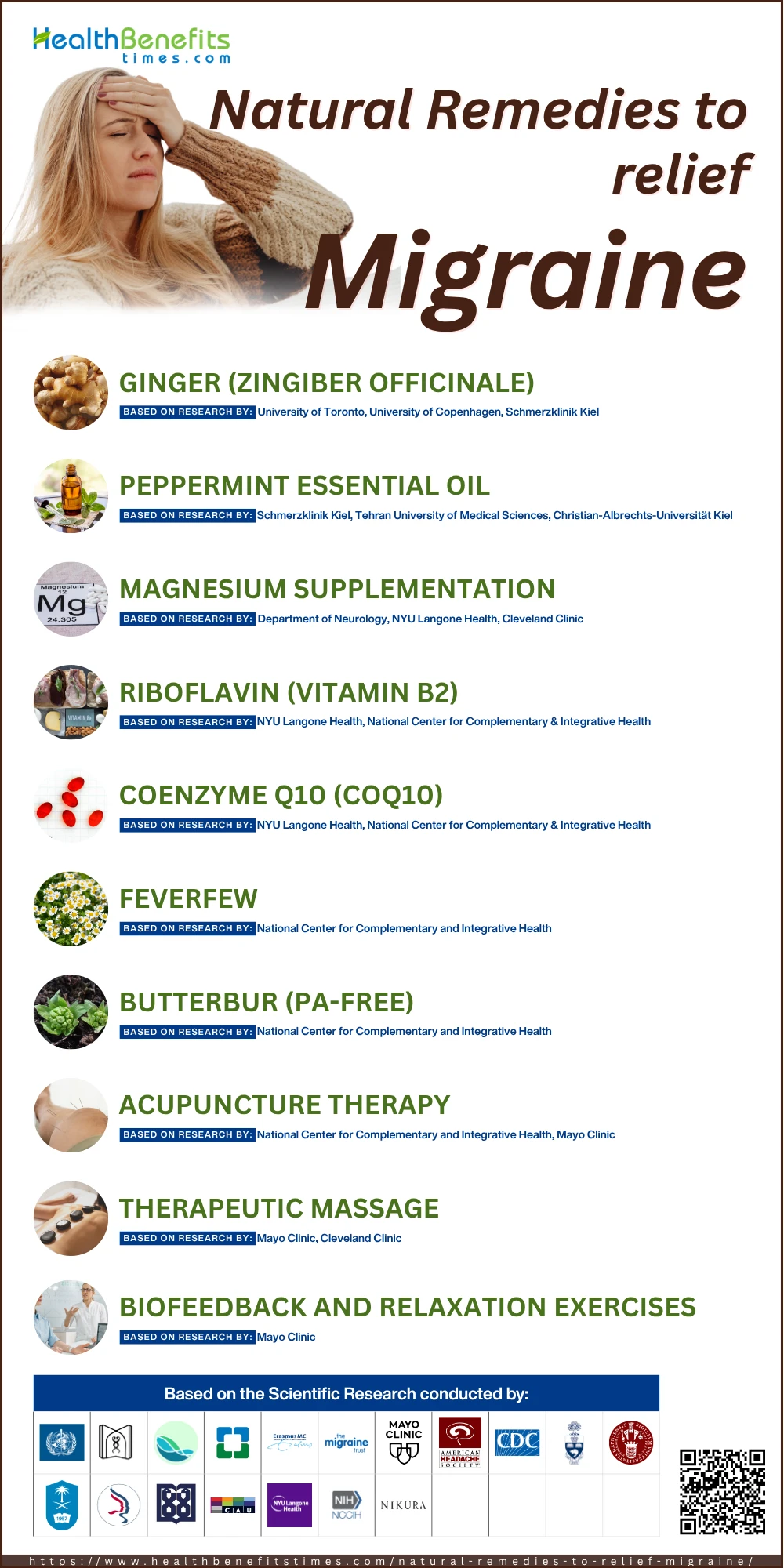
Applying diluted peppermint oil directly to your skin offers a rapid, cooling alternative to over-the-counter painkillers 22. The secret lies in menthol, the main active ingredient in peppermint, which helps relax tense muscles around your head and neck while boosting local blood circulation 23. Massaging a peppermint oil solution onto your forehead and temples has been shown in clinical studies to significantly lower headache pain within just 15 minutes, offering relief equal to taking a full dose of acetaminophen 24. In addition, inhaling the fresh scent of peppermint can help soothe the dizziness and light sensitivity that often keep you trapped in bed during an attack 22.
Note: You should mix three to five drops of pure peppermint essential oil with a tablespoon of a gentle carrier oil like coconut or jojoba oil, and gently massage it onto your temples, forehead, and the back of your neck 22.
3. Magnesium Supplementation
Keeping your body’s magnesium levels topped off is a highly recommended way to protect your nervous system from recurring attacks 25. When you are under a lot of stress, your body naturally excretes more magnesium, and this deficiency can cause blood vessels to constrict and trigger a wave of electrical hyperactivity in your brain 25. Clinical research indicates that taking daily oral magnesium can cut your migraine frequency by up to 43%, making it a trusted Level B preventive treatment recommended by headache specialists 25. It is especially helpful if you experience visual auras, as magnesium works to prevent the visual disturbances and black spots that precede the pain phase 12.
Note: Sufferers commonly take 400 mg of magnesium oxide or chelated magnesium daily with a meal to prevent future attacks, though you should expect to use it for at least a month before seeing full benefits 25.
4. Riboflavin (Vitamin B2)
Boosting your brain’s cellular energy with riboflavin is an incredibly safe and inexpensive way to reduce how often you get headaches 25. Some researchers believe that migraines are linked to a slight energy deficit in the brain’s mitochondria, which are the energy-producing powerhouses of your cells 25. By taking a high daily dose of riboflavin, you can help correct this balance; in fact, clinical studies show that taking 400 mg of riboflavin daily can cut your monthly migraine attacks by up to 56% 26. Because it is water-soluble, it is incredibly well-tolerated with virtually no major side effects 25.
Note: You can use this remedy by taking a single 400 mg oral riboflavin capsule every morning with breakfast, but keep in mind that it will safely turn your urine a harmless, bright neon-yellow color 25.
5. Coenzyme Q10 (CoQ10)
Adding Coenzyme Q10 to your daily wellness routine is another excellent way to optimize your brain’s mitochondrial health and lower inflammation 25. This natural enzyme acts as a strong antioxidant, protecting your brain cells from the oxidative stress that can make your nervous system hyper-reactive to everyday triggers 25. Clinical studies show that supplementing with CoQ10 can significantly decrease both the duration and frequency of your attacks, helping you reclaim days that would have otherwise been spent in a dark room 27. It is widely tolerated and is especially beneficial when combined with other energy-boosting vitamins 25.
Note: Sufferers commonly swallow a 100 mg to 150 mg CoQ10 softgel capsule daily with food to help build up protective levels in the bloodstream over several weeks 12.
6. Feverfew
Relying on the traditional power of feverfew can help you naturally prevent migraines from occurring in the first place 26. This daisy-like herb contains a natural compound called parthenolide, which works by calming down blood vessel spasms and preventing the release of inflammatory chemicals in your brain 28. While individual research results on feverfew are mixed, clinical guidelines suggest it is highly effective at reducing both the frequency of your attacks and accompanying symptoms like nausea and light sensitivity 26. It is often combined with magnesium and riboflavin for an even stronger preventative shield 25.
Note: You can consume this remedy by taking a daily standardized feverfew capsule, usually containing 100 mg to 150 mg of the herbal extract, as part of your morning preventive regimen 25.
7. Butterbur (PA-Free)
Taking a standardized extract of the butterbur plant can help drastically reduce how often you experience painful migraine attacks 26. Butterbur works by blocking CGRP signaling in your body, which prevents the painful swelling and widening of cranial blood vessels during a migraine 26. Clinical trials have demonstrated that taking a specific butterbur root extract can cut your attack frequency in half 26. However, because raw butterbur contains toxic chemicals called pyrrolizidine alkaloids (PAs) that are highly damaging to your liver, you must be extremely careful with how you source this herb 28.
Note: You must only use butterbur capsules that are explicitly labeled and certified as “PA-free,” and you should always consult your doctor before starting this specific herbal therapy 28.
8. Acupuncture Therapy
Scheduling a series of acupuncture sessions can help retrain your body’s pain pathways and lower your brain’s overall sensitivity 26. This ancient practice involves placing extremely thin, sterile needles into specific areas of your skin to stimulate your nerves and release natural, pain-blocking chemicals like endorphins 29. Systematic reviews of clinical trials indicate that acupuncture is highly effective at relieving migraine pain, showing results that can be just as powerful as daily preventative drugs but without any of the toxic chemical side effects 26. It is a wonderfully relaxing option that also helps you manage physical stress and muscle tension 30.
Note: You can apply this remedy by booking regular, weekly sessions with a licensed and certified acupuncturist, especially during periods when your headaches are most frequent 29.
9. Therapeutic Massage
Treating yourself to a gentle neck and shoulder massage is a fantastic way to release the physical tension that triggers painful attacks 30. Chronic tightness in your upper back, neck, and scalp can directly irritate the nerves that lead to your brain, causing a tension headache to easily escalate into a full-blown migraine 8. While clinical studies on massage therapy are still growing, massage has been shown to reduce stress, lower your heart rate, and improve sleep quality, all of which are essential for keeping migraines at bay. It is a gentle, comforting therapy that helps you relax both your mind and body. Note: You can use this remedy by having a partner or professional massage therapist gently rub your shoulders, neck, and scalp using circular motions, or by applying light, steady pressure to tight muscle knots 30.
10. Biofeedback and Relaxation Exercises
Learning how to control your body’s physical reaction to stress through biofeedback is a highly empowering way to stop migraines. During biofeedback, you learn to monitor your physical stress markers—like muscle tension or skin temperature—and use deep breathing and mental imagery to calm your nervous system. Clinical research shows that biofeedback can substantially reduce both the frequency and pain of migraines in as few as eleven sessions. Pairing this with progressive muscle relaxation or daily deep breathing exercises helps lower your daily stress levels and prevents your brain from becoming hyper-sensitized. Note: You can practice this remedy at home by dedicating 10 to 15 minutes each day to sitting quietly in a dark room while taking slow, deep diaphragmatic breaths and consciously relaxing your muscles one group at a time 13.
Foods and Activities to Avoid When You suffer from Migraine
1. Aged Cheeses and Tyramine-Rich Foods: You should avoid blue cheese, parmesan, and cured meats because they contain high amounts of tyramine, a chemical that can cause blood vessels to spasm and trigger intense head pain 4.
2. Monosodium Glutamate (MSG) and Preservatives: Steering clear of Chinese takeout, processed snacks, and ramen noodles is highly recommended because they often contain MSG, an additive known to over-excite your brain cells 12.
3. Processed Meats with Nitrates: Cutting hot dogs, bacon, and deli meats out of your diet is a smart move, as the nitrates used to preserve them release nitric oxide into your blood, causing blood vessel swelling and pain 4.
4. Caffeine Overuse and Spikes: Keeping your daily coffee or soda intake consistent is vital, as suddenly drinking too much or experiencing caffeine withdrawal can trigger severe rebound headaches 10.
5. Skipping Meals and Dehydration: Making sure you eat balanced meals on a set schedule prevents sudden blood sugar drops, while drinking six to eight glasses of water daily keeps you from getting dehydrated, which is a highly common trigger 10.
6. Excessive Screen Time: Reducing the hours you spend staring at computers, tablets, or phones is crucial, as the bright blue light can strain your eyes and easily trigger painful visual auras 31.
7. Irregular Sleep Patterns: Staying on a strict sleep schedule—even on weekends—keeps your brain’s internal clock stable, whereas sleeping in late or staying up too late can quickly provoke a migraine 32.
Myths and Misconceptions
| A migraine is just a normal, severe headache. | Migraines are a complex neurological disorder involving genetic variations, brain chemistry shifts, and localized nerve inflammation 8. |
| Eating chocolate is a direct cause of migraine attacks. | While chocolate is often blamed, cravings for sweet, carbohydrate-rich foods are actually an early symptom of the prodrome stage of an attack that has already begun 10. |
| Any herbal supplement is completely safe because it is natural. | Many natural herbs contain hidden risks, such as unpurified butterbur root, which contains alkaloids that are highly toxic to the liver 28. |
| Only adult women experience migraines. | Young children, adolescents, and adult men also suffer from severe migraines, though the condition becomes far more common in females after puberty due to hormonal cycles 15. |
| Sufferers always experience intense head pain during an attack. | Individuals can experience silent migraines, which cause visual distortions, vertigo, and nausea without any head pain at all 8. |
| Taking pain medication every day is a safe way to prevent pain. | Overusing over-the-counter pain relievers for more than 10 to 15 days a month can trigger rebound headaches, making attacks more frequent and severe 8. |
Special Considerations
Children
Pediatric patients require highly gentle care, as children often experience abdominal pain, cyclic vomiting, and extreme fatigue rather than standard head pain 31. Parents should focus on non-drug approaches such as ensuring strict sleep schedules, offering healthy snacks, and encouraging rest in a quiet, dark room 30. Children must never be given aspirin, as it is linked to Reye’s syndrome, a rare and potentially fatal condition in pediatric patients 30.
Pregnancy
Expectant mothers face unique challenges because hormonal changes during pregnancy can cause migraine patterns to shift dramatically, sometimes bringing unexpected relief or worsening attacks 14. Because many standard pain medications carry serious risks to the developing baby, pregnant women should rely heavily on safe, physical alternatives like massage, acupuncture, and relaxation exercises 25. It is absolutely critical to consult an obstetrician before taking any herbal remedies or dietary supplements during pregnancy or breastfeeding 25.
Chronic conditions
Living with complex conditions like heart disease, high blood pressure, depression, or epilepsy means you must handle migraine care with extreme caution 14. Dietary supplements can interact dangerously with prescription drugs; for instance, coenzyme Q10 can interfere with the blood-thinning medication warfarin 26.
Elderly
Older adults need to be extra mindful of supplement dosages due to natural declines in kidney or liver function 25. Sufferers must avoid high doses of magnesium if they have any degree of kidney impairment, as the body cannot properly filter the mineral, raising the risk of severe toxicity, irregular heartbeats, and confusion 25.
Precaution before use of natural remedies when you have Migraine
1. Talk with Your Doctor First: You should always consult your primary healthcare provider before taking any new supplement, as they can check for hidden drug interactions and make sure the treatment is safe for your specific body 33.
2. Verify that Butterbur is Certified PA-Free: Checking the label of any butterbur product is absolutely mandatory to ensure it has been purified to remove toxic pyrrolizidine alkaloids that can severely damage your liver 28.
3. Use Caution with High-Dose Magnesium: Watching for stomach aches, nausea, or diarrhea is important when taking magnesium, as high doses can irritate your digestive tract due to poor absorption 25.
4. Perform a Skin Patch Test with Essential Oils: Diluting pure peppermint oil with a carrier oil and testing a tiny drop on your forearm is a vital step to make sure it will not cause a painful skin rash or irritation 34.
5. Avoid Peppermint Oil Around Young Children: Keeping peppermint oil completely away from the faces and noses of infants and toddlers is critical, as breathing in the strong menthol can trigger serious breathing spasms 33.
6. Avoid Supplements If You Have Kidney Disease: Checking your kidney health is essential before taking regular magnesium, as poor renal function can lead to a dangerous buildup of the mineral in your blood 25.
When to see Doctor
1. A Sudden, Excruciating Thunderclap Headache: You must seek emergency medical care immediately if your headache starts suddenly and reaches maximum, agonizing intensity within 60 seconds, as this can be a sign of bleeding in the brain.
2. Sudden One-Sided Weakness or Paralysis: Heading to the emergency room is vital if you experience sudden weakness, numbness, or paralysis on one side of your body, as there is no way to distinguish this from a stroke without immediate medical tests.
3. Slurred Speech, Confusion, or Balance Loss: Getting checked out immediately is crucial if you suffer from confusion, slurred speech, double vision, or trouble walking, as these are clear indicators of a serious neurological issue.
4. Fever, Neck Stiffness, and Persistent Vomiting: Seeking immediate help is highly recommended if your headache occurs alongside a fever, stiff neck, or constant vomiting, which are warning signs of meningitis.
5. A Headache Following a Recent Head Injury: Calling your doctor is essential if you experience a severe headache within seven days of a blow to the head, as you may be suffering from a concussion or a post-traumatic injury.
6. A Change in Your Normal Headache Pattern: Scheduling a visit with your primary care provider is a smart move if your headaches begin to feel completely different—such as a sharp, stabbing pain instead of your usual throbbing pain—or if your attacks become significantly more frequent and severe.
Comments
comments
This article is based on Scientific Research Conducted by following Research Organization:
- Migraine and other headache disorders–World Health Organization, Switzerland
- Migraine: A Review on Its History, Global Epidemiology, Risk Factors, and Comorbidities–Tabriz University of Medical Sciences, Iran
- Headache disorders affect 3 billion people worldwide—nearly one in every three people, ranking sixth for health loss in 2023–Institute for Health Metrics and Evaluation (IHME), United States
- Migraine Headaches–Cleveland Clinic, United States
- Chronic Migraine–Cleveland Clinic, United States
- Calcitonin gene-related peptide and its role in migraine pathophysiology–Erasmus MC University Medical Center Rotterdam, Netherlands
- Migraine Aura–Cleveland Clinic, United States
- Headaches and Migraines–Cleveland Clinic, United States
- Barometric Pressure Headache: Can Weather Trigger Headaches or Migraines?–Cleveland Clinic, United States
- Migraine and diet–The Migraine Trust, United Kingdom
- Migraines: An Overview–Mayo Clinic, United States
- Tension Headaches Migraines and Cluster Headaches with Emad Estemalik MD–Cleveland Clinic, United States
- Migraines: Simple steps to head off the pain–Mayo Clinic, United States
- When Should I Go to the ER for a Migraine?–Cleveland Clinic, United States
- Primary Care in Rochester and Kasson–Mayo Clinic, United States
- Calcitonin Gene-Related Peptide (CGRP) and Migraine–American Headache Society, United States
- QuickStats: Percentage* of Adults Who Had a Severe Headache or Migraine in the Past 3 Months, by Sex and Age Group — National Health Interview Survey, United States, 2018†,§–Centers for Disease Control and Prevention (CDC), United States
- Headache Program–Cleveland Clinic Abu Dhabi, United Arab Emirates
- The efficacy of ginger for the treatment of migraine: A meta-analysis of randomized controlled studies–University of Toronto, Canada
- Double-blind placebo-controlled randomized clinical trial of ginger ( Zingiber officinale Rosc.) addition in migraine acute treatment–University of Copenhagen, Denmark
- A double-blind placebo-controlled pilot study of sublingual feverfew and ginger (LipiGesic™ M) in the treatment of migraine–King Saud University, Saudi Arabia
- [Peppermint oil in the acute treatment of tension-type headache]–Schmerzklinik Kiel, Germany
- Comparing the Effect of Intranasal Lidocaine 4% with Peppermint Essential Oil Drop 1.5% on Migraine Attacks: A Double-Blind Clinical Trial–Tehran University of Medical Sciences, Iran
- [Effectiveness of Oleum menthae piperitae and paracetamol in therapy of headache of the tension type]–Klinik für Neurologie, Christian-Albrechts-Universität Kiel, Germany
- Complementary and Integrative Health Treatments for Migraine–Department of Neurology, NYU Langone Health, United States
- Headaches and Complementary Health Approaches: What the Science Says–National Center for Complementary and Integrative Health (NCCIH), United States
- Complementary Health Approaches for Chronic Pain: What the Science Says–National Center for Complementary and Integrative Health (NCCIH), United States
- Headaches and Complementary Health Approaches–National Center for Complementary and Integrative Health (NCCIH), United States
- Headaches: What You Need To Know
- Headaches in children–Mayo Clinic, United States
- A parent’s guide to childhood headaches–Mayo Clinic, United States
- 5 chronic migraine lifestyle do’s and don’ts–Mayo Clinic, United States
- Peppermint Oil–NCCIH, United States
- Using peppermint oil for headaches and migraines could help to alleviate the painful symptoms you are experiencing.–Nikura, United Kingdom