

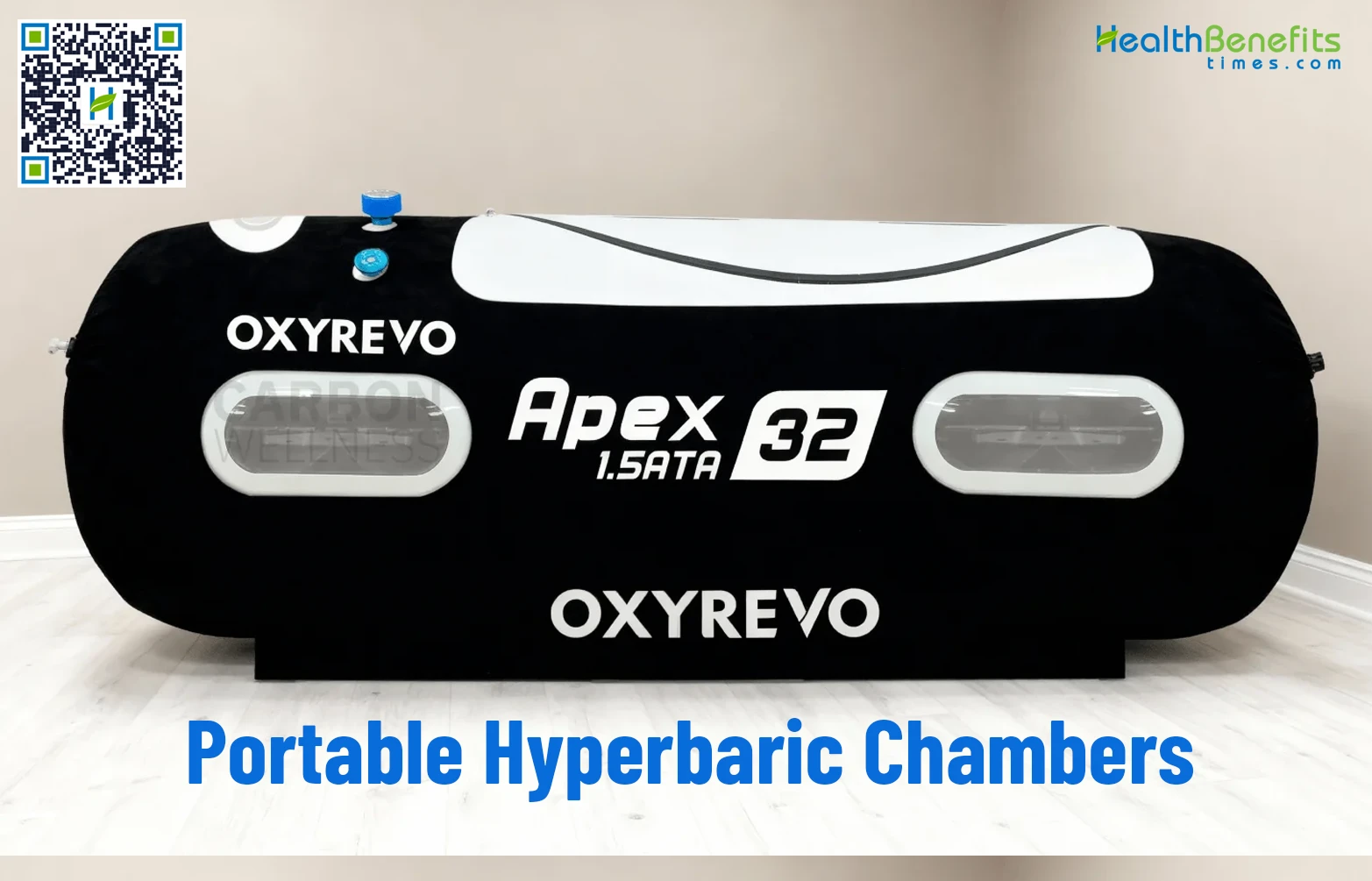
If you’re thinking about a portable hyperbaric chamber at home, it helps to know what that number means. This guide covers what 1.3 ATA can realistically do, where it falls short, and what to check before you climb in.
What Does 1.3 ATA Mean?
ATA stands for atmospheres absolute. At sea level, you live at 1.0 ATA, which is the weight of all the air above you.
A chamber at 1.3 ATA adds 30% more pressure, or about 4.4 extra pounds per square inch. That’s roughly what you’d feel 10 feet underwater, around the bottom of a deep pool.
| Pressure | Rough water depth | Where you’ll find it |
| 1.0 ATA | Surface | Normal life at sea level |
| 1.3 ATA | About 10 feet | Classic soft portable chambers |
| 1.5 ATA | About 16 feet | Some newer soft chambers |
| 2.0 to 2.4 ATA | About 33 to 46 feet | Hard shell and hospital chambers |
Where Portable Chambers Came From
The first soft chambers were built for climbers. A zip-up fabric bag, inflated with a pump, lets a person with altitude sickness “descend” a few thousand feet without moving down the mountain.
Today’s home models grew out of that design. In the US, low-pressure fabric chambers carry FDA clearance for acute mountain sickness only, according to the Undersea and Hyperbaric Medical Society (UHMS). Any other use is considered off-label.
What 1.3 ATA Can Do
Breathing room air at 1.3 ATA raises the oxygen pressure in each breath by about 30%. That’s close to breathing 27% oxygen at sea level instead of the usual 21%.
That boost is modest, but it has a few real uses:
- Altitude sickness. This is the clear use. The added pressure mimics a lower altitude, which can ease headache and nausea until a person can get down.
- Sleep and recovery, possibly. A 2026 crossover trial put 12 college athletes in a chamber at 1.25 ATA with 26–28% oxygen for an hour a day over six days. Their sleep quality scores and muscle oxygen levels improved compared with the control week.
- A quiet hour. Lying still in a calm, enclosed space is restful in its own right. Many owners treat sessions as scheduled downtime.
Keep that research in proportion. The athlete study was small, and the same group showed no change on sprint power tests.
What 1.3 ATA Can’t Do
This is where marketing and medicine part ways. The UHMS defines hyperbaric oxygen therapy as breathing near 100% oxygen at 1.4 ATA or higher, and every condition it approves for treatment calls for at least 2.0 ATA.
A 1.3 ATA soft chamber running on air doesn’t reach either line. In the UHMS’s words, it delivers no more oxygen than wearing an oxygen mask at normal pressure.
So a portable chamber at this pressure is not a replacement for clinical care in:
- Carbon monoxide poisoning
- Decompression sickness after scuba trips
- Chronic wounds, such as diabetic foot ulcers
- Radiation injury or severe bone and skin infections
These need a hospital or an accredited hyperbaric clinic. The FDA has also cautioned consumers that HBOT is not proven to treat conditions such as cancer, autism or diabetes.
1.3 vs 1.5 ATA: Do Newer Soft Chambers Change Things?
Soft chamber designs have moved on since the first altitude bags. Some newer models reach 1.4 or 1.5 ATA, about 16 feet underwater, and come with an oxygen concentrator that feeds a mask or headset.
That setup puts more oxygen into each breath than air at 1.3 ATA. It still sits well below hospital pressure, and the original soft chamber clearance covered air only, so ask both your doctor and the seller what a given model is cleared for.
If you’re comparing models, sellers of 1.5 ATA portable chambers usually list pressure, length, width and the included equipment, which makes side-by-side checks easier. In the US, home use of these chambers generally requires a prescription.
Safety Basics Before Your First Session
Mild pressure is gentle, but it still deserves some care:
- Ear pressure. It feels like a plane coming in to land. Swallow, yawn, or pinch your nose and blow gently to clear your ears as the chamber fills.
- Colds and ear infections. Blocked sinuses make it hard and painful to clear your ears. Skip sessions until you’re well.
- Lung conditions. Anyone with a past collapsed lung, severe COPD or recent chest surgery should get medical clearance first.
- Fire safety with oxygen. Keep lighters, hand warmers and unapproved battery devices out of the chamber, and skip oily lotions on oxygen days.
- Large windows or a model you can sit up in can help. If you’re unsure, try a session at a clinic first.
Pregnancy, seizure disorders and recent ear surgery are also worth raising with your doctor before you start.
Is a Portable Hyperbaric Chamber Worth It at Home?
It depends on what you want from it. If you spend time at high altitude, or you’d like a calm, slightly oxygen-richer hour as part of your routine, a portable hyperbaric chamber can fill that role.
If you’re hoping to treat a medical condition, 1.3 ATA isn’t the right tool. A doctor trained in hyperbaric medicine can tell you whether clinical HBOT at 2.0 ATA or higher makes sense for you.
Either way, go in with clear expectations. A portable chamber is a mild wellness device, not a hospital treatment you can set up in the bedroom.
Frequently Asked Questions
Is 1.3 ATA safe?
For most healthy adults, mild pressure is low risk. Ear discomfort is the most common complaint, and people with lung, ear or seizure concerns should check with a doctor first.
How long is a typical session?
Most people stay in for 60 to 90 minutes, plus a few minutes to pressurize and release. The athlete study above used 60-minute sessions.
Can I add oxygen to a 1.3 ATA chamber?
The original fabric chambers were designed to run on air only. Don’t add oxygen unless the chamber is built and cleared for it and your prescription covers it.
Is a portable chamber the same as HBOT?
Not by the medical definition. Clinical HBOT means near 100% oxygen at 1.4 ATA or higher, and approved treatments use 2.0 ATA or more.
This article is for general information and is not medical advice. Talk with your doctor before starting any hyperbaric routine.
Comments
comments