

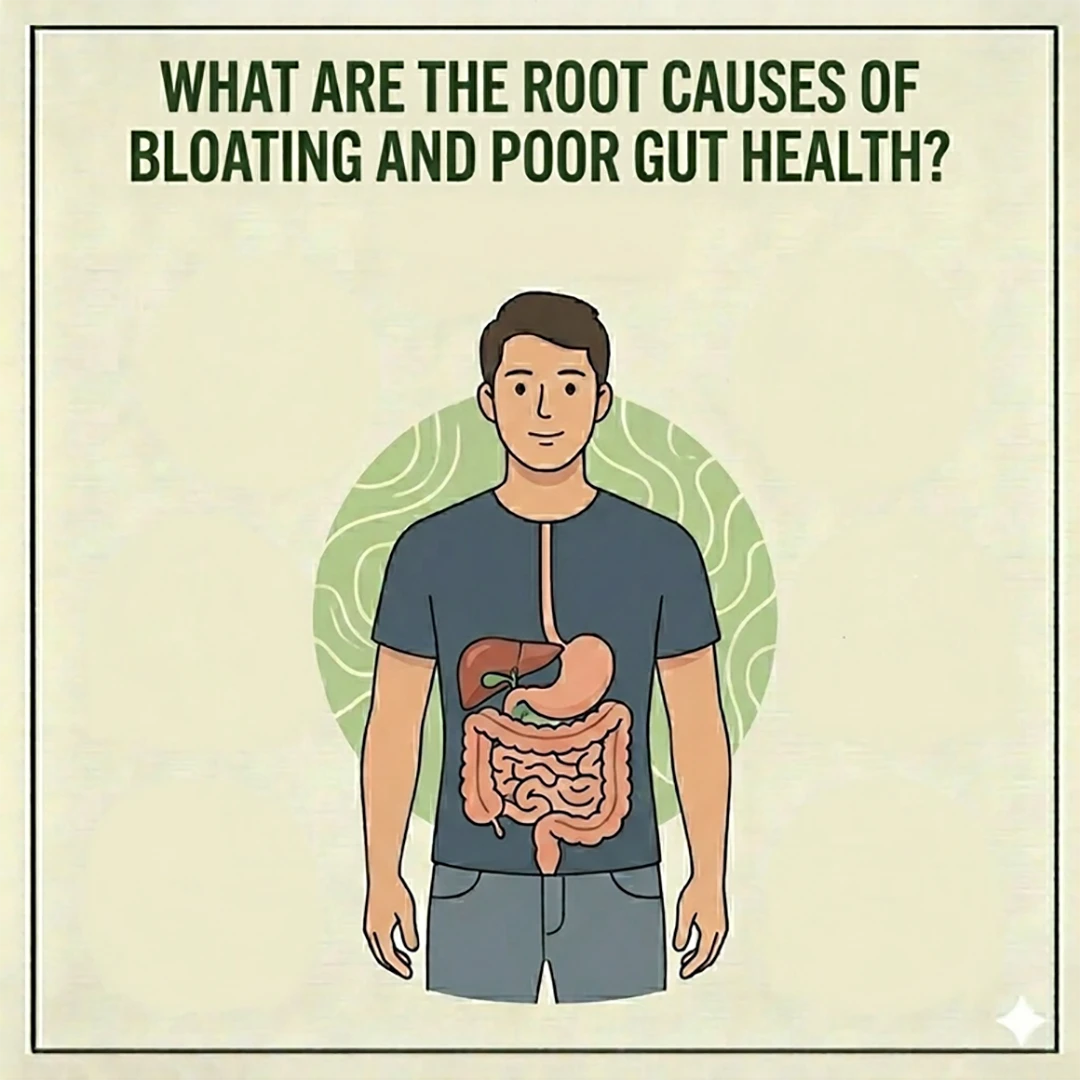
What Bloating Is Actually Telling You
Most people treat bloating as an inconvenience — something to push through or manage with antacids. But bloating is a symptom, not a diagnosis. It is the body’s way of communicating that the process of breaking down, absorbing, and moving food through the digestive tract is not working as it should.
When food is not properly digested in the stomach and small intestine, it arrives in the large intestine in an incompletely processed state. The bacteria living there begin fermenting it, producing gas as a byproduct. That gas has to go somewhere, and the pressure it creates is what you feel as bloating. So in a very literal sense, bloating is fermentation happening in the wrong place, at the wrong time, in excessive amounts.
The Role of Stomach Acid and Digestive Enzymes
One of the most overlooked root causes of bloating is low stomach acid. There is a common assumption that bloating or acid discomfort means too much acid, but often the opposite is true. When stomach acid is insufficient, proteins are not broken down properly. This slows the entire digestive process and creates an environment where bacteria and undigested food interact in ways that generate excessive gas and discomfort.
Digestive enzymes play a similar role. These are proteins secreted by the pancreas and small intestine that break down fats, carbohydrates, and proteins into forms the body can absorb. When enzyme production is low — which can happen due to chronic stress, poor diet, or aging — food moves through the system incompletely digested, contributing directly to bloating and irregular bowel patterns.
Gut Microbiome Imbalance as a Root Cause
The gut is home to trillions of bacteria, fungi, and other microorganisms that collectively form what is known as the gut microbiome. A healthy microbiome supports digestion, produces key vitamins, regulates inflammation, and even communicates with the brain. When this ecosystem falls out of balance — a state called dysbiosis — the consequences are wide-reaching.
Dysbiosis often develops from:
- Prolonged use of antibiotics
- A diet low in fiber and high in processed foods
- Chronic stress disrupting the gut-brain axis
- Lack of dietary diversity over time
- Poor sleep patterns affecting microbiome rhythms
When harmful bacteria outnumber beneficial ones, the gut wall can become more permeable. This is sometimes referred to as increased intestinal permeability. It means that partially digested food particles and bacterial byproducts can interact with the immune system in ways that trigger low-grade inflammation throughout the body. Over time, this inflammation does not stay contained to the gut. It can surface as skin breakouts, hair thinning, persistent fatigue, and even mood shifts — all seemingly unconnected symptoms that actually trace back to the same internal disruption.
What Most People Get Wrong About Gut Health
The most common mistake is treating bloating as an isolated stomach problem. People reach for gas relief tablets, cut out one food group, or try a short cleanse. These approaches may reduce the discomfort temporarily, but they do not address why the system became dysregulated in the first place.
The gut is not a separate organ working in isolation. It is deeply connected to the liver, the adrenal system, the skin, and the immune system. Correcting gut health means understanding which part of the system is underperforming and why. Rather than focusing only on symptoms, this approach aims to understand and address the factors that may be contributing to them.
How Stress and Lifestyle Feed the Problem
The gut has its own nervous system, often called the enteric nervous system. It communicates constantly with the brain through the vagus nerve. When you are under chronic stress, the brain signals the gut to slow down or behave erratically. Digestion is considered a non-essential function during a stress response — the body prioritizes the heart, muscles, and lungs instead.
This means that even a nutritious meal, eaten under stress, may not be properly digested. Cortisol, the primary stress hormone, reduces stomach acid secretion, slows gut motility, and alters microbiome composition over time. Many people who experience daily bloating are not eating the wrong foods — they are eating in a physiological state where their body cannot process food correctly.
Final Thoughts
Bloating and poor gut health are not problems to be muted. They are messages from a system that has been pushed out of balance — by stress, diet patterns, depleted digestive function, or microbial disruption. The body is not malfunctioning without reason. It is responding logically to conditions that have built up over time.
Real correction starts with asking why the gut is struggling, not just how to stop the discomfort. When the underlying causes are addressed — stomach acid, enzyme function, microbiome diversity, stress load — the symptoms tend to resolve as a natural outcome. That is not a quick fix. It is a more honest and lasting way to understand your body.
Comments
comments