

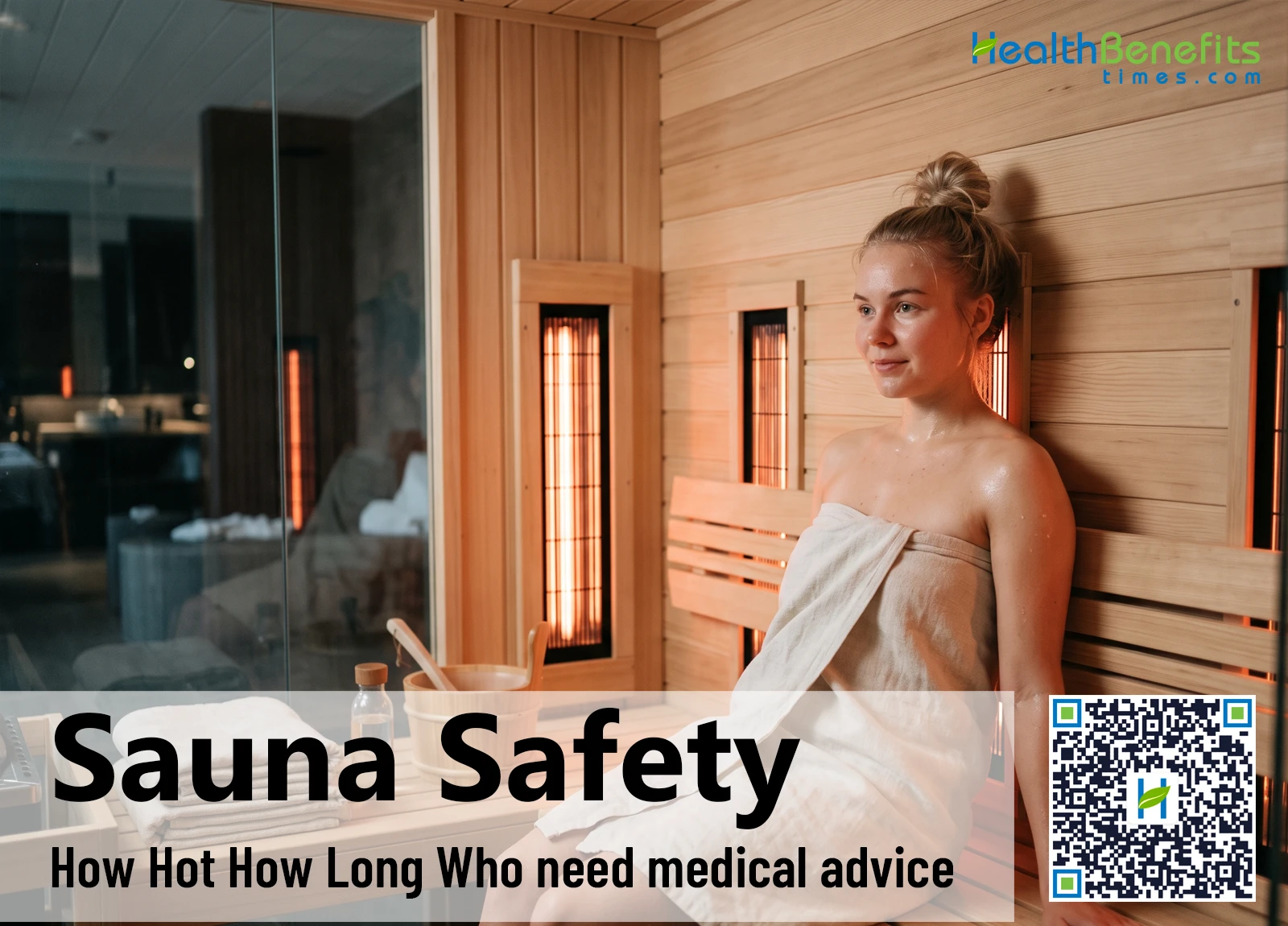
Home saunas, infrared cabins and sauna blankets have brought the habit to people who did not grow up with it. The heat is the same heat, though, and a few simple rules make the difference between a relaxing session and a dizzy, dehydrated one. Here is what to know before you step in.
What the research says, and what it doesn’t
The best-known study followed 2,315 middle-aged men in eastern Finland for about 20 years. Published in JAMA Internal Medicine in 2015, it found that men who used a sauna four to seven times a week had a markedly lower risk of fatal heart disease and of death from any cause than men who went once a week. Later analyses of the same group linked frequent sauna use with lower rates of high blood pressure and dementia, and a 2018 review in Mayo Clinic Proceedings summarised the wider evidence on blood pressure, vascular function and recovery.
Two caveats matter. First, these are observational studies: people who take a sauna most days may differ in other ways from people who don’t, so the studies show an association, not proof that the sauna caused the benefit. Second, the participants were mostly Finnish men using traditional saunas, so the findings don’t automatically carry over to every type of heat or every person. The safe conclusion is that regular sauna bathing appears to be well tolerated by healthy adults and may support heart health, not that it treats any condition.
How hot should a sauna be?
It depends on the type of sauna, because they heat you in different ways. A traditional Finnish sauna heats the air with a stove and stones. An infrared sauna warms your body directly with radiant panels, so the air stays cooler. A steam room runs cooler still but at close to 100% humidity, which makes it feel intense.
| Type | Typical air temperature | Humidity |
| Traditional (Finnish) | About 150–195°F (65–90°C) | Low, rising briefly when water hits the stones |
| Infrared | About 120–150°F (49–65°C) | Low |
| Steam room | About 110–120°F (43–49°C) | Near 100% |
The number on the thermometer is only part of the story. Moist air carries heat to your skin faster and slows the evaporation of sweat, so a room at 175°F with steam can feel hotter than a dry room at 190°F. Hot air also rises, so the top bench can be much hotter than the bottom one. Beginners do well to start on a lower bench, at the lower end of the range, and to change one thing at a time.
If you are setting up a sauna at home, this sauna temperature guide explains the typical ranges for each type and how humidity, bench height and sensor position change how hot the same setting feels.
How long should you stay in?
Most people do best with short rounds rather than one long sit. In the Finnish studies, a typical session lasted well under 20 minutes, and many regular sauna-goers do two or three rounds of 5 to 15 minutes with a cool-down in between.
- First few sessions: 5 to 10 minutes is plenty. You can always go back in.
- Regular use: 10 to 15 minutes per round is common for healthy adults; up to about 20 minutes once you know how your body responds.
- Infrared cabins and blankets: sessions often run longer because the air is cooler, but follow the maker’s time limits.
- Any session: leave straight away if you feel dizzy, light-headed, nauseous, have a headache or a racing heart.
Comfort is the guide, not the clock. Pushing through discomfort to hit a target time is how most sauna problems start.
Hydration and cooling down
You can sweat out around half a litre (about a pint) of fluid in a single session, more in a long one or after exercise. Drink a glass of water before you go in and another afterwards, and more if you do several rounds. Water is enough for most people; you don’t need a sports drink after an ordinary session.
Between rounds, cool off with a lukewarm or cool shower, a few minutes outside, or simply sitting in a cooler room. Cold plunges are popular, but the sudden temperature change puts a real load on the heart and blood pressure, so anyone with a heart condition should ask a doctor before trying one. Stand up slowly when you leave the bench, because blood pressure can drop as blood vessels widen in the heat.
Who should check with a doctor first
For most healthy adults, sauna bathing is low risk. Some people should get medical advice before they start, or avoid saunas altogether:
- Heart conditions: the 2018 Mayo Clinic Proceedings review lists unstable angina, a recent heart attack and severe aortic stenosis as reasons to avoid saunas. People with stable heart disease should still ask their cardiologist first.
- Low or high blood pressure: heat widens blood vessels and can make blood pressure drop, especially when you stand up.
- Pregnancy: obstetric guidance generally advises avoiding anything that raises core body temperature above about 102°F (39°C), particularly in the first trimester.
- Medications: drugs that affect blood pressure, heart rate, sweating or alertness (including some diuretics, beta-blockers, antihistamines and sedatives) can change how you handle heat.
- Illness or fever: skip the sauna while you are unwell, have a fever or are recovering from vomiting or diarrhoea.
- Children and older adults: they are more sensitive to heat; keep sessions shorter and cooler and supervise children.
Mistakes to avoid
- Drinking alcohol before or during a session. Finnish reviews of deaths in saunas have repeatedly found alcohol involved; it impairs judgement, dehydrates you and lowers blood pressure.
- Falling asleep in the heat. Set a timer, and if you use a sauna alone, tell someone in the house.
- Going in already dehydrated. After a hard workout or a hot day, drink first and cool down before you heat up again.
- Ignoring the maker’s limits. Home heaters, infrared cabins and blankets have maximum temperatures and session times for a reason.
- Treating it as a cure. A sauna can be a pleasant, relaxing habit. It is not a substitute for medical treatment.
A simple routine for beginners
- Drink a glass of water and take a quick shower.
- Sit on a lower bench for 5 to 10 minutes.
- Step out, cool down for 5 to 10 minutes and sip some water.
- If you feel good, do a second round; stop at two for your first week or two.
- Finish with a cool shower, rehydrate and rest for a few minutes before getting dressed.
The bottom line
Saunas have a long and largely reassuring safety record among healthy adults, and the research on regular use is encouraging, if not conclusive. Start cooler and shorter than you think you need, drink water, cool down between rounds, skip the alcohol and leave when your body tells you to. If you have a heart condition, blood pressure problems, are pregnant or take medication that affects how you handle heat, talk to your doctor first.
Sources
Laukkanen T, Khan H, Zaccardi F, Laukkanen JA. Association between sauna bathing and fatal cardiovascular and all-cause mortality events. JAMA Internal Medicine. 2015;175(4):542-548.
Laukkanen JA, Laukkanen T, Kunutsor SK. Cardiovascular and other health benefits of sauna bathing: a review of the evidence. Mayo Clinic Proceedings. 2018;93(8):1111-1121.
Laukkanen T, Kunutsor S, Kauhanen J, Laukkanen JA. Sauna bathing is inversely associated with dementia and Alzheimer’s disease in middle-aged Finnish men. Age and Ageing. 2017;46(2):245-249.
This article is for general information and is not medical advice.
Comments
comments