

At first glance, maple water looks just like regular water—thin, clear, and transparent. But when you taste it, there’s a gentle, layered sweetness with light notes of wood or flowers. These flavors can change depending on when the sap is collected. 1
Harvesting maple water only happens during a short window known as the “sap run.” This occurs when daytime temperatures rise above freezing and nighttime temperatures fall below freezing. That daily temperature shift creates pressure inside the tree’s internal circulatory system, which pushes the sap out through small tapholes drilled into the trunk. 2
The Nutritional Profile
Unlike plain sugar water, maple water naturally contains electrolytes and trace elements. One of its standout nutrients is manganese, a mineral the body needs for proper enzymatic function and antioxidant defense. 3
It’s also relatively low in calories when compared to isotonic sports drinks. That’s because its energy comes from natural sucrose, not added high-fructose syrups. 4 On top of that, maple water includes unique phytochemicals such as abscisic acid and Quebecol, a phenolic compound formed from compounds already present in the sap. 5
These natural components don’t stay the same throughout the season. Their levels shift as harvesting continues. For instance, the amino acid profile changes, and methionine tends to increase toward the end of the season. This rise often signals a noticeable change in flavor. 1
| Constituent | Concentration / Value | Function | Source |
| Moisture | ~98% | Moisture regulates temperature, transports nutrients, and maintains structural cell integrity. | 1 |
| Sucrose | 2.0% – 3.0% | Sucrose provides essential energy for cells and transports carbon in plants. | 1 |
| Energy | 100 kcal/L | Energy powers biological processes, enables movement, and maintains cellular homeostasis. | 3 |
| Manganese | 2.92 mg/L | Manganese activates enzymes, strengthens bones, and supports metabolism and antioxidants. | 3 |
| Calcium | 53 mg/L | Calcium strengthens bones, enables muscle contraction, and supports nerve signaling. | 4 |
| Potassium | 71 mg/L | Potassium regulates fluid balance, supports nerve signals, and controls muscle contractions. | 4 |
| Magnesium | 6.10 ± 0.80 mg/L | Magnesium supports muscle and nerve function, energy production, and bones. | 4 |
| Sodium | < 0.1 mg/L | Maintains fluid balance, regulates blood pressure, supports nerve and muscle function, maintains acid–base balance, and aids nutrient absorption. | 4 |
| Abscisic Acid (ABA) | 0.38 – 1.70 µg (variable) | Supports glucose regulation, modulates immune response, reduces inflammation, provides antioxidant protectio | 5 |
| Phaseic Acid | 3.29 µg (variable) | Regulates inflammatory response, supports glucose metabolism, exhibits antioxidant activity | 6 |
| Malate / Malic Acid | Present | Supports energy production in the Krebs cycle, aids muscle performance and fatigue reduction, contributes to detoxification processes, and helps maintain acid–base balance. | 4 |
| Polyphenols | 0.33 – 2.22 mg GAE | Provide antioxidant protection, reduce inflammation, support heart health, regulate blood sugar, and protect cells from damage. | 6 |
| Sulfate | 57.40 mg/L | Supports detoxification processes, contributes to protein and enzyme structure, aids in joint and connective tissue health, assists hormone metabolism, and helps maintain cellular function. | 4 |
Science-Backed Health Benefits of Maple Water
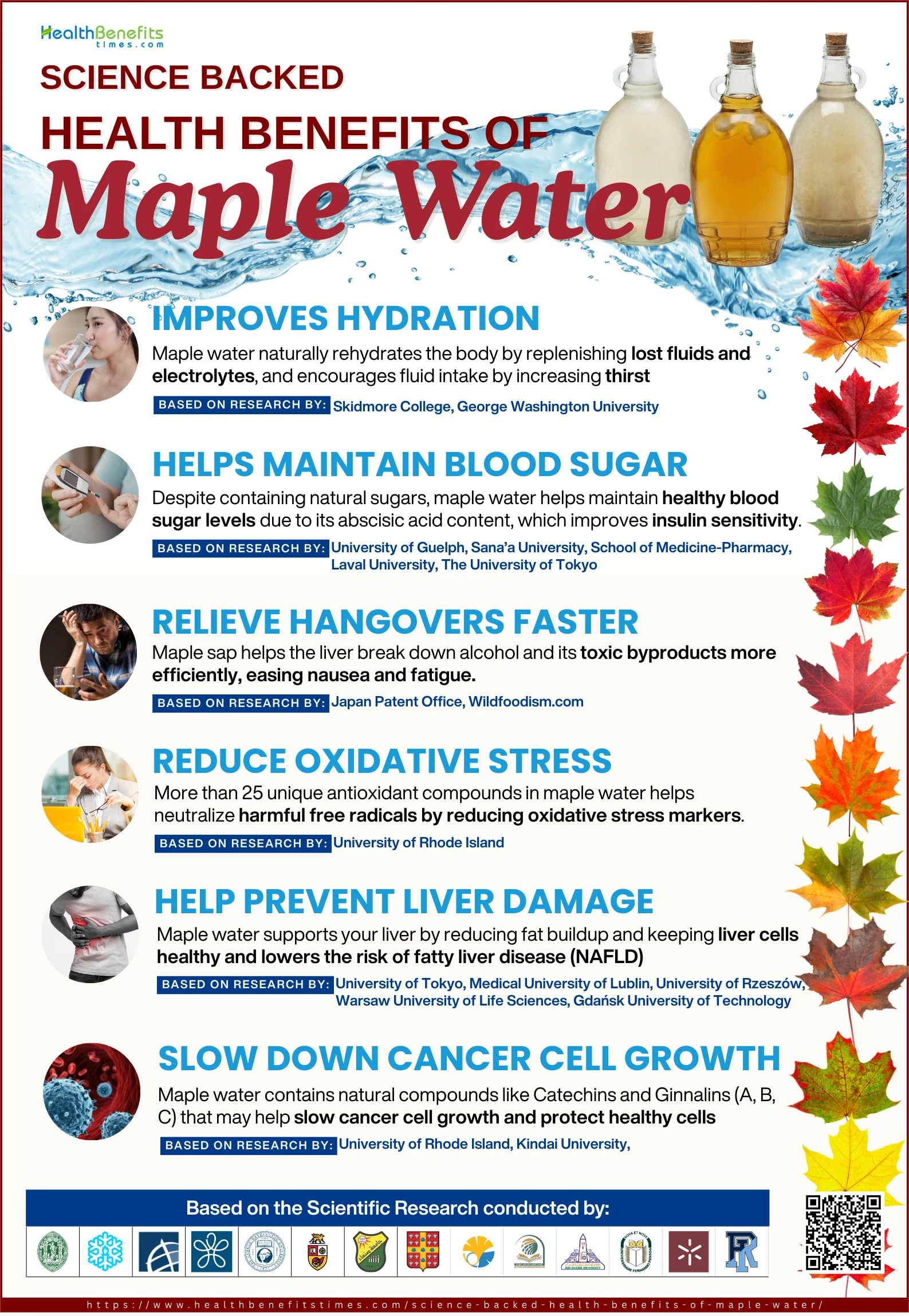
#1: Improves Hydration and Fluid Recovery
Whether you’re active or simply looking for something healthier than plain water or sugary sports drinks, maple water can be a solid choice for rehydration. It works as a natural isotonic drink, meaning the balance of water, salts, and sugars closely matches what’s already in the human body. Because of this, the fluid is absorbed more quickly. Maple water does more than replace lost fluids. Its natural electrolytes, especially calcium and potassium, help restore minerals lost through perspiration (sweating). It does this without the artificial colors or high sodium often found in store-bought performance drinks.
There’s another benefit worth noting. Maple water may encourage a stronger thirst response than plain water. This can help athletes and active people keep drinking during recovery, reducing the risk of involuntary dehydration that happens when plain water makes the body feel satisfied (or satiated) before it has actually had enough.
What Research Says:
A randomized study at Skidmore College looked at how maple water compared to a maple-flavored control in 26 healthy adults who had about 2% exercise-induced dehydration. 4 The study found that maple water didn’t boost fluid retention or plasma volume, but it did increase thirst by 12%. This effect is likely due to its higher osmolality (81 vs. 11 mOsmol/kg). 4 Maple water naturally contains electrolytes like potassium (71 ± 6 mg/L) and calcium (53 ± 5 mg/L), while having very little sodium. 4 On top of that, it provides antioxidant benefits that help reduce the oxidative stress caused by exercise. 4
#2: Helps Maintain Healthy Blood Sugar
It might sound strange that a sugary drink could help stabilize blood sugar. But unlike refined beverages, maple water works differently in the body. It contains natural compounds that help cells process glucose more effectively. Here’s the key difference: unlike soda, which can spike blood sugar quickly, maple water provides a plant hormone called abscisic acid (ABA). This hormone helps muscle and fat cells become more responsive to insulin. When insulin works better, it can clear sugar from the blood more efficiently. For people paying attention to their metabolic health, this means maple water triggers a much lower glycemic response than a typical soda.
What Research Says:
- Maple sap is a natural source of abscisic acid (ABA) and phaseic acid. 5 ABA helps fat cells (adipocytes) and muscle cells (myoblasts) take in glucose without needing insulin. That process is similar to how a class of diabetes drugs called thiazolidinediones work. But unlike those medications, ABA doesn’t come with the side effect of weight gain. 5
- In a clinical trial led by Dr. André Marette, researchers found that replacing refined sugars with maple syrup can benefit metabolic health. 7 The study focused on people with mild metabolic issues. Participants swapped out 5% of their daily calories for maple syrup over eight weeks. 8
- Here’s what they found. Compared to those consuming sucrose, the maple syrup group showed several improvements. They had a healthier glycemic response and lower systolic blood pressure. They also lost android fat, which is the fat stored around the abdomen. 7
- Research published in Nutritional Research and Biochimica et Biophysica Acta found that bioactive compounds in maple water can inhibit an enzyme called alpha-glucosidase. 9 This enzyme lives in your gut and is responsible for breaking carbohydrates down into glucose. 9 By blocking that enzyme, maple water slows down how quickly glucose enters your bloodstream. The result? It helps blunt the postprandial glycemic spike—the sharp rise in blood sugar you usually see right after a meal. 9
#3: Relieve Hangovers Faster
In South Korea, people have long used maple sap—known as “Gorosoe”—as a traditional hangover remedy. It works by helping the liver process alcohol more efficiently. The nutrients in the sap speed up the breakdown of alcohol and its toxic byproduct, acetaldehyde. That buildup of acetaldehyde is what often leads to nausea and fatigue after drinking. So by clearing it out faster, maple water eases those symptoms and helps the body recover more smoothly.
What Research Says:
- A study found that Korean Maple Sap boosted certain liver enzymes in rats specifically alcohol dehydrogenase (ADH) and aldehyde dehydrogenase (ALDH). 10 ADH helps break down alcohol, while ALDH turns the toxic byproduct acetaldehyde into harmless acetate. By increasing these enzymes, the sap helped the body clear alcohol and its byproducts from the blood more quickly. 10 Since acetaldehyde is a major neurotoxin responsible for hangover symptoms (veisalgia), reducing it suggests that maple sap could be a useful natural hangover remedy. 11 10
- A study in the Journal of Medicinal Food found that maple sap can protect the stomach from alcohol-related damage. In experiments with mice, giving them maple sap before alcohol exposure greatly reduced the development of gastric lesions. In fact, the protective effect was similar to that of omeprazole, a commonly used proton-pump inhibitor. 12
#4: Reduce Oxidative Stress
Our bodies deal with constant stress from things like pollution, UV rays, poor diet, and physical activity. This creates a kind of chemical imbalance known as oxidative stress. It produces free radicals, which can damage our cells and speed up aging (Warsaw University of Life Sciences).
That’s where maple water comes in. It contains antioxidants—some of them pretty unique—that help neutralize those free radicals and reduce cell damage. That might make it easier to recover from illness or intense exercise, and it could help keep your cells healthy overall.
What Research Says:
- It turns out there’s more to maple sap than just sugar. Researchers at the University of Rhode Island found that it contains over 25 phenolic compounds—including lignans, coumarins, and Quebecol—which have also been found in maple syrup. 13 To figure this out, they used a technique called High-Performance Liquid Chromatography, or HPLC. What they discovered was that these compounds are strong antioxidants, meaning they’re really good at neutralizing harmful molecules called free radicals. 13
- There was a study in the Journal of the International Society of Sports Nutrition that looked at maple water. To measure its antioxidant power, researchers used a common test called the FRAP assay. They found that maple water packs a serious punch—it has nearly four times the antioxidant potential (clocking in at 3.9 ± 0.0 mmol/L) compared to the control drinks (which were at 1.0 ± 0.1 mmol/L). 4 But the study didn’t stop there. After a workout, the people who drank maple water had more signs of antioxidants in their urine. That’s a good thing—it means those helpful compounds were actually absorbed by the body, did their job, and helped reduce oxidative stress. 4
- A study published in the Journal of Functional Foods looked at how maple water affects inflammation from exercise.24 {% %} The research focused on people who aren’t athletes. It found that drinking maple water every day lowered certain signs of oxidative stress in the body. It also reduced pro-inflammatory cytokines, specifically one called IL-12.24 At the same time, the drink boosted anti-inflammatory markers, like IL-4 and IL-10.24 This suggests that maple water may help the body keep its inflammatory response in check when dealing with physical stress.
#5: Help Prevent Liver Damage
The liver is kind of like the body’s main filtration system. It works around the clock to clean your blood and process the nutrients you take in. But with all the processed fats and sugars in many modern diets, the liver can get overwhelmed. When that happens, fat can build up and cause inflammation—a condition doctors call fatty liver disease. Now, there’s some interesting new research suggesting that maple water might help. Think of it as a gentle liver tonic. It appears to support the liver by helping it process fats more efficiently and stopping harmful lipids from piling up. That could make it a simple, natural addition to your diet—one that helps protect your liver over the long haul and may even lower the risk of metabolic issues down the road.
What Research Says:
- A recent study looked at how maple products might affect liver health. The research, which was published in the journal Nutrition Research, used mouse models with type 2 diabetes. 1 The results showed that mice given maple sap and syrup extracts had less liver damage than those fed regular sugar. They also developed less fatty liver. 3 Specifically, the mice that ate maple products had less fat buildup in their liver. They also showed lower signs of inflammation there. This suggests that these natural sweeteners might help protect against a condition called non-alcoholic fatty liver disease, or NAFLD. 2
- Research has found that certain compounds in maple can actually affect the way our liver works. Specifically, they turn down the activity of liver genes that are responsible for producing fat and ammonia. 9 Why does that matter? When these genes are less active, it helps stop new fat from building up in the liver. And that’s a good thing, because too much fat in the liver can lead to damage and stop it from working the way it should. 9
- Research looking at whether tree saps can protect the liver found that Acer sap helps keep liver cells, known as hepatocytes, from dying. Specifically, it stops a process called apoptosis—basically, programmed cell death—that’s triggered by things like chemical or metabolic stress. 14 By preventing that cell loss, the sap helps the liver hold up better. It keeps the organ’s structure and function intact, so it can keep doing its job even when it’s under conditions that would usually cause harm. 14
#6: Helps slow down cancer cell growth
No single food can cure cancer on its own, but what we eat is a big part of preventing it. Lab studies have found that extracts from maple water have something called chemopreventive potential. Basically, they work by making it hard for certain cancer cells to grow and multiply. These extracts disrupt the process of cell division. This suggests that maple water could be a useful part of a diet that supports digestive system health.
What Research says:
- Scientists have been taking a closer look at maple syrup—and not just for pancakes. In a couple of studies published in Biomedical Reports and Oncology Reports, researchers tested maple sap and syrup extracts on different human cancer cells, including colorectal cancer cells. 15 Here’s what they found: the cells treated with maple extracts grew more slowly compared to those exposed to plain sucrose. 15 That difference matters because it shows the sugar itself wasn’t the cause. Instead, it points to the bioactive compounds naturally found in maple as the ones doing the work. 15
- Scientists have found that extracts from maple trees can disrupt the growth of cancer cells. Specifically, the extracts stopped the cells from dividing during a key phase called the S-phase—that’s the stage where DNA copies itself. By blocking this process, the extracts basically stopped the cancer cells from multiplying. 16 What makes this interesting is that the effect is selective. In other words, it harmed the cancer cells more than it did normal, healthy cells. That’s an important quality to have in a potential treatment. 16
- A recent study zeroed in on some specific plant compounds and found that the anti-cancer benefits come from a group of them working together. In maple species, these are polyphenols like ginnalins A, B, and C, as well as various catechins. 15 According to the research, these compounds can interfere with the processes that fuel tumor growth. They disrupt the signals that tumors use to develop, block the formation of new blood vessels that feed them (a process called angiogenesis), and can even hinder metastasis—which is when cancer spreads. 17
How to Consume Maple Water
As Beverage
This type of water is great for making coffee and tea. Because it has a subtle sweetness and contains minerals, it helps bring out different flavor notes from the coffee beans or tea leaves. In fact, many people find they don’t need to add any sugar. 18 It also works well as a base for smoothies. It adds electrolytes without the thickness you get from dairy or the strong taste you get from coconut water. 18
As Culinary Cooking Liquid
Chefs use maple water for all kinds of cooking. They might poach fruit in it, boil potatoes, or cook grains like oatmeal, rice, and quinoa. Here’s what happens: as the liquid heats up, it reduces or evaporates. This makes the natural sugars in the water become more concentrated. So, by the time your food is done, it’s lightly coated with a subtle maple flavor and gets a little extra mineral boost. 18
Fermentation and Brewing
The natural sugar and nutrients in it make it perfect for fermentation. So it turns out, you can use it to make things like “maple vinegar” and traditional sparkling wines. It also makes its way into brewing, where some brewers use it as a base for ales. It adds fermentable sugars and gives the beer a unique woody flavor. 18
Cocktail Mixology
Its ability to smooth over harsh flavors makes it a go-to in “skinny” cocktails. Basically, it can replace simple syrup. You still get the sweetness and the right amount of dilution, but with fewer calories. 18
Science backed Side Effects of Maple Water
- A single liter of maple water has about 3 milligrams of manganese. 4 Now, the Institute of Medicine (IOM) says the safe upper limit for adults is 11 milligrams per day. 19 So drinking one liter is totally fine. But here’s the catch: if someone were to drink a lot—say, three or four liters in a day—they could easily go over that limit. That’s especially true if their diet already has a lot of manganese from things like whole grains, nuts, or leafy greens. 19 And here’s why that matters. Getting too much manganese over a long period has been linked to a condition called “manganism.” It’s a neurological disorder that can cause tremors, stiffness, and mental symptoms that look a lot like Parkinson’s disease. 20
- You might be surprised to learn that the rules for manganese are much stricter for your drinking water than for your food. The EPA and WHO, for example, set limits for manganese in drinking water, usually between 0.05 mg/L and 0.4 mg/L. 21 Here’s why: when manganese is dissolved in water, it’s much easier for your body to absorb. It can also cross the blood-brain barrier more readily than the manganese that’s bound up in solid food. Since maple water is a liquid, its manganese is probably just as easy for your body to absorb. So, it makes sense to think of it as a food supplement, not as a replacement for your main source of drinking water throughout the day. 22
- There are a few groups of people who don’t process manganese as well as others. This includes infants, the elderly, and people with liver issues. Their bodies have a harder time getting rid of excess manganese. That means if you’re in one of these groups, it’s a good idea to be cautious and talk to a healthcare provider before making maple water a regular part of your diet. 20
- You might see maple water marketed as just “water,” but it’s actually a different story. It has about 20 to 25 grams of sucrose in every liter. 4 To put that in perspective, for someone with diabetes or anyone following a strict ketogenic diet, that’s a significant amount of carbohydrates. It’s not something you can drink freely without thinking about it. You’d have to count it toward your daily intake, unlike plain water, which has nothing to track. 23
- This food does contain sugar, but it also has abscisic acid (ABA). This compound helps improve insulin sensitivity. So, the spike in blood sugar might be lower than what you’d get from the same amount of regular table sugar. 5 Still, you shouldn’t overdo it. Moderation is still important.
- Sap straight from the tree isn’t sterile. It can pick up things like environmental bacteria, yeast, or mold from the tap or the tubing system. 24 It’s pretty common for people to drink it raw, but doing so does come with a risk of an upset stomach. That’s why certain groups—like pregnant women, people with weakened immune systems, and young children—should stick with commercially pasteurized maple water. That extra step of pasteurization removes the risk of bacterial contamination. 25
- Maple sap is basically the fluid that flows through a tree’s xylem, so it’s not the same thing as pollen. That said, if you have a serious allergy to maple pollen, you might want to be a little careful with maple water. There’s a theoretical chance it could contain trace allergens or cause cross-reactivity. To be clear, documented cases of this happening are extremely rare.
Science backed Health Risks and Precaution of Maple Water
- Risk of Manganism
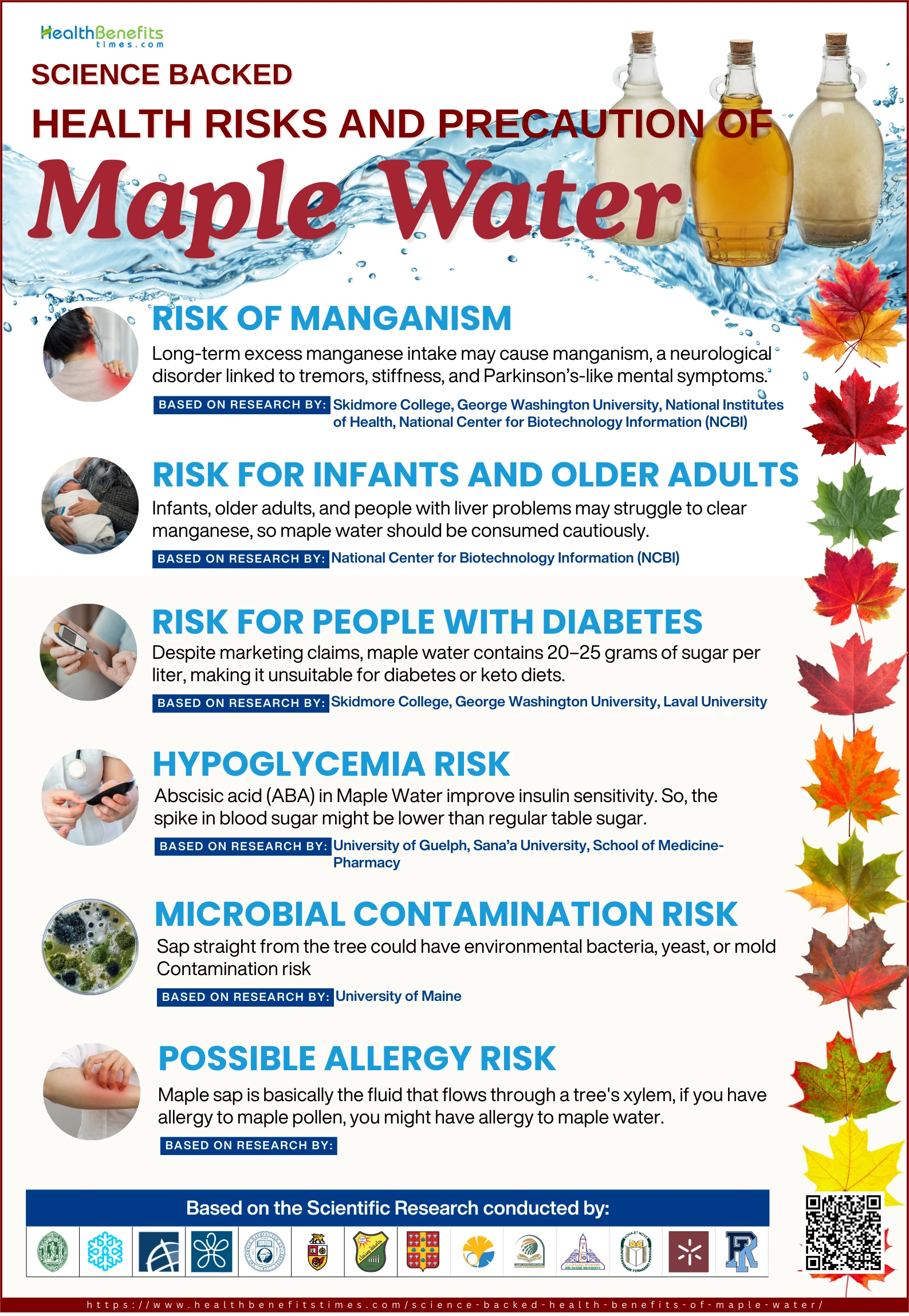
A single liter of maple water has about 3 milligrams of manganese. 4 Now, the Institute of Medicine (IOM) says the safe upper limit for adults is 11 milligrams per day. 19 So drinking one liter is totally fine. But here’s the catch: if someone were to drink a lot—say, three or four liters in a day—they could easily go over that limit. That’s especially true if their diet already has a lot of manganese from things like whole grains, nuts, or leafy greens. 19 And here’s why that matters. Getting too much manganese over a long period has been linked to a condition called “Manganism.” It’s a neurological disorder that can cause tremors, stiffness, and mental symptoms that look a lot like Parkinson’s disease. 20
- Potential Risk for Infants and Older Adults
There are a few groups of people who don’t process manganese as well as others. This includes infants, the elderly, and people with liver issues. Their bodies have a harder time getting rid of excess manganese. That means if you’re in one of these groups, it’s a good idea to be cautious and talk to a healthcare provider before making maple water a regular part of your diet. 20
- Potential Risk for People with Diabetes
You might see maple water marketed as just “water,” but it’s actually a different story. It has about 20 to 25 grams of sucrose in every liter. 4 To put that in perspective, for someone with diabetes or anyone following a strict ketogenic diet, that’s a significant amount of carbohydrates. It’s not something you can drink freely without thinking about it. You’d have to count it toward your daily intake, unlike plain water, which has nothing to track. 23
- Hypoglycemia Risk
This food does contain sugar, but it also has abscisic acid (ABA), this compound helps improve insulin sensitivity. So, the spike in blood sugar might be lower than what you’d get from the same amount of regular table sugar. 5 Still, you shouldn’t overdo it. Moderation is still important.
Points 3 and 4 may seem contradictory. On one hand, maple water contains 20–25 grams of sugar per liter, which can significantly raise blood sugar for people with diabetes or those on low-carb diets. On the other hand, it also contains abscisic acid (ABA), which may help improve insulin sensitivity and reduce the blood sugar spike compared to regular sugar.
How it affects different individuals:
- Chronic diabetes patients: Even with ABA, the sugar content can still raise blood glucose levels. Drinking maple water without tracking intake may worsen blood sugar control, so moderation and careful monitoring are essential.
- Healthy individuals: Those with normal insulin function may experience only minor fluctuations, as their bodies can adjust blood sugar efficiently. However, excessive consumption could still lead to temporary sugar spikes.
The effect of maple water on blood sugar depends on an individual’s physical condition, insulin sensitivity, and overall diet. Moderation is key for everyone.
- Microbial Contamination Risk
Sap straight from the tree isn’t sterile. It can pick up things like environmental bacteria, yeast, or mold from the tap or the tubing system. 24 It’s pretty common for people to drink it raw, but doing so does come with a risk of an upset stomach. That’s why certain groups—like pregnant women, people with weakened immune systems, and young children—should stick with commercially pasteurized maple water. That extra step of pasteurization removes the risk of bacterial contamination. 25
- Possible Allergy Risk
Maple sap is basically the fluid that flows through a tree’s xylem, so it’s not the same thing as pollen but, if you have a serious allergy to maple pollen, you might have careful with maple water. There’s a theoretical chance it could contain trace allergens or cause cross-reactivity.
Comments
comments
This article is based on Scientific Research Conducted by following Research Organization:
- Maple Syrup–Universidad de Las Palmas de Gran Canaria, Spain, University of Coimbra, Portugal, University of Lapland, Finland, Universidade Lusófona de Humanidades e Tecnologias, Portugal
- What Is Maple Water and Should You Be Drinking It?
- Effect of dark-colored maple syrup on cell proliferation of human gastrointestinal cancer cell–Kindai University, Japan
- Step Two: From Sap to Syrup
- Rehydrating efficacy of maple water after exercise-induced dehydration–Skidmore College, USA, George Washington University, USA
- Nutritional, pharmacological, and sensory properties of maple syrup: A comprehensive review–University of Guelph, Canada, Sana’a University, Yemen, School of Medicine-Pharmacy, France
- Chemical Compositional, Biological, and Safety Studies of a Novel Maple Syrup Derived Extract for Nutraceutical Applications–University of Rhode Island, USA
- MAPLE WATER OF QUÉBEC–Federation of Quebec Maple Syrup Producers, Canada
- Chemical Compositional, Biological, and Safety Studies of a Novel Maple Syrup Derived Extract for Nutraceutical Applications–University of Rhode Island, USA
- Effect of the new high vacuum technology on the chemical composition of maple sap and syrup
- Trends and Missing Links in (De)Hydration Research: A Narrative Review–University of Porto, Portugal, University of Coimbra, Portugal, University of Minho, Portugal, Fernando Pessoa University, Portugal
- NUTRITION AND HEALTH BENEFITS OF PURE MAPLE SYRUP–International Maple Syrup Institute, USA & Canada
- Healthful Hormone Found In Maple Syrup–Institut des nutraceutiques et des aliments fonctionnels, Canada
- Switching refined sugar for maple sugar alters gut microbiota–Université Laval, Canada
- Maple Syrup from Canada Trial Results (IMAGE)–Laval University, Canada
- Why substitute sugar with maple syrup?–Laval University, Canada
- A maple syrup extract alleviates liver injury in type 2 diabetic mouse model–The University of Tokyo, Japan
- Healthy Drink Trends 2017: 4 Benefits Of Drinking Maple Water, Plus How It Differs From Coconut Water
- The Health Benefits Of Drinking Maple Tree Sap–Wildfoodism.com, USA
- Gastroprotective Efficacy of North African Medicinal Plants: A Review on Their Therapeutic Potential for Peptic Ulcers–University of El Oued, Algeria, Abbes Laghrour University of Khenchela, Algeria, Ain Shams University, Egypt, Prince Sattam Bin Abdulaziz University, Saudi Arabia, Egyptian Russian University, Egypt, Brown University, USA, Daffodil International University, Bangladesh, University of Mohamed Khider, Algeria, Kampala International University, Uganda, Nuclear Research Centre of Birine, Algeria
- Medicine for preventing drunken sickness and hangover–Japan Patent Office, Japan
- Maple syrup is much more than just delicious!–Quebec Maple Syrup Producers, Canada
- The Acute Effects of a Maple Water Drink on Exercise Responses, Oxidative Stress and Inflammation in Overweight College Males–University of Louisiana at Lafayette, USA, Edward Via College of Osteopathic Medicine‑Louisiana Campus, USA, University of West Florida, USA
- Benefits of Maple Water–Kelly Jones Nutrition, USA
- Metabolic activity of tree saps of different origin towards cultured human cells in the light of grade correspondence analysis and multiple regression modeling–Medical University of Lublin, Poland, University of Rzeszów, Poland, Warsaw University of Life Sciences – SGGW, Poland, Gdańsk University of Technology, Poland
- Inhibitory effect of maple syrup on the cell growth and invasion of human colorectal cancer cells–Kindai University, Japan
- The Benefits of Maple
- Evaluating Processing Methods to Produce Safe, Shelf Stable Maple Sap Beverages for Small Operations–University of Maine, USA
- The maple tree owes its life, growth, and self-preservation to its sap, the maple water that flows within, carrying 46 essential nutrients to every extremity. Even better for humans, it contains only 8 g of carbohydrates and 35 calories per 375ml serving!–Maple from Canada™, Canada
- Maple nectar–Prestige Maple Products, Canada
- Shelf Life Of Maple Syrup | Need To Know Storage Tips [2022]–Maple Roch, Canada
- Maple Water–MapleTapper (Maple Tapper Brand/Company), Canada
- Maple Flakes : An Explosion of Dehydrated Flavors – Maple Recipes, Quebec Maple Products, Online Shop, Ma Cabane en Gaspésie, Bas-Saint-Laurent, Canada–Ma Cabane en Gaspésie, Canada
- Manganese–National Institutes of Health, USA
- Manganese Toxicity–National Center for Biotechnology Information (NCBI), USA
- Toxicological Summary for: Manganese–Minnesota Department of Health, USA
- Health Effects Support Document for Manganese–U.S. Environmental Protection Agency, USA
- Manganese FAQ–Water Quality Association, USA
- Manganese exposure from spring and well waters in the Shenandoah Valley: interplay of aquifer lithology, soil composition, and redox conditions–Washington and Lee University, USA, Trinity University, USA, Whitman College, USA, Virginia Tech, USA, Argonne National Laboratory, USA
- Toxicological risk assessment using spring water quality indices in plateaus of Giresun Province/Türkiye: a holistic hydrogeochemical data analysis–Giresun University, Turkey
- Comparative analysis of maple syrup to other natural sweeteners and evaluation of their metabolic responses in healthy rats–Laval University, Canada