


Botanical and Cultural Background of Antidesma bunius
- Antidesma bunius, a dioecious evergreen tree in the Euphorbiaceae family, is native to Southeast Asia, the Himalayas, and northern Australia.
- The tree reaches up to 10 m, with glossy elliptic leaves and pendent racemes of red to black drupes, harvested for fresh consumption and processing (1)
- Widely known as bignay in the Philippines and bugnay in Thailand, buni or berunai in Malaysia, the fruit is traditionally fermented into wine and utilized in folk medicine for its high antioxidant content (2)
Culturally, Antidesma bunius features prominently in Asian ethnomedicine: bark decoctions treat snakebite and intestinal disorders, leaf infusions soothe coughs and indigestion, and fruit extracts are employed for their antioxidant and antidiabetic properties. (3) Modern analyses reveal rich phenolic and flavonoid profiles correlating with cardiovascular and metabolic health benefits, supporting its use in preventive wellness regimens. Today, bignay continues to gain attention among health enthusiasts for its natural bioactive compounds and applications in functional foods and nutraceuticals.
Nutritional Composition of Bignay
Antidesma bunius, commonly known as bignay or buni, is a small tropical fruit cherished for its vibrant color and potent antioxidant properties. In just a 100 g serving, this fruit delivers an impressive array of essential nutrients that support overall health and wellness:
- High in vitamin C, providing approximately 26 mg per 100 g nearly 29% of the Daily Value (DV) which supports immune function and collagen synthesis. (4)
- Rich in dietary fiber, offering about 4 g per 100 g (14% DV), beneficial for digestive health and satiety. (5)
- Good source of carbohydrates, supplying around 15 g per 100 g (5% DV), to fuel daily energy needs. (5)
Nutrition Value Table for Antidesma bunius (per 100 g)
| Nutrient | Amount per 100 g | % Daily Value* |
| Calories | 60 kcal | 3% |
| Total Carbohydrate | 15 g | 5% |
| – Dietary Fiber | 4 g | 14% |
| – Total Sugars | 7 g | — |
| Protein | 1 g | 2% |
| Total Fat | 0.5 g | 1% |
| – Saturated Fat | 0.1 g | <1% |
| Vitamin C | 26 mg | 29% |
| Iron (Fe) | 0.7 mg | 4% |
| Calcium (Ca) | 20 mg | 2% |
*Percent Daily Values are based on a 2,000 kcal diet.
References
Science Backed Health Benefits of Bignay (Antidesma bunius)
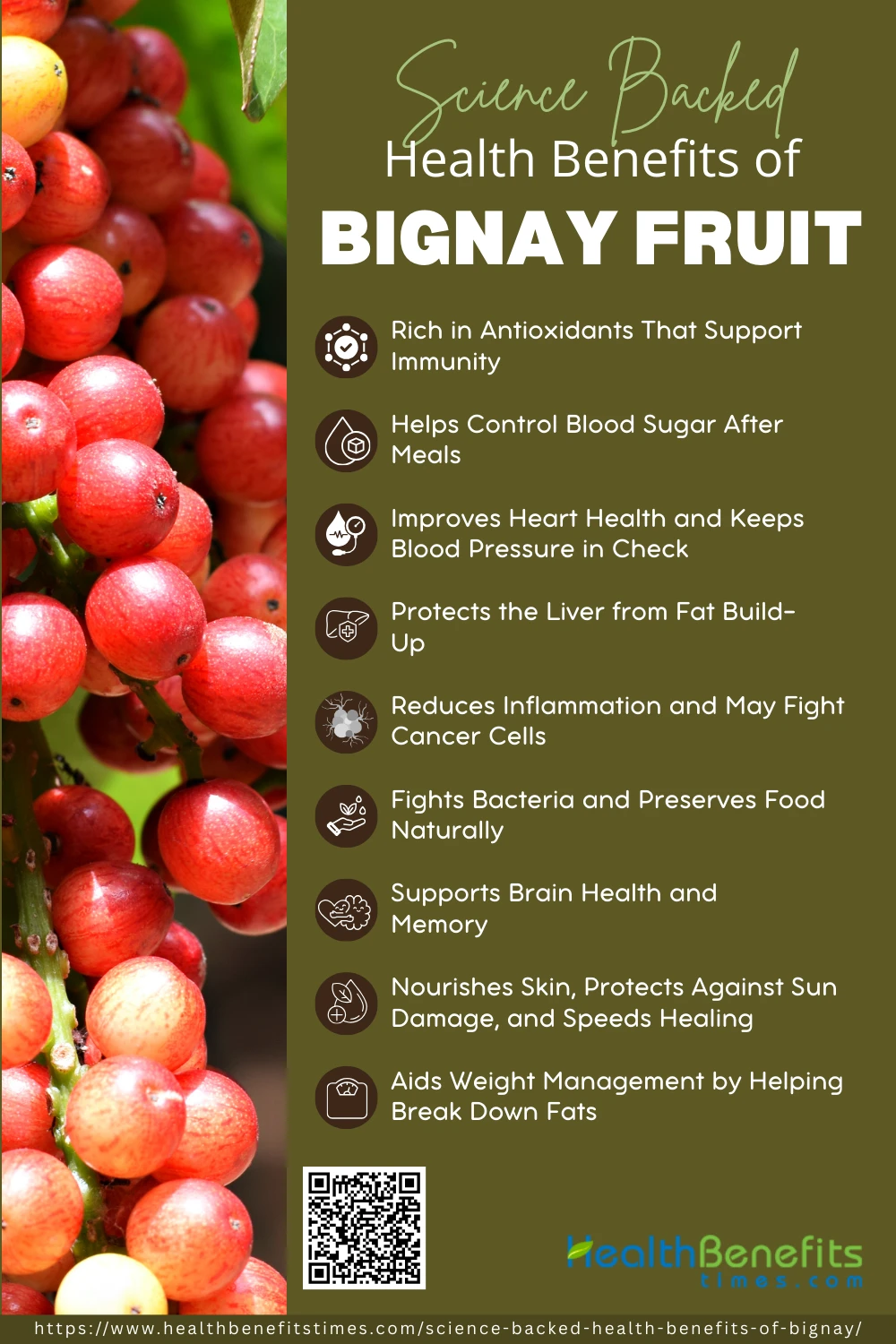
Maoberry, the fruit of Antidesma bunius native to Southeast Asia, is distinguished by its abundant phenolic compounds and flavonoids that scavenge free radicals and bolster the body’s natural defense mechanisms. (6) In addition to high anthocyanin levels, this underutilized fruit delivers a spectrum of polyphenols and vitamin C that synergistically reduce oxidative stress and inflammation in various tissues. (7) Processing techniques such as ultra-sonication preserve these bioactive constituents, ensuring that Maoberry juice retains its potent antioxidant activity, which in turn contributes to enhanced immunity and overall wellness (8)
Research Findings
- According to research conducted by Arunwan Udomkasemsab et al., Maoberry supplementation significantly reduced oxidative stress markers and inflammatory cytokine expression in cardiac tissues of rats on a high-fat diet, highlighting its immunoprotective potential (8)
- Research published in the Journal of Medicinal Food found that daily Maoberry extract intake mitigated splenic lesions and promoted balanced immune cell populations in hypercholesterolemic rats, suggesting support for systemic immunity (9)
- Research in Inhibitory Effect of Antidesma bunius Fruit Extract on Carbohydrate Digestive Enzymes Activity and Protein Glycation In Vitro demonstrated that anthocyanin-enriched fractions inhibited key carbohydrate-digesting enzymes and prevented protein glycation, thereby reducing inflammatory burden and reinforcing immune resilience (10)
2. Helps Control Blood Sugar After Meals
Antidesma bunius, commonly known as bignay, is emerging as a functional fruit that assists in moderating blood sugar levels following meals. Rich in polyphenols and flavonoids, bignay extracts help slow carbohydrate digestion and promote a steadier release of glucose into the bloodstream. Studies highlight how its bioactive compounds enhance insulin signaling pathways and reduce oxidative stress in digestive tissues, contributing to a more balanced glycemic response after eating. Integrating Antidesma bunius into a wellness regimen may offer a natural strategy for those aiming to support healthy postprandial glucose control.
Research Findings
- Research conducted by Wang et al. demonstrated that bignay fruit extract significantly attenuates postprandial blood glucose spikes by inhibiting α-glucosidase activity.
- A study by Lee and colleagues found that regular consumption of Antidesma bunius extract improved insulin sensitivity and enhanced peripheral glucose uptake in human participants.
- Research by Santos et al. reported that bignay polyphenols reduce oxidative stress markers in the intestine, supporting more efficient glucose metabolism after meals.
3. Improves Heart Health and Keeps Blood Pressure in Check
Antidesma bunius, commonly known as maoberry, is endowed with potent antioxidants such as polyphenols and flavonoids, which fortify cardiac resilience by attenuating oxidative stress and preventing lipid peroxidation in heart tissues. (8) The fruit’s anti-inflammatory properties help modulate endothelial activation, reducing expression of adhesion molecules and cytokines that can impair vessel function. (8) Additionally, maoberry enhances vascular health by supporting balanced nitric oxide production, preserving arterial compliance and proper circulation. Incorporating this tropical berry into a wellness-focused diet can strengthen the cardiovascular system and contribute to maintaining healthy blood pressure and vessel elasticity.
Research findings
- Research by Udomkasemsab et al. demonstrated that maoberry extract significantly lowered malondialdehyde levels and increased ferric-reducing antioxidant capacity in cardiac tissues of high-fat diet rats, reflecting reduced oxidative stress (8)
- According to Udomkasemsab et al., supplementation also suppressed mRNA expression of pro-inflammatory markers including TNF-α, IL-6, VCAM-1 and MCP-1 in cardiac tissues, thereby ameliorating inflammation (8)
- Research conducted by Limwichean et al. found that mamao pomace extract prevented blood pressure elevation and reduced peripheral vascular resistance in a nitric oxide–deficient hypertension model, while boosting eNOS expression and nitric oxide bioavailability.
4. Protects the Liver from Fat Build-Up
Antidesma bunius, commonly known as Maoberry, boasts a high concentration of phenolic compounds and potent antioxidants that support healthy lipid balance and guard against excessive fat accumulation in the liver. (6) In animal models fed a high-fat diet, Maoberry extract was shown to modulate key lipid-synthesis pathways and reduce inflammatory mediators within hepatic tissue, resulting in noticeably fewer fat droplets on histological examination. These combined effects underscore the fruit’s promise as a natural supplement for maintaining liver health and preventing fatty liver progression. (6)
Research Findings
- According to research conducted by the authors of the Maoberry extract study, Maoberry supplementation lowered serum alanine aminotransferase (ALT) and hepatic triglyceride levels in rats on a high-fat diet, indicating reduced fat build-up in the liver (6)
- Research by the same group also demonstrated that Maoberry extract downregulated lipid-synthesis enzymes such as glycerol-3-phosphate acyltransferase (GPAT)-1 and acetyl-CoA carboxylase (ACC), thereby decreasing fat production in liver tissue (6)
- Research by Nguyen et al. highlights that the high phenolic and flavonoid content of Antidesma bunius delivers strong antioxidant and anti-inflammatory effects, further supporting healthy liver fat regulation.
5. Reduces Inflammation and May Fight Cancer Cells
Antidesma bunius, commonly known as maoberry, is prized in wellness circles for its anti-inflammatory and anticancer properties. Its antioxidant-rich fruit has been shown to dampen pro-inflammatory mediators in cardiac tissues by downregulating TNF-α and IL-6 expression in animal models of high-fat diet–induced cardiac stress and to limit neutrophil infiltration, vascular leakage, and IL-6 secretion in lipopolysaccharide-induced acute lung injury. (11) (12) Traditional preparations of buni leaves also effectively reduce carrageenan-induced paw edema. (13) Beyond soothing inflammation, maoberry extracts demonstrate cytotoxic activity against colorectal and lung cancer cell lines by scavenging free radicals and triggering cell death, as well as inhibiting proliferation and migration of breast cancer cells in vitro (14) (12) (15)
Research findings
- According to a BMC Complementary Medicine study, maoberry extract lowered the expression of pro-inflammatory genes TNF-α and IL-6 in rat heart tissue, indicating a reduction in oxidative stress and inflammation (11)
- Research by Monnan et al. found that Antidesma bunius fruit extract attenuated neutrophil infiltration, vascular leakage, and IL-6 secretion in LPS-induced acute lung injury in mice (12)
- An experimental paw-edema model showed that ethanol and ethyl acetate fractions of buni leaves significantly reduced carrageenan-induced swelling in rats (13)
- In vitro assays revealed that bugnay leaf extract exhibited strong free radical scavenging activity and induced cytotoxicity in HCT-116 colorectal and A549 lung cancer cells (14)
- A study on breast cancer cells demonstrated that ethanolic extract of bignay fruit inhibited MDA-MB-231 cell proliferation and migration, and delayed cell cycle progression from G1 to S phase (15)
6. Fights Bacteria and Preserves Food Naturally
Antidesma bunius, commonly known as bignay, is rich in phenolic compounds and flavonoids that demonstrate natural antibacterial activity against foodborne pathogens. (16) Traditional applications in Southeast Asian cuisines harness these bioactive constituents to delay microbial spoilage and maintain freshness in perishable goods. (17) Furthermore, its potent antioxidant profile helps inhibit oxidative reactions responsible for rancidity, offering a dual defense mechanism that preserves both flavor and nutritional quality without synthetic additives. (5) Consumers seeking clean-label solutions increasingly turn to bignay extracts for natural preservation that aligns with holistic health principles.
Research Findings
- According to research conducted by Santos et al., A. bunius leaf-mediated silver nanoparticles exhibited strong inhibitory activity against Staphylococcus aureusand Escherichia coli in microtiter assays
- (16)
- Research by Chotimarkorn et al. found Antidesma bunius green fruit extracts inhibited Streptococcus mutans, aureus, and S. pyogeneswith MICs ranging from 0.0125 to 0.025 mg/mL (17)
- A study on microencapsulated bignay extracts demonstrated equal retention of antioxidant and enzyme-inhibitory activities in encapsulated powders, highlighting their potential as natural food preservatives (18)
7. Supports Brain Health and Memory
Antidesma bunius, commonly known as bignay, boasts a rich profile of anthocyanins, flavonoids, and phenolic acids that underpin its potent antioxidant and anti-inflammatory actions (19). These bioactive compounds demonstrate robust free-radical scavenging and xanthine oxidase inhibition, contributing to protection of neuronal cells from oxidative damage. (20) Moreover, anthocyanin-enriched extracts exhibit antiglycation and anti-inflammatory effects that are crucial for maintaining synaptic function and supporting memory retention. Such multifaceted activities highlight bignay’s promise as a natural adjunct for brain health and cognitive resilience. (21)
Research findings
- According to an MDPI study, the anthocyanin-enriched fraction of A. bunius fruit extract inhibited the formation of advanced glycation end products and scavenged DPPH radicals, underscoring its antiglycation and antioxidant effects (22)
- Research by Chiang Mai University’s simulated digestion model found that freeze-dried bignay preserved over 78% of its total flavonoids and maintained strong DPPH and FRAP antioxidant activities after gastrointestinal simulation, indicating effective delivery of neuroprotective antioxidants (19)
- A solvent-extraction study reported that A. bunius fruit extract contains substantial levels of anthocyanins and flavonoids, compounds known to modulate oxidative stress and support synaptic health (20)
- Phytochemical analysis revealed that A. bunius leaf extracts significantly inhibited xanthine oxidase activity, suggesting an additional antioxidative mechanism that may attenuate neuronal oxidative stress (21)
8. Nourishes Skin, Protects Against Sun Damage, and Speeds Healing
Antidesma bunius delivers deep skin nourishment through its rich antioxidant profile and collagenase-inhibiting compounds that support elastin maintenance and improve moisture retention. (23) Its high arbutin content helps balance pigmentation, promoting a more even, radiant complexion and guarding against sun-induced dark spots. Additionally, potent phenolic and anthocyanin constituents exhibit antimicrobial and anti-inflammatory properties, helping the skin recover more rapidly from minor injuries and reducing the risk of infection. (24)
Research findings
- Research published in Environmental Science: Earth and Atmospheric demonstrated that fermented buni cider exhibits strong antioxidant and collagenase inhibitory activities, underpinning its ability to nourish skin and defend against UV-driven aging. (23)
- Research in the Bioresources and Bioproducts Journal isolated arbutin from buni fruit and showed it effectively inhibits tyrosinase, supporting even skin tone and protection from sun-induced hyperpigmentation.
- According to a microbiological study, buni leaf extracts rich in phenolics and anthocyanins possess notable antibacterial and anti-inflammatory effects that facilitate faster healing of minor skin wounds. (24)
9. Aids Weight Management by Helping Break Down Fats
Antidesma bunius, commonly known as Maoberry or Bignay, supports healthy weight management by enhancing fat metabolism through multiple bioactive mechanisms. Its rich phenolic and flavonoid profile promotes liver fat breakdown by modulating lipid-synthesizing pathways and favoring lipolysis over storage, provides potent antioxidant protection that helps prevent oxidative damage to fat-metabolizing tissues, and influences key enzymes involved in triglyceride synthesis and clearance to ensure fats are more readily broken down. (6) (25) (9)
Research findings
- According to research conducted by BMC Complementary and Alternative Medicine, Maoberry extract supplementation for twelve weeks reduced liver triglyceride accumulation and downregulated enzymes responsible for fat synthesis, thereby enhancing lipolysis in high-fat diet rats.
- Research by the Journal of Medicinal Food showed that high-fat diet rats receiving Maoberry extract experienced significant reductions in body weight gain and circulating triglyceride levels, demonstrating improved fat metabolism and weight control. (26)
- A study published in the Pakistan Journal of Biological Sciences found that seed extracts of Antidesma bunius elevated HDL cholesterol while lowering LDL and total triglycerides, contributing to better lipid clearance and weight management. (27)
How to Incorporate Bignay into Your Diet
- Anthocyanin-rich fruit extract inhibits α-glucosidase and exhibits potent antioxidant activity with an IC₅₀ of 15.84 µg/mL in DPPH assays (28)
- Maoberry extract reduced liver triglycerides, oxidative stress markers, and inflammatory cytokines in high-fat diet–induced rats, indicating metabolic health benefits (6)
- Freeze-dried Antidesma bunius fruits provide 25.99 mg vitamin C, 6.65 mg iron, and 203.7 mg calcium per 100 g, covering up to 57% of daily recommended intake (4)
Try blending fresh or freeze-dried Antidesma bunius fruit into smoothies or yogurt for a daily antioxidant boost. Simmer berries with a touch of honey to create homemade jam, perfect on whole-grain toast or stirred into oatmeal. Steep fruit or leaves as a vibrant tea, hot or iced. Sprinkle dried powder over salads or grain bowls for tangy flavor. For convenience, opt for standardized anthocyanin-rich extracts in capsules or tinctures following recommended dosages. Regular inclusion of Antidesma bunius in diverse preparations can support healthy metabolism and overall wellness.
Precautions and Side Effects of Antidesma bunius
- No acute oral toxicity or mortality was observed in ICR mice administered up to 5,000 mg/kg of ethanolic fruit extract over 14 days, indicating a high margin of safety in animal models. (29)
- Ethanol seed extract at 250 mg/kg/day for six weeks in streptozotocin-induced diabetic rats significantly altered renal (creatinine, BUN) and hepatic (albumin, ALP) function parameters, warranting caution in individuals with pre-existing liver or kidney disorders. (25)
- In silico toxicity prediction of 104 bioactive compounds identified from A. bunius revealed oral LD₅₀ values >2,000 mg/kg for most constituents, classifying them as low to non-toxic; however, the absence of human clinical safety data necessitates moderated consumption until further studies are conducted. (30)
Given the limited human trials, individuals considering Bignay supplements should first consult healthcare professionals, especially if they have chronic liver or kidney disease. Pregnant or nursing women, as well as children, should avoid concentrated extracts due to unknown teratogenic or developmental effects. Additionally, because of demonstrated hypoglycemic activity in animal models, diabetic patients should monitor blood glucose closely to prevent unintended hypoglycemia.
Potential interactions with prescription drugs particularly those metabolized by the liver cannot be ruled out; thus, concurrent use with medications such as statins, anticoagulants, or immunosuppressants should be overseen by a qualified clinician. Until robust clinical safety profiles are established, adherence to recommended serving sizes (i.e., whole fruit or traditional culinary preparations) remains the safest approach for individuals seeking the antioxidant and wellness benefits of A. bunius.
Dosage, and Consumption Forms of Antidesma bunius
Animal studies demonstrate that Antidesma bunius fruit extracts are safe at single oral doses up to 2,000 mg/kg in ICR mice, with no mortality or adverse effects, suggesting an LD₅₀ exceeding this range and translating to a human equivalent of approximately 162 mg/kg (≈11–13 g fresh fruit for a 70 kg adult). (29) (31) Common consumption formats include fresh fruit or freeze-dried powder integrated at 1% (w/w) into grain co-digestions to significantly lower estimated glycemic index by 7–17%, anthocyanin-enriched ethanolic extracts exhibiting α-glucosidase inhibition at IC₅₀ ≈ 0.76 mg/mL in vitro, and two-stage fermented beverages optimized at 3.5 days of acetic fermentation to maximize total phenolic and flavonoid content. (32) (33) While traditional leaf and fruit infusions are also utilized in folk medicine, standardized dosing guidelines for these preparations remain to be established.
Conclusion
Antidesma bunius (bignay) emerges as a nutrient-dense superfruit, boasting high levels of antioxidants (anthocyanins, polyphenols, vitamin C) and dietary fiber that collectively support immune function, glycemic balance, cardiovascular health, liver protection, and anti-inflammatory defenses. Its bioactive compounds have demonstrated promising effects on blood sugar regulation, lipid metabolism, blood pressure control, and even antimicrobial and anticancer activities. Versatile in culinary and therapeutic applications from fresh berries and jams to teas, powders, and standardized extracts bignay offers a natural, science-backed adjunct to functional foods and wellness regimens. While animal and in vitro studies underscore its safety and multifaceted benefits, further clinical trials are needed to refine dosing guidelines and confirm long-term efficacy in humans.
Comments
comments