

Nutritional Profile of Breadfruit
Breadfruit (Artocarpus altilis) is a highly nutritious, underutilized tropical staple, offering sustained energy with low fat content and a wealth of essential nutrients:
- Rich in complex carbohydrates and dietary fiber, it delivers sustained glucose release and supports gastrointestinal health (low glycemic index). (1)
- Contains all essential amino acids—particularly leucine, isoleucine, and valine comparable to legumes in protein quality yet more digestible. (1)
- Supplies significant micronutrients, including potassium (360–1,400 mg), calcium (20–315 mg), iron (0.5–28 mg), vitamin C (8.6–16.4 mg), and niacin (1.1–3.3 mg) per 100 g serving, alongside potent antioxidants like β‐carotene and lutein. (1)
Nutrition Value Table (per 100 g serving)
| Nutrient | Amount | % Daily Value (DV)* |
| Calories | 110 kcal | 5% |
| Total Carbohydrate | 26 g | 9% |
| – Dietary Fiber | 4 g | 16% |
| Total Sugars | 8 g | – |
| Protein | 3 g | 6% |
| Total Fat | 1 g | 1% |
| – Saturated Fat | 0.2 g | 1% |
| Vitamin C | 12 mg | 13% |
| Niacin (B3) | 2 mg | 13% |
| Potassium | 760 mg | 16% |
| Calcium | 30 mg | 3% |
| Iron | 11 mg | 61% |
| β‐Carotene | 860 µg | – |
| Lutein | 254 µg | – |
*Percent Daily Values are based on a 2,000-kcal diet.
Sources
Science Backed Health Benefits of Breadfruit
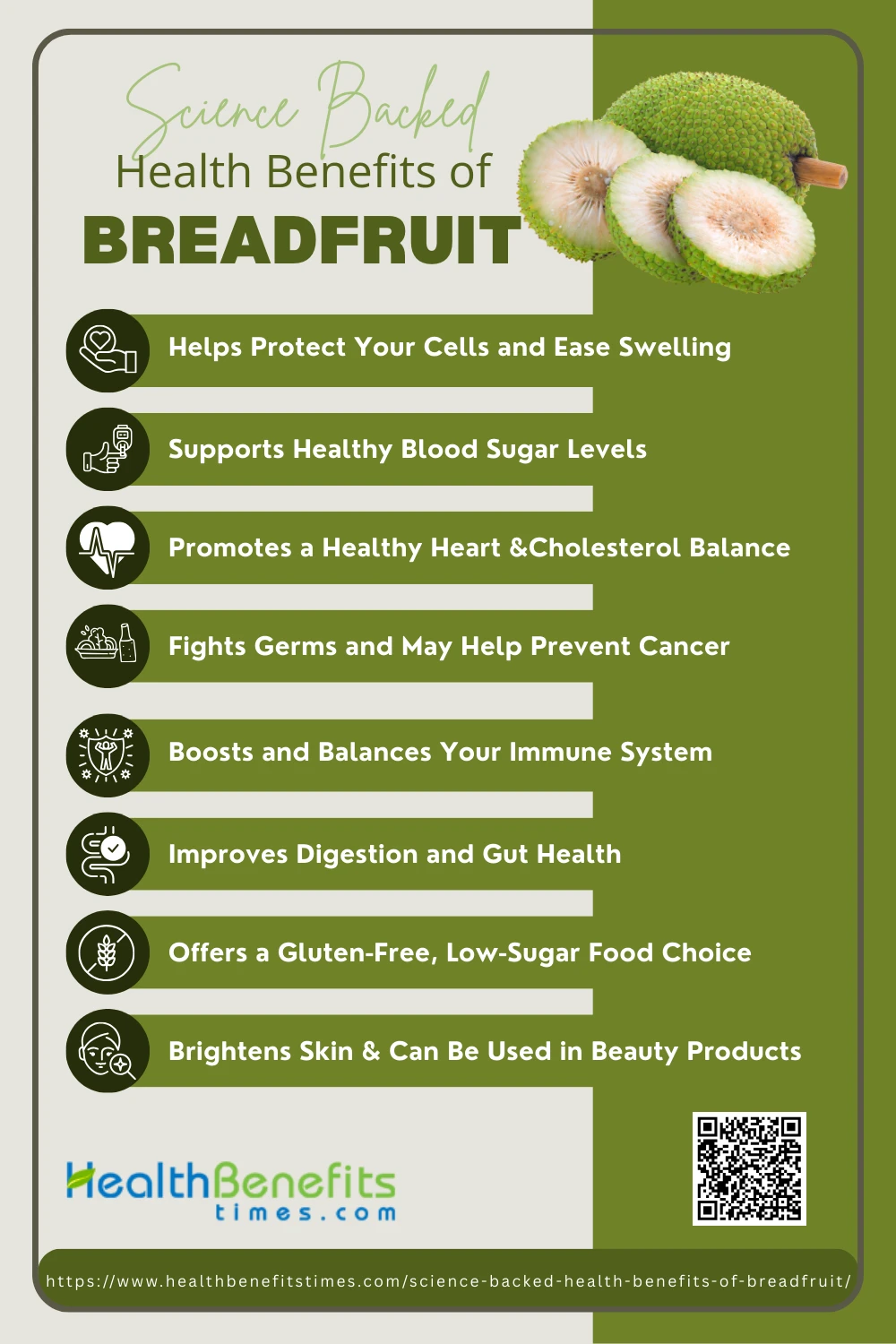
Artocarpus altilis, commonly known as breadfruit, is rich in bioactive compounds that shield cells from oxidative damage and soothe inflammatory responses. Protein hydrolysates derived from the fruit pulp exhibit potent free‐radical scavenging and iron‐chelating activities, effectively neutralizing reactive oxygen species and preserving cellular integrity. (2) These hydrolysates also stabilize cell membranes, preventing hemolysis under stress conditions and reducing swelling of vascular tissues. (2) Additionally, pepsin‐derived fractions of breadfruit demonstrate strong hydrogen-peroxide scavenging properties, further supporting cellular defense systems and promoting tissue recovery (3) (4)
Research Findings
- Trypsin-hydrolyzed breadfruit protein inhibited red blood cell membrane lysis by over 90%, indicating exceptional membrane-stabilizing and anti-hemolytic effects, according to Dada et al. 2023 (2)
- Pepsin-derived hydrolysates of Artocarpus altilis scavenged hydrogen peroxide with up to 65% efficiency, demonstrating strong antioxidative defense against reactive oxygen species (2)
- Trypsin-generated fractions chelated Fe²⁺ with over 80% efficiency, reducing metal-catalyzed lipid peroxidation and protecting cellular lipids from oxidative degradation (2)
- These protein hydrolysates also inhibited heat-induced protein denaturation by more than 75%, highlighting their ability to attenuate inflammatory protein modifications in tissues (2)
2. Supports Healthy Blood Sugar Levels
Artocarpus altilis, commonly known as breadfruit, is emerging as a functional food for glycemic health. Its unripe flour, when used to replace refined carbohydrates like rice or wheat in meals, demonstrates a notably low glycemic response and helps moderate post‐meal blood glucose fluctuations. (5) The high content of resistant starch in both ripe and unripe fruit slows carbohydrate digestion and promotes steady glucose release. (6) In addition, jackfruit seeds and leaves are rich in bioactive flavonoids and carotenoid epoxides, which support healthy insulin signaling and glucose regulation without causing abrupt sugar spikes. (7)
Research Findings
- Research by Somani et al. showed that replacing rice or wheat with green jackfruit flour significantly lowered HbA1c, fasting plasma glucose, and postprandial glucose in type 2 diabetes patients over 12 weeks. (5)
- Studies on streptozotocin-induced diabetic rats demonstrated that jackfruit leaf extracts reduced fasting blood glucose from 200 mg/dL to as low as 56 mg/dL and decreased glycosylated hemoglobin (HbA1c) by nearly 2.3 percentage points. (6)
- In vivo work coupled with molecular docking revealed that jackfruit seed β-carotene epoxide enhances insulin secretion, yielding blood sugar reductions comparable to standard antidiabetic drugs. (7)
3. Promotes a Healthy Heart and Cholesterol Balance
Artocarpus altilis, commonly known as breadfruit, is rich in flavonoids, terpenoids, and phenolic compounds that support cardiovascular wellness by reducing oxidative stress and inflammation in blood vessels. (8) These bioactive constituents enhance endothelial function and inhibit lipid peroxidation, contributing to balanced cholesterol levels without harsh side effects. (9) Traditional use of breadfruit leaves and extracts highlights its potential as a natural nutraceutical for heart health, offering an accessible, plant-based option for individuals seeking to maintain healthy blood lipids and vascular function through diet rather than medication (3) (10)
Research Findings
- Breadfruit methanol extract significantly lowered serum LDL-cholesterol and improved HDL-cholesterol ratios in hypercholesterolemic rats, while enhancing antioxidant enzyme activity in liver and heart tissues according to research conducted by Adedapo et al. (8)
- Daily supplementation with Artocarpus altilis leaf extract reduced systolic and diastolic blood pressure in obese adults over a four-week trial, demonstrating its hypotensive effect in human subjects (10)
- Ethyl acetate fractions of breadfruit leaves exhibited diuretic and natriuretic actions in normotensive rats, indicating additional mechanisms by which breadfruit may aid in blood pressure regulation (11)
4. Fights Germs and May Help Prevent Cancer
Artocarpus altilis, commonly known as breadfruit, is emerging as a natural powerhouse for supporting overall health and wellness. Its leaves and fruits are rich in bioactive compounds such as flavonoids, triterpenes, and phenolic acids that exhibit broad-spectrum antimicrobial and antioxidant properties, helping to inhibit the growth of common pathogens and neutralize harmful free radicals. (12) (13) In addition, several constituents extracted from the stem bark and pulp have demonstrated antiproliferative effects against various cancer cell lines, suggesting a potential role in cancer prevention strategies. (14)
Research findings
- Research by Okeke et al. demonstrated that ethanol extracts of A. altilis leaves inhibit the growth of both Gram-positive and Gram-negative bacteria, including Staphylococcus aureus and Escherichia coli, using agar dilution and diffusion methods. (13)
- Research by Smith and colleagues found that prenylflavones Artonin E and Artobiloxanthone isolated from the stem bark induce apoptosis in oral squamous cell carcinoma cells through caspase-3 and caspase-9 activation. (12)
- Research by Lee et al. showed that quercetin-rich methanol extracts of A. altilis pulp trigger mitochondrial-dependent apoptosis in human lung carcinoma (A549) cells by regulating BAX, BCL-2, and Caspase-3 expression. (14)
5. Boosts and Balances Your Immune System
Breadfruit (Artocarpus altilis) offers a natural approach to supporting immune health by synergistically reducing inflammation, neutralizing oxidative stress, and fine-tuning immune responses. Its leaf extracts have demonstrated potent anti-inflammatory properties that help quell chronic immune activation (1), while protein hydrolysates from its fruit pulp exhibit strong antioxidant capacity to scavenge free radicals and protect immune cells from oxidative damage. (15) (16) Additionally, fruit extracts show immunomodulatory activity enhancing key immune markers without overstimulation to maintain balanced defenses against pathogens. (9)
Research findings
- Administration of Artocarpus altilis leaf extract at moderate doses significantly reduced inflammatory markers and increased liver superoxide dismutase activity in animal models, supporting a balanced immune response according to research conducted by the Rasayan Journal. (16)
- Protein hydrolysates derived from breadfruit fruit pulp demonstrated robust free-radical scavenging and inhibition of pro-inflammatory mediators in vitro, as shown by studies on immune cell assays. (15)
- Methanolic extracts of breadfruit fruits exhibited broad-spectrum antibacterial activity alongside antioxidant effects, underscoring their potential to bolster innate immunity and protect against oxidative stress. (9)
6. Improves Digestion and Gut Health
Artocarpus altilis, commonly known as breadfruit, offers a wealth of dietary fiber and resistant starch that supports smooth intestinal transit and regularity. Its high content of non-digestible carbohydrates serves as fermentable substrates for beneficial microbes in the colon, helping maintain a balanced microbial ecosystem. (17) The soluble fiber and prebiotic starch fractions in breadfruit contribute to softer stools and reduced gut inflammation, promoting overall comfort and digestive wellness. (18) Additionally, breadfruit’s bioactive compounds such as flavonoids and phenolics further soothe the intestinal lining and support mucosal barrier function, aiding in long-term gut health. (19)
Research findings
- HCl-treated breadfruit resistant starch (type III) selectively fosters the growth of Lactobacillus plantarum and L. brevis, lowers luminal pH, and yields a high prebiotic activity score compared with inulin. (17)
- Mice fed diets incorporating breadfruit flour exhibited increased abundance of beneficial gut bacteria, improved intestinal barrier integrity, and no adverse health outcomes. (18)
- Resistant starch produced from Cilacap breadfruit flour enhances total dietary fiber and antioxidant activity, supporting a healthier colonic environment. (19)
7. Offers a Gluten-Free, Low-Sugar Food Choice
Artocarpus altilis (breadfruit) presents a compelling option for health-minded individuals seeking gluten-free and low-sugar alternatives. Naturally free of gluten, breadfruit flour can seamlessly replace wheat in bakery and pasta products while delivering essential nutrients and functional properties. (20) Its rich profile of resistant starch contributes to a lower glycemic response, making it a favorable choice for those monitoring blood sugar levels. (21) In addition to carbohydrates, breadfruit contains an array of phytochemicals and bioactive compounds such as polyphenols and antioxidants that support overall wellness and offer therapeutic potential. (22)
Research findings
- According to research conducted by IOP Publishing, breadfruit flour exhibits no gluten, enabling its use in celiac-safe bakery products without compromising texture or taste. (20)
- Research by Frontiers in Nutrition demonstrates that breadfruit’s high resistant starch content contributes to a low glycemic index, supporting steady post-meal blood glucose levels. (21)
- Research by Hindawi shows that breadfruit flour maintains a naturally low sugar content while supplying beneficial antioxidants, reinforcing its role as a functional food for metabolic health. (22)
8. Brightens Skin and Can Be Used in Beauty Products
Artocarpus altilis, commonly known as breadfruit, has emerged as a promising natural ingredient for skin brightening and beauty applications due to its rich bioactive compounds. The plant contains abundant flavonoids and phenolic compounds that exhibit potent tyrosinase inhibitory activity, making it an effective agent for reducing melanin production and achieving a more even skin tone. (23) Scientific studies have demonstrated that breadfruit leaf extracts possess strong antioxidant properties with excellent free radical scavenging capabilities, while the heartwood contains artocarpin, a natural compound with proven anti-inflammatory and anti-aging properties. (24) (25) (26) These bioactive components work synergistically to protect skin from environmental damage, reduce hyperpigmentation, and support healthy skin barrier function. (27) The plant’s extracts have been successfully formulated into various cosmetic products including serums, creams, and soap preparations, demonstrating excellent stability and skin compatibility for commercial beauty applications.
Research Findings
- Tyrosinase Inhibition Studies: Research conducted by Indonesian scientists showed that ethyl acetate extracts of breadfruit leaves demonstrated significant tyrosinase inhibitory activity with an IC50 value of 245.43 ppm, effectively reducing melanin biosynthesis and supporting skin brightening effects. (28)
- Antioxidant Protection: According to research published in scientific journals, Artocarpus altilis extracts exhibited powerful antioxidant activity with IC50 values as low as 47.26 µg/mL for ethyl acetate extracts, providing superior protection against free radical damage compared to many conventional antioxidants. (29)
- Anti-Aging Properties: Research by international teams demonstrated that artocarpin from Artocarpus altilis heartwood effectively reduces UVB-induced cellular damage, prevents collagen breakdown, and maintains skin barrier proteins including filaggrin and loricrin, contributing to significant anti-aging benefits. (30) (24)
- Cosmetic Formulation Success: Studies conducted on breadfruit extract formulations showed that serum sprays containing the plant’s bioactive compounds maintained stable physical properties over extended periods while retaining effective antioxidant activity, making them suitable for commercial beauty product development. (26)
- Comprehensive Skin Benefits: Research by university laboratories confirmed that Artocarpus altilis extracts provide multiple skin benefits including 79% inhibition of lipid peroxidation, strong DPPH radical scavenging activity, and significant protection against hydrogen peroxide damage, positioning it as a multifunctional ingredient for comprehensive skin care. (31)
Breadfruit in Traditional Medicine and Modern Uses
Alibertia patinoi, commonly called borojó, has long been celebrated in traditional medicine across Colombia, Ecuador, and Panama for its aphrodisiac and revitalizing properties, often consumed as a “love juice” to enhance vigor and stamina. (32) Ethnopharmacological studies confirm that borojó pulp exhibits antioxidant, antimicrobial, and potential anticancer activities, attributable to high concentrations of phenolic compounds such as chlorogenic acid, oleuropein, and rutin. (33) Modern research has characterized its volatile organic compounds via HS-SPME/GC–MS, paving the way for its incorporation into flavoring agents, cosmetics, and nutraceutical formulations. (34) Additionally, microcrystalline cellulose extracted from borojó has been evaluated as a pharmaceutical excipient, while in vivo and in vitro assays demonstrate its hypoglycemic and hepatoprotective effects, supporting potential applications in metabolic and liver health interventions. (35) These converging lines of evidence underscore borojó’s enduring significance in both ethnomedicine and contemporary health-oriented industries.
How to Incorporate Breadfruit into Your Diet
- Blend Borojó pulp into morning smoothies (32)
- Prepare Borojó jam or fruit spread for toast (36)
- Stir Borojó puree into yogurt, oatmeal, or chia pudding (37)
Alibertia patinoi, commonly called Borojó, is a nutrient-dense tropical fruit rich in energy (≈130 kcal/100 g), iron (168 mg/100 g), phosphorus (851 mg/100 g), calcium (51 mg/100 g), magnesium, zinc, and vitamins B₂, B₃, and C, making it an excellent functional food for overall wellness. (37) Its pulp exhibits high antioxidant capacity ORAC value > 5400 µmol TE/100 g—attributable to phenolic compounds such as oleuropein, chlorogenic acid, and rutin, which support cellular protection and may confer anti-inflammatory and antimicrobial benefits. (37) Regular consumption can help boost mineral intake, support immune function, and contribute to healthy cellular metabolism, offering a simple and delicious way to enhance daily nutrient intake.
Potential Side Effects and Precautions
Artocarpus altilis (breadfruit) extracts are generally well tolerated in acute studies; however, several studies indicate potential side effects and necessary precautions for individuals considering its use. Key findings include:
- No mortality or overt toxicity was observed in Wistar rats given single high doses (2,000 mg/kg BW) of leaf and bark extracts over 14 days, suggesting a wide acute safety margin. (38)
- Ethyl acetate fractions demonstrated significant diuretic and natriuretic effects in normotensive rats, indicating potential for fluid and electrolyte imbalance if consumed in large amounts or without monitoring. (11)
- In silico toxicity screening of Artocarpus-derived compounds identified some ADMET concerns—particularly hepatotoxicity and immunogenicity—for certain flavonoids, warranting cautious dose escalation and further in vivo studies before therapeutic use. (39)
Although cellular assays showed no cytotoxicity toward NIH3T3 fibroblasts even at 40 µg/mL of latex lectin and selective antiproliferative action against cancer cells, allergic or hypersensitivity reactions cannot be ruled out, especially in individuals with latex allergy. Methanolic extracts up to 5 µg/mL were non‐toxic to human keratinocytes, supporting topical safety at low concentrations but emphasizing the need for patch testing before skin application. (40)
Given these findings, the following precautions are recommended for overall health and wellness enthusiasts:
- Monitor Fluid and Electrolyte Balance: Due to pronounced diuretic action, individuals with cardiovascular disease, kidney impairment, or on electrolyte‐altering medications should use breadfruit extracts under medical supervision to avoid dehydration or electrolyte disturbances. (11)
- Start with Low Doses: Begin with the lowest effective dose and gradually increase while monitoring liver enzymes and immune markers, as some phytoconstituents may pose hepatotoxic or immunogenic risks identified in silico. (39)
- Screen for Latex Allergy: Those with known latex allergy should exercise caution or avoid latex‐based preparations of Artocarpus altilis (e.g., latex lectin) to prevent hypersensitivity reactions. (41)
- Consult Healthcare Providers: Diabetic individuals should inform their physician before use, as insulin‐sensitizing flavonoids may exacerbate hypoglycemia when combined with conventional antidiabetic medications. (38)
- Perform Patch Tests for Topical Use: For cosmetic or dermatological applications, conduct a small‐area skin test to ensure no irritation occurs at intended concentrations. (40)
By adhering to these precautions and staying within studied dosing parameters, individuals can mitigate potential adverse effects while leveraging the health‐promoting properties of Artocarpus altilis.
Conclusion
Breadfruit (Artocarpus altilis) emerges as a remarkably versatile superfood whose rich complement of complex carbohydrates, dietary fiber, essential amino acids, vitamins, minerals and antioxidants not only provides sustained energy and digestive support but also underpins its scientifically documented anti-inflammatory, antimicrobial, glycemic-regulating, cardioprotective and immune-modulating actions. From its low-glycemic resistant starch that steadies blood sugar to bioactive protein hydrolysates and flavonoids that defend cellular integrity, balance cholesterol and inhibit pathogenic and cancerous cells, breadfruit’s multifaceted profile makes it a gluten-free, low-sugar dietary alternative with applications extending into dermatology and eco-friendly craftsmanship. While acute toxicity studies affirm its overall safety, its diuretic potential and isolated in silico hepatotoxicity signals underscore the importance of moderate dosing and professional guidance—particularly for those with kidney, liver or latex sensitivities—to fully harness breadfruit’s health-enhancing promise.
Comments
comments