

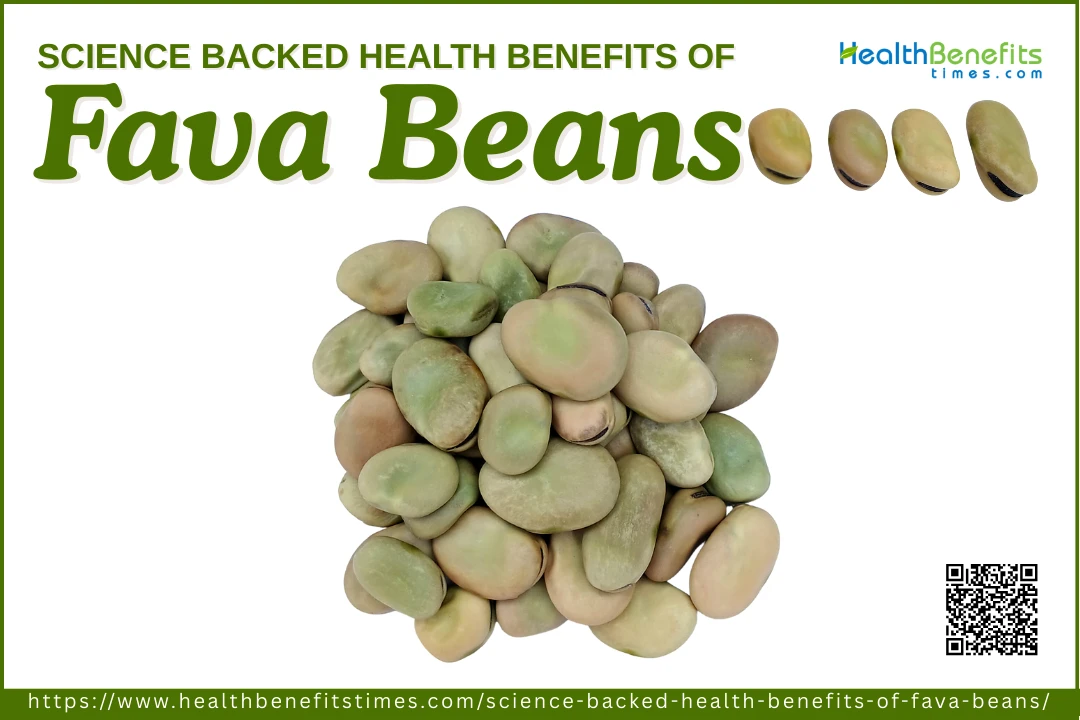
Appearance
Raw Fava Beans When raw, fava beans grow inside large, bright green, bumpy pods that can reach up to 12 inches in length. Inside the pod, the individual beans are encased in a thick, waxy, pale green skin. The beans themselves are flat, oval, and broad, with a vibrant green color that indicates freshness.
Dried Fava Beans
Once dried, the beans lose their vibrancy, turning a tan, light brown, or dull yellow color. They become hard and slightly shriveled. They are often sold split and skinned (without the outer shell), appearing as small, yellow, disk-like halves, or left whole with the brown skin intact, requiring soaking before cooking.
Nutritional Profile of Dried Fava Beans
Serving Size: 100g 2
| Nutrients | Amount | DV%* |
| Water | 71.5 g 3 | — |
| Energy | 110 kcal 4 | 5.5% |
| Carbohydrate, by difference | 19.6 g 5 | 7.1% |
| Protein | 7.6 g 6 | 15.2% |
| Fiber, total dietary | 5.4 g 7 | 19.3% |
| Total Sugars | 1.82 g 8 | — |
| Folate, total | 104 µg 9 | 26.0% |
| Potassium, K | 268 mg 10 | 5.7% |
| Phosphorus, P | 125 mg 11 | 10.0% |
| Magnesium, Mg | 43 mg 12 | 10.2% |
| Calcium, Ca | 36 mg 13 | 2.8% |
| Iron, Fe | 1.5 mg 14 | 8.3% |
| Zinc, Zn | 1.01 mg 15 | 9.2% |
| Total lipid (fat) | 0.4 g 16 | 0.5% |
| Niacin | 0.711 mg 17 | 4.4% |
| Manganese, Mn | 0.421 mg 18 | 18.3% |
Percent Daily Values (%DV) are based on a 2,000-calorie diet. Individual nutritional needs may vary depending on age, gender, activity level, and overall health.
Source: usda.gov
Science Backed Health Benefits of Fava Beans (Vicia fava)
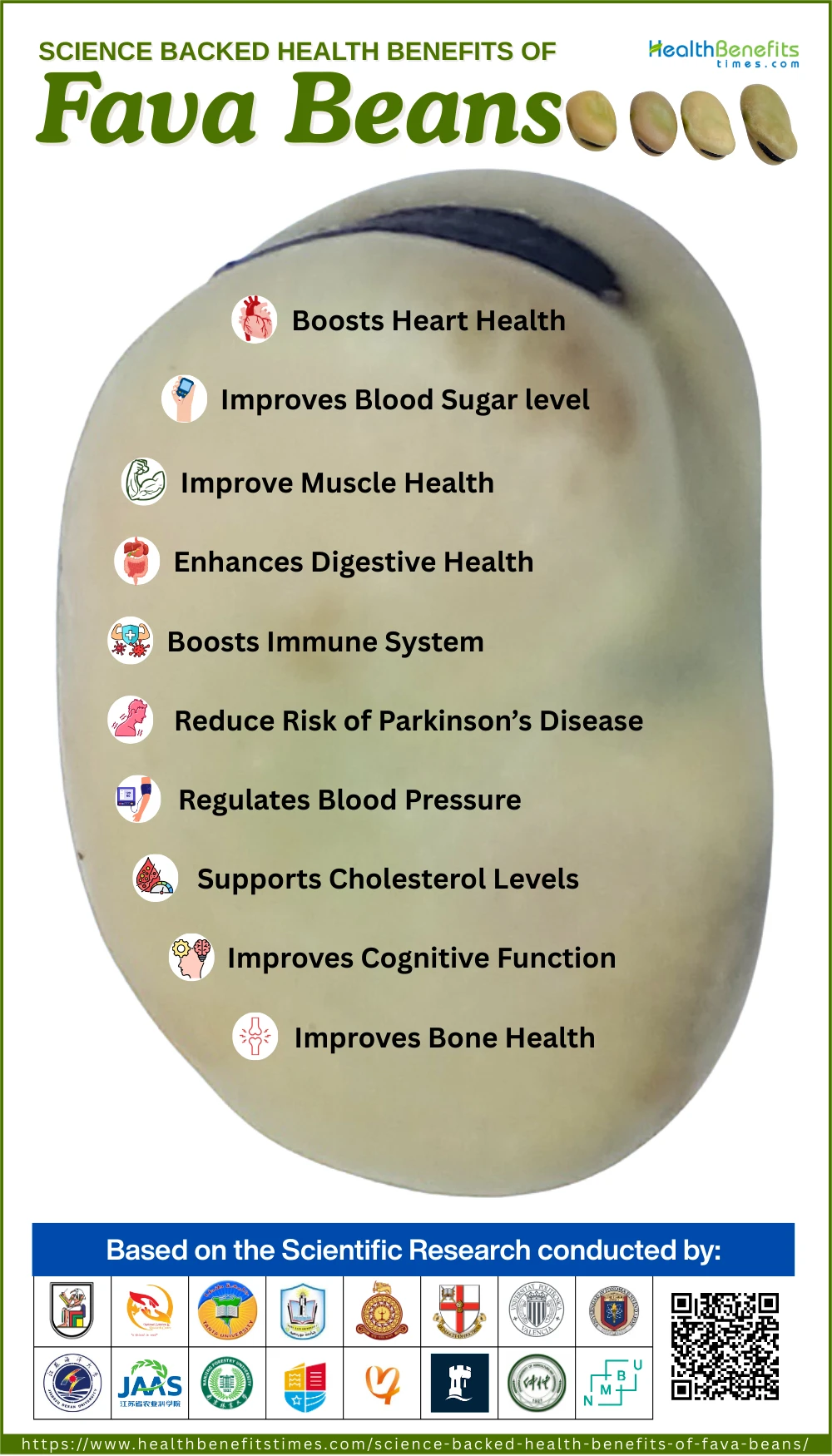
#1. Boosts Heart Health
Protein hydrolysates and peptides from fava beans can lower cholesterol by preventing it from being absorbed and made in the body. The fiber in fava beans also helps reduce cholesterol by binding to bile acids and removing them from the body. The amino acid L-DOPA found in fava beans can help control blood pressure by encouraging the production of nitric oxide, which relaxes and widens blood vessels. Phenolic compounds and saponins found in Fava Beans, have antioxidant and anti-inflammatory properties, offering protection against heart problems like hypertension and atherosclerosis. 1 Therefore eating fava beans can improve blood fat levels and help keep the heart in good condition.
What Research Says:
- Research shows that fava bean protein can help lower cholesterol by blocking HMG-CoA reductase, an enzyme responsible for making cholesterol in the body. Fava beans are traditionally used to treat high blood pressure and Parkinson’s disease, with research confirming their effectiveness in these areas. 1
#2. Improves Blood Sugar level
Flavonoids and L-DOPA in the beans block enzymes like α-amylase and α-glucosidase, which help to digest carbohydrates. This slowing of sugar absorption reduces blood sugar spikes after meals. 2 3 The dietary fiber in fava beans also controls how sugar is released into the bloodstream and helps improve insulin sensitivity. Eating fava beans regularly may help prevent or manage type 2 diabetes by protecting the pancreas and lowering insulin resistance.
What Research Says:
- A study on diabetic rats showed that fava bean sprout extracts helped lower blood sugar and improve fat levels in the blood, with results similar to the drug Glibenclamide. 2
- Another study found that methanol extracts from fava bean pods lowered HbA1c and fasting blood sugar, further proving its ability to lower glucose levels. 4
- Research on 29 types of Chinese fava beans found that L-DOPA, a key component, blocks enzymes that digest carbohydrates, linking the use of fava beans to diabetes-fighting effects. 3
#3. Improve Muscle Health
Bioactive peptides, which are small protein pieces that help repair muscles, reduce inflammation, and speed up recovery after exercise. 5 These peptides also regulate muscle protein synthesis and lower the activity of myostatin, a protein that stops muscle growth. This helps prevent muscle loss and conditions like sarcopenia. 6 When you eat fava beans, these compounds also help restore glycogen and reduce fatigue, which boosts muscle performance and endurance. 7
What Research Says:
- A study by Nuritas Ltd. showed that a special fava bean protein (PeptiStrong™) helped healthy men recover strength and reduce fatigue after strength training. It also lowered levels of myostatin, a protein that limits muscle growth. 5
- Research from the University of Limerick found that whole fava bean protein didn’t help increase muscle protein synthesis at rest or after exercise in young adults. This suggests that breaking the protein into smaller bioactive peptides may be more effective. 8
- A study by KGK Science showed that taking fava bean peptides with resistance training led to bigger improvements in leg strength and endurance after 56 days compared to just exercising alone. 6
- Another study published in The Journal of Nutrition found that a fava bean peptide supplement helped increase muscle protein synthesis during recovery after being immobilized, similar to how milk protein helps preserve muscle size. 7
#4. Enhances Digestive Health
Plant proteins, Fiber and beneficial compounds like flavonoids, alkaloids, and phenolic acids in Fava Beans, help reduce harmful substances such as tannins that can block nutrient absorption and promote the growth of good bacteria in the gut. 9 When fava beans are fermented or sprouted, the body can absorb more important nutrients, including amino acids, iron, and magnesium, which help digestion and may reduce the risk of gut inflammation and related metabolic issues. 10 Moreover, some compounds in fava beans, like L-DOPA and jasmonates, can interact with receptors in the body, helping to strengthen the gut’s defense system and manage digestive issues related to the immune system. 11
What Research Says:
- Research from Universitat Politécnica de València shows that fermenting fava beans with a mushroom called Pleurotus ostreatus lowers the tannin content by 18.5%, making the protein easier to digest and increasing the availability of important minerals in snack bars. 9
- A study on Nile tilapia found that sprouting fava beans reduced harmful substances by up to 64%, decreased gut inflammation, and improved the diversity of gut bacteria, showing that they can help prevent digestive problems in animals. 10
- In a study by Universidad Autónoma de Nuevo León, scientists discovered that certain compounds in fava beans, like wyerone acid and convicine, can interact with receptors in the body, supporting their use in treating immune and gut conditions through immune system pathways. 11
#5. Boosts Immune System
Fava beans contain proteins and bioactive compounds that may help boost the immune system. These compounds can change how genes related to immune functions work, especially in response to things like inflammation and infections. 12
What Research Says:
- A study by Hainan Medical College on mice found that eating fava beans caused changes in 769 different genes in the intestines, many of which are related to the immune system. 12
#6. Supports Weight Management
“Protein and fiber both help you feel full and stay full longer,” says a nutrition expert. These nutrients can help control your appetite and keep your metabolism in check. Fava beans also contain polyphenols, which are plant compounds that can improve fat levels in the body and lower unhealthy fats like triacylglycerols. This can help manage conditions like obesity and metabolic syndrome. Regularly eating fava beans can support a healthy weight by improving gut health and keeping energy levels stable.
What Research Says:
- A study on overweight rats showed that adding broad beans to their diet helped improve their body mass and fat levels. 13
- Research on mice eating a Western diet with fava bean protein showed they gained weight, but also experienced changes in gut bacteria, including fewer Proteobacteria. 14
- Trials with young rats suggested that fava bean protein is harder to digest, which could affect how the body uses energy and processes nitrogen. 15
#7. Regulates Blood Pressure
Dihydroxyphenylalanine (dopa) found in Fava Beans is a building block for dopamine, a compound that can help manage blood pressure by working with the kidneys. When you eat fava beans, dopa is converted into dopamine, which has properties that can help relax blood vessels and reduce excess sodium. This might help regulate blood pressure and fluid balance. So, fava beans could be helpful in managing conditions like high blood pressure. 16
What Research Says:
- A study from Vanderbilt University found that eating fava beans raised the levels of dopa in the blood and dopamine in the urine of healthy volunteers on a fixed-sodium diet. 16
#8. Improves Bone Health
Bioactive peptides and important minerals like calcium and phosphorus in Fava Beans, which help support your bones. These minerals play a key role in keeping bones strong. The peptides, especially when broken down (hydrolyzed), help regulate bone-related proteins such as osteocrin and oncostatin, which are involved in bone formation and maintenance. 17 Consuming these nutrients can improve bone mineral density, which is the measure of how much mineral is in your bones. Higher bone mineral density can help prevent bone loss, lowering the risk of conditions like osteoporosis and fractures. Fava beans also have anti-inflammatory properties that may support the health of your skin and underlying tissues, though more research is needed to confirm this. 18
What Research Says:
- A study by KGK Science showed that taking 2.4 grams of Vicia fava protein hydrolysate every day for 8 weeks helped adults increase their bone mineral content after doing resistance training. 17
- However, another study on chickens fed raw fava beans found that their tibia bones had lower mineral density and changes in bone structure. This suggests that unprocessed beans might hurt bone health because of certain substances that can interfere with nutrition. 18
#9. Improves Cognitive Function
Fava beans are packed with levodopa (L DOPA), Dihydroxyphenylalanine which helps produce dopamine, a chemical that supports motor control and brain functions like memory and mood. The beans also contain phytoestrogens, antioxidants, and anti-inflammatory compounds, which might protect the brain from damage and diseases. These nutrients can help manage conditions like Parkinson’s disease, which is linked to low dopamine levels, and may even slow cognitive decline that comes with aging or estrogen loss after menopause. Eating fava beans helps boost dopamine levels and reduce brain inflammation, but using fava bean oils on the skin hasn’t been studied for these effects yet.
What Research Says:
- Clinical studies show that eating fava beans can help people with Parkinson’s disease by extending their “on” periods and reducing unwanted movements. One study even found that the beans increased L DOPA levels in the blood, similar to the effects of carbidopa/levodopa treatment. 19
#10. Reduce Risk of Parkinson’s Disease
Levodopa (L-DOPA) Found in Fava Beans is important for producing dopamine, a brain chemical that is often low in people with Parkinson’s disease. 20 Fava beans also contain antioxidants and anti-inflammatory compounds such as 6-gingerol, phenolics, and flavonoids, which can protect brain cells from damage caused by oxidative stress and mitochondrial problems—both of which are involved in the progression of Parkinson’s disease. 21 These compounds may help stabilize the energy production in brain cells and assist in clearing damaged cells, potentially slowing down the brain degeneration seen in Parkinson’s. 22
What Research Says:
- Scientific studies show that fava bean extracts can help reduce brain cell damage related to Parkinson’s disease. Research from Jiangnan University found that an extract from broad beans helped reduce stress in cells, improved the health of the cell’s energy-producing parts, and activated a process that helps clear damaged cells in PC12 cells. 20
- Another study showed that the pods of broad beans have more L-DOPA than the seeds, and they protected brain cells in lab experiments, even at high concentrations. 21
- In clinical observations, Parkinson’s patients who ate cooked fava beans had longer periods of improved movement and fewer involuntary movements. 23
- The traditional use of Mucuna pruriens, a bean related to fava beans, in Ayurvedic medicine also supports the idea that L-DOPA from beans can help manage motor symptoms. 23
- Moreover, a study of broad bean sprouts found that compounds like caffeic acid and p-coumaric acid may protect the brain by reducing inflammation and acting as antioxidants. 22
#11. Supports Healthy Cholesterol Levels
Dietary fiber, protein, and phytosterols in fava beans reduce “bad” LDL cholesterol and triglycerides while increasing “good” HDL cholesterol. These nutrients block cholesterol absorption in your intestines and help your body get rid of excess lipids through feces. This can prevent problems like high cholesterol and heart diseases such as atherosclerosis. Fava beans also contain unsaturated fatty acids and antioxidant compounds that reduce inflammation and oxidative stress, helping protect your blood vessels. Studies suggest that regular consumption of fava beans may help improve overall heart health.
What Research Says:
- Studies show that fava bean seed dust can lower total cholesterol, LDL cholesterol (the “bad” cholesterol), and triglycerides in rats fed a high-fat diet. It also helps increase HDL cholesterol (the “good” cholesterol) and boosts antioxidant enzyme activity. 24
- Research from Raja Narendra Lal Khan Women’s College found that a mix of fava bean and sesame seed oil can lower harmful markers linked to heart disease and improve liver health, similar to the effects of statin drugs in animals. 25
- The China Agriculture Research System discovered that heated fava bean peptides can stop cholesterol from being absorbed and reduce the activity of HMG-CoA reductase, an enzyme that helps produce cholesterol. 26
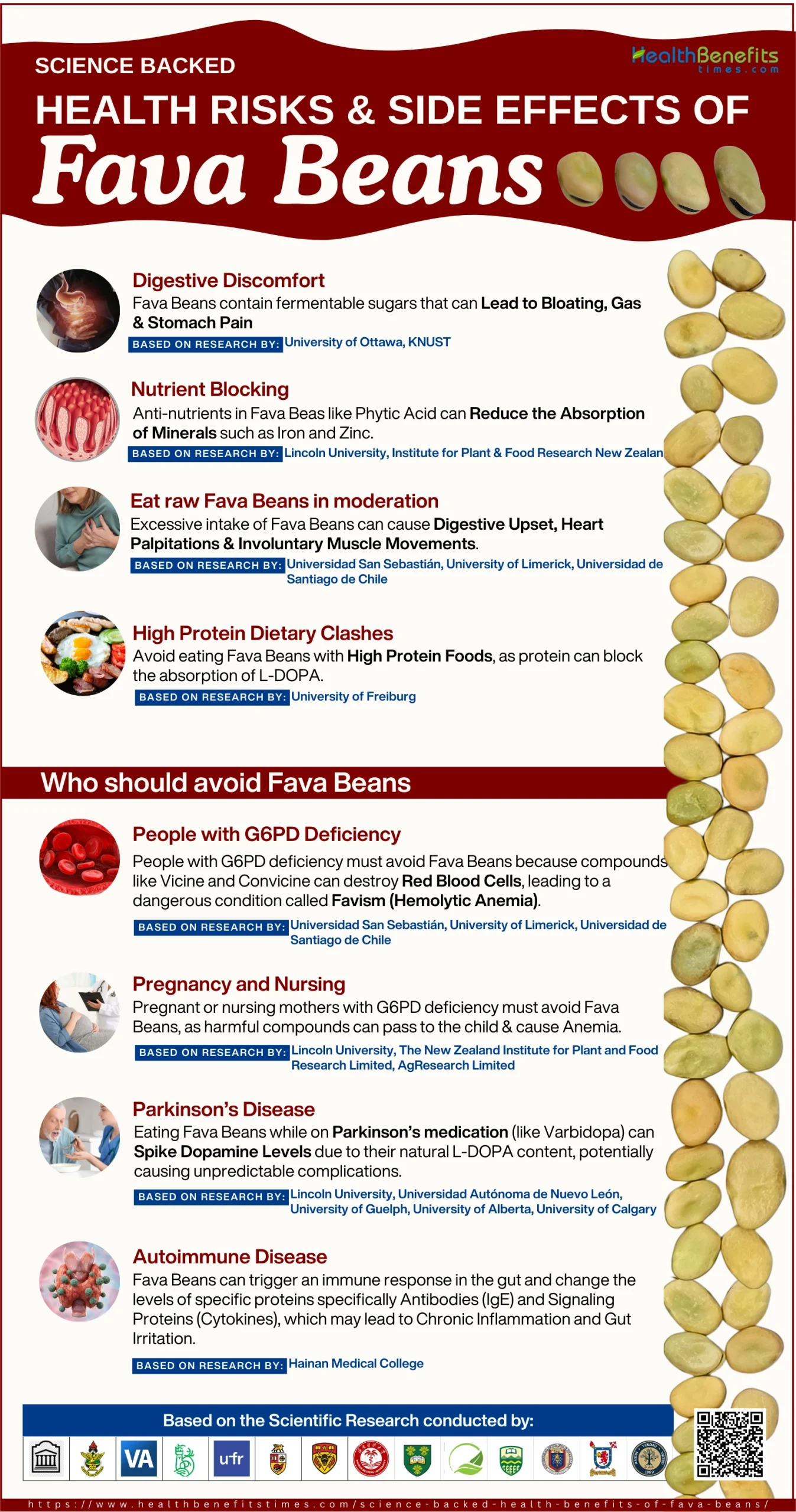
Science Backed Health Risks & Side Effects of Fava Beans
- Stomach Upset: Eating fava beans can cause digestive discomfort, including stomach pain, bloating, and gas. This happens because the beans contain sugars that ferment in the gut, which can be difficult for some people to digest. 27
- Nutrient Blocking: The beans contain “anti-nutrients” (like phytic acid) that can make it harder for the body to digest protein and absorb essential minerals like iron and zinc. 1
- Eat Moderate Quantity: Eating raw fava beans or consuming them in large quantities can lead to nausea, vomiting, diarrhea, anxiety, a racing heart (tachycardia), and involuntary muscle movements. 19 Therefore it is suggest to eat Fava Beans in moderate quantity only.
- Don’t eat with High Protein foods: Eating fava beans with high-protein meals (like yogurt) can prevent the body from absorbing the L-DOPA effectively, because protein gets absorbed first and blocks L-DOPA.. 28
Who Should Avoid:
- People with G6PD Deficiency should strictly avoid fava beans. 19 For individuals who lack the enzyme glucose-6-phosphate dehydrogenase (G6PD), eating fava beans is unsafe and contraindicated. The beans contain compounds (vicine and convicine) that destroy red blood cells, triggering a condition known as “favism” or hemolytic anemia. 1 19
- Pregnancy & Nursing: Pregnant women and nursing mothers with this deficiency should not eat fava beans, as the harmful compounds can be passed to the fetus or infant through breastmilk, causing severe anemia. 1
- Parkinson’s Disease: Fava beans naturally contain L-DOPA. If eaten while taking Parkinson’s medications (like carbidopa), it can significantly increase dopamine levels in the blood. 1 While this may reduce the need for medication in some patients, it can also cause variable responses or complications. 11
- Autoimmune Disease: Fava beans can trigger an immune response in the gut and change the levels of specific proteins specifically antibodies (IgE) and signaling proteins (Cytokines), which may lead to chronic inflammation or gut irritation. 12
Comments
comments
This article is based on Scientific Research Conducted by following Research Organization:
- Exploring faba beans (Vicia faba L.)–Lincoln University, Lincoln, New Zealand, AgResearch Limited, Lincoln, New Zealand, The New Zealand Institute for Plant and Food Research Limited, Christchurch, New Zealand
- Comparative Insights into Four Major Legume Sprouts Efficacies for Diabetes Management and Its Complications–Cairo University, Cairo, Egypt, National Research Centre, Dokki, Giza, Egypt, Tanta University, Tanta, Egypt, Technical University of Kaiserslautern, Kaiserslautern, Germany, Port Said University, Port Said, Egypt
- Phytochemical Profiling, Antioxidant Capacity, and α-Amylase/α-Glucosidase Inhibitory Effects of 29 Faba Bean (Vicia faba L.) Varieties from China–Jiangsu Ocean University, Lianyungang, China, Jiangsu Academy of Agricultural Sciences, Nanjing, China, Nanjing Forestry University, Nanjing, China, Jiangsu University, Zhenjiang, China
- Improved Strength Recovery and Reduced Fatigue with Suppressed Plasma Myostatin Following Supplementation of a Vicia faba Hydrolysate, in a Healthy Male Population–Nuritas Ltd., Dublin, Ireland, SSC Sports Medicine, Dublin, Ireland, Munster Technological University, Cork, Ireland
- Randomised, double-blind, placebo-controlled study to evaluate the effect on human strength and endurance after resistance training and supplementation of Vicia faba protein hydrolysate compared with placebo–University of Colombo, Colombo, Sri Lanka
- Vicia faba Peptide Network Supplementation Does Not Differ From Milk Protein in Modulating Changes in Muscle Size During Short-Term Immobilization and Subsequent Remobilization, but Increases Muscle Protein Synthesis Rates During Remobilization in Healthy Young Men–Maastricht University Medical Centre+, the Netherlands, Nuritas Ltd., Dublin, Ireland
- The Effect of Fava Bean (Vicia faba L.) Protein Ingestion on Myofibrillar Protein Synthesis at Rest and after Resistance Exercise in Healthy, Young Men and Women: A Randomised Control Trial–University of Chester, UK, University of Nottingham, UK
- Impact of Fava Bean (Vicia faba) Processing on Quality Characteristics and Digestibility of a Protein-Rich Snack–Universitat Politècnica de València, Valencia, Spain
- Effects of diet containing germinated faba bean (Vicia faba L.) on the intestinal health and gut microbial communities of Nile tilapia (Oreochromis niloticus)–Zhongkai University of Agriculture and Engineering, Guangzhou, China, Guangdong Youpei Supply Chain Management Co., Ltd, Zhongshan, Guangdong Province, China
- Phytochemicals From Vicia faba Beans as Ligands of the Aryl Hydrocarbon Receptor to Regulate Autoimmune Diseases–Universidad Autónoma de Nuevo León, Monterrey, Mexico
- Intestinal transcriptional profiling reveals fava bean-induced immune response in DBA/1 mice–Hainan Medical College, Haikou, China
- Intestinal effect of faba bean fractions in WD-fed mice treated with low dose of DSS–Norwegian University of Life Sciences, Ås, Norway
- An increase in renal dopamine does not stimulate natriuresis after fava bean ingestion–Vanderbilt University School of Medicine, Nashville, TN, USA
- Nutritional response of growing rats to faba beans (Vicia faba L., minor) and faba bean fractions–Rowett Research Institute, Aberdeen, Scotland, UK
- Randomised, double-blind, placebo-controlled study to evaluate the effect on human strength and endurance after resistance training and supplementation of Vicia faba protein hydrolysate compared with placebo–Nuritas Limited, Dublin, Ireland
- Gut-bone axis response to dietary replacement of soybean meal with raw low-tannin faba bean seeds in broiler chickens–University of Life Sciences in Lublin, Lublin, Poland, Maria Curie-Skłodowska University, Lublin, Poland, Siedlce University of Natural Sciences and Humanities, Siedlce, Poland, Medical University in Lublin, Lublin, Poland
- Estrogenic Plants: to Prevent Neurodegeneration and Memory Loss and Other Symptoms in Women After Menopause–Universidad San Sebastián, Concepción, Chile, Bay Pines VA Healthcare System, Bay Pines, FL, United States, University of Limerick, Limerick, Ireland, Universidad de Santiago de Chile, Santiago, Chile
- Protective Mechanism of Broad Bean Extract on Parkinson’s Disease Model Cells–Jiangnan University, Wuxi, China, Nanjing Forestry University, Nanjing, China, Jiangsu College of Tourism, Yangzhou, China, Qinghai University, Xining, China
- Vicia faba L. Pod Valves: A By-Product with High Potential as an Adjuvant in the Treatment of Parkinson’s Disease–University of Basilicata, Potenza, Italy, Institute of Biomolecular Chemistry (CNR), Pozzuoli, Italy, University of Salerno, Fisciano, Italy, University of Milan, Milan, Italy
- A Study and In Vitro Evaluation of the Bioactive Compounds of Broad Bean Sprouts for the Treatment of Parkinson’s Syndrome–Nanjing University of Chinese Medicine, Nanjing, China, Nanjing Core Tech Biomedical Co., Ltd., Nanjing, China
- Knowing Your Beans in Parkinson’s Disease: A Critical Assessment of Current Knowledge about Different Beans and Their Compounds in the Treatment of Parkinson’s Disease and in Animal Models–University of Freiburg, Freiburg, Germany
- Supplementation of seed dust of Vicia faba and sesame ameliorates high lipid diet-induced dyslipidemia in rats–Raja Narendra Lal Khan Women’s College, Midnapore, West Bengal, India, Jadavpur University, Kolkata, West Bengal, India
- Anti-hyperlipidemic effect of oils from Sesamum indicum L. and Vicia faba L. on male Wistar rats–Raja Narendra Lal Khan Women’s College, Midnapore, West Bengal, India
- Effect of thermal processing on cholesterol synthesis, solubilisation into micelles and antioxidant activities using peptides of Vigna angularis and Vicia faba–Chinese Academy of Agricultural Sciences (CAAS), Beijing, China
- The Effect of Processing on Bioactive Compounds and Nutritional Qualities of Pulses in Meeting the Sustainable Development Goal 2–University of Ottawa, Ottawa, ON, Canada, Kwame Nkrumah University of Science and Technology, Kumasi, Ghana
- Fava Beans–University of Guelph, Ontario, Canada, Alberta Health Services & University of Alberta, Edmonton, Canada
- A practical toxicity bioassay for vicine and convicine levels in faba bean (Vicia faba)–University of Calgary, Calgary, Canada, University of Saskatchewan, Saskatoon, Canada