

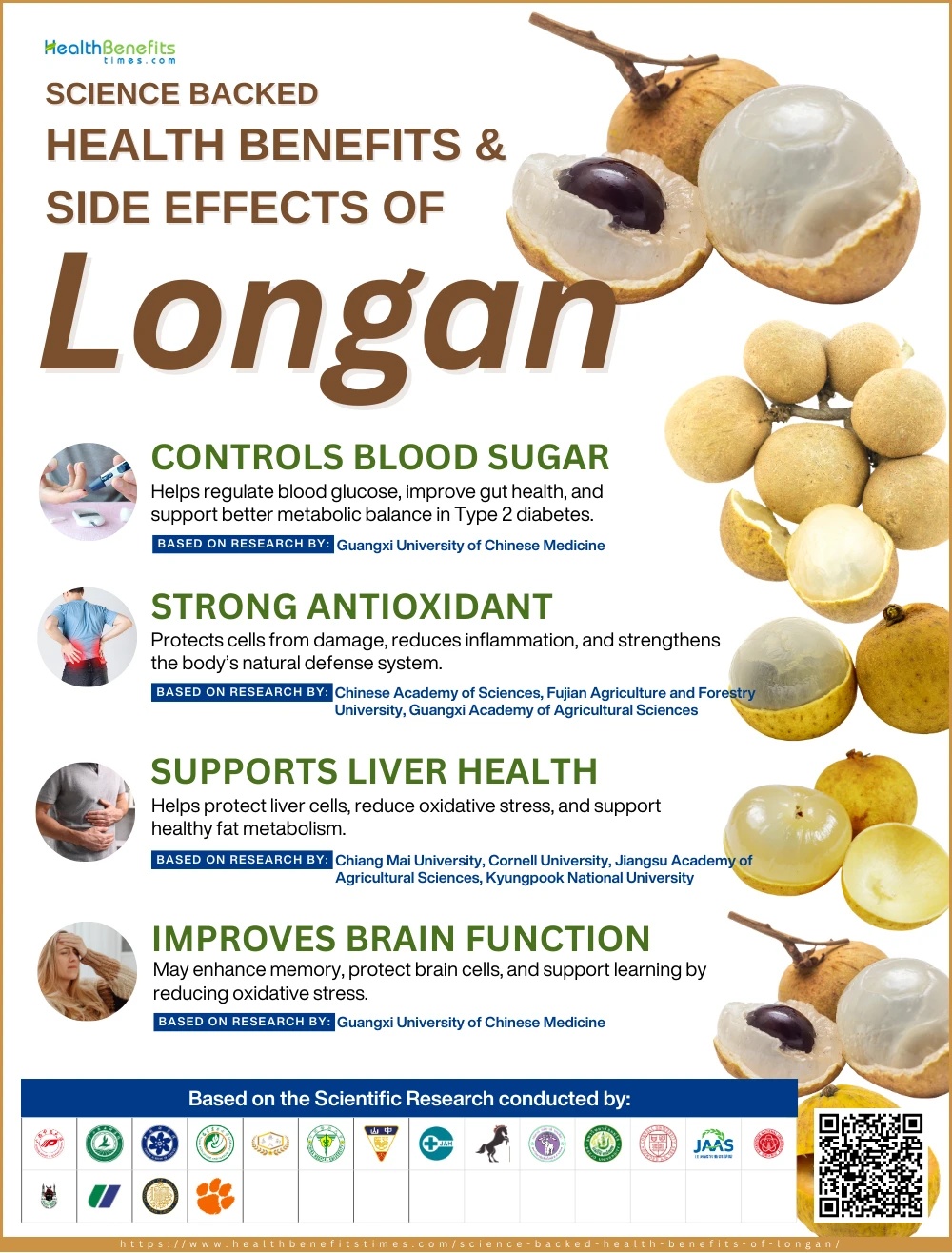
1. Control Blood Sugar
Longan leaves contain natural compounds that may be helpful for people with type 2 diabetes. These leaves work in several ways to support better health. First, they help lower high blood sugar levels when a person has not eaten. They also help prevent the unwanted weight loss that can happen when diabetes is not under control. Additionally, these leaves improve cholesterol levels by reducing harmful fats called triglycerides and LDL cholesterol while increasing protective HDL cholesterol. They also help calm inflammation in the body, which is linked to diabetes problems. 1 Research suggests that taking longan leaf extract could offer multiple benefits for metabolic health, not just blood sugar control.
What Research Says:
- Research published in PubMed and BioMed Research International explains how longan leaf extract may help in Type 2 Diabetes. A study using Proton Nuclear Magnetic Resonance showed that longan leaf extract helps fix problems in body metabolism by regulating important processes such as Amino Acid Metabolism and the Citric Acid Cycle. 1
- Another study used Liquid Chromatography–Mass Spectrometry and 16S rRNA Sequencing to study gut bacteria. The results showed that longan leaf extract improves gut health by increasing helpful bacteria such as Ligilactobacillus and reducing harmful bacteria like Desulfobacterota. 2
- These positive changes in gut bacteria help improve six different metabolic processes in the body. As a result, the body can better control blood glucose levels and improve glucose tolerance, which are important for managing Type 2 Diabetes. 2
2. Have Antioxidant and Anti-Inflammatory Effects
Free radicals are harmful molecules that can damage your cells and cause oxidative stress. This stress is linked to many long-term health issues, such as heart disease, arthritis, and diabetes. Longan fruit, as well as products made from its skin (pericarp) and seeds, is full of natural compounds that fight this damage. The main compounds include polyphenols, flavonoids, and alkaloids. These substances work as antioxidants to protect your cells. 3 4 In traditional Chinese medicine, longan has been used to calm pain and swelling. Modern science shows this works because longan can lower the body’s levels of pro-inflammatory molecules, such as tumor necrosis factor and nitric oxide. 5 6 Eating the fruit helps support your body’s own defense systems, including important antioxidant enzymes like superoxide dismutase and glutathione peroxidase. 5 You can also apply longan extracts to your skin. This may help reduce local inflammation and shield it from environmental stress, which could be good for conditions like eczema or signs of aging. 7 Specific nutrients found in longan, such as corilagin, gallic acid, and ellagic acid, are responsible for these anti-inflammatory and antioxidant effects. Other beneficial compounds include quercetin and kaempferol, which further help protect your cells from damage.
What Research Says:
- Scientists at China Medical University in Taiwan found that water extract from longan peel (pericarp) can reduce swelling in the paw by lowering harmful chemicals like nitric oxide and tumor necrosis factor-alpha, while also boosting protective enzymes such as catalase, superoxide dismutase, and glutathione peroxidase. 5
- Studies from Chiang Mai University in Thailand showed that longan treated with heat over time becomes more active biologically. The seed extract had the strongest antioxidant effects and blocked an enzyme called hyaluronidase, which may help with joint health and slow down skin aging. 7
- Research from the Guangxi Key Laboratory of Fruits and Vegetables Storage-Processing Technology found that alkaloid extracts from longan seeds are better at removing harmful free radicals than phenolic extracts. Both seed flavonoids and peel alkaloids also helped lower blood sugar by blocking alpha-glucosidase. 4
- Scientists from several Taiwanese institutions discovered that longan flower extract can lower inflammation markers like interleukin-6 and reactive oxygen species in immune cells. It also increased enzymes that make melatonin, which may help with sleep-related inflammation. 6
- A major review of longan chemicals confirmed that extracts from the peel and seeds have many health benefits, including reducing inflammation, supporting the immune system, and acting as antioxidants. This supports their traditional use for nerve pain, swelling, and heart health. 3
3. Beneficial for Liver Health
Longan fruit, also known as “Dragon’s Eye,” may help protect the liver. Its by-products contain natural bioactive compounds that fight oxidative stress and inflammation, which are common causes of liver problems. These nutrients may help manage liver fibrosis, hepatitis, and non-alcoholic fatty liver disease (NAFLD) by supporting healthy fat breakdown and natural detox processes. While the oil is not for skin use, eating longan-based foods allows these protective nutrients to enter the blood and support liver function naturally (301). 8
What Research Says:
- Recent studies have shown that by-products from longan fruit are rich in compounds that protect the liver. Research by Zubairu et al. found that these by-products have high amounts of polyphenols, such as corilagin, gallic acid, and ellagic acid. 8
- These compounds act as strong antioxidants, reduce inflammation, and support the immune system. They help protect liver cells from damage through different metabolic processes. 8
- The findings also support traditional knowledge, which has used longan for liver health for over 2,000 years. 8
- Additionally, these by-products help regulate fat metabolism and oxidative stress in the liver, which is important for preventing conditions like fatty liver disease (NAFLD) and hepatitis. However, more studies in humans are needed to confirm these benefits. 8
4. Helps in Cognitive and Memory Enhancement
It’s all about longan pulp polysaccharides, which are great for your brain. These natural compounds help protect your brain cells and boost your memory. In traditional Chinese medicine, people have used longan fruit for a long time to help with memory loss and sleep issues, often combining it with other herbs in recipes like Guipi Decoction. Studies show that these polysaccharides can block an enzyme that breaks down important brain chemicals, which makes it easier to learn and remember things. They also work as antioxidants to fight stress in the brain, which might prevent damage from strokes and lower the chance of brain diseases as you age. 9
What Research Says:
- Scientific studies show that LPs (longan polysaccharides) can help improve brain function. They work by slowing down acetylcholinesterase (AChE), an enzyme that breaks down important brain chemicals. This is helpful for conditions like Alzheimer’s disease. Special extraction methods, such as ultra-high pressure-assisted enzyme treatment, make these polysaccharides even more effective. 9
- Research by Bai and colleagues also found that LPs can improve memory and learning in animal tests. 9
- Other studies show that LPs protect the brain from damage. In models of brain injury caused by reduced blood flow, LPs lowered harmful substances like malondialdehyde (MDA) and increased protective antioxidants such as superoxide dismutase (SOD) and glutathione peroxidase (GSH-Px). 9
- This protection helps reduce further damage after stroke-like events. These effects on brain chemicals and oxidative stress support the traditional use of longan in Asian medicine to improve memory and reduce mental fatigue. 9
Side Effects
- The documents do not report any adverse effects from the consumption of Longan extracts in the conducted studies. In fact, cell viability tests on RAW 264.7 macrophage cells showed that ethanolic extracts from dried and black D. longan (aril, pericarp, seed) at a concentration of 1 μg/mL were non-cytotoxic, with cell viability exceeding 100%. 10 Similarly, the water extract of longan pericarp (WLP) showed no cell toxicity in RAW264.7 macrophages as measured by the MTT cell viability test. 11
Food Incompatibilities
N/A
Timing & Conditions
N/A
Contraindications
1. The documents do not list any specific medical conditions or diseases that make Longan consumption unsafe. On the contrary, they explore its potential therapeutic effects. For example, one study investigated the leaves of D. longan for the management of Type 2 Diabetes, and another examined its effect on metabolic pathways and gut microbiota in rats with type 2 diabetes mellitus. These are studies on potential benefits, not contraindications. 12
Drug Interactions
N/A
External Pesticides and Mold
1. Harvested longan fruit are susceptible to decay caused by both bacterial and fungal infections, with ochratoxin A (OTA) being a mycotoxin produced by a number of fungi that can contaminate fresh fruits and dried fruits. Fungal pathogens including Penicillium, Rhizopussp., Aspergillus sp., Alternaria sp., Lasiodiplodia theobromae, Pestalotiopsis sp., Cladosporium sp., Fusarium sp., Colletotrichum gloeosporioides, and Geotrichum candidum have all been identified in rotten longan fruit tissues, and damaged or pathogen-infected fruits could be easily contaminated with ochratoxin A, though analysis in this study showed that OTA was not present in the longan pulp. 13
Comments
comments
This article is based on Scientific Research Conducted by following Research Organization:
- Study on the Mechanism of the Leaves of Dimocarpus longan Lour. in the Management of Type 2 Diabetes based on Metabolomics–Guangxi University of Chinese Medicine, China
- Leaf Ethanol Extract of Dimocarpus longan Lour. Ameliorates Type 2 Diabetes Mellitus in Rats by Regulating Metabolic Pathways and Gut Microbiota–Guangxi University of Chinese Medicine, China.
- Pericarp and seed of litchi and longan fruits: constituent, extraction, bioactive activity, and potential utilization*–Chinese Academy of Sciences, China, Fujian Agriculture and Forestry University, China, Guangxi Academy of Agricultural Sciences, China
- Polyphenols and Alkaloids in Byproducts of Longan Fruits (Dimocarpus Longan Lour.) and Their Bioactivities–Guangxi Academy of Agricultural Sciences, China
- Antioxidant and Anti-Inflammatory Properties of Longan (Dimocarpus longan Lour.) Pericarp–Chia Nan University of Pharmacy and Science, Taiwan, China Medical University, Taiwan
- Longan Flower Ethanol Extract, Dimocarpus longan Lour, Mitigates Oxidative Damage and Inflammatory Responses While Promoting Sleep-Related Enzymes in Cell Models–Chung Shan Medical University, Taiwan, Jen-Ai Hospital, Taiwan, Percheron Bioceutical Research Center (Nutrarex Biotech Company), Taiwan
- Enhancement of phenolics content and biological activities of longan (Dimocarpus longan Lour.) treated with thermal and ageing process–Chiang Mai University, Thailand, Maejo University, Thailand
- Nutritional and Therapeutic Potential of Longan Fruit By-products for Liver Diseases: Pathway to Functional Foods–Chiang Mai University, Thailand, Cornell University, United States, Jiangsu Academy of Agricultural Sciences, China, Kyungpook National University, South Korea, Umm Al-Qura University, Saudi Arabia
- Extraction, purification, structural features and biological activities of longan fruit pulp (Longyan) polysaccharides: A review–Guangxi University of Chinese Medicine, China
- Hawthorn (Crataegus monogyna Jacq.): A Review of Therapeutic Potential and Applications–West Pomeranian University of Technology in Szczecin, Poland
- Anti-inflammatory effect of the water fraction from hawthorn fruit on LPS-stimulated RAW 264.7 cells
- Community Metabolic Interactions, Vitamin Production and Prebiotic Potential of Medicinal Herbs Used for Immunomodulation–University of California San Diego, United States.
- A Comparative Identification of Ochratoxin A in Longan Fruit Pulp by High Performance Liquid Chromatography-Fluorescence Detection and Electron Spray Ionization-Mass Spectrometry–Chinese Academy of Sciences, China, Clemson University, United States