

Based on the provided PDF, here are the top 16 nutritional values for dry-roasted, unsalted peanuts.
Serving Size: 1 oz (28.35 g) 1
| Nutrients | Amount | DV%* |
| Water | 0.513 g 2 | – |
| Energy | 166 kcal 3 | 8% |
| Protein | 6.92 g 4 | 14% |
| Total lipid (fat) | 14.1 g 5 | 18% |
| Carbohydrate | 6.04 g 6 | 2% |
| Fiber, total dietary | 2.38 g 7 | 9% |
| Total Sugars | 1.39 g 8 | – |
| Niacin (Vitamin B3) | 4.08 mg 9 | 26% |
| Manganese | 0.507 mg 10 | 22% |
| Copper | 0.121 mg 11 | 13% |
| Magnesium | 50.5 mg 12 | 12% |
| Vitamin E | 1.4 mg 13 | 9% |
| Phosphorus | 103 mg 14 | 8% |
| Folate, total | 27.5 µg 15 | 7% |
| Zinc | 0.785 mg 16 | 7% |
| Potassium | 180 mg 17 | 4% |
Source: usda.gov
*Percent Daily Values (%DV) are based on a 2,000-calorie diet. Individual nutritional needs may vary depending on age, gender, activity level, and overall health. (Note: DV% is estimated based on standard FDA values as the source document does not provide them).
Science Backed Health Benefits of Peanuts
#1. Supports Heart Health
Cardiovascular disease, the leading cause of global mortality, encompasses a range of disorders affecting the heart and vasculature which can often be managed through specific nutritional interventions. The intake of Arachis hypogaea provides a complex matrix of bioactive compounds, including monounsaturated fatty acids, arginine, phenolic compounds, and phytosterols, which function synergistically to enhance endothelial function and modulate lipid metabolism. 1 Mechanistically, these nutrients help attenuate oxidative stress and inflammation while facilitating nitric oxide release, a key factor in vascular health. 1 2 By optimizing lipid profiles—specifically by lowering triglycerides and improving cholesterol ratios—these components play a vital role in preventing the progression of atherosclerosis. 3 2 Consequently, this dietary inclusion offers significant protection against specific pathologies, particularly ischemic stroke, coronary heart disease, and general cardiovascular mortality. 4 5
What Research Says:
- Large-scale longitudinal data from the Japan Public Health Center-based Prospective Study revealed that higher consumption is significantly associated with a reduced risk of total stroke, particularly ischemic stroke, and overall cardiovascular disease in both men and women. 4
- According to extensive analyses of the Nurses’ Health Study and Health Professionals Follow-Up Study, frequent intake is inversely associated with the incidence of coronary heart disease and total cardiovascular disease, with specific observations indicating reduced all-cause mortality even among patients with diabetes mellitus. 6 5
- The ARISTOTLE randomized clinical trial and subsequent meta-analyses demonstrate that regular ingestion effectively lowers blood triglycerides and improves total cholesterol/HDL-cholesterol ratios in healthy adults without causing significant weight gain. 3 7 3
- Furthermore, systematic reviews and controlled animal studies indicate that components such as peanut oil and fat-free flour can retard the development of atherosclerosis and favorably modulate lipid profiles, including increasing HDL cholesterol. 8 2
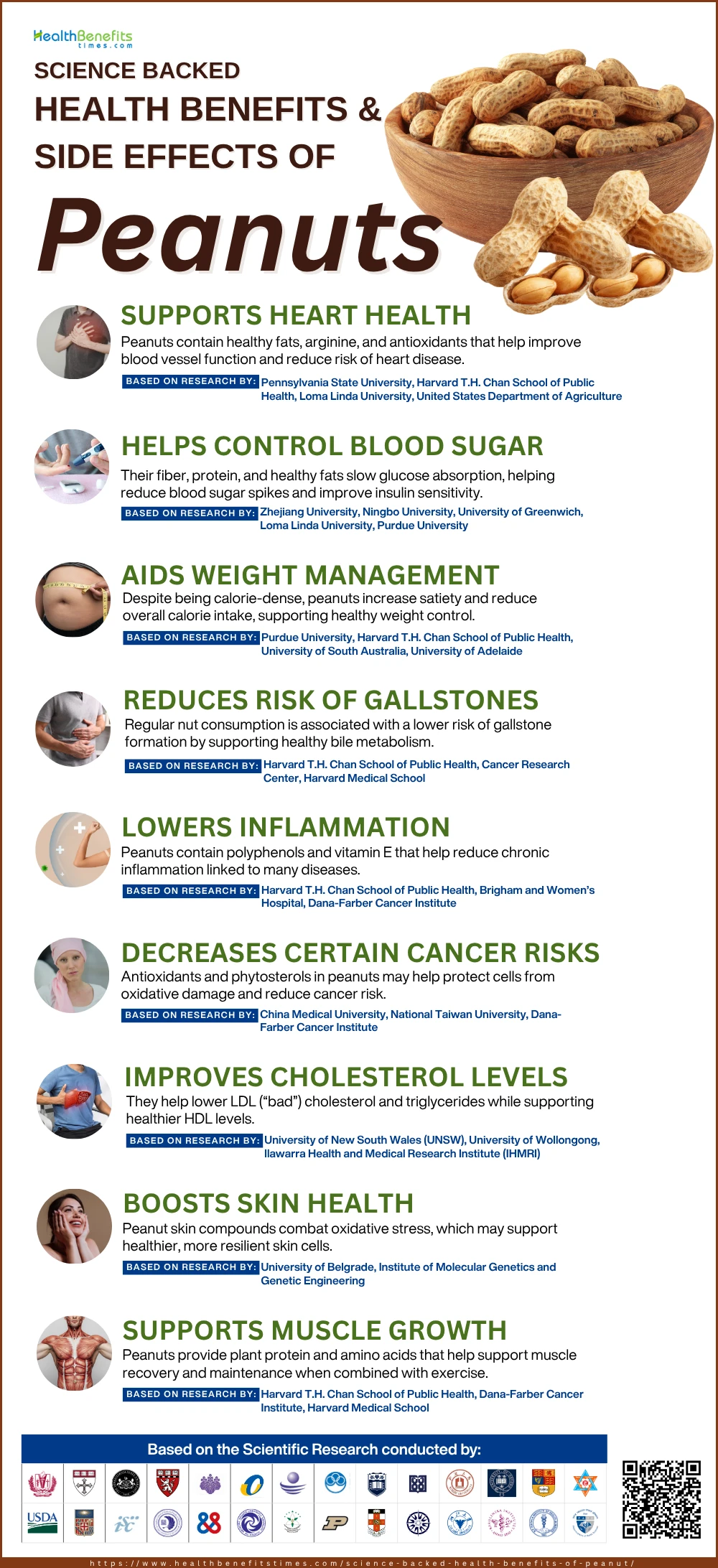
Diabetes Mellitus represents a chronic metabolic dysregulation characterized by persistent hyperglycemia, necessitating dietary strategies that modulate glucose absorption and sensitivity. Incorporating specific legumes into a daily regimen can significantly aid in the management of Type 2 Diabetes and prediabetes by leveraging a potent matrix of monounsaturated fatty acids (MUFA), fiber, arginine, and magnesium. 9 10 These nutrients function synergistically to attenuate glycemic responses; specifically, the high fat and fiber content delays gastric emptying, which slows the rate at which glucose enters the circulation, thereby reducing postprandial spikes. 11 3 Additionally, bioactive compounds such as resveratrol and phytosterols contribute to cellular health, while the specific fatty acid profile assists in modulating insulin signaling pathways. 10 Consequently, this improves insulin sensitivity and reduces the overall glycemic load, essential factors for maintaining normoglycemia and preventing the progression of metabolic syndrome. 12
What Research Says:
- A systematic review and meta-analysis of 40 randomized controlled trials determined that peanut consumption significantly decreases HOMA-IR and fasting insulin levels, suggesting a distinct improvement in insulin sensitivity even where fasting glucose remains unchanged. 12
- According to a study comparing groundnuts to tree nuts, peanuts were found to be as effective as almonds in reducing both fasting blood glucose (FBG) and postprandial glucose (PPG) when incorporated into a low-carbohydrate diet for Type 2 Diabetes patients. 9
- Research involving obese women demonstrated that peanut butter exerts a stronger effect than whole peanuts on moderating post-meal glucose and hormone responses, likely due to the greater bioaccessibility of lipids which enhances gut satiety hormone secretion. 11
- While a 6-month weight loss trial at the University of South Australia and a nighttime snacking study found that peanut interventions resulted in similar glucose outcomes to low-fat control diets, they noted significant improvements in nutrient intake and systolic blood pressure without compromising weight loss. 13 14
- Epidemiological data cited by the Peanut Institute suggests that frequent consumption is associated with a lower risk of developing Type 2 Diabetes, particularly when replacing refined grains or processed meats. 15
#3. Aids Weight Management
Physiological regulation of body mass is not merely a function of caloric restriction but involves complex metabolic interactions where satiety and nutrient absorption play pivotal roles. Despite their high energy density, the inclusion of peanuts in a diet does not necessarily impede weight loss; rather, their rich matrix of monounsaturated fatty acids (MUFA), protein, and fiber enhances satiety, leading to a spontaneous reduction in subsequent caloric intake known as dietary compensation. 16 17 Furthermore, the unique physical structure of these nuts limits the bio-accessibility of their lipid content, causing a significant portion of energy to be excreted rather than metabolized, which effectively mitigates the risk of positive energy balance usually associated with high-fat foods. 17 This specific nutrient profile not only aids in the reduction of total body fat and waist circumference but also targets metabolic dysfunctions, such as inflammation and oxidative stress, often observed in obesity. 18
What Research Says:
- Clinical trials conducted by researchers at the University of South Australia revealed that adults at high risk for type 2 diabetes who consumed 35g of peanuts before two main meals achieved weight loss comparable to those on a traditional low-fat diet, while simultaneously experiencing greater reductions in systolic blood pressure. 19 20
- According to a study involving women with obesity, the consumption of whole peanuts within an energy-restricted diet resulted in superior improvements in body composition, specifically lower BMI and total body fat, compared to skinned peanuts or a nut-free diet. 18
- Reviews of epidemiological data indicate an inverse association between frequent nut consumption and BMI, with mechanistic studies suggesting that the high satiety properties of peanuts generate compensatory responses that offset approximately 65-75% of their provided energy. 17
- Further evidence suggests that moderate-fat diets incorporating peanuts may enhance long-term compliance and diet quality more effectively than strict low-fat regimens, thereby supporting sustainable weight management and cardiovascular health. 16
#4. Reduces Risk of Gallstones
Gallstone disease represents a major source of morbidity in Western populations, often manifesting as newly diagnosed symptomatic cases requiring medical intervention. While the exact biological mechanisms remain a subject of investigation, nuts are known to be rich in several compounds that may offer protective benefits against this condition. These nutrients appear to exert their positive effects systemically through dietary intake rather than external application, as the protective association persists even after adjusting for various types of fat consumption, including saturated and monounsaturated fats. Consequently, the regular ingestion of these nutrient-dense foods is linked to a significant reduction in disease risk, suggesting that the complex matrix of bioactive components found in nuts plays a crucial role in maintaining gallbladder health 21
What Research Says:
- Study Overview: According to a comprehensive investigation involving the Health Professionals Follow-up Study, researchers monitored 457,305 person-years of follow-up to assess the impact of nut consumption on health outcomes 21
- Key Findings: Data indicates that men who consumed five or more units of nuts per week demonstrated a significantly lower risk of developing gallstone disease compared to those who rarely ate them 21
- Statistical Evidence: The relative risk was calculated at 0.70 for frequent consumers, a finding that remained statistically significant even when peanuts were analyzed separately from other nut types 21
- Methodology: This large-scale cohort assessment utilized a 131-item semiquantitative food frequency questionnaire starting in 1986 to track dietary habits and subsequent disease diagnosis. 21
#5. Lowers Inflammation
Chronic, low-grade inflammation acts as a silent catalyst for the pathophysiology of numerous non-communicable conditions, including cardiovascular disease, atherosclerosis, and type 2 diabetes. 22 23 Mitigating this systemic stress requires bioactive compounds capable of interrupting specific molecular pathways, such as NF-κB and COX-2, which drive the release of pro-inflammatory cytokines. 23 24 Legumes rich in polyphenols—specifically procyanidins, catechins, resveratrol, and m-coumaric acid—serve as potent inhibitors of these inflammatory cascades. 24 25 When ingested, these phytochemicals, working in concert with monounsaturated fatty acids (MUFAs), fiber, and Vitamin E, actively scavenge free radicals and suppress downstream markers like prostaglandin E2 and nitric oxide. 22 24 Furthermore, these nutrients help restore mitochondrial function and regulate lipid metabolism, thereby shielding cells from the oxidative damage that accelerates aging and metabolic dysfunction. 26 27
What Research Says:
- Large-scale epidemiological data from the Nurses’ Health Study and Health Professionals Follow-Up Study indicate that frequent consumption is inversely associated with circulating concentrations of C-reactive protein (CRP) and Interleukin-6 (IL-6), key biomarkers of systemic inflammation. 22 28
- In the ARISTOTLE randomized clinical trial, researchers at the University of Barcelona observed that daily intake of skin-roasted varieties prevented the shortening of telomeres in healthy young adults, a protective effect attributed to reduced oxidative stress and inflammation. 25
- Laboratory investigations by North Carolina State University demonstrated that extracts derived from the skins significantly inhibit COX-2 protein expression and reduce nitrous oxide levels in cellular models, exhibiting activity comparable to proven anti-inflammatory agents. 24
- Further animal studies reveal that specific shell and skin extracts ameliorate high-fat diet-induced atherosclerosis by lowering tumor necrosis factor-alpha (TNF-α) and beneficially modulating gut microbiota, specifically increasing the abundance of Akkermansia. 26 27
#6. Decreases Certain Cancer Risks
Cancer, characterized by uncontrolled cellular proliferation and genomic instability, can be biochemically countered by specific bioactive compounds found in certain legumes. These nutrient-dense foods are rich in phytosterols like beta-sitosterol, resveratrol, phytic acid, and vitamin E, which exert potent antioxidant and anti-inflammatory effects that protect cellular DNA from oxidative damage and inhibit tumor growth. 29 30 Dietary fiber and polyphenols further aid by modifying the intestinal environment to reduce carcinogen exposure and inducing apoptosis, or programmed cell death, in malignant cells. 31 32 Through these systemic pathways, the regular ingestion of these nutrients is linked to a lowered susceptibility to various malignancies, including colorectal, esophageal, gastric noncardia, pancreatic, and breast cancers. 31 33 34 These chemopreventive agents essentially function by suppressing inflammation and blocking the activation of pro-carcinogens, thereby offering a dietary defense against oncogenesis. 32
What Research Says:
- According to the large-scale NIH-AARP Diet and Health Study, peanut butter consumption is inversely associated with the risk of gastric noncardia adenocarcinoma and esophageal squamous cell carcinoma. 31
- Research involving the Yanting Cancer Hospital indicates that frequent consumption significantly lowers the risk of developing esophageal squamous cell carcinoma by up to 70%, particularly in high-risk populations. 30
- A comprehensive meta-analysis demonstrates that a mere 5g daily increment in intake correlates with reduced cancer mortality and lower incidence of colon and pancreatic cancers. 32 33
- A prospective analysis of a community-based cohort in Taiwan observed a distinct anti-proliferative effect, reporting a significant reduction in colorectal cancer risk specifically among women with high intake. 29
- Clinical observations further suggest that high consumption frequency may decrease breast cancer susceptibility by two to three times compared to null consumption. 34
#7. Improves Cholesterol Levels
Cholesterol is a lipid molecule integral to cellular structure, yet its dysregulation stands as a primary risk factor for the development of atherosclerosis and cardiovascular disease. 35 Managing this balance often requires nutritional strategies that target lipid metabolism through specific bioactive pathways. Nutrient-dense legumes rich in monounsaturated fatty acids (MUFA), plant proteins like arginine, and varying degrees of fiber and phytosterols actively modulate lipid profiles by altering hepatic absorption and synthesis. 36 These phytochemicals and nutrients function synergistically to lower serum triglycerides and atherogenic low-density lipoprotein (LDL) concentrations while mitigating oxidative stress markers that contribute to arterial plaque formation. 3 Clinical evidence suggests that the consumption of these nutrient matrices helps prevent conditions such as coronary heart disease and hyperlipidemia by improving endothelial function and maintaining favorable high-density lipoprotein (HDL) levels. 37
What Research Says:
- Clinical Trials and Meta-Analyses: A comprehensive systematic review and meta-analysis of 139 randomized controlled trials revealed that regular consumption significantly lowers total cholesterol, LDL cholesterol, triglycerides, and Apolipoprotein B, creating an overall reduction in cardiovascular disease risk. 35
- Impact of Processing: Research involving participants from Ghana, Brazil, and the United States indicates that the form of consumption—whether raw, roasted, salted, or ground into butter—does not compromise the lipid-lowering benefits, with hyperlipidemic individuals experiencing the most significant reductions in total and LDL cholesterol. 36
- Intervention in Healthy Populations: The ARISTOTLE study conducted by the University of Barcelona found that daily intake reduced triglyceride levels and improved total cholesterol/HDL ratios in healthy young adults, suggesting preventative benefits even in those without existing metabolic syndrome. 3
- Regional Studies: An intervention involving healthy Ghanaian adults demonstrated that regular inclusion of peanuts in the diet led to significant decreases in both total cholesterol (7.2%) and triacylglycerol (20.0%) concentrations. 38
- Animal Models and Oxidative Stress: Experimental studies on hyperlipidemic rats showed that dietary inclusion improved blood glutathione levels and high-density lipoprotein (HDL-C) while decreasing thiobarbituric acid reactive substances (TBARS), indicating a reduction in oxidative stress alongside lipid improvements. 37
#8. Boosts Skin Health
Cellular senescence and oxidative stress are fundamental drivers of tissue degradation, often manifesting clinically as inflammation, ulcers, or age-related decline. Bioactive compounds like Procyanidin A1, extracted from the red cuticle of Arachis hypogaea, provide a robust defense mechanism against these pathologies. While traditional practices have utilized these extracts to treat hemorrhagic disorders, ulcers, and inflammation, modern understanding reveals their role in modulating the PI3K/Akt pathway. By reducing reactive oxygen species (ROS) and inducing autophagy—the body’s internal recycling system—these nutrients restore cellular proliferation and integrity. Consequently, the specific phytochemicals found in the skin of this legume target underlying biological decay, offering a therapeutic strategy against oxidative damage and tissue senescence. 39
What Research Says:
- According to research conducted by the College of Pharmaceutical Sciences at Zhejiang University, the isolation of Procyanidin A1 (PC A1) from peanut skin demonstrates significant potential in extending replicative lifespans in yeast models and chronological lifespans in mammalian cells. 39
- Scientific analysis reveals that PC A1 effectively alleviates cellular senescence in PC12 and NIH/3T3 lines by suppressing senescence-associated secretory phenotype (SASP) factors and lowering oxidative stress markers like malondialdehyde (MDA). 39
- Further evidence from Western blot analysis indicates that this compound induces autophagy through the downregulation of phosphorylated mTOR, while simultaneously enhancing the activity of the antioxidant enzyme SOD2 to protect against cytotoxicity. 39
#9. Supports Muscle Growth and Repair
Sarcopenia, the progressive and age-related decline in skeletal muscle integrity, represents a significant metabolic challenge that predisposes individuals to frailty and functional loss. 40 41 42 To counteract this catabolic drift, the musculoskeletal system requires a robust supply of essential amino acids (EAAs) to stimulate myofibrillar protein synthesis, the primary biological driver of tissue repair and hypertrophy. 43 44 While deficient in methionine and threonine, defatted peanut powder provides a substantial quantity of arginine and leucine, key modulators in the anabolic pathway that facilitate the repair of exercise-induced micro-tears. 40 43 By delivering a high-quality plant-based protein digestibility-corrected amino acid score (PDCAAS), these phytochemicals and nutrients help sustain positive nitrogen balance, thereby acting as a preventative nutritional strategy against muscle wasting diseases when integrated with physical activity. 45 41
What Research Says:
- Investigations conducted by the School of Kinesiology at Auburn University reveal that in older, untrained adults, daily peanut protein supplementation combined with resistance training (RT) significantly enhanced vastus lateralis muscle thickness and knee flexion strength compared to training without supplementation. 45 40 41
- Conversely, parallel research on younger adults indicates that while this supplementation strategy effectively raised daily protein intake, it did not statistically amplify muscle mass or strength gains beyond training alone, although positive trends in lean tissue mass were observed in females. 43 44
- According to a network meta-analysis from Taipei Medical University comparing various protein sources, while whey protein often ranks highest for efficacy, peanut protein combined with RT is confirmed to yield favorable therapeutic effects on muscle mass accretion compared to regular care alone. 42
Health Risks and Precautions of Peanut
Side Effects
1. In individuals at high cardiometabolic risk (including those with metabolic syndrome, overweight/obesity, type 2 diabetes, or hypercholesterolemia), peanut consumption was associated with a slight but significant increase in body weight (mean difference: 0.97 kg; 95% CI: 0.54 to 1.41; p < 0.0001), with a dose‑response effect of approximately 0.033 kg per g/day (p = 0.049); however, no significant changes in body fat percentage or body mass index were observed in this subgroup, and healthy consumers showed no weight gain. 3
2. The only explicitly documented adverse effect related to peanut consumption is allergy or intolerance. Individuals with a known peanut allergy or intolerance are advised against peanut consumption, as it may trigger adverse reactions. 25
3. Peanut consumption may be associated with an increased risk of hepatocellular carcinoma when peanuts are contaminated with aflatoxin, a mycotoxin produced by Aspergillus flavusand Aspergillus parasiticusthat develops under improper, humid storage conditions. 32 30 Additionally, the beneficial effects of peanuts can be reduced by the addition of partially hydrogenated vegetable fats (containing trans fats) to peanut butter, and additives such as sugar or salt in peanut butter may diminish the beneficial effects of plain peanuts. 31 Although not statistically significant, one large prospective study observed a nonsignificant positive association between peanut butter consumption and the risk of esophageal adenocarcinoma, which may be partly attributable to residual confounding by BMI, as peanut butter consumers had a slightly higher BMI than non-consumers. 32
4. The included studies document several potential adverse effects associated with peanut consumption. A meta-analysis of randomized controlled trials found that individuals at high cardiometabolic risk experienced a significant increase in body weight following peanut interventions (mean difference: 0.97 kg; 95% CI: 0.54 to 1.41; p < 0.0001), although no significant changes were observed in body fat or body mass index. Additionally, dose-response analyses indicated that body weight increased slightly with higher doses of peanuts. 33
A separate comprehensive systematic review noted that under improper storage conditions, aflatoxin—a mycotoxin with carcinogenic properties produced by Aspergillus flavus and Aspergillus parasiticus—may accumulate in peanuts, potentially reducing their beneficial effects and posing health risks. The same review highlighted that in some food cultures, salt is used in peanut processing, and high salt consumption is associated with increased risk of gastric and colorectal cancers and all-cause mortality. Furthermore, peanut butter often contains additives such as partially hydrogenated vegetable fats (containing trans fats) and added sugar or salt, which may diminish the protective effects of plain peanuts. 3
Peanut allergy and intolerance are explicitly cited as exclusion criteria in clinical trials, confirming that allergic reactions are a known adverse effect. 33 Another review reinforces that caution regarding the allergic potential of peanuts is warranted. 3
5. No significant adverse effects were reported in human trials evaluating peanut consumption. One study noted that raw unsalted peanuts were rated as the least palatable form compared to roasted or honey-roasted varieties and peanut butter, though this did not constitute a health risk. A meta-analysis of clinical trials observed that individuals at high cardiometabolic risk experienced a small but significant increase in body weight following peanut interventions (mean difference: 0.97 kg; 95% CI: 0.54 to 1.41; p < 0.0001), and dose-response analysis indicated a slight weight increase with higher peanut doses. In an animal study, peanut consumption altered tissue factor activity in rats, with effects varying by tissue type and health status; however, the mechanism and clinical relevance remain undetermined 3
6. Consumption of peanuts is associated with two primary categories of adverse effects: aflatoxin toxicity and allergic reactions. Aflatoxins, particularly Aflatoxin B1 (AFB1), are secondary toxic metabolites produced by Aspergillusfungi and are classified as class 1 human carcinogens; AFB1 is the most potent liver carcinogen among the aflatoxins. Chronic dietary exposure to aflatoxins has been linked to immunotoxic effects, which may accelerate the progression of HIV to AIDS, and has been epidemiologically associated with the development of kwashiorkor, a severe form of protein-energy malnutrition, in children. 46 Peanut allergy affects approximately 2% of children and commonly persists into adulthood; reactions range from mild, transient symptoms such as oral pruritus and urticaria to severe, life-threatening anaphylaxis. 46 47 48 Seventeen peanut allergens (Ara h 1–17) have been identified, with Ara h 1 and Ara h 3 being the most abundant and responsible for sensitization in about 75% and 60% of peanut-allergic patients, respectively. 48 Fatal anaphylactic reactions due to peanut ingestion have been documented. 49
7. Peanut allergy is an IgE-mediated type I hypersensitivity reaction that can provoke a range of clinical symptoms, primarily cutaneous (94%), respiratory (42%), and gastrointestinal (33%). Reactions typically occur within minutes of exposure; 95% of patients react within 20 minutes, with a median onset as late as 55 minutes following oral challenge. Symptoms can include isolated hives, angioedema, wheezing, vomiting, and in severe cases, anaphylaxis—a sudden, potentially deadly reaction requiring immediate treatment. 50 Peanut allergy is the most common cause of fatal food-related anaphylaxis and accounts for the majority of severe food-allergic reactions. 50 51 Approximately one-third of patients experience anaphylaxis to accidental consumption, and biphasic responses occur in 20–30% of food-induced anaphylactic events, with symptom recurrence 1–8 hours after initial resolution (115). Even trace amounts can trigger reactions; objective signs have been documented at 2 mg of peanut protein, and subjective symptoms at doses as low as 100 μg. {% %} In highly sensitized individuals, the median estimated eliciting dose in real-life accidental exposures is 125 mg of peanut protein. 50 Peanut allergy generally persists; less than 20% of children outgrow it, and those with low initial specific IgE or isolated cutaneous symptoms are more likely to achieve tolerance. 50 51
Food Incompatibilities
1. In clinical dietary interventions, specific foods were restricted from being consumed alongside peanuts due to their similar nutritional composition or high resveratrol content. These incompatible or restricted foods include other nuts (pistachios, walnuts, almonds, hazelnuts), as well as wine, grapes, dark chocolate (>70% cocoa), and berries. 25
2. Approximately 30% of peanut-allergic patients also exhibit clinical reactivity to tree nuts, including cashew (30%), walnut and pistachio (28%), hazelnut (22%), and pecan (20%). 50 No evidence was found in the provided documents regarding general food incompatibilities for individuals without peanut allergy, nor specific foods that should be avoided concurrently with peanut in the general population.
Timing & Conditions
1. Peanut consumption should be avoided under certain lifestyle and health conditions. Specifically, peanuts are not recommended for individuals who are active smokers, those with high alcohol consumption, or individuals engaging in other toxic habits. Additionally, consumption is contraindicated for individuals with a body mass index (BMI) over 25 kg/m². 25
Contraindications
1. Peanut allergy or intolerance is explicitly listed as an exclusion criterion in clinical trials, indicating that individuals with these conditions should not consume peanuts. 3 No other medical conditions are identified as contraindications in the supplied sources.
2. Individuals with a known food allergy or intolerance to peanuts should avoid consumption, as this is a specified exclusion criterion in clinical trials to prevent adverse reactions. 3 20
3. Specific medical conditions that make peanut consumption unsafe include diagnosed chronic diseases such as cardiovascular diseases, cancer, and diabetes. Peanut allergy or intolerance is also a definitive contraindication. 25
4. The documents do not specify medical conditions that make peanut consumption universally unsafe; however, aflatoxin-contaminated peanuts are specifically contraindicated for liver health due to a 3.0-fold increased risk of hepatocellular carcinoma observed in association with contaminated products. A family history of esophageal cancer (EC) was identified as a strong risk factor for developing esophageal squamous cell carcinoma (ESCC), but peanut consumption was not contraindicated in this group; rather, the protective association of peanut intake was significant among individuals without a family history of EC. 30
5. Peanut consumption is contraindicated in individuals with peanut allergy or intolerance, as these conditions were consistently listed as exclusion criteria in clinical trials. 36 3 Additionally, individuals with chronic diseases including cardiovascular disease, cancer, and diabetes were excluded from some peanut intervention studies. 36 Individuals prescribed medications for chronic conditions (apart from birth control) were also excluded from participation. 3
6. A known peanut allergy is an explicit contraindication for peanut protein consumption. Multiple studies examining peanut protein supplementation excluded individuals with a known peanut allergy from participation. 45 40 41 43 44 This exclusion criterion was consistently applied across all study protocols involving peanut protein powder supplementation in both younger and older adult populations.
7. Peanut allergy is an absolute contraindication to peanut consumption. 49 46 Strict dietary avoidance of peanut-containing products is the primary preventive measure for affected individuals; products bearing precautionary allergen labelling (PAL) such as “may contain traces of peanuts” have been demonstrated to contain clinically relevant amounts of Ara h 1 and Ara h 3 that exceed the eliciting dose (ED05) for 5% of the allergic population, prompting physicians to advise complete avoidance of such products. 47 Additionally, individuals with compromised immunity, such as those living with HIV, and malnourished children may be at increased risk from aflatoxin-contaminated peanuts, although peanut allergy itself remains the principal contraindication. 48 49
8. Peanut consumption is unsafe for individuals with confirmed peanut allergy, particularly those with concomitant asthma, which is a risk factor for poor outcomes and severe anaphylaxis. 50 Atopic eczema (atopic dermatitis) in infancy is strongly associated with a high risk of developing peanut allergy, and disturbances in cutaneous barrier function—such as filaggrin deficiency—may promote peanut sensitization. 51 Infants deemed at risk for atopy (both parents, or one parent and a sibling with atopic features) may benefit from maternal dietary avoidance of peanuts during breastfeeding, although prospective studies report conflicting results. 50 The documents do not address contraindications for pistachio consumption specifically; the query appears to contain a typographical error referencing “pistachio” instead of peanut.
Drug Interactions
1. No evidence of specific drug interactions with peanut consumption was identified in the provided documents. Epinephrine and antihistamines (e.g., diphenhydramine, hydroxyzine) are discussed as treatments for allergic reactions, not as contraindicated combinations. 51
External Pesticides and Mold
1. Aflatoxin contamination, resulting from mold growth under improper or humid storage conditions, is a documented carcinogenic risk associated with peanuts, pistachios, almonds, and walnuts. 30 This contamination has been detected in 23–80% of Chinese peanuts or peanut products and has been linked to a 3.0-fold increased risk of hepatocellular carcinoma, with one study in Henan, China, reporting a 13.6-fold increased risk. It is recommended that appropriate storage and consumption of non-contaminated peanuts be promoted to mitigate these risks. 32
2. Peanuts are highly susceptible to contamination by aflatoxins, toxic metabolites produced by Aspergillusspecies, during both preharvest and postharvest stages, including drying and storage (111). Surveys conducted in informal markets have found that 60% of raw peanut samples and 100% of peanut butter samples were contaminated with total aflatoxins, with levels ranging from <0.75 µg/kg to 426.4 µg/kg in raw peanuts and 4.7 µg/kg to 435.0 µg/kg in peanut butter; Aflatoxin B1 was the most prevalent analogue (111). The use of low-grade, insect-infested, shrivelled, or discoloured peanuts by backyard manufacturers contributes to the high contamination levels in peanut butter. 46 The documents do not address pesticide residues or recommend purchasing organic peanuts or certification labels.
Comments
comments
This article is based on Scientific Research Conducted by following Research Organization:
- The role of tree nuts and peanuts in the prevention of coronary heart disease: multiple potential mechanisms–Pennsylvania State University, USA, Harvard T.H. Chan School of Public Health, USA, Loma Linda University, USA
- Peanuts, peanut oil, and fat free peanut flour reduced cardiovascular disease risk factors and the development of atherosclerosis in Syrian golden hamsters–United States Department of Agriculture, USA
- Effect of Peanut Consumption on Cardiovascular Risk Factors: A Randomized Clinical Trial and Meta-Analysis–University of Barcelona, Spain, Carlos III Health Institute (ISCIII), Spain, Harvard T.H. Chan School of Public Health, USA, Harvard Medical School, USA
- Peanut Consumption and Risk of Stroke and Ischemic Heart Disease in Japanese Men and Women: The JPHC Study–Osaka University Graduate School of Medicine, Japan, University of Tsukuba, Japan, National Cerebral and Cardiovascular Center, Japan, Oita University, Japan, Nagoya University Graduate School of Medicine, Japan, Fujita Health University, Japan, Hokkaido University Graduate School of Medicine, Japan, National Cancer Center, Japan
- Peanut consumption improves indices of cardiovascular disease risk in healthy adults–Purdue University, USA
- Nut Consumption in Relation to Cardiovascular Disease Incidence and Mortality Among Patients With Diabetes Mellitus–Harvard T.H. Chan School of Public Health, USA, Harvard Medical School, USA
- Tree Nut and Peanut Consumption and Risk of Cardiovascular Disease–University of New South Wales, Australia, University of Wollongong, Australia
- Peanut and cardiovascular disease risk factors: A systematic review and meta-analysis–Tehran University of Medical Sciences, Iran
- A Randomized Controlled Trial to Compare the Effect of Peanuts and Almonds on the Cardio-Metabolic and Inflammatory Parameters in Patients with Type 2 Diabetes Mellitus–Zhejiang University, China, Ningbo University, China, University of Greenwich, United Kingdom
- A randomized controlled trial to evaluate the effect of incorporating peanuts into an American Diabetes Association meal plan on the nutrient profile of the total diet and cardiometabolic parameters of adults with type 2 diabetes–Loma Linda University, USA
- Acute and Second Meal Effects of Peanuts on Glycemic Response and Appetite in Obese Women with High Type 2 Diabetes Risk: A Randomiz Diabetes Risk: A Randomized Crossover Clinical T er Clinical Trial.–Purdue University, USA
- The effect of nuts on markers of glycemic control: a systematic review and meta-analysis of randomized controlled trials–University of Oxford, United Kingdom, Harvard T.H. Chan School of Public Health, USA, Harvard Medical School, USA, Karolinska Institutet, Sweden, Imperial College London, United Kingdom
- Peanuts or an Isocaloric Lower Fat, Higher Carbohydrate Nighttime Snack Have Similar Effects on Fasting Glucose in Adults with Elevated Fasting Glucose Concentrations: a 6-Week Randomized Crossover Trial–Patan Academy of Health Sciences, Nepal, Tribhuvan University, Nepal, B. P. Koirala Institute of Health Sciences, Nepal, University of Oxford, United Kingdom, Harvard T.H. Chan School of Public Health, USA, Imperial College London, United Kingdom
- Defend Against Diabetes with Peanuts–The Peanut Institute, United States
- The Effect of a Peanut-Enriched Weight Loss Diet Compared to a Low-Fat Weight Loss Diet on Body Weight, Blood Pressure, and Glycemic Control: A Randomized Controlled Trial–University of South Australia, Australia
- The potential role of peanuts in the prevention of obesity
- Impact of peanuts and tree nuts on body weight and healthy weight loss in adults–Purdue University, United States
- Effects of whole peanut within an energy-restricted diet on inflammatory and oxidative processes in obese women: a randomized controlled trial–Harvard T.H. Chan School of Public Health, United States
- The Effects of a Hypocaloric Diet Containing Peanuts on Weight Loss, Glycemic Control and Blood Pressure: A 6-Month Randomized Controlled Trial–University of South Australia, Australia, Commonwealth Scientific and Industrial Research Organisation (CSIRO), Australia, University of Adelaide, Australia
- The Effect of a Peanut-Enriched Weight Loss Diet Compared to a Low-Fat Weight Loss Diet on Body Weight, Blood Pressure, and Glycemic Control: A Randomized Controlled Trial–University of South Australia, Australia, Commonwealth Scientific and Industrial Research Organisation (CSIRO), Australia, University of Adelaide, Australia