

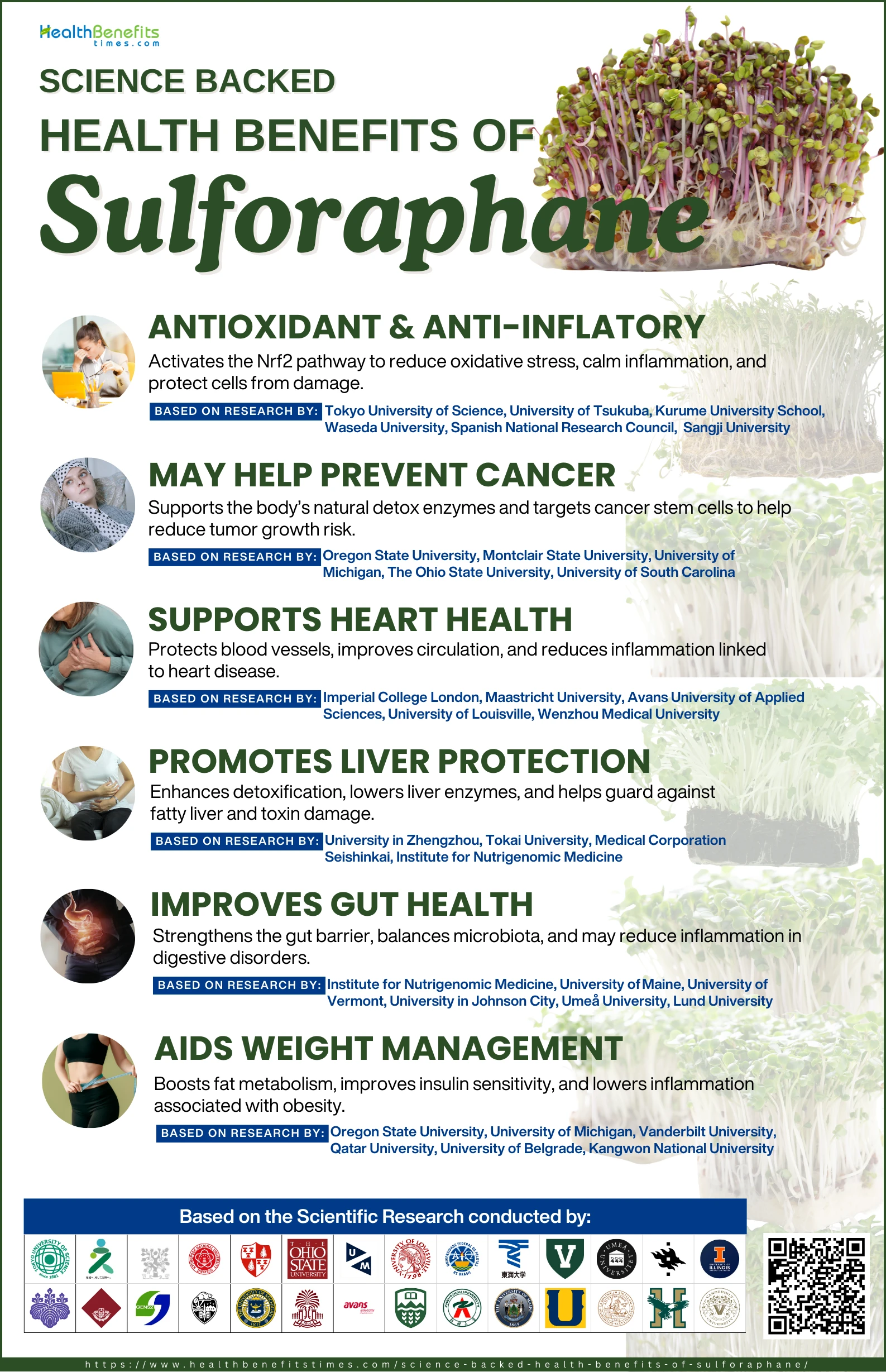
1. Have Oxidative Stress and Anti-Inflammatory Effects
Oxidative stress is a type of damage to your cells. It can be caused by infections like H. pylori or from using painkillers like NSAIDs. However, broccoli sprouts contain sulforaphane, a nutrient that helps protect your cells. Sulforaphane works by boosting your body’s own defenses to reduce oxidative stress and calm inflammation. Studies show that this protective action helps prevent stomach damage from H. pylori or NSAIDs. 1 2 Other research suggests it defends blood vessels, potentially lowering the risk of complications from diabetes and heart disease. 3 For muscle soreness after exercise, sulforaphane can lessen inflammation and pain. 4 5 While eating the sprouts is common, research also indicates that extracts applied to the skin can offer protection. 3
What Research Says:
- Research shows that broccoli sprouts have positive effects. Studies led by Dr. Akinori Yanaka, published by the National Institutes of Health (NIH), showed that sulforaphane in broccoli sprouts not only stopped the growth of H. pylori bacteria but also helped reduce stomach inflammation in both mice and human volunteers. 2 1
- A clinical trial by Medina and others found that people who ate broccoli sprouts had lower levels of markers for inflammation and blood vessel reactions, showing that it has anti-inflammatory effects in real life. 6
- A study by Ruhee and Suzuki, also from the NIH, explained that sulforaphane activates a key pathway in the body that helps protect against oxidative stress and reduces inflammation, which helps protect organs after exercise. 5
- Research into specific types of inflammation showed that broccoli sprout extract helped reduce liver damage and improved survival rates in mice by lowering harmful inflammation markers, which could be useful for treating acute inflammation. 7
- Additionally, studies by Sotokawauchi and others showed that an extract from broccoli sprouts could stop the formation of harmful molecules that cause inflammation and lower oxidative stress in blood vessels. 3
2. Prevents Cancer
Broccoli sprouts may help protect against certain types of cancer. They contain sulforaphane, a compound that may help prevent cancer by protecting healthy cells and neutralizing threats. Sulforaphane works by activating the body’s own defense enzymes, which flush out toxins and carcinogens before they can damage DNA. It also suppresses the survival pathways that cancer cells depend on. 8 Test-tube and animal studies show that sulforaphane is particularly effective against breast, bladder, and colon cancers by targeting cancer stem cells, which are responsible for tumor growth and recurrence. 9 10 11 Additionally, when consumed, these compounds circulate through the bloodstream and accumulate in tissue, where they create an environment hostile to cancer growth. 11 Even applying broccoli sprout extracts on the skin has been shown to inhibit abnormal cell growth, suggesting that the protective effects may extend to direct cellular health at the surface level. While more human studies are needed, a diet rich in sulforaphane-containing foods like broccoli sprouts has been linked to lower cancer risk.
What Research Says:
- A study published in Molecular Cancer Therapeutics by Tang and his team found that a broccoli sprout extract can make cancer cells self-destruct. It does this by activating a pathway in the cell that leads to the death of cancer cells, stopping bladder cancer cells during cell division.
- Research by Abbacui and the team at Ohio State University showed that sulforaphane and its by-product erucin helped reduce the size of bladder tumors in animals by up to 58%. These compounds were found in high amounts in tumor tissue, where they help block certain cancer-promoting pathways. 11
- A study by Li and others, funded by the National Institutes of Health, showed that sulforaphane reduces breast cancer stem cells by more than 50%. It does this by affecting a pathway that controls cell growth, preventing tumors from coming back after treatment. 10 12
- Researchers at Oregon State University, including Clarke and Dashwood, found that sulforaphane stops cancer cells in prostate and colon cancers from growing by reactivating genes that prevent tumors from forming, without harming normal cells. 8
- Li and Tollefsbol’s team at the University of Alabama found that if a mother eats broccoli sprouts during pregnancy, her child gets extra protection against breast cancer later in life. This happens because the sprouts change the child’s genes in a way that protects them. 12 13
- A review by Dabré and other researchers in Burkina Faso confirmed that sulforaphane is a strong modulator of genes in various cancers. It works by affecting genes that control DNA and restoring healthy gene activity. 13
3. Good for Cardiovascular Health
Broccoli sprouts are rich in a powerful compound called sulforaphane, which is known to support heart health. That’s because sulforaphane helps shield your cardiovascular system by activating your body’s natural defense against oxidative stress, a key factor in heart disease. 14 Regularly eating these sprouts may help manage several heart-related issues: it can help maintain healthy blood pressure, reduce inflammation in the arteries that can lead to blockages, and protect blood vessels from the harm caused by high blood sugar. 15 Additionally, sulforaphane promotes good blood flow by controlling how platelets respond, which reduces the risk of forming dangerous clots. 16 From preventing long-term problems like diabetic cardiomyopathy to aiding recovery after a heart attack, including broccoli sprouts in your diet offers a simple, food-based way to strengthen your heart. 17
What Research Says:
- Research shows that broccoli sprouts have many health benefits. A study at the University of Alberta found that eating broccoli sprouts regularly helped rats live longer. It also reduced blood pressure in male rats and lowered belly fat in female rats. 18
- Experiments at the University of Louisville showed that combining broccoli sprout extract with zinc helped protect the heart in rats with sleep apnea. This worked by boosting certain protective pathways in the body. 17
- A study in the Journal of Cardiovascular Pharmacology found that sulforaphane (a compound in broccoli sprouts) helped improve heart function after a heart injury by affecting important proteins that control calcium in the heart. 19
- A clinical trial at Maastricht University showed that a single dose of broccoli sprouts reduced a specific chemical in urine by 50% in healthy adults, confirming its ability to reduce blood clotting. 16
- Other studies show that sulforaphane reduces inflammation in blood vessels, especially in areas prone to plaque buildup, and helps prevent weight-related health issues. This highlights its overall potential to protect the heart. 15
4. Good for Liver Health
Sulforaphane, a nutrient found in broccoli sprouts and other cruciferous vegetables, may help protect the liver. It activates the body’s natural defense systems to reduce oxidative damage and inflammation that can lead to liver problems. 20 This compound supports the liver’s detoxification processes and boosts antioxidant activity throughout the body. 21 Research suggests sulforaphane may help prevent and manage fatty liver disease, alcohol-induced liver damage, drug-related liver injury, and even liver cancer. 20 Regular intake of broccoli sprout extracts has been shown to improve liver function markers, offering meaningful liver protection. 21
What Research Says:
- A study from Tokai University Hospital in Japan showed that taking broccoli sprout extract (which has glucoraphanin) every day for two months helped lower liver function markers like ALT and gamma-GTP in men with fatty liver. This improvement was linked to reduced oxidative stress, measured by levels of 8-OHdG in urine. 21
- In a trial by Kagome Co., Ltd., healthy middle-aged adults with slightly high liver enzymes who took glucoraphanin supplements for 24 weeks showed better ALT levels than those who took a placebo. No harmful side effects were found, even with higher doses. 22
- Other studies explain that sulforaphane, a compound in broccoli, activates a process in the body that helps protect cells. It can stop fat buildup, reduce inflammation, ease stress in the cell’s internal system, help break down fat droplets, and improve how energy-producing parts of the liver cells work. 20
- Animal tests by Kagome showed that broccoli sprout extract helped prevent liver failure caused by toxins. It raised the activity of a liver enzyme (glutathione S-transferase) and reduced damage to liver tissue. 21
5. Beneficial for Gut Health
Sulforaphane from broccoli sprouts may also improve digestive health. When you eat sulforaphane, it reaches your gut and works on the cells that line your intestines—these cells act like a control center for digestion. This compound helps bring balance to your gut by soothing inflammation, strengthening the gut barrier, and tackling the main causes of gut imbalance, instead of just attacking germs. 23 Research shows that sulforaphane can aid people with inflammatory bowel diseases, such as ulcerative colitis and Crohn’s disease, by lowering the inflammation that triggers these conditions. 24 Patients with irritable bowel syndrome, even those with constipation, often see big improvements in symptoms and can again handle foods they couldn’t eat before. 23 Sulforaphane might also cut fasting blood sugar in prediabetes, showing a link between gut health and metabolism. 25 Animal studies confirm that eating broccoli sprouts reduces colitis severity by interacting with gut bacteria. 26 However, most evidence comes from animal or lab studies. More human research is needed before we can make strong recommendations.
What Research Says:
- A 12-week study by researchers at the University of Gothenburg found that broccoli sprout extract lowered blood sugar by 0.2 mmol/L in people with prediabetes. Those who saw benefits also had different gut bacteria and more of a gene needed to activate sulforaphane. 25
- Research from the University of Illinois showed that even when the enzyme in broccoli sprouts is inactivated by cooking, steamed sprouts still produce sulforaphane in the colon and help reduce inflammation in mice with gut issues. This effect depends on healthy gut bacteria. 26
- Scientists at the University of Vermont found that giving raw broccoli sprouts to mice with Crohn’s disease from an early age improved their gut health, increased good bacteria, and helped reduce symptoms. 27
- Researchers at Oregon State University discovered that the makeup of gut bacteria affects whether compounds in broccoli are turned into useful sulforaphane or non-active nitriles. Certain bacteria are linked to producing more nitriles. 28
- A study in Molecular Nutrition & Food Research showed that eating cooked broccoli for seven days increased the bacteria in the gut that helps break down glucoraphanin into sulforaphane, boosting activity of a marker related to the health benefits of isothiocyanates in mice, whether lean or obese. 29
6. Helps in Weight Management
Broccoli sprouts may help with weight management by working on several processes in your body at once. This effect comes from a compound they contain called sulforaphane. When you eat it, sulforaphane helps reduce the buildup of fat and improves how your body responds to insulin. That makes it useful for preventing or managing issues linked to weight, like type 2 diabetes and heart disease. 30 31 It works mainly by activating a pathway in your body known as Nrf2. This helps lower inflammation and oxidative stress—both of which are closely tied to weight gain and metabolic issues. 32 Sulforaphane also affects how your body handles fats by encouraging fat cells to burn more fat instead of storing it. 33 Eating broccoli sprouts regularly can even lower levels of certain inflammatory markers, such as interleukin-6 and C-reactive protein, which are often higher in people carrying extra weight. 34 Because of these combined effects, adding sulforaphane-rich foods to your diet can be a simple, natural way to support weight control.
What Research Says:
- Research from Virginia Tech showed that taking sulforaphane long-term reduced fat buildup by 6.04% and improved insulin sensitivity by 23.66% in young mice. The same positive effects were also seen in middle-aged obese mice. 30
- Studies from the University of Michigan and Qatar University found that sulforaphane helps reduce obesity by fixing leptin resistance, which is when the body doesn’t respond to signals that control hunger. This process needs working leptin receptors and high leptin levels for sulforaphane to reduce weight. 31
- Research in pharmacological reviews explains that sulforaphane activates Nrf2, a key molecule that helps the body fight inflammation and control fat metabolism. 32
- A clinical study from Catholic University of Murcia with 40 overweight adults showed that eating 30 grams of broccoli sprouts daily for 10 weeks reduced inflammation markers (interleukin-6 levels) from 4.76 pg/mL to 2.11 pg/mL, showing it has anti-inflammatory effects. 34
- A study from Kangwon National University found that broccoli sprout powder, rich in sulforaphane, activates AMPK, which boosts the breakdown of fats and helps reduce fat-building factors. These effects were even stronger when combined with mustard seed powder. 33
Side Effects
Consuming high doses of Sulforaphane may lead to adverse effects. An acute toxic dose of 300 mg per kg of body weight can cause convulsions. Doses in the range of 150–300 mg/kg may lead to hypothermia, while doses of 200–300 mg/kg can impair motor coordination, and doses of 200–250 mg/kg can reduce muscle strength (105). 5
The documents do not list specific adverse effects from consuming sulforaphane or broccoli sprouts in humans. In fact, one review notes that clinical trials with sulforaphane have shown it to be safe and well-tolerated. 8 However, one paper mentions that while low concentrations (less than 1 μM) of sulforaphane can reduce inflammatory activation in endothelial cells without affecting their viability, very high concentrations (greater than 10 μM) can trigger endothelial cell apoptosis (cell death). 15 This suggests that while generally safe, extremely high concentrations could potentially have negative cellular effects.
Clinical studies and reviews indicate that sulforaphane and broccoli sprout extracts are generally well-tolerated. However, some mild adverse effects have been reported. In one study, participants taking a broccoli sprout supplement for 24 weeks experienced adverse events such as dry eye, headache, and eczema, though the principal investigator found no causal relationship with the supplement. 20 Another review of clinical trials noted occasional mild side effects including grade 2 constipation, nausea, headache, and bloating. A specific clinical trial in children with autism spectrum disorder found that sulforaphane was associated with insomnia, irritability, and intolerance of taste and smell, although no severe adverse effects or abnormal changes in blood chemistry were observed. 22
Initial consumption of a sulforaphane-yielding supplement can sometimes result in gastrointestinal symptoms such as bloating, cramping, flatulence, and diarrhea. These symptoms are hypothesized to be a potential sign of a microbial imbalance in the gut and typically subside with dose titration and continued use. These effects may be related to the supplement’s impact on the gut ecosystem, possibly including the die-off of non-commensal microbiota. 23
In a randomized controlled trial involving individuals with prediabetes, treatment with broccoli sprout extract (BSE) resulted in gastrointestinal side effects, though no severe adverse events were observed in response to the treatment (505). 25
One review paper discusses potential toxic effects based on in silico and animal studies. This research suggests that sulforaphane may have the potential to cause cell cycle disruption and apoptosis, with chromosomal damage and skin illnesses such as dermatitis or psoriasis appearing as possible negative effects. Further in silico analysis indicated the possibility of hepatotoxicity, dermal adverse effects, Ames toxicity (mutagenicity), rat oral acute toxicity, carcinogenicity, eye corrosion, eye irritation, and respiratory toxicity. Another study found that in mice, the median lethal dose (LD50) of sulforaphane was approximately 212.67 mg/kg, and at the highest tested dose (200 mg/kg), it significantly lowered the threshold for seizures. 32 However, the document also notes that reaching “toxic” levels of sulforaphane through regular dietary consumption of cruciferous vegetables is highly improbable. A human study on overweight subjects consuming 30g of broccoli sprouts daily for 10 weeks did not report any adverse effects, focusing instead on the anti-inflammatory benefits. 34
Sulforaphane from broccoli sprout extracts is generally well-tolerated, but several mild to moderate adverse effects have been documented. The most commonly reported side effects include gastrointestinal issues such as nausea, heartburn, abdominal bloating, and constipation. 35 36 37 38 An unpleasant taste, smell, and intolerance of the broccoli sprout extract have also been noted, occasionally leading to participant dropout in clinical studies. 37 38 In children with Autism Spectrum Disorder (ASD), side effects such as insomnia, irritability, and non-compliance related to the taste were observed. 39 38 Rare instances of grade 2 nausea and constipation have been reported, but no grade 3 adverse events were noted in studies using doses up to 200 μmol/day. 35 One study reported that at very high, non-physiological doses, sulforaphane caused sedation and muscle impairment in mice, with a lethal dose established at 212.67 mg/kg. 36 However, such effects have not been observed in human trials at recommended doses.
Food Incompatibilities
- The documents do not mention any specific foods that should not be consumed with sulforaphane or broccoli sprouts. However, it is noted that cooking cruciferous vegetables inactivates the plant enzyme myrosinase, which is necessary to convert the precursor glucoraphanin into the active compound sulforaphane. This results in significantly less (up to threefold) sulforaphane formation and reduced bioavailability. 8 Therefore, consuming raw or lightly prepared sprouts is important for maximizing sulforaphane exposure.
Timing & Conditions
- A key precaution identified in the documents is the need for careful dose titration when first introducing a sulforaphane-yielding supplement. This is particularly important for individuals suspected of having a dysbiotic gut microbial population. A guided introduction with a lower dose, gradually increasing over time, is recommended to minimize possible exacerbation of gut discomfort, which may be linked to the release of microbes from biofilms or the die-off of certain bacteria. 23
- While there are no absolute restrictions on timing, some clinical studies provide practical guidance. In one trial, caregivers were advised to administer sulforaphane in the morning to potentially avoid insomnia, a reported side effect in some children. It was also recommended to avoid taking the supplement with a heavy meal, as this could affect its absorption. 35 Another study instructed patients to take the sulforaphane capsules prior to their morning meal. 38 The documents do not specify any particular time of year or season to avoid sulforaphane.
Contraindications
- Sulforaphane is regarded as safe for human consumption within limited doses and is well-tolerated. Clinical trials have demonstrated its safety in various populations, with no severe adverse effects reported even at higher doses. 20 While some studies excluded individuals with certain pre-existing conditions (e.g., serious liver or kidney disease) for the purpose of the trial, this was to ensure study validity rather than an established contraindication to the compound. 21 22
- Based on the provided documents, there are no specific medical conditions for which sulforaphane or broccoli sprouts consumption is definitively unsafe. However, one study using mouse models offers insights into conditions where its mechanism of action might be ineffective or altered. The research showed that the weight-reducing effect of sulforaphane required a functional leptin receptor signaling pathway. It did not reduce body weight or food intake in leptin-deficient (Lepob/ob) mice or leptin receptor mutant (Leprdb/db) mice, which are genetic models of obesity. 31 This suggests that in individuals with certain genetic leptin signaling deficiencies, the anti-obesity effects of sulforaphane may not occur. Another review mentions that one in silico study suggested a potential link between sulforaphane and the advancement of colorectal cancer through the overexpression of some genes, though this requires further validation. 32
- Sulforaphane appears safe for most populations, but certain conditions warrant caution. Clinical trials have excluded individuals with specific medical conditions, which suggests potential contraindications. These include individuals with impaired renal, hepatic, or thyroid function, as well as those with a history of seizures within one year. 38 One study excluded patients with peptic ulcer disease and gastric malignancy. 40 Individuals with known allergies or intolerances to broccoli or other cruciferous vegetables should also avoid sulforaphane supplements. 37 While not a direct contraindication, individuals with a history of developmental regression may have different baseline mitochondrial function, which could influence their response to treatment. 38
Drug Interactions
- One study demonstrated that a single intake of broccoli sprouts significantly reduced urinary 11-dehydro-thromboxane B2 (TXB2), a marker of platelet reactivity. 16 This indicates that sulforaphane has an antiplatelet effect. Therefore, consuming high amounts of sulforaphane-rich foods like broccoli sprouts alongside anticoagulant or antiplatelet medications (e.g., aspirin, clopidogrel) could theoretically increase the risk of bleeding, although this specific interaction is not mentioned in the texts.
- One review mentions N-acetyl cysteine (NAC) in a comparative context, noting that it can have adverse effects on intestinal function and may exacerbate histamine-related symptoms by inhibiting the enzyme diamine oxidase (DAO). However, this is not presented as an interaction with sulforaphane, but rather as a caution regarding NAC itself. 23
- One study mentions that the antidiabetic properties of sulforaphane were compared to metformin, showing no significant difference in effect, but demonstrating they work through different mechanisms. Another study investigated sulforaphane in combination with the chemotherapy drug cisplatin using nanoparticles to improve its effectiveness in breast cancer cells, and with imatinib to sensitize leukemia stem cells. 32 While these studies show interaction, they do not indicate a negative or unsafe interaction that would lead to a recommendation for avoidance.
- The most significant documented drug interaction involves rifampicin, a potent antibiotic. While in vitro studies showed that sulforaphane could effectively block rifampicin’s activation of the Pregnane X Receptor (PXR) and subsequent induction of CYP3A4, this effect was not replicated in a human clinical trial. Co-administration of sulforaphane did not reduce the induction of CYP3A4 by rifampicin in healthy volunteers. Sulforaphane may have a minor inhibitory effect on basal CYP3A4 activity in individuals with higher baseline enzyme levels, but this effect was small and not considered clinically significant. 37 This suggests that sulforaphane could potentially interact with other drugs metabolized by CYP3A4, but the clinical relevance is likely low. The documents do not report interactions with other specific medications.
External Pesticides and Mold
The purity of sulforaphane supplements is an important consideration for safety. In the preparation of pharmaceutical-grade broccoli sprout extracts for clinical studies, extensive testing was performed to ensure the absence of microbial contaminants, including yeasts and molds, and to verify that products did not contain unintended chemical contaminants. 39 35 36 One study noted that they tested commercial nutritional supplements to verify that the retail products had levels of active ingredients close to what was specified on their labels, implying that not all products on the market meet these quality standards. 39 Based on these rigorous testing protocols in the provided sources, it is recommended to purchase sulforaphane from reputable sources that conduct third-party testing for purity and contaminants. Checking for certification labels that indicate adherence to quality and safety standards is a prudent practice.
Comments
comments
This article is based on Scientific Research Conducted by following Research Organization:
- Sulforaphane enhances protection and repair of gastric mucosa against oxidative stress in vitro, and demonstrates anti-inflammatory effects on Helicobacter pylori-infected gastric mucosae in mice and human subjects–Tokyo University of Science in Tokyo, Japan
- Role of Sulforaphane in Protection of Gastrointestinal Tract Against H. pylori and NSAID-Induced Oxidative Stress–University of Tsukuba, Japan
- Aqueous Extract of Glucoraphanin-Rich Broccoli Sprouts Inhibits Formation of Advanced Glycation End Products and Attenuates Inflammatory Reactions in Endothelial Cells–Kurume University School of Medicine in Kurume, Japan
- The Integrative Role of Sulforaphane in Preventing Inflammation, Oxidative Stress and Fatigue: A Review of a Potential Protective Phytochemical–Waseda University, Japan
- The Immunomodulatory Effects of Sulforaphane in Exercise-Induced Inflammation and Oxidative Stress: A Prospective Nutraceutical–Waseda University, Japan
- The intake of broccoli sprouts modulates the inflammatory and vascular prostanoids but not the oxidative stress-related isoprostanes in healthy humans–Spanish National Research Council, Murcia, Spain
- The Anti-Inflammatory Effects of Broccoli (Brassica oleracea L. var. italica) Sprout Extract in RAW 264.7 Macrophages and a Lipopolysaccharide-Induced Liver Injury Model–Sangji University, Republic of Korea, Kyungpook National University, Republic of Korea
- Multi-targeted prevention of cancer by sulforaphane–Oregon State University in Corvallis, USA
- Targeting cancer stem cells with sulforaphane, a dietary component from broccoli and broccoli sprouts–Montclair State University in Montclair, USA
- Sulforaphane, a dietary component of broccoli/broccoli sprouts, inhibits breast cancer stem cells–University of Michigan, USA
- Inhibition of bladder cancer by broccoli isothiocyanates sulforaphane and erucin: characterization, metabolism, and interconversion–The Ohio State University in Columbus, USA
- Temporal efficacy of a sulforaphane-based broccoli sprout diet in prevention of breast cancer through modulation of epigenetic mechanisms–University of South Carolina, USA
- Sulforaphane from broccoli, an epigenetic modulator in cancer cells–Université Joseph KI‑ZERBO, Burkina Faso
- Sulforaphane Protects against Cardiovascular Disease via Nrf2 Activation–The First Hospital of Jilin University, China
- The influence of sulforaphane on vascular health and its relevance to nutritional approaches to prevent cardiovascular disease–Imperial College London, UK
- The beneficial effect of sulforaphane on platelet responsiveness during caloric load: a single-intake, double-blind, placebo-controlled, crossover trial in healthy participants–Maastricht University, The Netherlands, Avans University of Applied Sciences, The Netherlands
- Combination of Broccoli Sprout Extract and Zinc Provides Better Protection against Intermittent Hypoxia-Induced Cardiomyopathy Than Monotherapy in Mice–The First Hospital of Jilin University in Changchun, China, University of Louisville in Louisville, Kentucky, USA, Wenzhou Medical University in Wenzhou, China
- Broccoli Sprouts Promote Sex-Dependent Cardiometabolic Health and Longevity in Long-Evans Rats–University of Alberta, Canada
- Sulforaphane Effects on Cardiac Function and Calcium-Handling-Related Proteins in 2 Experimental Models of Heart Disease: Ischemia-Reperfusion and Infarction–Universidade Federal do Rio Grande do Sul, Brazil, Universidade Federal de Pelotas, Brazil.
- Therapeutic potential of sulforaphane in liver diseases: a review–University in Zhengzhou, China
- Sulforaphane-rich broccoli sprout extract improves hepatic abnormalities in male subjects–Tokai University Tokyo Hospital, Japan
- Effects of broccoli sprout supplements enriched in glucoraphanin on liver functions in healthy middle-aged adults with high-normal serum hepatic biomarkers: A randomized controlled trial–Medical Corporation Seishinkai, Japan
- The Rationale for Sulforaphane Favourably Influencing Gut Homeostasis and Gut–Organ Dysfunction: A Clinician’s Hypothesis–Institute for Nutrigenomic Medicine, Australia
- Interplay of Broccoli/Broccoli Sprout Bioactives with Gut Microbiota in Reducing Inflammation in Inflammatory Bowel Diseases–University of Maine, USA, University of Vermont, USA, University in Johnson City, USA.
- Effect of broccoli sprout extract and baseline gut microbiota on fasting blood glucose in prediabetes: a randomized, placebo-controlled trial–University of Gothenburg in Gothenburg, Sweden, Umeå University, Sweden, Lund University, Sweden, Helsinki University, Finland, Johns Hopkins University, USA, Sahlgrenska University Hospital, Sweden.
- A steamed broccoli sprout diet preparation that reduces colitis via the gut microbiota–University of Michigan, USA
- Early life exposure to broccoli sprouts confers stronger protection against enterocolitis development in an immunological mouse model of inflammatory bowel disease–University of Vermont in Burlington , USA, University of Maine, USA, Husson University, USA
- Composition of the Gut Microbiome Influences Production of Sulforaphane-Nitrile and Iberin-Nitrile from Glucosinolates in Broccoli Sprouts–Oregon State University in Corvallis, Oregon, USA
- Cooked Broccoli Alters Cecal Microbiota and Impacts Microbial Metabolism of Glucoraphanin in Lean and Obese Mice–University of Illinois Urbana‑Champaign, USA
- Sulforaphane Ameliorates High-Fat-Diet-Induced Metabolic Abnormalities in Young and Middle-Aged Obese Male Mice–Oregon State University in Corvallis, Oregon, USA
- Sulforaphane reduces obesity by reversing leptin resistance–University of Michigan, United States, Vanderbilt University, United States, Qatar University, Qatar
- Sulforaphane—A Compound with Potential Health Benefits for Disease Prevention and Treatment: Insights from Pharmacological and Toxicological Experimental Studies– University of Belgrade, Serbia
- Anti-Obesogenic Effects of Sulforaphane-Rich Broccoli (Brassica oleracea var. italica) Sprouts and Myrosinase-Rich Mustard (Sinapis alba L.) Seeds In Vitro and In Vivo–Kangwon National University, Republic of Korea
- Effects of long-term consumption of broccoli sprouts on inflammatory markers in overweight subjects–Universidad Católica San Antonio de Murcia, Spain
- A phase II study of sulforaphane-rich broccoli sprout extracts in men with recurrent prostate cancer–Oregon Health & Science University, USA
- Sulforaphane: A Broccoli Bioactive Phytocompound with Cancer Preventive Potential–Lake Erie College of Osteopathic Medicine, USA.
- Randomized controlled trial of sulforaphane and metabolite discovery in children with Autism Spectrum Disorder–University of Massachusetts Medical School, United States, Johns Hopkins University School of Medicine, United States, Purdue University, United States, University of Arkansas for Medical Sciences, United States, University of Arizona College of Medicine, United States
- Sulforaphane is not an effective antagonist of the human Pregnane X-Receptor in vivo–University of Washington, United States
- Sulforaphane from Broccoli Reduces Symptoms of Autism: A Follow-up Case Series from a Randomized Double-blind Study–University of Massachusetts Medical School, United States, Johns Hopkins University, United States, Kennedy Krieger Institute, United States