

Science-Validated 10 Essential Supplements for Vegans
A well-balanced vegan diet offers many health benefits, but certain nutrients can be challenging to obtain. This article explores 10 science-backed supplements essential for vegans to maintain optimal health and vitality.
1. Vitamin B12
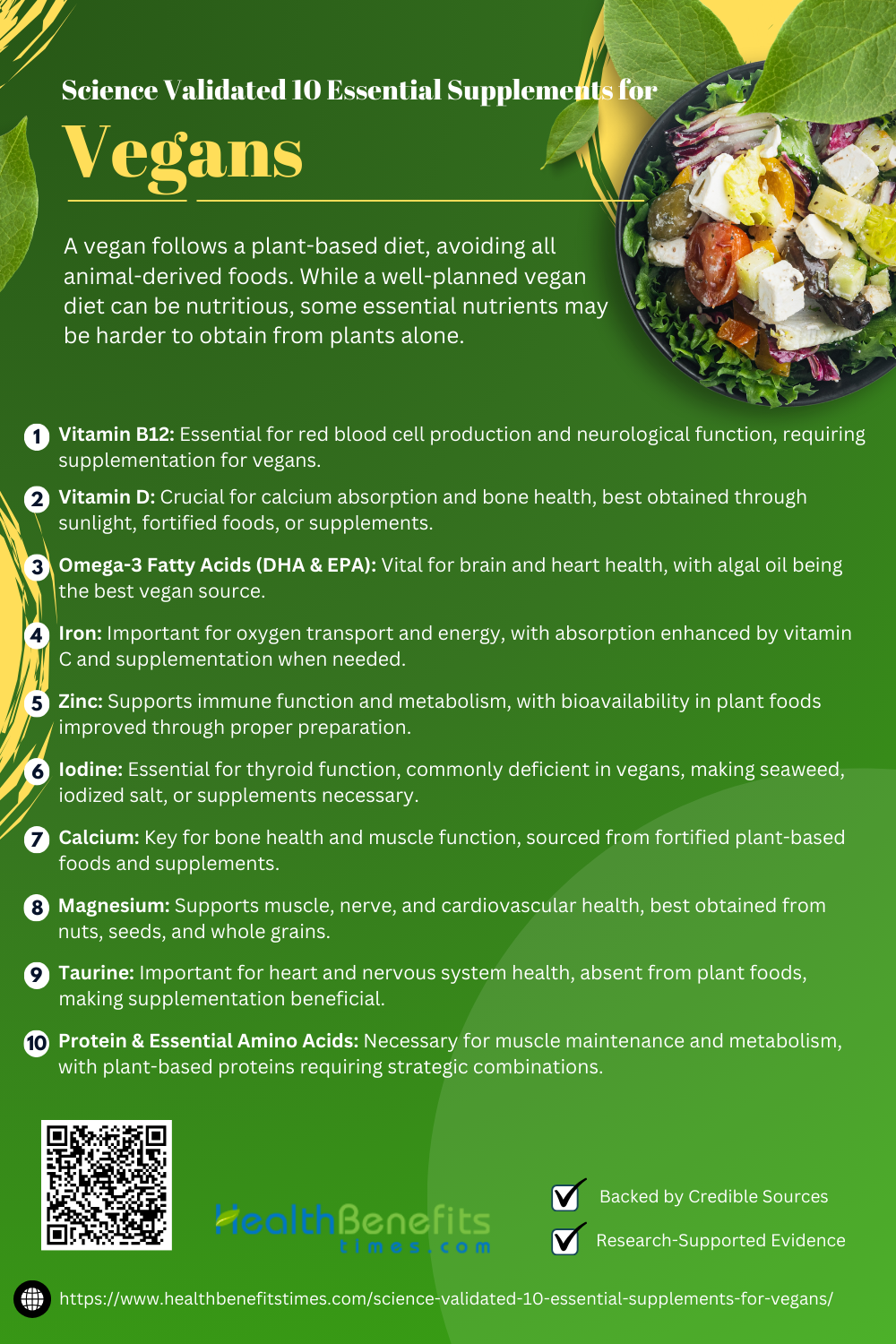
Vitamin B12 is a water-soluble vitamin vital for red blood cell production and neurological function, but it is absent from plant-based foods, making supplementation crucial for vegans. (8) Deficiency can lead to anemia and cognitive issues. (9) While naturally found in animal products like meat, dairy, and eggs, fortified foods and supplements remain the best sources for vegans. (10) (11) Regular monitoring ensures optimal levels, preventing cardiovascular risks. (12) (13)
2. Vitamin D
Vitamin D plays a crucial role in calcium absorption and bone health, yet studies show vegans often have lower levels than omnivores. (3) Deficiency can increase fracture risks. (14) While sunlight is a primary source, dietary intake is insufficient. (14) Fortified foods and supplements remain essential. (2) Living in high latitudes worsens deficiency risks. (1) Proper supplementation ensures optimal levels. (15)
3. Omega-3 Fatty Acids (DHA & EPA)
Omega-3 fatty acids, particularly DHA and EPA, support brain function and cardiovascular health, yet vegans often have lower levels than omnivores. (16) Deficiency can impact cognitive health and inflammation regulation. (17) Algal oil provides a reliable vegan DHA and EPA source, while flaxseeds and chia seeds mainly offer ALA, which converts inefficiently. (18) Regular supplementation ensures optimal levels, particularly for athletes and aging individuals. (19)
4. Iron
Iron is crucial for oxygen transport and energy production, yet studies show vegans may have a higher risk of deficiency due to lower bioavailability of plant-based iron. (20) While legumes, seeds, and leafy greens provide iron, absorption is enhanced with vitamin C. (2) Regular monitoring ensures sufficient intake. (21) Women are particularly at risk. (22) Supplementation helps maintain optimal levels. (23)
5. Zinc
Zinc is vital for immune function, DNA synthesis, and metabolism, making it essential for vegans due to lower bioavailability in plant foods. (24) Vegan sources include legumes, nuts, and seeds, though phytates may hinder absorption. (25) Proper food preparation enhances bioavailability. (26) Fortified foods or supplements can prevent deficiency, especially for pregnant women and children. (27) (3) A well-balanced vegan diet supports adequate zinc levels. (28)
6. Iodine
Iodine is essential for thyroid function and metabolism, making it crucial for vegans who lack traditional sources like dairy and seafood. Vegan sources include seaweed, iodized salt, and fortified foods. (29) Deficiency is common among vegans and may lead to hypothyroidism. (30) (3) Supplementation is recommended, particularly for pregnant women. A balanced diet with fortified options can help vegans meet iodine requirements.
7. Calcium
Calcium is essential for bone health, muscle function, and nerve signaling, making it crucial for vegans who lack dairy sources. (31) Vegan sources include fortified plant milk, leafy greens, tofu, and almonds. (32) Deficiency increases the risk of osteoporosis and fractures. (3) Calcium absorption can be enhanced by consuming vitamin D-rich foods. (1) Fortified foods or supplements may be necessary to meet daily intake recommendations. (33) A well-planned vegan diet ensures adequate calcium levels. (27)
8. Magnesium
Magnesium is essential for muscle function, nerve signaling, and bone health, making it a critical nutrient for vegans who rely on plant-based sources. (34) Vegan sources include leafy greens, nuts, seeds, and whole grains, though absorption may be impacted by phytates. (3) Magnesium deficiency can lead to fatigue and muscle cramps, emphasizing the need for proper intake. (35) Fortified foods and supplements help maintain adequate levels. (27) Magnesium supports cardiovascular health and energy production. (36) A well-balanced vegan diet ensures sufficient magnesium intake. (1)
9. Taurine
Taurine plays a vital role in cardiovascular health, antioxidant defense, and nervous system function, yet it is absent from vegan diets as it is primarily found in animal products. (37) Vegan diets often result in lower plasma and urinary taurine levels, raising concerns about deficiency. (38) Taurine supplementation may improve cardiovascular and metabolic health in vegans. (39) Some plant-based sources such as seaweed contain trace amounts, but supplementation is often necessary. Taurine supports cognitive function and reduces inflammation. (40) Therefore, vegan-friendly taurine supplements may help maintain optimal health. (41)
10. Protein & Essential Amino Acids
Protein and essential amino acids are crucial for muscle maintenance, metabolism, and immune function, yet some vegan diets may lack adequate amounts. (42) Plant-based sources include legumes, soy, quinoa, and nuts, though some lack complete amino acid profiles. (43) Blending complementary proteins helps maintain balance. (44) Vegan athletes may require additional supplementation for optimal performance. (45) Protein supplements, such as pea or rice protein, ensure adequate intake. (46) A well-planned vegan diet can provide sufficient protein without deficiencies. (47)
Conclusion
In conclusion, incorporating science-validated essential supplements into a vegan diet is crucial to ensure optimal health and prevent nutrient deficiencies. While a well-planned plant-based diet can provide most essential nutrients, key supplements like vitamin B12, vitamin D, omega-3 fatty acids (DHA & EPA), iron, zinc, iodine, calcium, and protein sources such as pea or soy protein can help fill any nutritional gaps. Antioxidants like selenium and vitamin K2 also support overall well-being. By making informed choices based on scientific research, vegans can maintain a balanced, nutrient-rich diet and enjoy long-term health benefits.
Comments
comments