

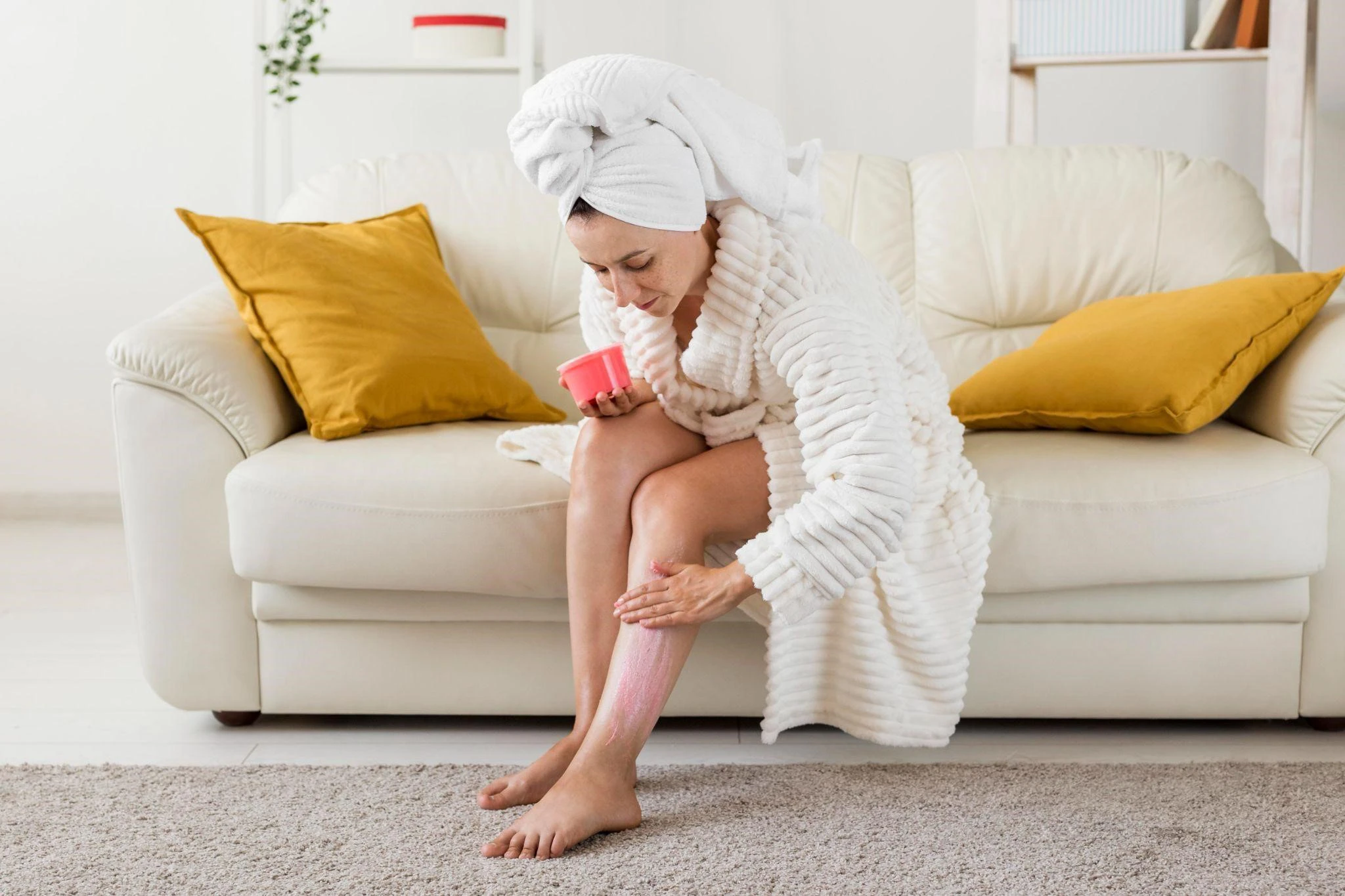
The good news is both respond well to the same basic approach: gentle, consistent exfoliation. A 2% salicylic acid body wash works on both concerns at once, since salicylic acid is oil-soluble and can get into pores in a way most surface cleansers can’t, addressing the buildup that causes each condition in the first place. Before getting into treatment though, it helps to understand what’s actually going on with each one.
What Causes Strawberry Legs
Strawberry legs get their name from the small dark dots that show up after shaving, resembling the seeds on a strawberry. These dots are usually a combination of a few things happening at once:
- Open pores that appear larger and darker right after hair removal, since shaving or waxing leaves follicles temporarily exposed
- Trapped dead skin cells and oil sitting in those follicles, which oxidise and darken on contact with air
- Ingrown hairs, where hair curls back into the skin instead of growing out, creating a small dark or inflamed dot
- Dry skin, which makes pores appear more pronounced and the whole area look rougher overall
Keratosis Pilaris Causes
Keratosis pilaris causes work a little differently, though the end result, rough, bumpy skin, can look similar to strawberry legs at a glance. KP happens when keratin, a protein that protects skin, builds up and blocks hair follicles instead of shedding normally. That blockage creates small, hard bumps, often on the upper arms, thighs, or cheeks, sometimes surrounded by mild redness.
A few things that tend to trigger or worsen it:
- Genetics play a big role, KP often runs in families and tends to show up in childhood or the teenage years
- Dry skin makes the keratin buildup worse, which is why KP often flares up more in colder, drier months
- Certain skin conditions like eczema are commonly linked with a higher likelihood of KP
- Tight clothing or friction against the affected areas can aggravate existing bumps
Patches of Goosebumps on Skin: Is It KP or Something Else?
A common way people describe KP before they know what it is: patches of goosebumps on skin that don’t go away, no matter the temperature or how long you wait. That persistence is actually one of the easiest ways to tell KP apart from actual goosebumps, which are a temporary muscle reflex and disappear within minutes.
A few signs it’s likely KP rather than something else:
- The bumps stay in the same spots consistently, usually upper arms, thighs, or cheeks
- They feel rough or sandpaper-like to the touch rather than smooth
- They don’t resolve with basic moisturizing alone
- There’s often a mild pinkish tint around each bump, though not always
How to Get Rid of Strawberry Skin and KP
Since both conditions come down to buildup blocking or discoloring hair follicles, how to get rid of strawberry skin and KP both start with the same basic principle: consistent, gentle exfoliation paired with proper hydration.
Here’s a routine that works for both:
- Exfoliate with a salicylic acid body wash 3 to 4 times a week, since salicylic acid works inside the pore itself, dissolving the oil and dead skin buildup that causes both conditions
- Avoid harsh physical scrubs on affected areas, they can irritate skin further without addressing the actual buildup underneath
- Moisturize immediately after showering, while skin is still slightly damp, to lock in hydration and keep keratin from hardening further
- Shave carefully if strawberry legs are the main concern, using a sharp razor and shaving in the direction of hair growth to reduce ingrown hairs
- Be patient, both conditions improve gradually over 4 to 8 weeks of consistent care rather than disappearing overnight
Why a Salicylic Acid Body Wash Works So Well
Most body washes clean the surface and stop there. A proper salicylic acid body wash goes further, since salicylic acid is oil-soluble and can actually penetrate into the pore itself rather than just sitting on top of skin. That matters a lot here because both strawberry legs and KP are fundamentally about blockages inside follicles, not just surface-level dirt. As an exfoliating body wash, here’s what it actually helps with:
- Body acne: clears out the oil and dead skin buildup inside pores that leads to breakouts on the back, chest, and shoulders, addressing the cause rather than just calming the surface
- Strawberry skin: breaks down the trapped oil and dead cells that darken pores after shaving, while also helping reduce the ingrown hairs that contribute to those visible dark dots
- Uneven skin tone: consistent exfoliation clears away the buildup that leaves patches looking darker or more textured than the surrounding skin, gradually evening things out
- Rough texture: dissolves the bond between dead skin cells so they shed properly instead of piling up, leaving skin smoother to the touch over time
Used consistently, it functions as both a body wash for strawberry legs and a body wash for keratosis pilaris, since the underlying mechanism, clearing follicle buildup, addresses both conditions at the same time.
What to Look for in a KP Body Wash
Not every exfoliating wash is formulated the same way, and a few details matter more than others when picking a proper kp body wash:
- 2% salicylic acid concentration: strong enough to be effective without over-exfoliating sensitive body skin
- Zinc PCA: helps regulate excess oil and has a calming effect on skin, useful alongside exfoliation since it keeps irritation in check while the salicylic acid does its work
- Hydrating base ingredients: since dry skin worsens both conditions, the wash shouldn’t strip moisture while it exfoliates
- Fragrance-free or lightly fragranced: reduces the chance of irritation on skin that’s already dealing with bumps or redness
- Gentle enough for daily areas but effective 3 to 4 times a week: overuse can backfire, so the formula needs to strike that balance
What to Realistically Expect
Neither strawberry legs nor KP disappears overnight, and expecting instant smoothness usually leads to giving up on a routine before it’s had a real chance to work. Most people start noticing smoother texture and fewer visible dots or bumps within 2 to 3 weeks of consistent use, with more complete improvement by the 8 week mark. KP in particular can flare seasonally, so don’t be discouraged if it looks slightly worse during colder months even with a good routine in place, that’s the dryness talking, not a sign the routine has stopped working.
The underlying approach for both conditions really comes down to the same thing: keep pores clear, keep skin hydrated, and stay consistent. Neither is dangerous or permanent in the sense that matters, they’re just skin conditions that respond well to the right kind of patience.
Comments
comments