

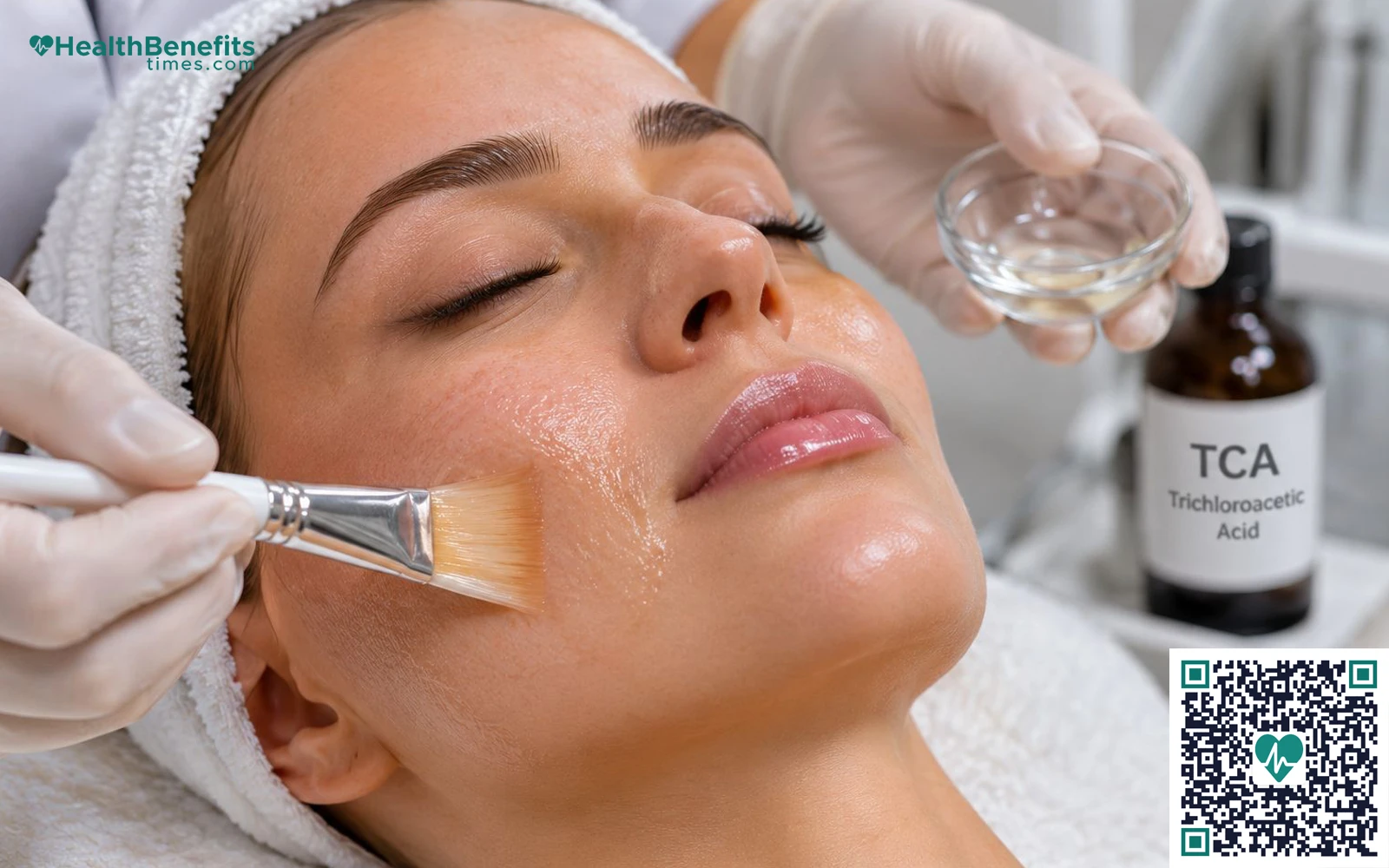
From persistent acne scars and sun damage to uneven pigmentation and fine lines, TCA has several potential applications. However, achieving meaningful results depends on understanding the science behind chemical exfoliation, selecting an appropriate treatment, and prioritizing skin safety.
Recent dermatological research published in 2026 also highlights the importance of personalized treatment approaches rather than relying on a single procedure for every skin concern.
What Is Trichloroacetic Acid and How Does It Work?
Trichloroacetic acid is a chemical peeling agent used in dermatology to produce controlled skin resurfacing. Unlike everyday exfoliating cleansers and cosmetic scrubs, TCA creates a controlled chemical injury that initiates the skin’s natural repair processes.
Depending on the treatment depth, this process can encourage epidermal renewal and collagen remodeling, potentially improving skin texture and certain visible imperfections.
TCA is used in different formulations and concentrations for professional dermatological applications. Specialized retailers such as OKDERMO list various trichloroacetic acid (TCA) skincare products, reflecting the diversity of formulations associated with chemical resurfacing.
However, concentration alone does not determine the suitability or safety of a chemical peel. Skin characteristics, treatment technique, formulation, and professional assessment are equally important.
Can TCA Chemical Peels Improve Acne Scars?
For many people, the effects of acne remain visible long after active breakouts have disappeared. Depressed acne scars can be particularly difficult to address because they involve structural changes within the skin.
A scoping review published in the Journal of Cosmetic Dermatology in August 2026 examined 34 studies investigating the use of trichloroacetic acid for atrophic acne scars.
The research identified TCA as a potentially valuable component of personalized scar treatment, particularly when combined with other dermatological procedures or used through targeted scar-reconstruction techniques.
One specialized procedure, known as TCA CROSS, is used by trained practitioners to treat certain types of depressed acne scars, including narrow, deep ice-pick scars.
The findings also reinforce an important distinction: not every acne scar responds to the same treatment. Some patients may benefit more from microneedling, laser resurfacing, subcision, or a combination of procedures.
The objective is generally to improve scar depth and overall skin texture rather than promise complete scar removal.
TCA Peels for Dark Spots and Uneven Pigmentation
Hyperpigmentation can develop following acne, inflammation, hormonal changes, or cumulative sun exposure. Although many pigmentation concerns can be managed with topical treatments, selected patients may benefit from professionally administered chemical peels.
By promoting renewal of the outer skin layers, chemical peels can help improve certain forms of superficial discoloration.
A 2026 review examining chemical peels for pigmentary skin disorders reported potential benefits from several peeling agents, including TCA. However, the authors emphasized that treatment outcomes vary and that individualized approaches remain necessary.
This is particularly important for individuals with darker skin tones, who may be more susceptible to post-inflammatory hyperpigmentation following excessive irritation.
Inappropriate treatment can worsen the very pigmentation concerns a person is trying to address. A thorough dermatological assessment is therefore essential before undergoing chemical resurfacing.
The Role of TCA in Anti-Aging Treatments
Visible skin aging develops through a combination of natural biological changes, environmental exposure, and lifestyle factors.
Over time, changes in collagen, skin elasticity, and cumulative ultraviolet damage can contribute to fine lines, rough texture, and uneven skin tone.
Professional chemical peels may help improve selected signs of photoaging, including:
- Fine superficial wrinkles.
- Rough or irregular skin texture.
- Certain sun-related pigmentation changes.
- Uneven skin tone.
- The appearance of superficial skin imperfections.
TCA peels are not a replacement for daily skincare or sun protection. Instead, they may form part of a broader dermatological treatment plan that addresses existing skin damage while helping reduce further deterioration.
Why Stronger Chemical Peels Are Not Always Better
One of the most common misconceptions surrounding chemical peels is that stronger formulations automatically produce superior results.
Deeper resurfacing may offer benefits for certain concerns, but it also increases the potential for complications and extends recovery time.
According to the American Academy of Dermatology, superficial chemical peels generally require between one and seven days of healing, while medium-depth peels may require seven to fourteen days.
Individual recovery depends on the procedure, skin characteristics, and adherence to professional aftercare recommendations.
Excessive chemical exposure can cause burns, persistent redness, abnormal pigmentation, infection, and permanent scarring. The most appropriate treatment is therefore determined by clinical suitability rather than maximum strength.
The Importance of Professional Supervision
The growing accessibility of chemical peeling products has raised important public health concerns.
In July 2024, the U.S. Food and Drug Administration issued a warning about chemical peel products containing high concentrations of acids, including trichloroacetic acid. The agency highlighted the risk of serious injuries associated with their use without qualified professional supervision.
These safety concerns remain relevant as consumers encounter chemical resurfacing products through online marketplaces and social media.
Before considering a TCA peel, individuals should discuss their medical history, existing skin conditions, previous treatments, medication use, and susceptibility to abnormal pigmentation or scarring with a dermatologist.
Professional chemical peels should not be treated as ordinary at-home exfoliating products.
Protecting the Skin After Chemical Resurfacing
Recovery is an essential component of chemical peel treatment. During the healing process, the skin requires appropriate protection and supportive care.
Patients should follow their practitioner’s specific instructions, avoid picking or scratching peeling skin, and refrain from introducing potentially irritating cosmetic ingredients until the skin has recovered sufficiently.
Sun avoidance during recovery and consistent broad-spectrum sun protection after healing are especially important for reducing pigmentation complications and maintaining treatment results.
Severe pain, unexpected blistering, signs of infection, or delayed healing require prompt medical assessment.
The Future of Personalized Skin Resurfacing
Recent research suggests that effective acne scar and pigmentation management increasingly depends on selecting treatments according to individual skin characteristics rather than applying standardized solutions to everyone.
Trichloroacetic acid remains a relevant tool in professional dermatology, with potential applications in scar management, skin texture improvement, and selected pigmentation and photoaging concerns.
Nevertheless, successful treatment requires realistic expectations, careful patient selection, and professional supervision.
Ultimately, the goal of chemical resurfacing should not simply be more dramatic exfoliation, but measurable improvements in skin appearance while preserving long-term skin health and minimizing unnecessary risks.
Comments
comments