

What the Hair Growth Cycle Actually Is
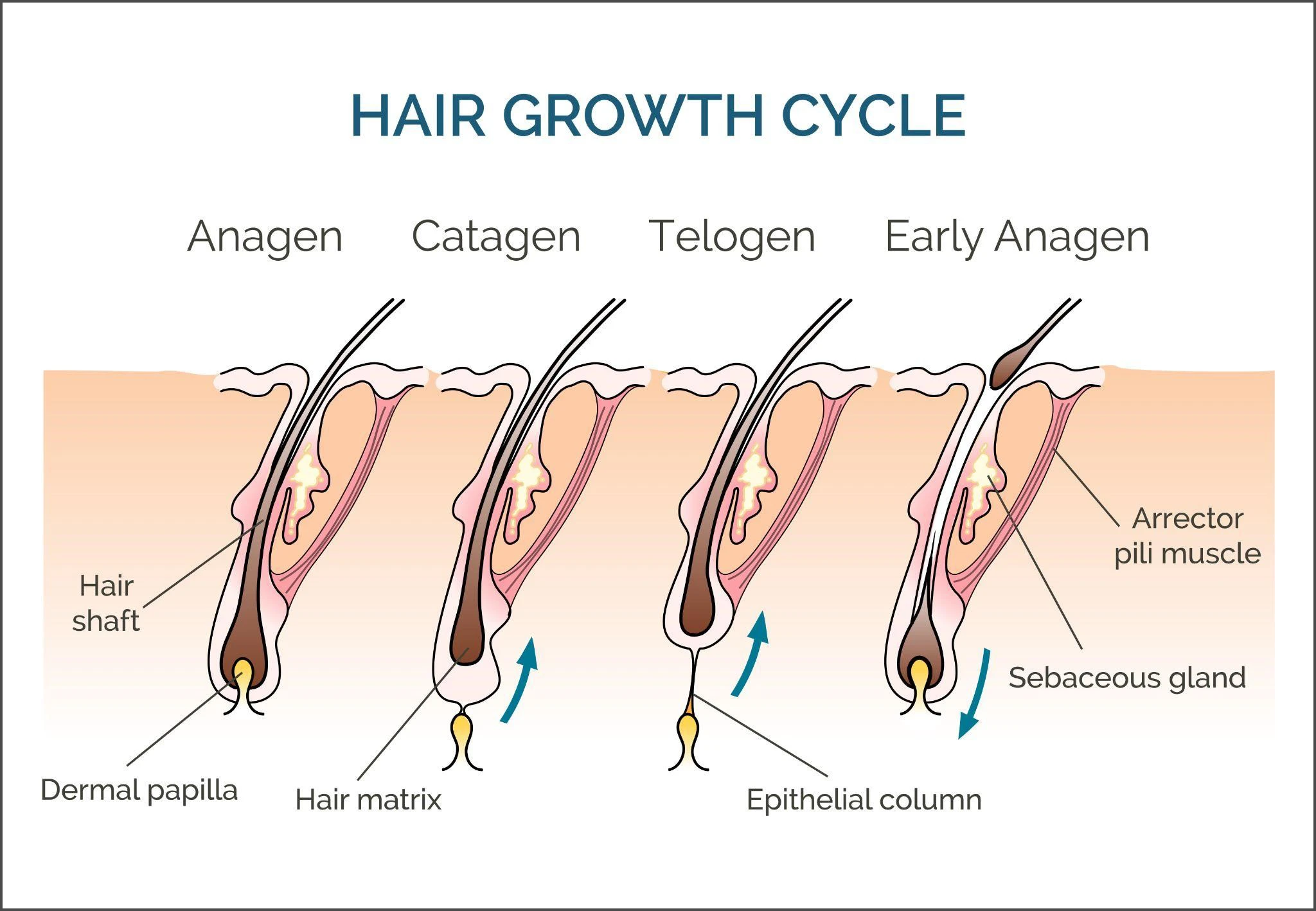
Hair doesn’t grow continuously. Every single strand on your head goes through a fixed, repeating cycle — it grows, it transitions, it rests, and then it falls so a new strand can take its place. This isn’t a sign of damage. It’s how the system is supposed to work.
The cycle has three main phases:
- Anagen — the active growth phase
- Catagen — the short transition phase
- Telogen — the resting and shedding phase
At any given time, most of your hair (roughly 85–90%) is in the growth phase. The rest is either transitioning or resting. When this balance shifts, that’s when you start seeing more hair on your pillow or in the shower drain.
The Anagen Phase: Where Growth Actually Happens
This is the phase that matters most. During anagen, cells in the hair follicle divide rapidly and push the hair shaft upward. The longer a strand stays in this phase, the longer it gets. This is why some people can grow hair down to their waist while others struggle to get past their shoulders — it often comes down to how long their anagen phase lasts.
For most people, the anagen phase duration ranges from two to seven years. Genetics plays the biggest role here, but nutrition, hormones, and scalp health can either support or quietly shorten this window. A shorter anagen phase means hair never reaches its full potential length — and follicles may cycle faster than they should.
Catagen and Telogen: The Quiet Phases You Don’t Notice
After anagen ends, the follicle enters catagen — a brief transition lasting about two to three weeks. The hair stops growing and detaches from its blood supply. This is normal, and only about 1–2% of your hair is in this phase at any time.
Then comes telogen. The hair sits in the follicle for roughly two to four months before it sheds. Around 50 to 100 hairs fall daily during this phase — which sounds like a lot, but is completely normal given how many hairs you have. The problem begins when too many follicles enter telogen at the same time, causing what’s called telogen effluvium — sudden, diffuse shedding that often appears three to four months after a trigger like illness, crash dieting, or prolonged stress.
Why the Cycle Gets Disrupted
The hair cycle is sensitive. Several internal and external factors can push follicles out of their natural rhythm:
- Nutritional deficiencies — especially iron, zinc, biotin, and vitamin D — can shorten the anagen phase
- Hormonal imbalances, particularly elevated DHT in men and thyroid irregularities in women, directly affect follicle behavior
- High chronic stress raises cortisol levels, which interferes with follicle signaling
- Scalp inflammation caused by dandruff, product buildup, or poor circulation can restrict nutrient delivery to the follicle
- Sudden physical stress — surgery, childbirth, high fever — can shock a large portion of follicles into telogen simultaneously
Understanding Hair Loss from a cycle perspective helps explain why shedding often starts weeks or months after the actual trigger. By the time you see the hair falling, the disruption already happened.
Where Traya Fits Into This
Because hair loss has multiple causes — some hormonal, some nutritional, some stress-related — generic solutions rarely work long-term. Traya’s approach is built around identifying which part of the cycle is being disrupted and addressing it at that level, rather than offering a one-size-fits-all fix.
Final Thoughts
The hair growth cycle is not complicated once you see it clearly. Hair falls because it’s designed to, and it regrows because the system is built for renewal. When something goes wrong, it’s usually because one phase is being cut short or another is lasting too long. Fixing it starts with understanding what’s driving the imbalance — not just chasing the symptom.
Comments
comments