

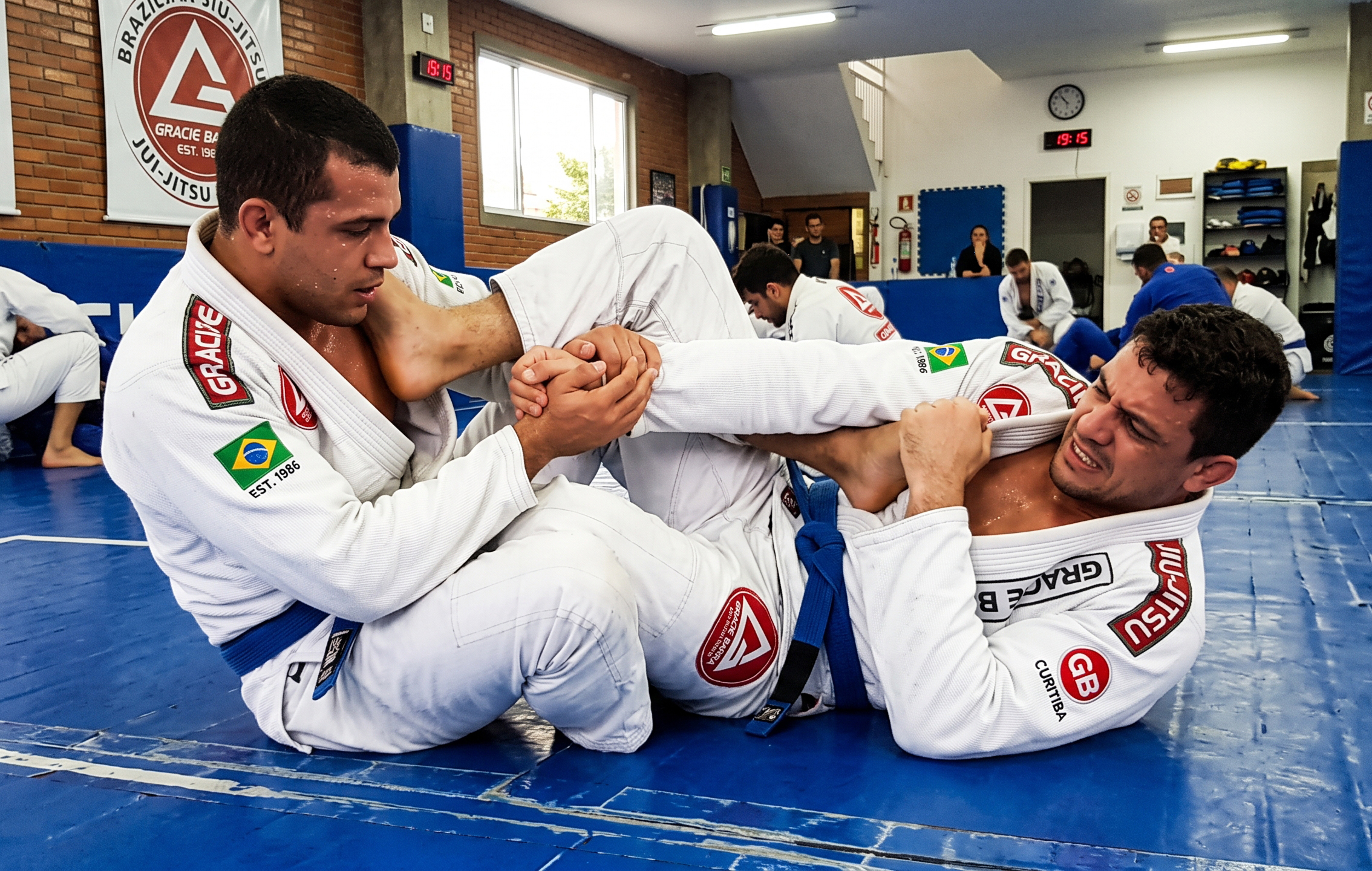
Brazilian Jiu-Jitsu tends to get discussed in two narrow contexts: as a competitive combat sport, or as a self-defense system. Both framings undersell what’s actually a remarkably well-rounded health intervention, one that a growing number of physical therapists and health-focused trainers now recommend for reasons that have little to do with competing or fighting at all. Understanding the specific health mechanics behind a solid BJJ classes Toronto program explains why.
A Genuinely Low-Impact Form of Resistance Training
Unlike running or high-impact plyometric training, BJJ places relatively little repetitive stress on joints while still demanding substantial strength output, particularly through the core, hips, and grip. Because the sport is largely ground-based and movements are controlled rather than explosive and repetitive, it functions as a form of resistance training that’s considerably gentler on joints than many higher-impact fitness options, while still producing meaningful strength gains across the entire body.
This distinction matters more than it might initially seem for anyone whose previous attempts at fitness stalled out due to joint pain or old injuries. Running programs and high-impact interval formats frequently get abandoned specifically because of knee, hip, or lower back discomfort that develops from repetitive impact over months of training. A ground-based sport that builds equivalent or greater full-body strength without that same repetitive impact profile solves a problem that a meaningful share of adults have quietly given up trying to solve through conventional fitness routes.
Grip Strength and Functional Aging
Grip strength has become one of the more closely watched markers in longevity research, since it correlates with overall functional capacity and independence later in life more strongly than many people expect. BJJ trains grip strength constantly and functionally, through gripping a partner’s clothing or limbs under resistance, rather than through an isolated exercise like a static grip trainer. That functional context (grip strength developed while also coordinating balance, core stability, and technique) tends to transfer to everyday physical tasks more directly than isolated grip exercises alone.
This functional-strength distinction is a recurring theme across BJJ’s broader health case. Isolated exercises build strength in a narrow, specific movement pattern, while BJJ builds strength embedded within complex, whole-body movement problems that closely resemble the kind of unpredictable physical demands daily life actually presents, catching your balance, carrying an awkward load, or reacting to an unexpected physical challenge. That transferability is a large part of why physical therapists have increasingly taken an interest in grappling-based training as a complement to more conventional rehabilitation and strength programming.
| Health marker | How BJJ trains it | Why it matters |
| Grip strength | Constant functional gripping under resistance | Correlates with long-term functional independence |
| Core stability | Near-constant core engagement during ground positions | Reduces lower back strain risk in daily life |
| Cardiovascular capacity | Interval-style rounds of live rolling | Builds aerobic and anaerobic capacity together |
| Joint mobility | Wide range-of-motion positions and transitions | Maintains hip and shoulder mobility over time |
The Cardiovascular Demands Are Often Underestimated
BJJ looks slower and more methodical from the outside than striking-based combat sports, which leads to a common misconception that it’s less cardiovascularly demanding. In practice, live rolling (sparring) places substantial demands on both aerobic and anaerobic systems, since periods of intense physical exertion against a resisting partner are interspersed with brief recovery periods, producing an interval-training effect similar to what’s documented in striking-based combat sports research. Anyone who has rolled for even a few minutes against a comparably skilled partner can attest that the cardiovascular demand is considerably higher than it appears from the sidelines.
New students are often surprised by how quickly they fatigue during their first few live rolling sessions, despite considering themselves reasonably fit going in. Isometric strength demands (holding a dominant position, resisting a submission attempt, maintaining pressure against a resisting opponent) place a very different metabolic demand on the body than the more familiar cardio of running or cycling, and that unfamiliar demand takes most new students several weeks of consistent training to adapt to properly.
Stress Reduction Through Problem-Solving Under Pressure
BJJ is sometimes described by practitioners as “physical chess,” and that framing has real substance behind it. Training requires solving a constantly shifting physical problem in real time, which demands enough focused attention that it tends to crowd out unrelated stress and rumination for the duration of a session, similar to the attention-focusing effect documented in other mindfulness-adjacent physical practices. Regular practitioners frequently describe this as one of the more valuable, if less advertised, mental health benefits of consistent training.
This effect is distinct from the general mood benefits of exercise more broadly. Where a solo cardio session leaves plenty of mental bandwidth free for a wandering mind, a live BJJ roll demands close to full attention simply to avoid being caught in a bad position, which leaves very little room for unrelated stress to intrude for the duration of the session. Practitioners frequently describe walking out of a hard training session mentally clearer than when they walked in, an effect that’s harder to reliably reproduce with lower-engagement forms of exercise.
Who Tends to Benefit Most From Starting
BJJ has an unusually wide range of viable starting points compared to many combat sports, since technique and leverage can meaningfully compensate for size and raw strength differences between training partners:
- Adults returning to exercise after years away, who benefit from the low-impact nature relative to running or high-intensity interval formats
- People recovering from certain injuries (with a physician’s clearance), due to the controlled, technique-driven nature of most training
- Older adults specifically interested in functional strength and mobility, given the sport’s heavy reliance on core stability and joint mobility rather than pure explosive power
- Anyone whose previous fitness routines have failed due to boredom, given the constantly evolving technical and strategic nature of the training
The Social Structure Supports Long-Term Adherence
Health interventions that rely purely on individual willpower tend to have poor long-term adherence, a well-documented problem across nearly every category of preventive health behavior, from diet to exercise to medication compliance. BJJ’s partner-based, class-structured format builds in exactly the kind of external accountability that individual willpower alone often fails to sustain over months and years. A missed class is noticed by training partners in a way a missed solo gym session simply isn’t, and that small social cost to skipping tends to meaningfully improve the odds that a health-motivated new student is still training a year later rather than having quietly stopped within the first few months.
A Realistic Beginner Timeline
New students sometimes expect visible fitness changes faster than is realistic for a technically complex sport. A more accurate picture:
- First month: learning fundamental positions and escapes, with conditioning building steadily as a byproduct of live training
- Months two to four: noticeably improved cardiovascular capacity and a clearer sense of core and grip strength gains
- Months five and beyond: meaningful technical competence alongside continued, compounding fitness improvement
What to Look for in a Health-Focused Program
Not every BJJ gym structures its beginner program the same way, and a few factors matter more than gym size or reputation when the primary goal is health and longevity rather than competition:
- Instructors willing to modify live training intensity for older students or those returning from injury, rather than a one-intensity-fits-all approach
- A genuine beginner track that builds fundamentals gradually before introducing full-resistance live rolling
- Clear communication about injury history intake, so training partners and coaches can adjust accordingly
- A culture that treats recreational, non-competitive training as a legitimate long-term goal, not just a stepping stone toward competition
Common Questions
Is BJJ safe for older adults or people returning to exercise after a long break? Generally yes, particularly at gyms that emphasize controlled, technique-focused training and allow new students to train at their own pace rather than pushing intensity prematurely.
How does BJJ compare to weightlifting for building strength? It builds strength differently, through functional, whole-body resistance under live, resisting conditions, rather than through isolated movements against fixed resistance. Many practitioners use both in combination for complementary benefits, since traditional resistance training can address specific strength gaps that grappling alone doesn’t fully target.
Do you need to be flexible to start BJJ? No. Flexibility improves substantially with consistent training, and most gyms build mobility work directly into warm-ups specifically because incoming students typically start with limited flexibility.
How often should a beginner train for meaningful health benefits? Two to three sessions a week is a sustainable starting point that produces genuine fitness and mobility improvements without the overtraining risk that comes with jumping straight into a more aggressive schedule.
Is BJJ appropriate for someone managing a chronic condition like arthritis? Often, yes, with a physician’s clearance and a coach willing to modify training intensity and specific positions accordingly, since the sport’s controlled, technique-driven nature allows for considerably more individualized pacing than many higher-impact fitness options.
References
- PubMed, “Physiological Responses and Energy Cost During a Simulation of a Muay Thai Boxing Match” — https://pubmed.ncbi.nlm.nih.gov/19370044/ 2. Harvard Health Publishing, “Interval Training for a Stronger Heart” — https://www.health.harvard.edu/exercise-and-fitness/interval-training-for-a-stronger-heart 3. American Council on Exercise, “Training Mixed Martial Arts Athletes Using the ACE Integrated Fitness Model” — https://contentcdn.eacefitness.com/cp/pdfs/CertifiedNews/AprMay10Cert.pdf
Comments
comments