

What Is Rebounding?
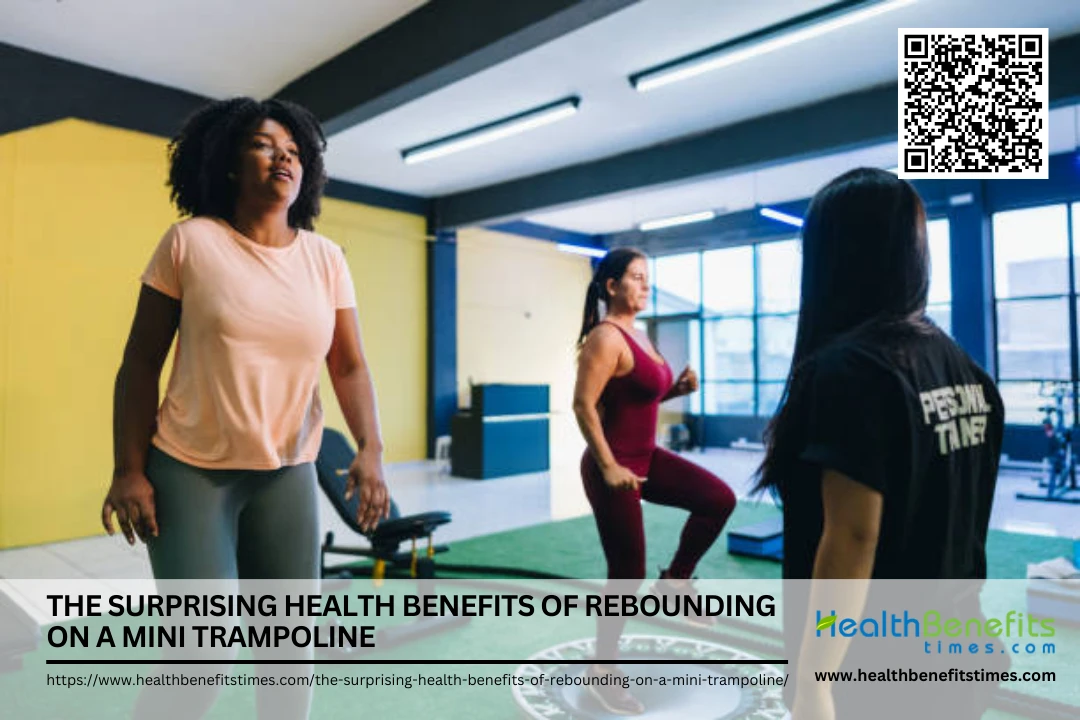
Rebounding is a form of aerobic exercise that involves rhythmic bouncing on a mini trampoline (also known as a rebounder), designed to leverage gravitational shifts to improve balance, strength, and endurance. There are two primary types of rebounders: spring-based and bungee-cord rebounders, which differ in resistance and bounce intensity. (1) (2) (3)
A typical rebounding session lasts between 15 to 30 minutes and includes a warm-up, dynamic bouncing movements (e.g., jogging in place, jumping jacks), and a cool-down. These sessions are often tailored for cardiovascular health, coordination, and lymphatic stimulation, making them accessible for all ages and fitness levels. (4) (5)
Historically, trampolines were first developed for acrobatic and military training in the 20th century, but gained mainstream popularity in the 1980s as a household fitness tool. NASA’s pivotal study in the 1980s endorsed rebounding as an efficient way for astronauts to recover bone density and cardiovascular function post-mission, sparking decades of continued research into its health applications. (6) (7) (8)
Differences between rebounding and traditional cardio
Here’s a comparative table that highlights the key differences between rebounding and traditional cardio exercises like jogging, cycling, or aerobic dance:
| Aspect | Rebounding (Mini Trampoline) | Traditional Cardio (e.g., Jogging, Cycling) |
| Impact on Joints | Low-impact due to shock absorption from trampoline surface (1) | Higher impact, especially running and jumping exercises which stress joints and knees |
| Lymphatic Stimulation | High; bouncing promotes lymphatic drainage and detoxification (5) | Minimal lymphatic stimulation |
| Bone Density Benefits | Supports bone density via repetitive low-impact loading (6) | High-impact cardio like running promotes bone health; cycling offers limited benefits |
| Caloric Burn | Comparable or higher in short intervals (150–300 kcal in 30 min) | Jogging typically burns 250–400 kcal in 30 min depending on intensity |
| Accessibility | Suitable for all ages and fitness levels; low injury risk | May be difficult for seniors or those with joint issues |
| Space Requirement | Requires small space (indoor-friendly) | May need outdoor space or equipment (bike, treadmill) |
| Balance & Coordination | Improves proprioception, motor skills, and neuromuscular control | Improves endurance but less focus on balance |
| Engagement/Fun Factor | High; enjoyable and novel movement pattern encourages adherence | Varies; some may find repetitive traditional cardio boring |
| Mental Health Benefits | Reduces anxiety, boosts mood via rhythmic motion and endorphin release | Also boosts mood and reduces stress; intensity-dependent |
| Cost | One-time purchase of rebounder ($60–200) | May involve recurring costs (gym membership, equipment maintenance) |
Surprising Health Benefits of Rebounding on a Mini Trampoline
Rebounding on a mini trampoline may seem playful, but it offers powerful health benefits. This fun, low-impact workout boosts heart health, improves balance, and supports detoxification—all from gentle bouncing.
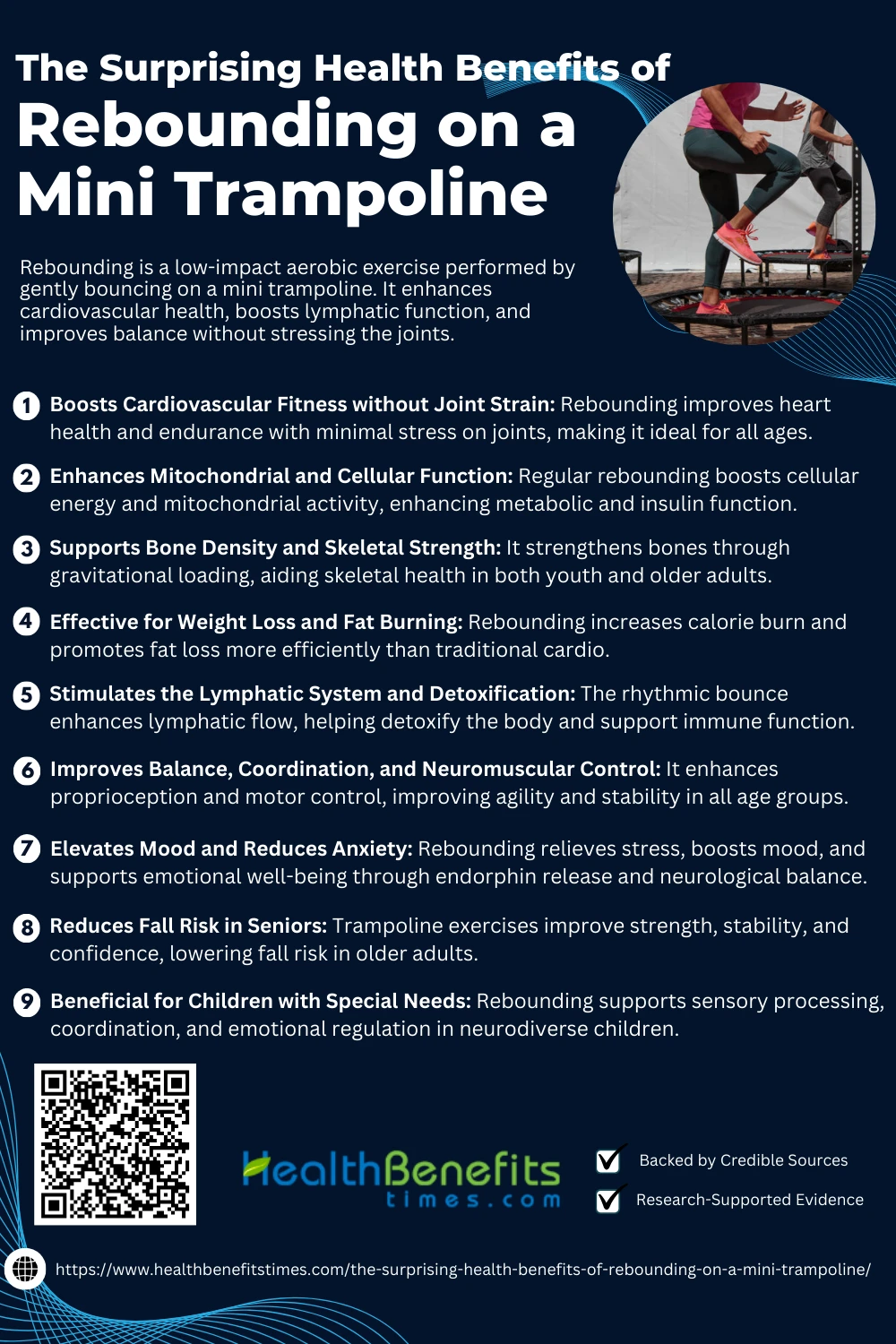
Rebounding is a highly effective aerobic workout that elevates heart rate while significantly reducing joint impact compared to traditional cardio activities. Research shows that trampoline-based exercises improve cardiovascular endurance and oxygen consumption in both active and sedentary individuals without stressing joints or ligaments. (76) (1) This low-impact modality is ideal for injury-prone or older populations. (7) Rebounding enhances endurance, regulates blood pressure, and improves recovery post-injury. (10) Studies also demonstrate its superior vertical workload efficiency compared to treadmill jogging. (11)
2. Enhances Mitochondrial and Cellular Function
Rebounding on a mini trampoline activates full-body movement that improves energy metabolism at the cellular level. Research indicates that regular rebounding significantly increases mitochondrial protein levels, boosting cellular respiration and energy output. (12) This cellular enhancement has been linked to improved insulin sensitivity and energy availability in sedentary and diabetic individuals. (13) A 15-week rebounding regimen was found to stimulate mitochondrial function and oxygen transport. (14) Further evidence shows rebound exercise enhances oxygenation and ATP production critical to cellular vitality. (7) (1)
3. Supports Bone Density and Skeletal Strength
Rebounding exercises create repeated gravitational loading, which has been shown to stimulate osteoblastic activity and improve bone density in women and older adults. A study on adult women found significant improvement in bone health markers after rebound training. (15) Rebounding is also used in rehabilitation to combat bone loss in immobilized patients. (1) Its low-impact nature preserves joint integrity while encouraging skeletal strengthening. (7) Youth and elderly populations alike benefit, with studies showing increased femoral neck density and reduced fracture risk. (16) Additional findings highlight its role in increasing mineral density in children with skeletal deficiencies. (17)
4. Effective for Weight Loss and Fat Burning
Rebounding significantly aids in weight management by combining aerobic intensity with fun, low-impact movements. A randomized trial found notable reductions in BMI and waist-hip ratio among overweight individuals practicing rebounding regularly. (18) The vertical motion increases metabolic rate and caloric burn, often exceeding traditional cardio in energy expenditure. (19) A study of overweight women confirmed consistent fat loss and improved body composition following mini-trampoline sessions. (15) Body Jump® training, a trampoline-based regimen, also yielded measurable reductions in fat mass. (20)
5. Stimulates the Lymphatic System and Detoxification
Rebounding offers unique stimulation to the lymphatic system, which is essential for detoxifying waste, excess fluids, and cellular debris. The rhythmic up-and-down motion serves as a natural pump, enhancing lymph flow without overstraining the body. (21) Just a few minutes of bouncing daily can significantly increase circulation and immune response. (22) Studies show that the g-force created during bouncing effectively mobilizes lymph fluids for faster toxin clearance. (23) This promotes improved immune function and inflammation control. (24)
6. Improves Balance, Coordination, and Neuromuscular Control
Rebounding on a mini trampoline significantly enhances balance, coordination, and neuromuscular control by training the body’s ability to respond to dynamic movement and spatial changes. Studies show that this low-impact activity stimulates proprioception and motor planning, which are critical for postural control. (1) The continuous adjustments required during bouncing improve joint stabilization and agility. (25) Research further supports its application in neurorehabilitation for both children and adults to enhance sensorimotor integration. Rebounding challenges the vestibular system, aiding balance recovery in populations with impaired movement patterns. (26) Even short protocols on rebounders produce measurable gains in functional stability. (27)
7. Elevates Mood and Reduces Anxiety
Rebounding on a mini trampoline has shown notable psychological benefits, including reduced anxiety and enhanced mood. Regular bouncing sessions stimulate the lymphatic system and release endorphins, key hormones in stress reduction Okemuo et al., 2023. (28) The rhythmic motion also mimics vestibular stimulation, improving neurological balance and emotional regulation Fricke et al., 2023. (29) Furthermore, it enhances sleep quality—a factor deeply tied to emotional health Justina et al., 2021. (30) Its positive influence has also been observed in postmenopausal women Fink et al., 2021 and those with obesity-related depression Ojukwu et al., 2025. (31) (32)
8. Reduces Fall Risk in Seniors
Mini trampoline exercises improve balance, coordination, and muscle strength, significantly lowering fall risk among seniors. A 15-week study reported enhanced stability and recovery mechanisms Atiković et al., 2018. (14) The controlled bounce environment fosters neuromuscular adaptation Fink et al., 2021. (31) Additionally, mini-trampoline training led to better gait and mobility scores in elderly adults with Parkinson’s Domingos et al., 2023. (33) Rebound therapy also increases bone mineral density and proprioception Posch et al., 2019, while improving independence in daily tasks post-stroke Krewer et al., 2013. (34) (16)
9. Beneficial for Children with Special Needs
Rebounding offers sensory stimulation, motor skill development, and emotional benefits for children with special needs. Studies confirm improved posture, attention, and muscle tone through rebound therapy in children with autism, Down syndrome, and intellectual disabilities. (35) Trampoline use enhances coordination and cognitive engagement while reducing stress levels. (36) Clinical trials also show trampoline-based programs improve balance and functional capacity in neurodiverse children. (37) Rebounding’s playful nature fosters emotional regulation and social interaction. (38) Additionally, research affirms its safety and efficacy in classroom-based special education settings.
Who Can Benefit from Rebounding?
Rebounding is a versatile workout suitable for all ages and fitness levels. From children to seniors, athletes to beginners, nearly everyone can enjoy its joint-friendly, energizing, and health-boosting benefits.
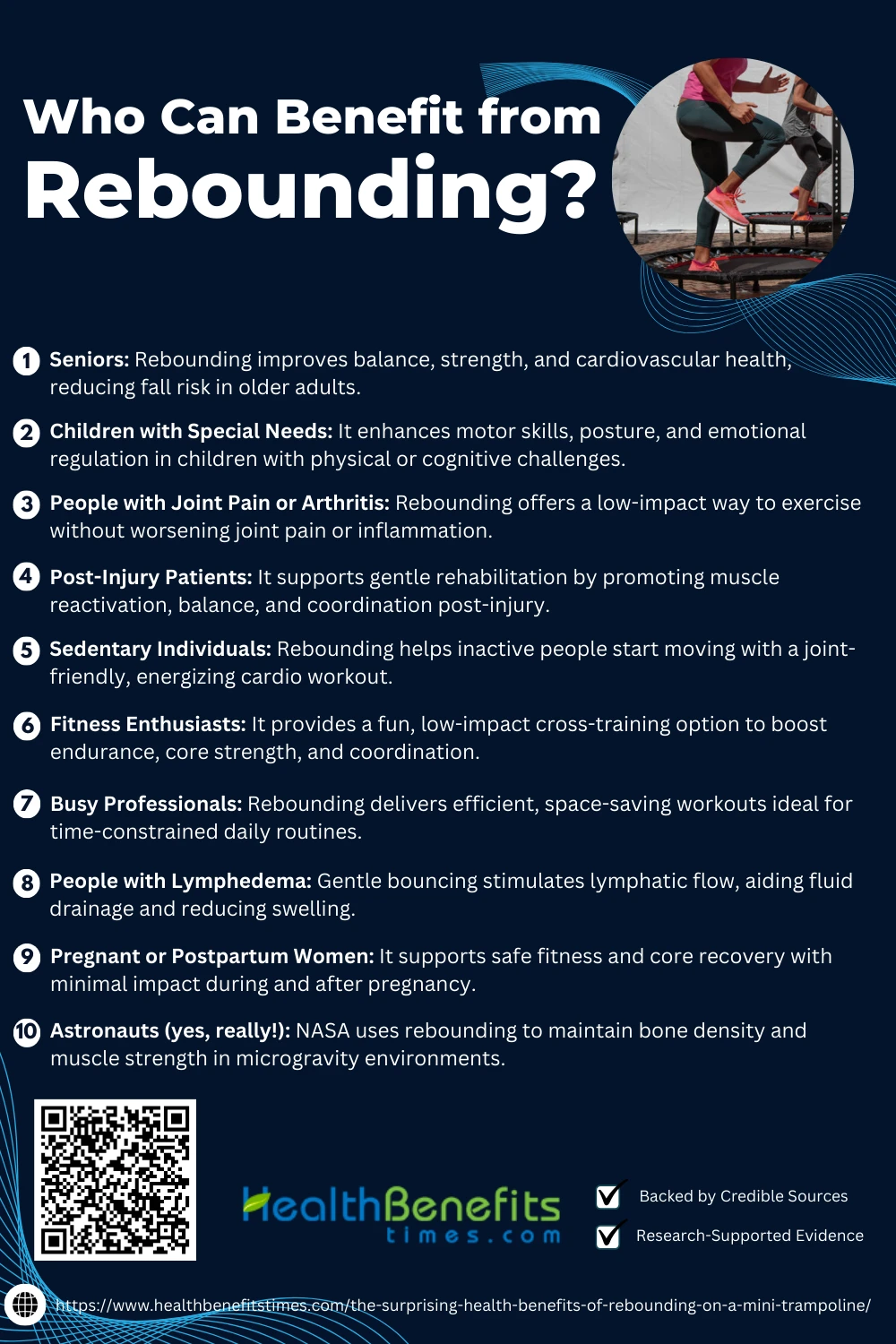
Rebounding on a mini trampoline is a safe, low-impact exercise ideal for older adults aiming to maintain balance, strength, and cardiovascular health. It significantly enhances gait, mobility, and postural control in elderly populations. (1) Research also indicates improvements in bone health and muscular strength with consistent trampoline sessions. (15) Seniors benefit from reduced fall risk, improved endurance, and joint-friendly motion during exercise. (29)
2. Children with Special Needs
Rebounding provides therapeutic benefits for children with physical, sensory, or cognitive challenges. It enhances motor coordination, balance, and sensory integration, particularly in children with Down syndrome and cerebral palsy. (37) Studies show improvements in gross motor functions and posture through structured trampoline sessions. (39) Research also highlights its effect on muscle tone and strength in special populations. Furthermore, rebound therapy has demonstrated benefits for children with profound and multiple learning disabilities. (35) It also boosts engagement and enjoyment, aiding emotional regulation in neurodivergent youth. (38)
3. People with Joint Pain or Arthritis
Rebounding offers a gentle yet effective exercise option for individuals suffering from arthritis or chronic joint pain. Its low-impact bouncing reduces mechanical stress on knees and hips, while promoting circulation and flexibility. (1) Studies show it alleviates stiffness and enhances mobility in arthritic patients. (40) Research confirms trampoline exercises maintain joint health without exacerbating inflammation or wear. (7)
4. Post-Injury Patients
Rebounding on a mini trampoline is increasingly recognized as an effective rehabilitation method for post-injury patients. Its low-impact motion fosters muscle reactivation and coordination without overloading healing tissues. (25) Case studies confirm its benefits in spinal cord recovery by enhancing both physical and emotional well-being. (41) Additional trials showed improvements in balance and strength during knee and ankle injury rehab (Roberts, 2017). Clinical findings support its inclusion in physical therapy protocols for increasing static stability. (42) Overall, rebound therapy presents a practical solution for functional recovery post-trauma.
5. Sedentary Individuals
Rebounding provides an effective, accessible entry point into fitness for sedentary individuals. Studies confirm that mini trampoline workouts improve aerobic capacity and body composition even in previously inactive populations. (25) Rebounding promotes cardiovascular health and metabolic regulation while reducing exercise-related joint strain. (5) It also enhances physical fitness and energy levels in adults transitioning from a sedentary lifestyle. (1)
6. Fitness Enthusiasts
Fitness enthusiasts looking to diversify their routines can benefit greatly from rebounding. Mini trampoline training improves cardiovascular endurance and strengthens core muscles with reduced impact stress, ideal for intense yet joint-safe conditioning. (43) It supports cross-training for athletes and helps increase VO₂ max. (44) Studies also highlight its metabolic benefits for active populations. (45) Beyond aerobic gains, rebounding sharpens neuromuscular coordination, enhancing sports performance. (46) It’s a fun, effective modality for advanced exercisers seeking variety and results. (1)
7. Busy Professionals
Rebounding is ideal for busy professionals seeking efficient workouts that combine aerobic conditioning, muscle engagement, and stress relief in short durations. Just 15–20 minutes of trampoline exercise improves cardiovascular fitness and energy levels without needing a gym or large space. (1) Studies also show enhanced metabolic function and body composition through brief, consistent sessions. (47) Its convenience and versatility support daily exercise habits even in demanding schedules. (14)
8. People with Lymphedema
Rebounding on a mini trampoline offers a gentle yet powerful means to stimulate lymphatic flow, making it especially helpful for individuals with lymphedema. Controlled bouncing supports lymph drainage without overstraining the limbs, reducing fluid buildup. (48) Research emphasizes improved lymph circulation and immune defense through low-impact rebound exercise (Ciraulo, 2007). Experts also highlight rebounders as effective tools in treating lymphatic disorders like lipedema. (49) Additionally, structured rebounding sessions improve physical therapy outcomes and lymph health education promotes rebound exercise as a therapeutic standard. (24) (1)
9. Pregnant or Postpartum Women
Rebounding on a mini trampoline offers a gentle yet effective exercise modality for pregnant and postpartum women. It supports core reconditioning and pelvic floor stability without intense impact, which is vital during recovery phases. According to Rathi et al. (2024), rebound exercises are increasingly recommended for rehabilitation due to their low joint stress Cureus review. (1) Furthermore, research by Nygaard & Shaw (2016) shows that physical activity during pregnancy, such as rebounding, helps manage weight and reduce urinary incontinence American Journal of Obstetrics. (50) Clement (2022) emphasized trampolining’s role in safe cardiovascular engagement during and after pregnancy University of Canterbury. (7) Another study by Kurz et al. (2017) noted rebounding helps with postpartum musculoskeletal impairments Physical Therapy Journal. (51) Even pelvic health experts such as Martin (2021) affirm that light rebounding can support pelvic floor health post-birth MelioGuide. (52)
10. Astronauts (yes, really!)
NASA originally researched rebounding as an ideal exercise to counteract the effects of microgravity on the musculoskeletal system. Mini trampoline workouts mimic gravitational loading, helping maintain bone density and muscle integrity. A study by Justina et al. (2021) outlines rebounding as effective for physical conditioning in low-gravity simulations ResearchGate PDF. (53) Clement (2022) notes its original inclusion in astronaut training programs due to unique biomechanical benefits Canterbury Thesis. (7) ACE Fitness also cites rebounding as offering balance and spatial awareness training similar to early space mission protocols ACE Research. (54) As noted by Neurolaunch, rebounding assists astronauts in bone recovery post-flight Neurolaunch. (55) Lastly, Thiel (2018) demonstrates that plantar forces generated on rebounders align with optimal astronaut reconditioning strategies Wisconsin Study. (56)
Rebounding Safety Tips and Best Practices
To enjoy rebounding safely, it’s important to follow proper techniques and guidelines. With the right equipment, form, and awareness, you can maximize benefits while minimizing the risk of injury.

Using a high-quality mini trampoline is crucial to preventing injury and maximizing workout efficiency. Research emphasizes that unstable or poorly constructed rebounders increase the risk of falls and joint stress, particularly in older adults and children. (55) High-end rebounders with bungee cords or reinforced springs offer better shock absorption and stability. (57) Rehabilitation studies recommend rebounders with secure frames, slip-resistant feet, and optional support bars for clinical safety. (58)
2. Warm Up Before and Cool Down After
Initiating rebounding sessions with a warm-up and ending with a cool-down significantly reduces the risk of injury and enhances performance. Research emphasizes that warm-ups elevate muscle temperature, improving elasticity and neuromuscular function. (59) Cool-downs aid in lactic acid dispersion and heart rate normalization. (60) Studies further highlight that skipping warm-ups may impair explosive performance and increase muscle stiffness. (61) The importance of low-impact stretching and dynamic warm-ups before rebounding is underscored in youth sports protocols. (62) Mobile health interventions also confirm that guided warm-ups promote adherence and safety. (63)
3. Maintain Proper Form
Maintaining proper form during rebounding is vital to reduce the risk of musculoskeletal injuries and promote effective exercise. Key techniques include keeping the knees slightly bent and landing softly to distribute force evenly, as supported by findings in Obesity Reviews. (64) Incorrect form may increase spinal pressure, while structured interventions significantly improve joint safety. (65) (66)
4. Supervise Children and Older Adults
Supervision is essential when children or older adults use rebounders, due to their heightened risk of injury. The Journal of Pediatrics highlights that lack of adult oversight increases injury rates. (67) For seniors, close guidance during physical activity improves safety outcomes. (68) Structured safety environments reduce accident risks among young users. (69)
5. Avoid Overexertion—Start Gradually
To prevent injury and promote sustainable progress, rebounding routines should begin with short, low-intensity sessions. Experts recommend a gradual increase in duration and complexity to allow cardiovascular and muscular systems to adapt. (70) This progressive overload approach reduces fatigue-related risks and enhances performance outcomes. Starting slow is particularly critical for sedentary individuals or those with underlying health issues. (71)
6. Wear Grippy, Non-Slip Footwear or Go Barefoot
Wearing non-slip footwear or going barefoot during rebounding can significantly reduce the risk of slipping, ensuring stability and traction on the trampoline surface. Research highlights that non-slip socks and minimalist shoes offer superior grip and foot control (Menz, 2021), while barefoot activities enhance proprioception and balance. (72) Improper footwear, on the other hand, may increase fall risk, especially in older adults or children. (73) Choosing the right gear supports safety and improves overall effectiveness of rebounding.
7. Follow Medical Advice for Special Conditions
Before beginning rebounding, individuals with specific medical conditions—such as cardiovascular disorders, neurological issues, or recent surgeries—must consult healthcare providers. Clinical guidelines emphasize that tailored supervision ensures safe participation and avoids symptom exacerbation. (28) Evidence also shows potential complications, such as rebound syndrome, when special populations exercise unsupervised. (74) Rebounding remains beneficial, but only when integrated into medically informed protocols. (75)
Conclusion
Rebounding on a mini trampoline offers an impressive range of health benefits that go far beyond fun and fitness. This low-impact activity supports cardiovascular health, strengthens bones and muscles, boosts balance and coordination, and stimulates the lymphatic system for better detoxification. It’s also a powerful tool for reducing stress and enhancing mental well-being. Best of all, rebounding is accessible, space-efficient, and suitable for nearly every age and fitness level. Whether you’re looking to elevate your exercise routine or simply add more joyful movement to your day, rebounding is a surprisingly effective and enjoyable way to support overall health and vitality.
Comments
comments