

An employee may recognise that a difficult conversation is unlikely to threaten their career, while still experiencing physical tension long after it ends. Someone who has left an unpredictable relationship may understand that their current environment is safe, yet remain unusually sensitive to changes in another person’s tone of voice.
What these experiences reveal is a limitation of treating stress primarily as a cognitive problem. The capacity to recognise safety and the physiological capacity to recover from perceived danger are interconnected but distinct processes.
This distinction is generating interest in a different category of mental wellness technology: non-invasive vagus nerve stimulation (VNS). Rather than focusing exclusively on thoughts, emotions or behavioural responses, researchers are exploring whether peripheral nerve stimulation can influence some of the physiological mechanisms underlying heightened arousal.
The Overlooked Dimension of Stress: Recovery
Stress is generally discussed in terms of its intensity, frequency and causes. Less attention is given to what happens after a stressful experience ends.
Two people may experience comparable levels of physiological activation during a demanding situation but recover at different rates. One may return relatively quickly to resting conditions, while the other continues experiencing muscle tension, heightened alertness or repetitive thoughts. Over time, the duration of these responses can become as relevant as their initial intensity.
Nervous system hyperarousal describes a state of elevated physiological and psychological activation. It may involve increased sensitivity to environmental stimuli, disrupted sleep, exaggerated startle responses and difficulty disengaging from potential threats.
Hypervigilance represents a more specific aspect of this experience: persistent monitoring for signs of danger. Ordinary sounds, facial expressions and ambiguous social interactions may receive disproportionate attention because the possibility of a threat has become particularly salient.
The distinction is important because reducing exposure to stressful situations does not necessarily address the mechanisms that prolong the response.
| Dimension | Adaptive stress response | Persistent hyperarousal |
| Attention | Focuses on an immediate demand | Continues searching for potential threats |
| Autonomic activity | Adjusts to meet physiological demands | May remain elevated beyond the original event |
| Behaviour | Supports appropriate action | Can involve repeated checking or avoidance |
| Recovery | Returns toward resting conditions | May interfere with rest and sleep |
Persistent hyperarousal is not a standalone diagnosis, nor does it necessarily indicate trauma or neurological damage. However, it provides a useful framework for understanding why psychological insight alone may not always resolve physical stress responses.
Why the Brain and Body Do Not Always Agree About Safety
In 2016, neuroscientists Joseph LeDoux and Daniel Pine proposed a two-system framework distinguishing conscious experiences of fear and anxiety from the neural mechanisms responsible for defensive physiological and behavioural responses. [1]
The framework challenges the assumption that subjective fear and bodily manifestations of fear necessarily represent a single process. Although these systems interact, changes in one are not guaranteed to produce corresponding changes in the other.
This helps explain an experience frequently encountered in psychological care: a person can revise their interpretation of a situation without experiencing immediate physiological relief.
Learning also plays an important role. When particular sounds, environments or social interactions repeatedly accompany stressful experiences, the nervous system may develop associations between those otherwise ordinary cues and potential danger. Subsequent exposure can prompt defensive responses even when the original source of stress is absent.
An additional mechanism involves interoception, the processing of sensory information originating within the body.
A noticeable heartbeat, uncomfortable breathing sensation or tightening stomach may become more than a physiological response. It can become information that influences the brain’s assessment of the situation. When these sensations acquire threatening meanings, attention and anticipation may contribute to further arousal.
The result can be a self-reinforcing interaction between physiological activation and threat perception.
This creates an important question for mental health management: if signals travelling from the body influence emotional experience, could interventions directed toward those physiological pathways complement approaches that primarily address conscious thoughts and interpretations?
The Vagus Nerve: A Biological Connection Between Emotional and Physical States
The vagus nerve provides one of the anatomical foundations for investigating this question. As the tenth cranial nerve, it extends from the brainstem through the neck and into the chest and abdomen, participating in cardiovascular regulation, digestion and visceral sensory communication.
A substantial proportion of vagal fibres are afferent, meaning they transmit information from peripheral regions toward the central nervous system. The brain therefore receives a continuous stream of information about internal physiological conditions, rather than simply issuing instructions to the body’s organs.
Vagal sensory pathways communicate with the nucleus tractus solitarius in the brainstem. This structure participates in broader networks involved in autonomic regulation, cardiovascular responses and the integration of internal sensory information.
The relevance to emotional wellbeing lies in this continuous exchange between physiological conditions and central nervous system activity. Changes in bodily processes may influence how experiences are perceived, just as psychological experiences can alter physiological responses.
Parasympathetic activity also contributes to the adjustments associated with recovery following demanding experiences. However, nervous system regulation should not be reduced to a simple contest between sympathetic and parasympathetic activity. Both divisions support essential functions, and their influence differs across organs and circumstances.
The objective is not permanent relaxation. It is the capacity to adjust physiological activity appropriately as demands change.
From Managing Thoughts to Interacting With Neural Pathways
Psychological approaches such as cognitive behavioural therapy can help individuals examine threatening interpretations, change behavioural patterns and develop more adaptive responses to difficult experiences.
These interventions are sometimes described as top-down approaches because they engage conscious cognitive and behavioural processes. Bottom-up regulation describes a complementary perspective in which sensory and physiological inputs are used to influence nervous system activity.
Breathing exercises provide an accessible example. Respiration operates automatically but can also be voluntarily adjusted, allowing deliberate behaviour to interact with cardiovascular and autonomic processes.
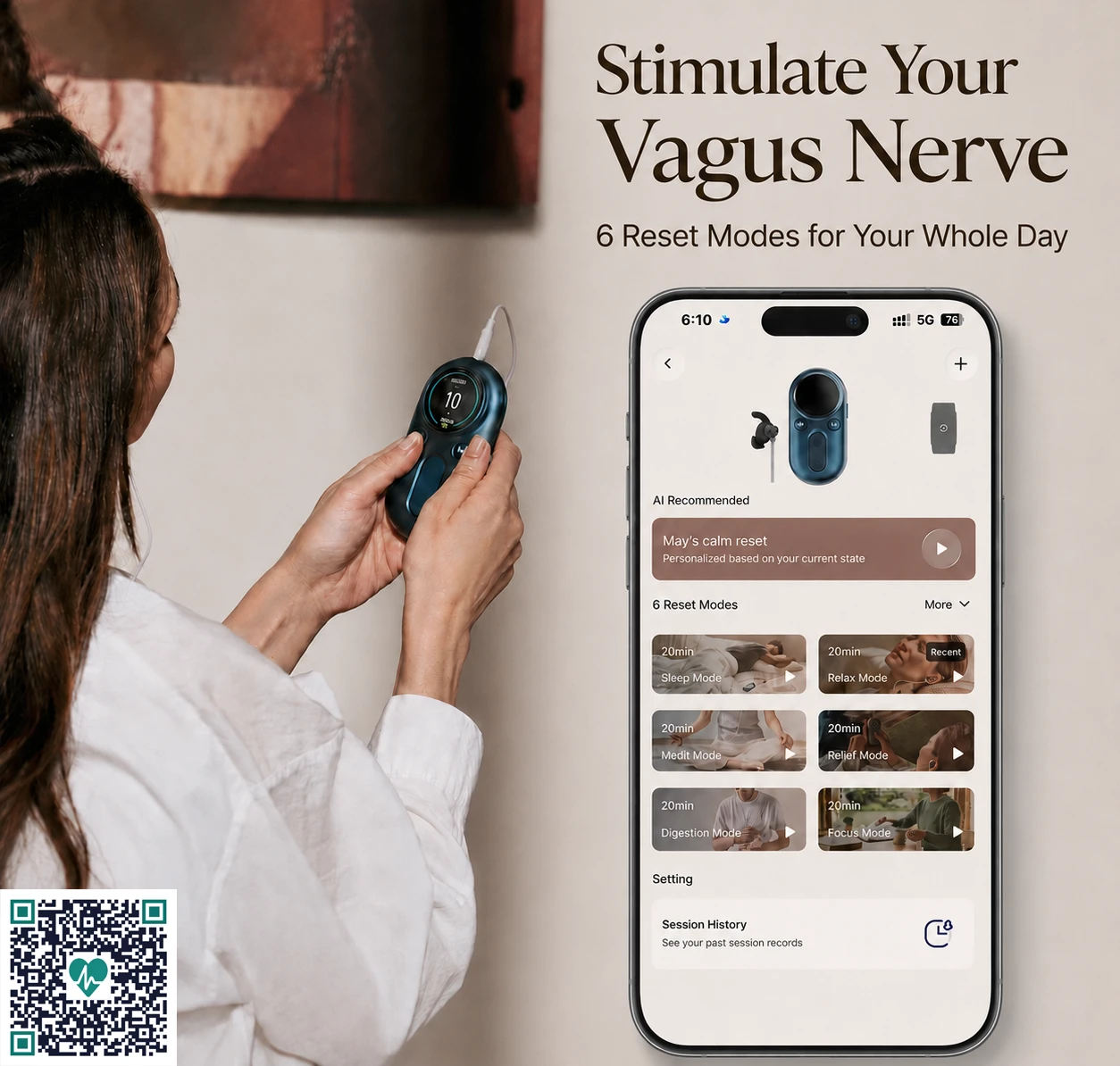
Wearable neurotechnology extends this principle into a different technological category. Instead of relying solely on conscious participation in breathing or cognitive exercises, non-invasive neuromodulation devices deliver controlled electrical stimulation to selected peripheral nerve regions.
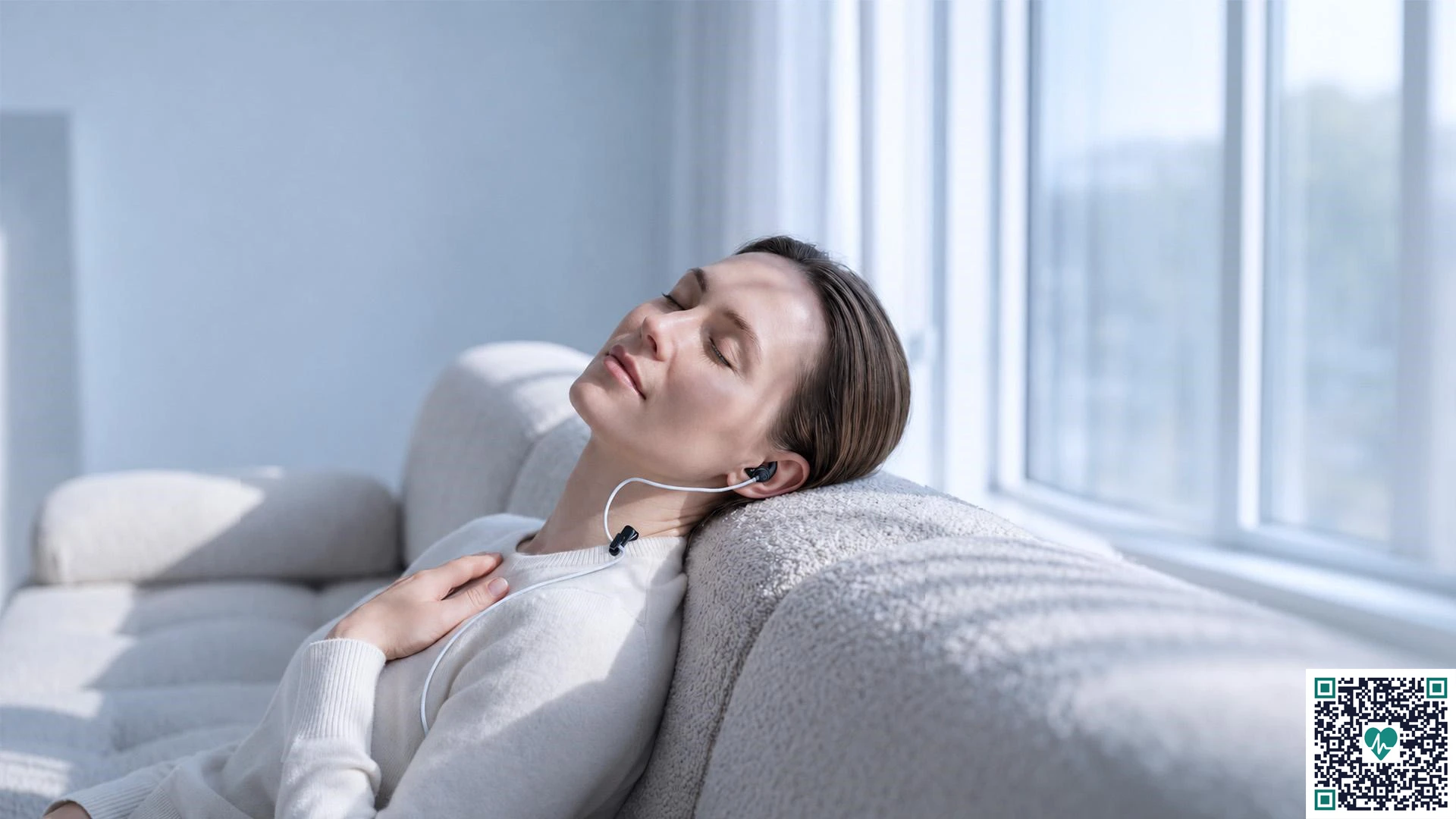
One approach is transcutaneous auricular vagus nerve stimulation, commonly abbreviated as taVNS. It uses electrodes positioned on the external ear to engage sensory pathways associated with the auricular branch of the vagus nerve.
ZenoWell’s wearable vagus nerve stimulation device illustrates how this research direction has informed consumer wearable design. Its dedicated earpiece incorporates two electrode contact points targeting the cymba conchae and cavum conchae, the upper and lower regions of the bowl-shaped area of the external ear. Adjustable stimulation intensity, anatomically defined electrode positioning and selectable operating programmes allow users to conduct dedicated sessions.
The significance of this approach is not simply that neurostimulation has become portable. It introduces a physical method of interacting with peripheral neural pathways into everyday wellness routines, complementing techniques that require active cognitive engagement.
Why Electrode Placement Matters in Vagus Nerve Stimulation
The external ear is not uniformly supplied by the vagus nerve. Its sensory innervation also includes branches originating from other cranial and cervical nerves. Consequently, applying electrical stimulation to different auricular locations may produce different patterns of neural engagement.
A functional magnetic resonance imaging study published in 2017 compared four stimulation sites in 37 healthy participants: the inner tragus, cymba conchae, a region of the ear canal and the earlobe. Stimulation of the cymba conchae produced significant activity in both the nucleus tractus solitarius and locus coeruleus relative to the control location. [2]
These findings help explain why electrode geometry and anatomical placement are important considerations in wearable VNS design. The objective is to deliver stimulation to a defined sensory region rather than simply generate an electrical sensation somewhere on the ear.
For consumer devices, translating this principle into practical use involves several engineering considerations:
- Electrode placement that can be reproduced across sessions.
- Earpiece geometry that accommodates differences in ear anatomy.
- Stable electrical contact between the electrode and skin.
- Adjustable intensity and comfortable stimulation.
- Clear operating instructions and safety information.
These characteristics can influence the consistency of stimulation delivery. However, evidence of neural pathway engagement does not independently establish effectiveness for anxiety disorders, trauma-related symptoms or persistent hyperarousal.
This distinction is especially important for mental wellness products, where technical sophistication should not be confused with demonstrated clinical outcomes.
Can Non-Invasive Vagus Nerve Stimulation Reduce Physiological Arousal?
In a 2023 sham-controlled crossover study, researchers investigated three forms of peripheral nerve stimulation in 19 healthy young adults exposed to acute stressors.
Auricular VNS produced significant changes in selected cardiovascular measurements, including indices related to cardiac sympathetic activity, compared with sham stimulation. The findings suggested that peripheral stimulation could influence aspects of the physiological response following stressful experiences. [3]
However, not all studies have demonstrated comparable effects.
A 2025 randomised experiment examined 41 healthy volunteers undergoing a socially evaluated cognitive stress task. Participants received either stimulation at the left cymba conchae or sham stimulation at the earlobe. Although some autonomic measurements changed during active stimulation, researchers found no significant improvements in subjective stress, cognitive performance or physiological responses to the stress task itself. [4]
These contrasting results highlight a central challenge in developing neurotechnology for emotional wellbeing.
A device may interact with measurable physiological processes without producing a corresponding change in conscious emotional experience. Similarly, an intervention that modifies responses during a controlled stress experiment may not necessarily address persistent hyperarousal in everyday settings.
Research findings must therefore be interpreted according to the population studied, stimulation protocol and specific outcomes measured.
Non-invasive VNS remains an emerging area of investigation, not an established consumer treatment for chronic hyperarousal or psychiatric disorders. Its scientific relevance lies in exploring mechanisms that conventional cognitive approaches may not directly target.
Where Wearable VNS Fits Among Existing Regulation Approaches
The growing number of mental wellness devices reflects a broader expansion of how people approach emotional regulation. However, technologies marketed for similar purposes may operate through substantially different mechanisms.
Understanding these distinctions can help individuals make more informed decisions.
| Approach | Primary mechanism | User involvement |
| Cognitive reframing | Changes interpretations and expectations | Active cognitive participation |
| Breathwork | Engages respiratory and cardiovascular interactions | Conscious breathing adjustments |
| HRV biofeedback | Provides feedback about cardiovascular variability | Active monitoring and training |
| Tactile relaxation devices | Deliver patterned sensory input | Generally limited active participation |
| Wearable VNS | Applies electrical stimulation to selected peripheral nerve regions | Electrode positioning and stimulation control |
The relevant question is not which approach is universally superior. Different strategies address different aspects of the interaction between emotional experience, attention and physiological activation.
For someone whose heightened arousal is maintained by threatening interpretations of bodily sensations, psychological interventions may address an important underlying mechanism. Someone exploring physiological relaxation practices may be interested in breathing exercises, biofeedback or non-invasive neuromodulation.
Wearable VNS belongs to this latter category, although it should not be used to delay appropriate psychological or medical care.
The value of understanding these mechanisms is that it moves the discussion beyond vague promises to reduce stress and toward a more precise understanding of what an intervention is designed to do.
Choosing a Neurotechnology Device Without Creating Another Source of Stress
A mental wellness device must be evaluated differently from an ordinary consumer electronic product. Its practical value depends not only on its technical specifications but also on how comfortably and consistently a person can incorporate it into daily life.
This is particularly relevant for people experiencing hyperarousal, who may already be sensitive to physical sensations or uncomfortable with continuous monitoring.
When considering a wearable vagus nerve stimulator, several factors deserve attention:
Anatomically defined stimulation sites. Electrode design should correspond to identifiable auricular regions, allowing users to understand the intended placement rather than relying on trial and error.
Adjustable stimulation intensity. Sensory tolerability varies considerably. Stronger stimulation should not automatically be interpreted as more effective, and painful stimulation is not an appropriate objective.
Manageable operating requirements. A device intended for relaxation should not introduce unnecessary cognitive demands through complicated setup procedures or continuous interaction with physiological measurements.
Transparent evidence and safety information. Research supporting a general stimulation mechanism should be distinguished from studies evaluating a specific commercial product. Contraindications, intended uses and operating instructions should be clearly communicated.
People with implanted electronic medical devices, relevant cardiovascular conditions or other medical concerns should seek professional guidance before beginning electrical neurostimulation.
Similarly, persistent hyperarousal associated with trauma, panic, severe sleep disturbances or significant impairment warrants evaluation by a qualified healthcare professional.
The purpose of exploring wearable neurotechnology should be to expand appropriate regulation options, not create an additional obligation to optimise every aspect of the nervous system.
Redefining Emotional Wellbeing as the Capacity to Recover
Modern wellness culture often presents relaxation as an achievement: something that can be measured, optimised and maintained through sufficient discipline.
Yet permanent calm is neither a realistic nor desirable model of healthy nervous system function. Human beings need physiological activation to respond to challenges, concentrate on demanding activities and adapt to changing environments.
A more meaningful objective is regulatory flexibility: the capacity to respond when necessary and recover when circumstances permit.
This perspective helps explain why the emergence of wearable vagus nerve stimulation represents an interesting development in mental wellness technology. Its underlying rationale is that physiological pathways may provide another point of entry into the interconnected processes that shape emotional experience.
Psychological interventions, supportive environments, behavioural practices and emerging neurotechnology each address different parts of this broader system. Their potential contributions are complementary, and their limitations matter equally.
Recognising that your body remains on alert after your mind has recognised safety is not evidence of a personal failure. It is a reminder that recovery involves more than understanding the circumstances that caused stress.
Perhaps the next evolution of stress management is not about becoming better at avoiding activation. It is about developing the capacity to recover from it.
References
- LeDoux JE, Pine DS. Using neuroscience to help understand fear and anxiety: A two-system framework. American Journal of Psychiatry. 2016;173(11):1083–1093.
- Yakunina N, Kim SS, Nam EC. Optimization of transcutaneous vagus nerve stimulation using functional MRI. Neuromodulation. 2017;20(3):290–300.
- Sanchez-Perez JA, et al. Transcutaneous auricular vagus nerve stimulation and median nerve stimulation reduce acute stress in young healthy adults: A single-blind sham-controlled crossover study. Frontiers in Neuroscience. 2023;17:1213982.
- Effects of taVNS on physiological responses and cognitive performance during a mental stressor. 2025. PubMed PMID: 40908377.
Comments
comments