

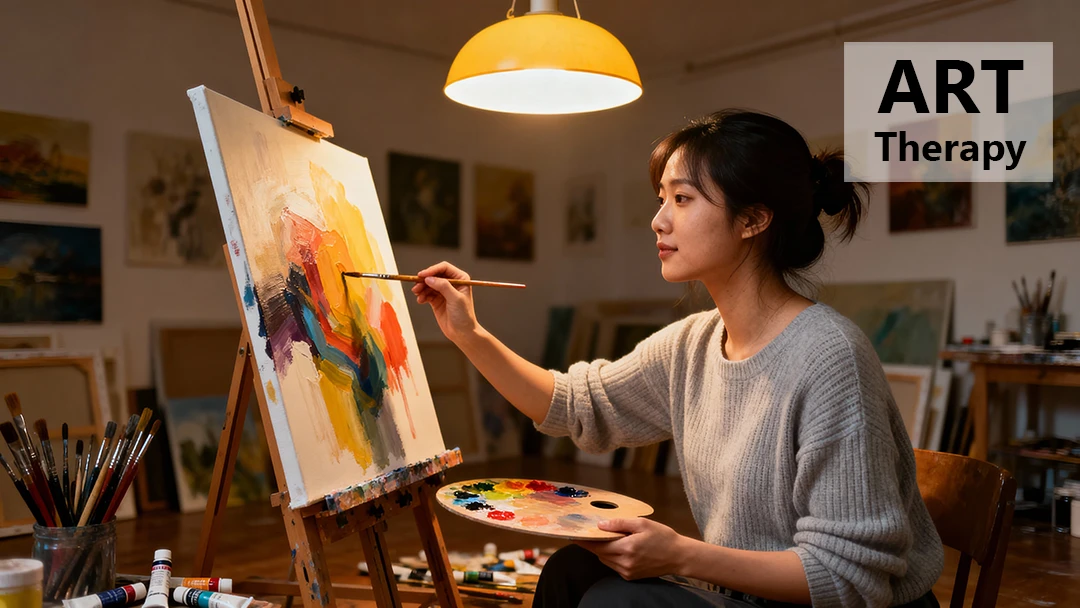
Art therapy may seem like just a fun practice, but research proves its effects on the brain can dramatically improve mental and physical well-being. Newer research looks at how art impacts stress, anxiety, depression, PTSD, and even physical pain. It all starts with the way art reacts with the brain.
What is Art Therapy?
Art therapy is a psychological therapy method that uses creative media like painting or crafting to foster calming responses in patients. In a professional setting, certified art therapists facilitate the practices with specific intentions for treatment goals, including stress relief, cognitive improvements and strengthening self-awareness or community relationships. This can look like painting with colors that express a mood, collaging to make order from chaos or even singing to relieve anger or stress.
You don’t have to be good at art for art therapy to benefit you. In fact, releasing expectations and judgment can better support your therapy results. The point isn’t to make good art, but to use the art as a means to reach your goals, just as speaking might work in traditional therapy. Art can be especially effective for nonverbal patients who would otherwise struggle to communicate with therapists.
Art therapy can be as formal or informal as you need. Your therapy goals are uniquely your own, and your therapist should support you however best for your needs. At its core, the practice offers a space for clients to freely express themselves without inhibitions. No words, no formality, just art. Inherently, art therapy should be a fun, creative activity to relieve stress or perhaps take pressure off a therapy session. It also activates key areas in your brain that scientifically benefit your overall well-being.
How Art Activates Key Brain Processes
Your brain is a complex organism with roads and avenues of neurons firing to keep you functioning. Neuroplasticity is when your brain makes changes, forming new connections in response to new circumstances. It’s how you learn, adapt and grow.
Scientists believe that mental health disorders like depression and PTSD can damage or disrupt neuroplasticity. On the other hand, creative exercises appear to support neuroplastic changes associated with cognition, emotion and memory. These creative activities help rebuild those neurological connections harmed by the damage of mental health disorders.
These key findings identify art therapy as a cognitive support mechanism associated with neurological benefits, including and beyond stress relief. But what else can art therapy do for you?
Evidence-Based Benefits of Art Therapy
Art therapy’s proven emotional, cognitive and memory-associated neurological benefits can translate to many areas of your life and support your various therapy goals. Whether you’re looking for behavioral changes, mental releases or pain relief, you can turn to art.
Mental Health
Art therapy is commonly used to support mental health because of its positive associations with stress relief. Art is a common method for therapists to pursue, particularly for treating PTSD. More than 30% of patients with PTSD struggle to respond to traditional therapy methods, and findings indicate that patients showed mental health improvements through art therapy.
Trauma and anxiety manifest in the brain and can cause the prolonged feeling of “fight or flight,” which can be challenging to overcome through talk therapy. Creative expression to visualize what a patient feels can be a breakthrough in communicating with therapists.
Physical Health
Different forms of art can activate and improve fine motor skills and physical well-being. Art therapy is an enjoyable experience for many and can serve as a distraction from physical symptoms, momentarily relieving or reducing pain. Physical symptoms caused by prolonged stress, like headaches or stomach issues, may resolve as a result of art therapy.
Physical and mental health are deeply intertwined. Poor physical health and pain can strain your mental health just as much as mental issues can manifest into physical ones. Art therapy serves as a holistic approach to supporting your overall health.
Community and Social Health
A healthier mind and body can also promote a better relationship with your community, which in turn helps support your well-being. Art can actually improve your mindfulness and empathy toward others as an abstract form of connection and communication. The visuals serve as a medium transcending linguistic barriers and foster connections with others who, though they may not know what you’ve experienced, can understand what you feel.
Isolation can drive depression, which can lead to more isolation. The cycle is hard to break. But art therapy pushes boundaries beyond an insular moment or experience and can help bridge gaps between individuals’ experiences to better understand each other. And if the art itself isn’t self-evident, it can help you think deeper and spark conversations.
How to Integrate Art Therapy Into Your Healthy Practices
Anyone can go to therapy and seek art as a medium. However, everyone is different and requires unique approaches. What art interests you? What inspires you? How would you like to express yourself, if you know? Do you have therapy goals?
There are many different modes and methods of art therapy to try, including neurographic art, which specifically aims to graphically map neurological pathways and trigger cognitive processing through spontaneous line drawing. This abstract art form concentrates its approach on scientific neuroplasticity by visualizing your thought patterns and artfully mimicking tension release, showcasing your brain on the paper. Essentially, by drawing, connecting and shading spontaneous lines on the page, your hand is mimicking your brain’s pathways through processing and reducing stress.
While art therapists are certified professionals who specialize in guiding clients, not everyone can afford therapy or has found a therapist right for them. There are ways you can use art at home to help yourself recenter as a form of self-therapy:
- Coloring books: Set time aside to color a few pages in a coloring book. The structured outlines can alleviate any stress of not knowing what to draw yourself. There are plenty of adult-themed coloring books, too.
- Doodle or sketch: Create a space for yourself to draw without the pressure of it looking good or being presented anywhere. If you don’t know what to draw, consider items in front of you or outside or try a prompting book.
- Journal: Writing is a creative outlet that many health professionals recommend. It helps reduce stress by taking whatever overwhelms you mentally and leaving it on the page.
- Paint rocks: Not everyone has canvases or wants to showcase stress-induced art, but rocks are readily available and can be satisfyingly tactile.
It’s important to take time for yourself, and indulging in creative practices even without a specialized therapist can be an excellent way to promote your physical, mental, and spiritual health.
Art for a Healthier Brain
Your brain is a complex being, and science is still trying to fully understand it. However, more and more research proves the benefits of art and creativity on cognitive functions. Beyond a fun stress relief, art is necessary for your overall health.
Comments
comments