

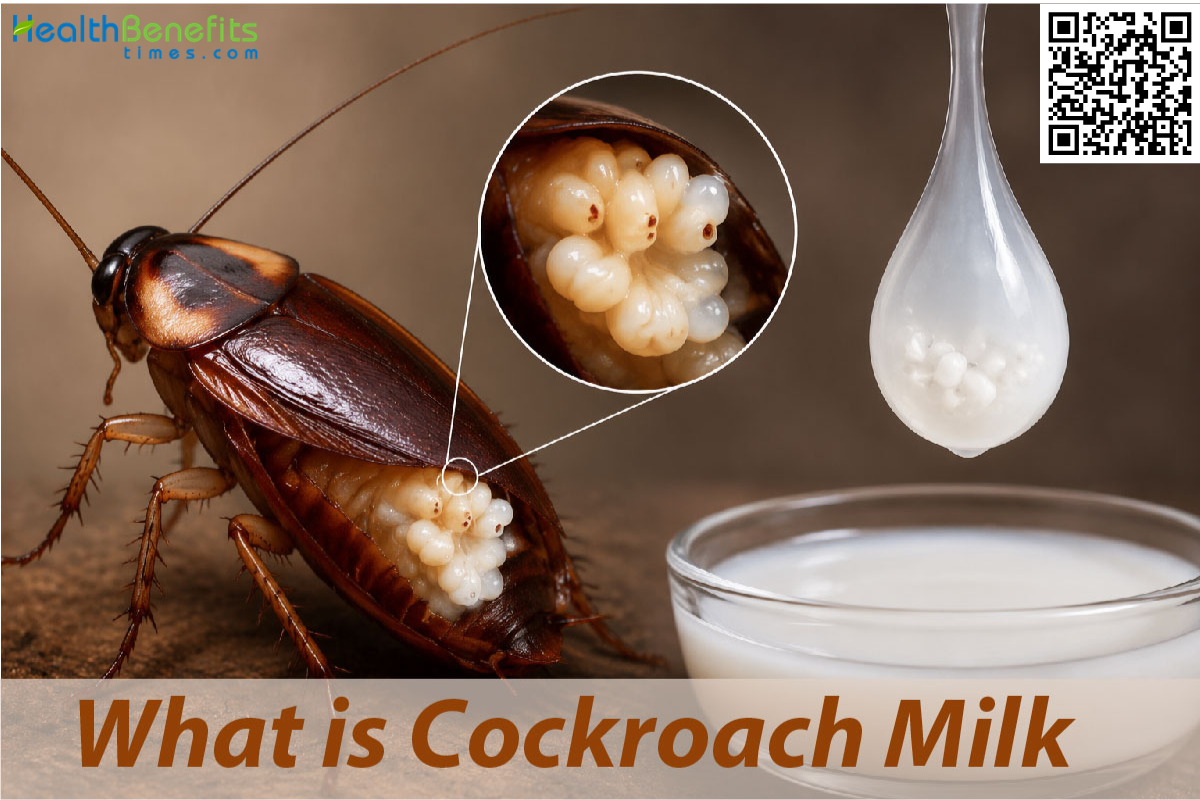
Health benefits of Cockroach Milk
1. Supply a Highly Concentrated Source of Calories and Energy
How it may help
Cockroach milk crystals deliver an immense amount of energy and calories in a microscopic volume. Because it packs proteins, fats, and sugars into dense structures, it functions as a highly efficient energy source. In theory, this density could provide sustained nourishment for individuals needing high-calorie diets in extremely small portions.
What research says
Scientific analysis confirms that the crystallized milk from the Pacific beetle cockroach contains more than three times the energy of an equivalent amount of dairy milk. Researchers conclude that these crystals are a complete food source, combining highly concentrated caloric energy with essential nutrients necessary for rapid cellular growth 3.
How to use it safely
Currently, you cannot safely consume natural cockroach milk, as it is not an approved human food. To avoid dangerous pathogens, never attempt to extract fluids from insects. Future human consumption will rely entirely on scientists recreating these nutritional protein crystals safely in a sterile laboratory environment.
2. Deliver a Complete Protein Profile
How it may help
Cockroach milk provides all essential amino acids, which are the biological building blocks the human body cannot produce on its own. This complete protein profile supports muscle repair, cellular growth, and immune function, working much like high-quality meat or dairy proteins but in a highly concentrated, microscopic form.
What research says
Scientific analysis reveals that the protein crystals from the Pacific beetle cockroach contain a comprehensive sequence of all essential amino acids. Researchers conclude that these crystals represent a complete, high-quality biological food source, possessing a molecular structure capable of supporting rapid, sustained tissue growth and cellular development 3.
How to use it safely
Because natural cockroach milk is impossible to harvest at scale and poses severe hygiene risks, you cannot consume it directly. Safely utilizing this complete protein will require scientists to bioengineer and synthesize the exact amino acid sequence using yeast in a controlled, sterile laboratory environment.
3. Act as a Slow-Release Nutrient Source for Sustained Digestion
How it may help
The unique crystalline structure of cockroach milk breaks down gradually during digestion. This slow-release mechanism provides a steady, continuous supply of nutrients to the body over a longer period. It helps maintain stable energy levels and prevents the rapid spikes and crashes often associated with quickly digested food sources.
What research says
Scientific analysis demonstrates that these milk crystals function as a natural time-release food. Researchers found that as the liquid protein is digested and consumed by the stomach, the remaining crystal releases more protein at an identical rate, ensuring a constant, sustained delivery of nutrients for cellular growth 3.
How to use it safely
Because commercial cockroach milk does not exist, you cannot currently consume it for dietary purposes. To safely utilize this slow-release mechanism in the future, scientists must artificially replicate the specific crystalline structure in a food-safe laboratory setting, completely separate from the actual insect.
4. Provide Essential Fats and Lipids
How it may help
Cockroach milk crystals contain vital fats, including essential fatty acids, tightly bound directly to their protein structure. These lipids play a crucial role in maintaining healthy cell membranes, absorbing fat-soluble vitamins, and providing a dense, secondary source of stored energy to support biological development and overall cellular health.
What research says
Structural analysis reveals that the milk crystals from the Pacific beetle cockroach are complex molecules integrated with beneficial lipids. Researchers conclude that these bound fats contribute significantly to the exceptionally high caloric value and comprehensive nutritional profile necessary to sustain rapid, healthy tissue growth 3.
How to use it safely
You cannot safely harvest or consume natural insect milk due to severe biological and contamination risks. To safely access these specific essential fats in the future, you must wait for food scientists to successfully bioengineer and synthesize the complete lipid-protein complex in a certified, food-safe manufacturing facility.
5. Offer Attached Sugars
How it may help
Cockroach milk contains attached sugars, known as glycans, which provide a readily available carbohydrate energy source. These sugars enhance how the protein functions and interacts within the body, ensuring that vital biological processes have immediate fuel while the slower-digesting proteins provide long-term energy.
What research says
Mass spectrometry reveals that cockroach milk protein crystals are highly glycosylated, meaning they have carbohydrate chains attached to their molecular structure. Studies identify specific sugars like N-acetyl-D-glucosamine and mannose. These attached sugars contribute directly to the milk’s extreme caloric density and make the insect proteins structurally similar to complex mammalian proteins 4.
How to use it safely
Because natural cockroach milk carries severe contamination risks, you cannot safely consume it. To utilize these unique glycosylated proteins safely, scientists will need to bioengineer the complex sugar-protein structures in a controlled laboratory setting to create a sterile, food-safe supplement.
How is Cockroach Milk made
1. Natural Secretion in the Brood Sac
Unlike most insects that lay eggs, the female Pacific beetle cockroach gives birth to live young. To nourish her offspring during gestation, she secretes a highly nutritious, liquid protein substance directly inside her specialized brood sac. This continuous feeding process ensures the developing embryos receive the essential hydration and complex nutrients required for rapid cellular growth before they are born 1.
2. Internal Crystallization Within the Embryo
As the developing embryos consume the liquid secretion, the substance undergoes a unique biological transformation inside their digestive tracts. The liquid condenses and forms dense, microscopic protein crystals within the embryo’s midgut. This crystallization process allows the insect to store massive amounts of energy and calories in a highly compact form, functioning as an extremely efficient, slow-release nutrient reserve 1.
3. Laboratory Extraction for Scientific Study
Because insects cannot be milked like traditional dairy animals, researchers must perform delicate microsurgery to study this substance. Scientists carefully dissect the developing embryos and extract the microscopic protein crystals directly from their digestive tracts. While this extraction method provides enough raw material for detailed structural analysis and nutritional profiling, it is entirely impractical for producing milk on a commercial scale 1.
4. Genetic Sequencing of the Protein Structure
To bypass the impossible task of harvesting milk directly from live insects, researchers have focused on mapping the insect’s DNA. Scientists successfully sequenced the specific genes responsible for creating the unique protein crystals. By fully understanding the genetic blueprint, researchers determined the exact amino acid sequence and molecular structure needed to replicate the milk’s comprehensive nutritional profile synthetically 1.
5. Synthetic Production Using Bioengineered Yeast
The future of cockroach milk production relies entirely on advanced biotechnology rather than insect farming. Scientists plan to insert the sequenced cockroach genes into bioengineered yeast strains. In a sterile, controlled laboratory environment, this genetically modified yeast can artificially synthesize the identical protein crystals, allowing for safe, large-scale production without the severe hygiene risks associated with handling real insects 1.
Side effects of Cockroach Milk
1. Allergic Cross-Reactivity
Insect proteins contain tropomyosin, which can trigger severe allergic reactions and anaphylaxis in individuals who are already allergic to crustaceans, shellfish, or house dust mites 5.
2. Excessive Caloric Overload
These protein crystals pack three times the energy of dairy milk. Regular consumption of this hyper-dense energy source could rapidly cause unintended weight gain and metabolic disruption 4.
3. Microbiological Contamination
Extracting biological material directly from living insects introduces dangerous hygiene risks. Natural insect fluids can carry harmful pathogens unless synthesized safely within a strictly controlled laboratory environment 6.
4. Secondary Sensitization
Individuals may react to hidden allergens originating from the insect’s diet. Biological contaminants present in the insect’s food source can transfer into its tissues, causing unexpected immune responses 7.
Comments
comments